

Mary Beth Orr is a formidable and expressive force in contemporary music, a classically trained French hornist and folk vocal artist whose artistry is steeped in tradition yet courageously ventures into uncharted emotional and musical territory. Based in Grand Rapids, Michigan, she has carved out a distinguished path, not only as the 3rd Horn of the Grand Rapids Symphony but also as a sought-after performer with orchestras such as the Detroit Symphony and Charleston Symphony. Her accolades are extensive and striking, including being a finalist for The American Prize in instrumental performance in 2023 and multiple first-prize awards in international music competitions. Her journey has taken her from the Interlochen and Charleston Horn Institutes to the stages of the Spoleto Music Festival, Carnegie Hall, and even to the prestigious Beethoven Haus in Germany. What defines Orr is not just her technical brilliance but her emotional openness and commitment to musical storytelling. As a soloist, educator, and collaborator, she continues to transcend the boundaries of traditional performance, making space for authenticity, vulnerability, and connection.

Released on March 7th, 2025, her original album titled “The Singing Horn” stands as a sweeping and deeply personal work of art, merging classical and folk traditions in a way that feels both intimate and expansive. Rather than treating her French horn and voice as separate musical tools, Orr brings them into harmony, creating a dual force that expresses the breadth of human experience with clarity and conviction. This 26-track project flows with emotional cohesion, bound together by recurring themes of love, grief, motherhood, and spiritual reflection. The structure of the album is masterful, with no one track dominating the experience, but rather each contributing to a broader narrative that is both delicate and powerful. It is a unified artistic expression that honors tradition while presenting something wholly unique and contemporary.
“The Singing Horn” showcases Orr’s remarkable ability to blend her Appalachian heritage with the refinement of classical chamber music. What emerges is not simply a cross-genre experiment, but a fully formed artistic identity that draws strength from both roots and innovation. Her horn playing retains its classical precision while taking on a soulful, almost vocal quality, and her singing is steeped in folk authenticity without losing technical grace. These elements converge to form a sonic landscape that is warm, contemplative, and richly textured. The album is less about individual performances and more about the emotional and thematic arc that it creates as a whole.
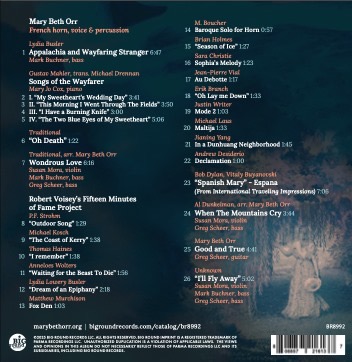
The Singing Horn Album Track List:
Appalachia and Wayfaring Stranger:
The opening track of “The Singing Horn”, titled “Appalachia and Wayfaring Stranger,” serves as a meditative and powerful introduction to Mary Beth Orr’s musical ethos. Through this nearly seven minute piece, Orr introduces her signature fusion of Appalachian folk tradition with classical chamber sensibilities, establishing a dual identity that is both reverent and innovative. The French horn takes the lead, its warm and sonorous tone unfolding with deliberate grace. The pacing is unhurried, offering space for each note and silence to linger, creating an atmosphere of deep contemplation. From the outset, the track positions the horn not merely as an accompaniment but as a primary voice, carrying the melody with both weight and intimacy.
As the piece progresses, subtle layers begin to emerge, with the contrabass adding depth and an earthy grounding beneath the horn’s solemn lyricism. This orchestration provides a rich, ambient framework that mirrors the journey like nature of the song’s themes. Then, almost at the end, Orr’s voice enters soft, sacred, and ethereal like a hymn rising quietly from memory. Her vocals arrive not as a climax but as a gentle arrival, threading emotional nuance into the already textured landscape. It is a moment of profound calm, where voice and horn converge in a dialogue that speaks to both loss and hope, to home and distance, all without overwhelming the listener. The restraint here is intentional, giving weight to stillness and allowing reflection to become part of the listening experience.
“Appalachia and Wayfaring Stranger” is more than a musical piece; it is a statement of purpose. It sets the tone for the rest of the album, signaling that this project is not simply a performance of songs but a cohesive narrative crafted through sound. The blending of folk hymns with the elegance of classical form reveals Orr’s deep understanding of both genres, while her arrangement choices underscore a commitment to storytelling that transcends technical display. As the album’s first step, this track creates a doorway into a deeply personal and spiritual journey, one where the listener is invited not just to hear, but to feel and remember.
Wondrous Love
Track 7, “Wondrous Love,” stands as one of the most emotionally profound and musically intricate pieces on “The Singing Horn”. Mary Beth Orr reimagines the traditional hymn with a rich chamber ensemble that includes violin, two contrabasses, her own voice and horn, and touches of delicate percussion. This ensemble does not simply accompany the melody but becomes part of a greater emotional architecture, forming a luminous and sacred sonic space. The instrumentation feels intentional and reverent, with each voice entering and exiting the soundscape with grace, allowing the music to breathe and evolve naturally. From the very beginning, there is a sense that this track is not just a reinterpretation, but a spiritual offering crafted with deep sensitivity.
Orr’s arrangement carefully preserves the hymn’s spiritual essence while expanding its emotional and musical reach. Her voice moves gently through the composition, conveying a sense of awe, longing, and stillness that honors the hymn’s traditional role as a piece of sacred reflection. The violin and basses offer a warm and understated support, creating a meditative undercurrent that never overpowers but gently lifts the vocal line. What sets this track apart, however, is the horn’s role. Rather than functioning as background texture, the horn weaves in and out of the arrangement with thoughtful interjections, like spoken reflections between verses. These moments of brass add a soulful pause between vocal phrases, acting almost as breaths or meditations, giving the listener room to feel and reflect.
With its length, “Wondrous Love” has the space to unfold gradually and meaningfully. There is no sense of hurry, only patience and presence, which makes it one of the album’s most immersive tracks. The slow pacing allows every tone, harmony, and silence to resonate fully, drawing the listener into a contemplative state. This track encapsulates the essence of “The Singing Horn”: a blending of folk tradition and classical elegance, guided by emotional truth and performed with humility. Orr’s ability to breathe new life into a time-honored hymn while preserving its reverence demonstrates not only her artistic skill but her deep respect for the spiritual power of music.
Good and True:
Track 25, “Good and True,” is a deeply affecting and spiritually resonant piece that captures Mary Beth Orr at her most personal and introspective. Positioned near the end of “The Singing Horn”, this original composition serves as a gentle yet powerful reflection on themes of motherhood, identity, and inner transformation. Drawing inspiration from the Dagara Tribe’s birthing song, as described by Sobonfu Somé, Orr infuses the piece with ceremonial weight and emotional vulnerability. The track is performed using only voice, horn, and guitar, creating an intimate and stripped-back arrangement that leaves ample space for breath, reflection, and emotional depth. The restrained instrumentation allows each note to linger, each phrase to echo with meaning, and every pause to hold quiet significance. There is no urgency to the tempo, no flourish to distract from the essence of the message, it is music that listens as much as it speaks.
Orr’s vocal delivery is marked by tenderness and quiet strength, shaped by her lived experience of motherhood and created under the physical and emotional demands of both prenatal and postpartum life. Her lyrics feel like a quiet prayer, delivered with a sincerity that gives the song its ceremonial quality. The horn, as in much of the album, functions not just as an instrument but as an emotional voice of its own, offering subtle interjections that feel like breaths of insight or moments of inner knowing. Greg Scheer’s acoustic guitar accompaniment is warm and understated, wrapping around the horn and vocals with a gentle steadiness that supports without overshadowing. Together, these elements create a listening experience that is at once grounded in personal truth and open to universal resonance.
“Good and True” is more than a song; it is a moment of healing and honesty that encapsulates the album’s core values of spiritual depth, human connection, and artistic courage. Unlike some of the more classically structured or traditionally inspired tracks on the album, this piece feels rooted entirely in Orr’s own emotional and creative process. The absence of excess instrumentation or dramatic shifts draws the listener inward, encouraging stillness and introspection. What makes it stand out is not just its beauty, but its emotional weight, the feeling that it was written not just to be heard, but to be felt. In this way, it becomes one of the album’s most profound statements, affirming Orr’s unique voice as both a composer and a storyteller who is unafraid to bare her soul in sound.
I’ll Fly Away:
Track 26, “I’ll Fly Away,” brings “The Singing Horn” to a heartfelt and transcendent close, reimagining the beloved gospel hymn through Mary Beth Orr’s refined musical lens. Known for its celebratory spirit, the hymn is transformed here into a rich chamber piece that balances reverence with emotional depth. Orr does not simply perform the song but reshapes it into a graceful farewell, blending the familiar melody with new layers of subtle complexity. Her arrangement honors the original’s joyful tone while allowing for quiet reflection, making the track feel both grounded in tradition and elevated by her interpretive sensitivity.
The instrumentation adds a textured warmth to the piece. The contrabasses provide a deep and steady foundation, while Susan Mora’s violin lends a soaring, lyrical quality that dances between sorrow and release. Guitar and bass enrich the harmonic palette with gentle fluidity, and Orr’s own voice and horn rise together in harmony with the ensemble. Their union feels like a closing prayer, filled with gratitude and quiet transcendence. The performance as a whole does not rush toward a triumphant finale but instead unfolds patiently, offering a thoughtful and graceful exit from the emotional landscape of the album.
“I’ll Fly Away” encapsulates the themes that have carried through the entire project: movement, memory, transformation, and the intertwining of grief and hope. Positioned as the final track, it serves not just as a conclusion but as a final reflection on the journey that “The Singing Horn” has guided the listener through. The emotional lift it offers feels earned and meaningful, resonating long after the final note fades. In this closing moment, Orr leaves her audience with a sense of peace and spiritual release, bringing the album to a close with grace, purpose, and profound emotional clarity.
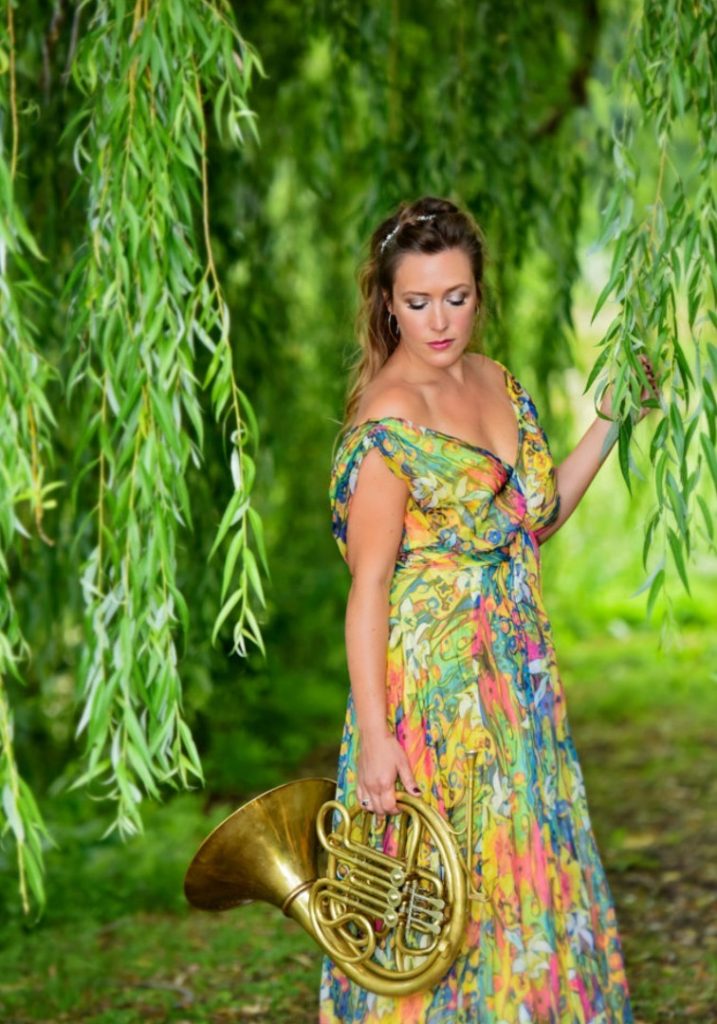
A significant part of what makes “The Singing Horn” so compelling is the way it embraces collaboration without ever losing Orr’s clear artistic voice. The album’s sound is enhanced by the graceful contributions of Mark Buchner on double bass, Mary Jo Cox on piano, Susan Mora on violin, and Greg Scheer on bass and guitar. Each of these collaborators brings a layer of color and texture to the music, building a collective energy that supports and amplifies Orr’s vision. Their playing is sensitive, never intrusive, allowing Orr’s arrangements and performance to remain the album’s emotional core. Together, they form a cohesive ensemble that breathes life Into every moment, ensuring that the album remains consistent in tone and emotional clarity from start to finish.
Beyond its musical achievements, “The Singing Horn” is also a work of emotional vulnerability and spiritual depth. It explores the complex terrain of human feeling in a way that is honest and unflinching. There is no need to isolate songs or highlight particular moments because the album’s power lies in its totality, its ability to move from one mood or idea to the next with grace and coherence. The careful pacing and unified aesthetic invite listeners into a sustained emotional experience that is at once personal and universal. Through its seamless flow and heartfelt authenticity, the album becomes a mirror for reflection, a space for comfort, and a source of quiet strength.
The Singing Horn is a Soul-Stirring Fusion Of Classical Finesse And Folk Spirit, Offering A Deeply Personal And Spiritually Resonant Journey Where Voice And Horn Speak As One
As a debut, “The Singing Horn” is a triumphant and genre-blending statement that affirms Mary Beth Orr’s place as a singular voice in today’s musical landscape. It is no surprise that the album has already earned Silver Outstanding Achievement Honors at the Global Music Awards 2025, as it exemplifies both technical mastery and emotional resonance. Orr’s ability to craft a deeply affecting journey through music, one that bridges generations, genres, and states of being, is a rare gift. With this album, she does not merely perform music; she creates a world. One that listens back, and one that stays with you long after the final note.
For more information about Mary Beth Orr, click on the icons below.