
Kevin Driscoll is not your average singer-songwriter. Based in Jacksonville, Florida, he has built his career on fearless honesty and genre-defying creativity. A multi-instrumentalist and arranger with an ear for emotional truth, Driscoll blends indie folk, alternative rock, blues, and global rhythms into something both deeply personal and universally relatable. His music doesn’t just describe emotions; it lives inside them, turning personal reflection into shared human experience. Influenced by legends like David Byrne, Nine Inch Nails, BB King, and Leonard Cohen, Driscoll’s sound moves effortlessly between rhythmic groove and quiet vulnerability. His songwriting is rooted in storytelling, songs that speak as much through their silences as their melodies, carrying raw emotion without sacrificing sophistication. Each release feels like a step into a different emotional landscape, always anchored by his unpolished intensity and commitment to connection.
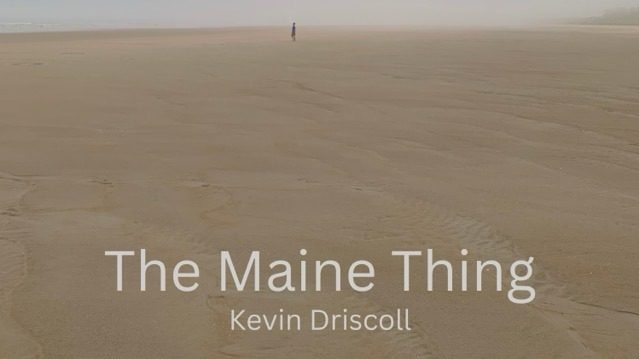
At the heart of Driscoll’s work is a singular mission: to strip away the noise, to find and hold onto the things that matter. Whether drawing on the lyrical depth of Tom Waits, the emotional texture of Bruce Cockburn, or the melodic craftsmanship of Paul Simon, he never loses his own voice, a voice shaped by curiosity, honesty, and the courage to stay human in a distracted world. Released on January 1, 2025, Kevin Driscoll’s latest single, “The Maine Thing,” is more than a song, it’s a meditation set to music. Born on the rugged coast of Maine from a simple guitar riff stumbled upon in a quiet moment of exploration, the track grew into an acoustic reflection on clarity, focus, and emotional grounding.
Recorded primarily at Long Jump Records in Jacksonville, “The Maine Thing” carries the intimacy of a private performance — a warm, stripped-down arrangement that feels as if Driscoll is sitting across from you, guitar in hand, speaking directly to your restless thoughts. Every instrument, every pause, every breath is purposeful. Aside from a hauntingly beautiful violin solo by Argentinian virtuoso Damien Bolotin, Driscoll performs every part himself, underscoring the track’s deeply personal nature. Pulling influence from Tom Waits, Bruce Cockburn, and Paul Simon, “The Maine Thing” blends hypnotic guitar work, subtle banjo drones, and minimalist production to create something rustic yet cinematic, raw yet resonant. It’s a song about remembering what matters, about coming back to center when life scatters you in every direction. Quietly powerful and emotionally immersive, “The Maine Thing” is Kevin Driscoll at his most human, offering not just music, but a moment of stillness in a world that rarely stops moving.
Kevin Driscoll’s “The Maine Thing” opens in a way that feels less like the beginning of a song and more like the awakening of a thought, tenderly carried into sound. The introduction eases in with a tribal-tinged rhythmic pulse, subtle but undeniably present, grounding the track with a heartbeat-like cadence that instantly roots the listener. This percussive rhythm is not flashy or overly complex, it is steady, meditative, and earthy, giving the impression of something ancient and natural. Over this rhythmic canvas, the gentle picking of an acoustic guitar emerges, its arpeggios syncopated and flowing, casting a web of melody that feels thoughtful and reflective. The way the guitar strings are plucked carries warmth and intimacy, with each note ringing softly into the surrounding space, leaving room for resonance and silence to shape the mood. There is also a soft low end beneath these layers, rounded and unobtrusive, filling the soundscape with a quiet fullness that grounds the delicate opening textures. The opening moments are careful, restrained, and deeply inviting, pulling the listener into a soundscape that feels both personal and spacious, as if the music is preparing the mind for contemplation.
As the song begins to build, the instrumentation reveals its richness in subtle layers rather than dramatic shifts. The acoustic guitar continues its steady rhythmic picking, but faint textures emerge around it, almost like faint trails of color brushed lightly across a canvas. The low percussive beat maintains its pulse, a steadying force that keeps the listener anchored, while soft bass notes add weight and depth to the foundation. The percussion is gentle, almost hand-drum-like in quality, giving the track an organic pulse that never feels mechanical. The harmonics of the guitar occasionally shine through with brightness, offering small sparks of light in the otherwise mellow tone. These instrumental choices are deliberate, never overwhelming the song’s reflective atmosphere but always working together to create an enveloping warmth. The groove is subtle, not the kind to move the body in energetic motion, but the kind that sets the heart into a slow, calming rhythm, making the listener sway gently as if carried along by the tide of sound.
When Kevin Driscoll’s voice enters, the entire piece shifts into sharper focus, as though the previously unfolding textures had been waiting to support his words. His vocal delivery is measured and deliberate, leaning towards the cadence of spoken reflection rather than dramatic singing. There is a breathiness to his tone, one that makes the voice feel close, intimate, and confessional, as if he is speaking directly to the listener rather than performing for a crowd. Each syllable is carefully shaped, with pauses that allow the weight of his words to sink in. The lyrics themselves wrestle with themes of distraction, focus, and the fragile balance of thought and feeling, and his voice captures these ideas with quiet intensity. The guitar continues to wrap around his vocal phrases, while the rhythm underneath carries the words forward, giving his reflective lines both structure and movement. The overall effect is one of intimacy and directness, where the music and vocals are less about performance and more about opening a dialogue between artist and listener.
The entrance of the violin becomes a turning point in the song, adding a texture that feels almost otherworldly compared to the grounded earthiness of the earlier instrumentation. The violin cuts through with a tone that is both haunting and melodic, singing in long, expressive phrases that rise above the steady rhythm. Its timbre is warm yet tinged with a faint ache, as if carrying both beauty and sorrow in its voice. The solo does not feel ornamental, it feels necessary, like another character entering the conversation, expanding the emotional range of the track. The way the violin weaves between the guitar arpeggios and the steady percussive beat creates a dynamic tension, lifting the song into new emotional territory without disturbing its meditative core. It becomes the centerpiece of the song’s instrumental expression, filling the air with resonance that lingers even after each note fades. The violin’s presence widens the sonic landscape, giving the track a sense of depth and narrative movement, as if the song itself had begun to tell a story through sound alone.
As the song progresses into its later stages, what stands out is not a dramatic transformation but the persistence of its mood, its refusal to break from the reflective pulse it established at the beginning. The repetition of the guitar’s rhythmic phrases and the steady percussion becomes hypnotic, almost mantra-like, drawing the listener deeper into its cycle. The bass continues to offer quiet support, ensuring that every sound remains anchored, while the violin’s earlier resonance still seems to echo within the atmosphere, even when it softens back into the background. Driscoll’s vocals remain steady and deliberate, reinforcing the lyrical themes of perseverance, clarity, and grounding. The interplay between instruments and voice creates a circular flow where each element supports the others rather than competing for dominance. The production itself emphasizes clarity and space, allowing each instrument to breathe naturally, ensuring nothing feels overcrowded or forced. This restraint is what gives the track its timeless and intimate feel, one that lingers in the mind long after the music fades.
Kevin Driscoll’s The Maine Thing is a quietly powerful acoustic meditation on clarity, grounding, and remembering what truly matters.
By its conclusion, “The Maine Thing” leaves the listener in a state of quiet reflection rather than resolution. The final moments do not burst into dramatic climaxes or fade away in emptiness, but rather continue in the same steady, contemplative tone that carried the song from the beginning. This consistency becomes the song’s greatest strength, it feels intentional, reminding the listener that some truths are not found in grand gestures but in steady persistence and grounded reflection. The careful layering of acoustic guitar, bass, percussion, and violin, combined with Driscoll’s intimate vocal delivery, creates a work that is both musically and emotionally immersive. It is a song that invites patience, encouraging the listener to stay present with its textures and absorb its message slowly. Rather than chasing spectacle, Kevin Driscoll has built an atmosphere that thrives on simplicity, depth, and sincerity. The song feels less like an end and more like an open space, one where reflection continues even after the final note has faded, leaving its weight carried forward within the listener’s own thoughts.
For more information about Kevin Driscoll, click on the icons below.