
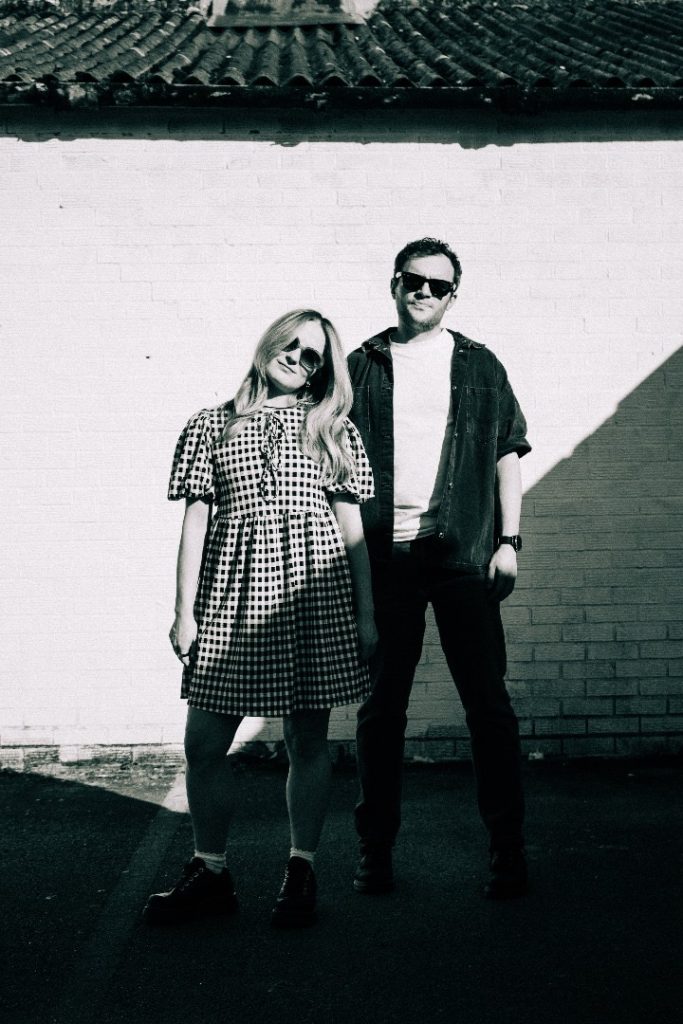
Phwoar, pronounced “F-war,” are a Birmingham-based alternative indie rock duo with a fiery DIY spirit that channels raw energy into hook-laden songs. The band consists of Helena on drums and Paul on guitar, both of whom share vocal duties, giving their sound a layered personality despite their stripped-down two-piece format. Earlier in April 2025 they made waves with their EP “Flowers Through the Concrete,” a project that solidified their reputation for gritty, clever songwriting and high-voltage performances. Now, with their new single “So Much Better“, Phwoar prove that they are not slowing down, pushing forward with a track that embodies both their unfiltered energy and sharp social commentary.
“So Much Better,” released on September 19th, 2025, is an uncompromising burst of indie rock that thrives on urgency, grit and razor-sharp intent. At just over two minutes long, it takes no detours and allows no room for hesitation, instead pulling the listener straight into a sonic storm that hits hard and fast. The song is designed to make every second matter, and it does so with ferocity, clarity and precision. The momentum builds instantly, with the opening seconds announcing its presence in a way that refuses to be ignored. Rather than easing in or slowly layering sounds, it leaps forward in full force, surrounding the listener in a tightly woven soundscape that mirrors the restless, dopamine-fueled culture it sets out to critique. This immediacy is not just a stylistic choice but a deliberate reflection of the short attention spans and endless scrolling behaviors of online life, which the song so cleverly dismantles.
The guitar in “So Much Better” is the first element to demand attention, and it never loosens its grip. Saturated with distortion and buzzing with fuzz, it dominates both rhythm and melody, carving out a sound that feels rich and unrelenting despite the two-piece format. Power chords thunder with authority, creating a sense of heaviness that forms the backbone of the track, while sharp, choppy strums give the verses a cutting edge that adds urgency. Between these dominant passages, small melodic fills sneak through with a raw brightness, providing a momentary release before plunging back into the thick wall of sound. The guitar is not concerned with complexity or intricacy; instead, it thrives on repetition, strength and raw texture. Its presence is commanding, giving the song a feral drive that feels alive, like a growling engine that refuses to stall. This is not background accompaniment; it is the lifeblood of the track, the constant roar that pushes the song to its frenetic pace.
The drumming matches this intensity with a performance that is both relentless and precise, acting as the structural glue that holds the explosive guitar work in place. The snare lands with sharp cracks that slice through the distortion, giving the rhythm a cutting precision that adds to the track’s urgency. Rolling fills scatter across transitional moments with just enough flair to heighten the energy, while the kick drum maintains a steady, pounding pulse that anchors the chaos above it. Cymbal crashes erupt at all the right points, accentuating moments of release and amplifying the dynamic shifts between verse and chorus. The drumming is not simply a backdrop; it is a central force that drives the track forward, fueling its sprint-like momentum and ensuring there is never a second of stagnation. The balance between aggression and control is striking, as every hit is measured, purposeful and executed with an intensity that propels the song’s frantic pace. It mirrors the feeling of living in a digital world that never slows down, where the rhythm of life is dictated by constant alerts, feeds and notifications.
The vocal delivery in “So Much Better” adds another crucial dimension, as both voices in the duo take turns and overlap to create a performance that feels layered, raw and dynamic. One vocal snarls with frustration, spitting out lines like bitter declarations, while the other introduces a more melodic edge that provides contrast and memorability. This interplay creates tension, a back-and-forth energy that feels like a conversation between sarcasm and sincerity, anger and irony. The rougher, shouted phrases sharpen the critique, while the catchier melodic refrains ensure the song remains immediately engaging and sticks in the listener’s memory long after it ends. This dual vocal approach prevents monotony, giving the track a shifting personality that keeps it unpredictable and alive. By combining two vocal characters into one performance, the song feels more expansive, embodying multiple emotional tones at once. This dynamic vocal presence makes the critique more personal and visceral, as if the voices are directly speaking for all who have grown weary of the superficiality of online culture.

The lyrics of “So Much Better” cut with precision, delivering a concise and biting critique of the false positivity and manipulative structures that dominate social media and digital spaces. They highlight how likes, attention and hype are used as currency, controlling behavior and shaping identity, while disguising it all as connection and self-expression. The brevity of the words mirrors the brevity of the track, ensuring that every line lands like a jab, wasting nothing and leaving no space for ambiguity. The phrasing feels urgent, mirroring the short-form content and rapid-fire consumption habits of the platforms it critiques. Yet beneath the sarcasm and frustration lies a wry humor, an ironic awareness of the absurdity of chasing validation in a system designed to exploit it. This mixture of wit and anger makes the lyrical content resonate on multiple levels, offering both a direct call-out and a satirical reflection of the digital environment it dismantles.
The structure of “So Much Better” intensifies its impact by relying on tight, streamlined sections that create a constant push and pull between tension and release. The verses feel taut, carried by jagged guitar rhythms and steady drumming that lock the listener into a cycle of restlessness. When the choruses hit, they explode outward, bursting with fuller vocal delivery and crashing instrumentation that provide moments of cathartic release. The fast-moving structure perfectly matches the thematic core of the track, embodying the relentless pace of a culture where everything is designed to grab attention before the next distraction arrives. The two-minute format amplifies this effect, ensuring the listener never has a chance to drift away before being jolted by another surge of energy.
The production quality of “So Much Better” ensures that the rawness of its performance is preserved without sacrificing clarity. The guitar distortion is textured and detailed, never becoming muddy despite its thick layering, while the drums retain a crisp sharpness that cuts through with authority. Vocals are pushed forward in the mix, allowing their grit and dual interplay to shine, while still balancing naturally against the instrumental chaos beneath them. The overall sound is big and full, surprising given the two-piece setup, a testament to careful mixing and an intentional use of space. The production enhances the intensity without smoothing over the edges, leaving the song with a live-wire immediacy that feels authentic and urgent. This clarity ensures that repeat listens are rewarding, with each playthrough revealing new nuances in the interplay of instruments and voices.
So Much Better is a Blistering Two-minute Indie Rock Storm, Fusing Snarling Guitars, Pounding Drums, Dual Vocals, And Biting Wit Into An Electrifying Critique Of Digital Culture
“So Much Better” ultimately succeeds as an anthem that transforms cultural critique into an electrifying musical statement. Every element contributes to a sense of immediacy, from the snarling guitar and pounding drums to the dual vocals and biting lyrics, creating a track that demands attention and refuses to let go. Its short length only strengthens its intensity, leaving the listener both exhilarated and unsettled, caught between the enjoyment of its catchiness and the sting of its critique. It is a song that understands the moment it exists in, mirroring the chaos of online life while simultaneously railing against it. By compressing defiance, wit and raw energy into just over two minutes, “So Much Better” proves that brevity can be a weapon, turning a compact track into a lasting statement that resonates long after its final note crashes to an end.
For more information about Phwoar, click on the links below.