

In the heart of Melbourne’s contemporary blues scene, Kaliopi & The Blues Messengers stand as a powerful force defined by grit, artistry, international experience, and a deep reverence for the spirit of the blues. At the center of this collective is Kaliopi, an acclaimed guitarist and vocalist whose journey stretches across continents and creative traditions. Her artistic evolution reflects years of disciplined study, global collaboration, and a personal commitment to the emotional truths that define the genre. Kaliopi’s musicianship is rooted not only in instinct and passion, but also in elite training. She is a graduate of Berklee College of Music’s Advanced Blues Guitar Program, completing the program with a perfect 4.0 GPA under the mentorship of Professor Michael Williams. The precision of her technique, paired with the depth of her vocal expression, has led critics such as Steve Jones of Blues Blast Magazine (USA) to praise her for her “sizzling guitar with howling vocals,” while Salty Dawg Productions celebrates the unique mark she has carved through years of work across Australia, the USA, and Greece.
Her artistry has been shaped through powerful musical alliances. A transformative three-month period abroad recently saw her collaborating with renowned Greek blues icons Blues Wire, Blues Cargo, Sakis Dovolis, and others, an experience that further expanded her expressive palette and affirmed her international standing. Kaliopi has also shared stages with celebrated musicians from two continents, including Geoff Achison, Ian Collard, Jimi Hocking (AU), and Hlias Zaikos, Dimitri Iounidis, Marios Papadeas (GR). These collaborations, paired with performances at major festivals such as ABAS Blues Fest (GR), Echuca/Moama Winter Blues Festival, and multiple Women’s Blues Festivals in Australia, have earned her a reputation as a dynamic, commanding performer with global resonance. Surrounding Kaliopi is The Blues Messengers, a band known for their evocative storytelling and their ability to merge old-school authenticity with contemporary energy. Their work has consistently earned critical and commercial success.
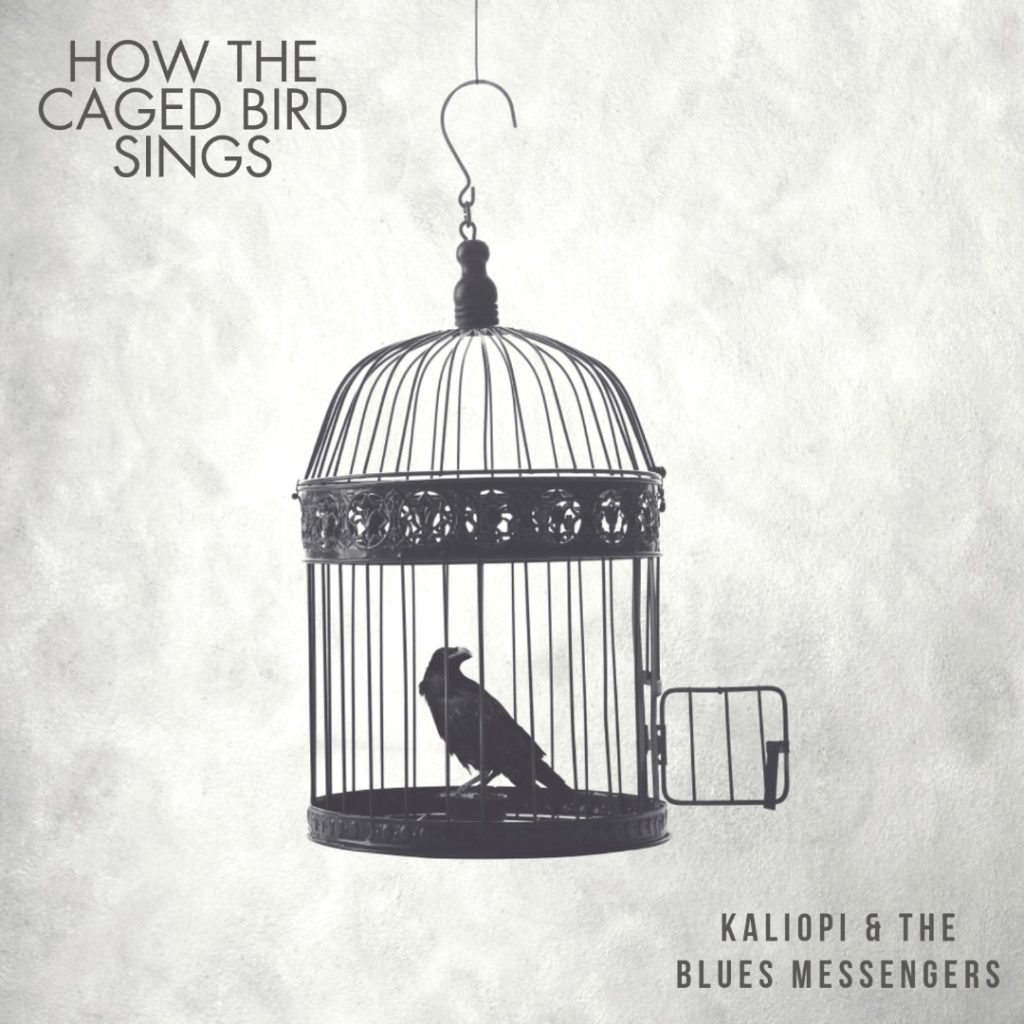
Their second album, The Devil’s Voodoo Curse (2024), climbed into the top 25 of the ABARAC charts for 12 consecutive months, peaking at #3, and earning the VIC/TAS Best Emerging Artist Award. Prior to that, their debut album Blues for Minnie (2023) established them as a compelling new voice in the Australian blues landscape. Together, Kaliopi & The Blues Messengers create music that feels timeless yet boldly modern, music that tells stories, honors tradition, and reaches listeners with emotional clarity and soulful conviction. With the release of “How The Caged Bird Sings” on November 14, 2025, Kaliopi & The Blues Messengers unveil a soul-stirring new chapter in their artistic journey.
Inspired by Dr. Maya Angelou’s transformative memoir and poem “I Know Why the Caged Bird Sings”, this single becomes a blues-soul testament to resilience, liberation, and the unbreakable human will to rise beyond suffering. Recorded at Woodstock Studios in Melbourne under the engineering of Richard Stolz and mixed/mastered by Sean O’Sullivan at Highway No.9, the track captures the warmth, emotional gravity, and spiritual depth that define the band’s sound. Kaliopi’s voice and guitar embody the struggle and flight of the symbolic caged bird, while The Blues Messengers craft a rich, immersive soundscape layered with Hammond organ, tender rhythms, and a clarinet that lifts the song into the realm of transcendence. As the first single from their upcoming 2026 album, “How The Caged Bird Sings” marks a moment of rebirth, both personal and artistic. It is a work shaped by endurance, steeped in storytelling, and destined to resonate with anyone who has ever struggled to reclaim their freedom.
“How The Caged Bird Sings” by Kaliopi & The Blues Messengers begins with an opening so evocative and soul-anchored that it feels like stepping into a quiet room filled with memory, longing, and slow-burning introspection. The first seconds are shaped by a warm, contemplative guitar tone, clear, rounded, and gently expressive, playing soft phrases that drift like thoughts forming in the back of the mind. Behind it, the Hammond organ swells with a tender glow, spreading smooth layers of sound that deepen the emotional temperature of the moment. The bass enters with a slow, deliberate pulse, its warm low-end cushioning the atmosphere while still maintaining a sense of heaviness that mirrors the song’s emotional weight. Even the light drum taps, soft cymbal brushes, subtle kick patterns, and restrained snare touches, contribute to a groove that is not just rhythmic but deeply emotional. These opening elements combine to create a moody, reflective environment that immediately pulls the listener inward, preparing them for the emotional journey the song is about to unfold.
Nothing is rushed; each element enters like a quiet confession, shaping a sonic space that is both vulnerable and profound. As the arrangement expands, “How The Caged Bird Sings” reveals its intricate instrumental architecture with a sensitivity that highlights every nuance. The interplay between the Hammond organ, electric guitar, and bass becomes increasingly fluid, forming a soulful blend that feels like the heartbeat of the song. The organ’s warm chords breathe in slow pulses, sometimes stepping back to create openness and at other times pushing forward with soft vibrato, enriching the harmonic landscape. The bassline moves with a grounded certainty, walking gently beneath the arrangement and adding a sense of stability and calm. The drums remain understated but vital, providing a steady rhythmic foundation, light hi-hat strokes, subtle snare whispers, and a kick drum that pulses like a low, steady heartbeat. Together, these elements create a groove that feels unhurried and intentional, wrapping the listener in a warm, soulful embrace.
The rhythm section does not impose itself; instead, it shapes the emotional current that carries the entire track, allowing the music to ebb and flow with natural grace. When Kaliopi’s vocals enter, the emotional weight of “How The Caged Bird Sings” deepens dramatically. Her voice arrives with a rich, textured presence, warm, soulful, and full of human vulnerability. There is a rawness in her tone that makes every word feel lived-in, as if she is opening a door into her own experiences and allowing listeners to witness the memories behind them. She employs subtle vibrato, controlled breathiness, and a powerful sense of dynamic tension, shifting effortlessly between softness and strength. Her phrasing is deliberate, resting on syllables just long enough to let their emotional meaning settle. Every vocal line feels like a declaration of resilience, each note shaped with intention as she interprets the metaphor of the caged bird not merely as a symbol, but as a personal story. Her delivery grows more intense as the song progresses, mirroring the internal struggle and gradual rise toward liberation that the lyrics suggest.
The vocals do not simply sit atop the instrumentation, they merge with it, weaving emotion and sound into a single cohesive narrative. The progression of “How The Caged Bird Sings” unfolds with a steady emotional logic that aligns seamlessly with its blues-rooted foundation. The chord changes are grounded in traditional blues language, yet the arrangement is enriched with modern soul and contemporary blues influences that give it a distinct identity. The harmonic movement is smooth, warm, and emotionally expressive, minor flourishes suggest reflection and tension, while the organ’s chord extensions add layers of spiritual depth. The groove maintains its slow, introspective pace, refusing to rush even during moments of emotional elevation. This creates a steady, meditative flow that mirrors the symbolic journey from confinement to awakening. The rhythmic structure, anchored by the bass, drums, and organ, creates a sense of steady progression while preserving an undercurrent of emotional uncertainty.
This balance between tension and calm allows the listener to experience the song not only as a musical composition, but as an emotional landscape unfolding one step at a time. The centerpiece arrives when Kaliopi lays down her guitar solo, an expressive, emotionally charged moment that functions as the voice of the metaphorical bird struggling to rise. Her guitar tone becomes more pronounced, slightly roughened with intensity, carrying a deliberate blend of vulnerability and determination. Each bend, slide, and sustained note feels like a cry or a plea, moving between soft, reflective passages and more assertive, upward-reaching lines. Beneath the solo, the rhythm section subtly swells; the drums grow slightly fuller, the bass becomes more prominent, and the organ rises with increased harmonic richness, all contributing to a gentle emotional lift. As the solo resolves, the clarinet enters with a haunting, floating melody, airy, bright, and profoundly expressive. Its timbre adds an entirely new emotional color to the song, symbolizing the release and spiritual ascent of the caged bird.
How The Caged Bird Sings is a soulful blues journey of resilience and rebirth, where Kaliopi’s voice and guitar transform Maya Angelou’s inspiration into powerful, liberating emotion.
The clarinet’s lines feel almost weightless, gliding effortlessly above the groove, giving the song a sense of culmination, reflection, and freedom. As “How The Caged Bird Sings” draws to a close, the arrangement gradually softens, allowing the emotional weight of the performance to settle gently on the listener. The drums pull back into subtler patterns, the bass eases into a warm fade, and the organ releases its final chords with glowing tenderness. The guitars soften into gentle echoes, and the clarinet’s last lingering notes hang in the air like a final breath of relief. The ending feels unhurried and organic, dissolving into a thoughtful silence that reflects the journey the song has carried the listener through. It is not a triumphant ending, it is a peaceful one, capturing a quiet liberation that feels deeply earned. With its rich instrumentation, soulful groove, expressive vocals, and masterful emotional pacing, “How The Caged Bird Sings” stands as a powerful, beautifully crafted blues-soul offering that resonates long after its final note fades.
For more information about Kaliopi & The Blues Messengers, click on the icons below.