
Emerging from Cleveland, Ohio, Tony Frissore is a musician, producer, and global music enthusiast whose artistry transcends traditional genres. Educated in Boston and New Orleans, Frissore developed an early passion for Funk, Jazz, and the improvisational energy of jam sessions, experiences that shaped the melodic and rhythmic sophistication evident in his work today. His musical journey later led him to Europe, where he built connections with top DJs and club owners, expanding his understanding of electronic music, production techniques, and the pulse of international audiences. Frissore’s career spans decades and a remarkable diversity of styles. His first EDM mix, The Übermix, was released in 2008, followed by several hip-hop singles in 2012. In 2019, he released Black Market Mix, and during the COVID-19 quarantine, he unveiled his third album, the introspective and down-tempo Quarantine Chronicles. In 2025 alone, Frissore released multiple singles, including Just Fade Away, The Eagle Has Landed, and Know Yourself, each reflecting his evolving artistry and dedication to blending genres.
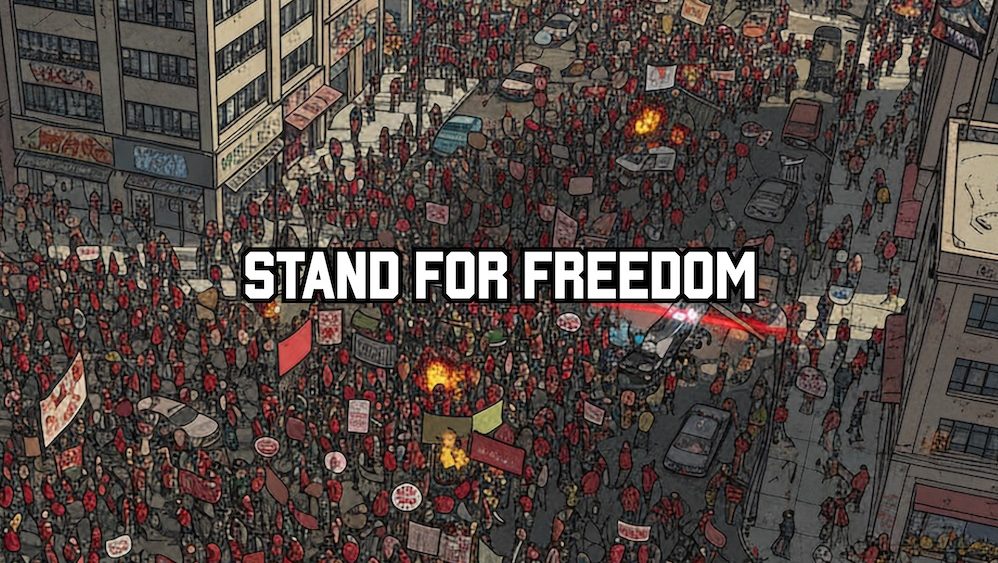
His music has resonated globally, appearing on networks such as MTV, Discovery, TLC, HGTV, OWN, and DIY Network, and reaching audiences in over 150 countries through Shazam and radio exposure. Frissore also plays with the band Pop Avenue in Cleveland, continuing to explore live performance alongside his studio work. On November 21, 2025, Tony Frissore released his latest single, “Stand for Freedom”, a powerful and genre-blending fusion of experimental hip-hop, electronic textures, and spoken-word artistry. The track is built around a historic excerpt from Ralph J. Bunche’s 1949 Nobel Peace Prize address, focusing on Bunche’s direct challenge to Americans to confront racial injustice and uphold democratic ideals. Rather than merely reflecting on history, Frissore positions Bunche’s words as a call to action for the present, weaving them seamlessly into an atmospheric and emotionally compelling composition.
“Stand for Freedom” opens with warm, resonant piano motifs, layered with punchy basslines and subtle electronic textures, creating a sonic landscape that feels both timeless and contemporary. The archival speech floats over the instrumentation with commanding clarity, its message of accountability, courage, and social justice amplified by Frissore’s nuanced production. The track embodies a duality of reflection and confrontation, inviting listeners to experience history, emotion, and rhythm as a unified, immersive journey. In essence, “Stand for Freedom” is more than a single, it is a musical dialogue across generations, a fusion of past and present, and a bold reminder of the enduring relevance of justice and equality. With this release, Tony Frissore continues to cement his reputation as an innovator, blending genres, ideas, and historical consciousness into music that resonates deeply and universally.
“Stand for Freedom” by Tony Frissore opens with a refreshingly welcoming piano line, a motif that immediately draws the listener into its emotional core with warmth, depth, and an almost spiritual presence. The keys carry a rich resonance, ringing with clarity and fullness that hint at both the energetic lift and soothing calm that the rest of the track will later embody. As the progression unfolds, the piano’s steady layering creates a sense of ancient musical lineage, something timeless and rooted, while still feeling contemporary and clean in its delivery. When the bass arrives, it enters with a punchy, groovy force, locking tightly into the piano’s rhythmic accents. Its presence is bold yet refined, adding weight and foundational movement without overshadowing the melodic beauty already established. Together, these elements create a retro-jazz–inspired sound bed that feels both classic and reborn, like an old soul revived through modern production.
The emotional atmosphere becomes instantly compelling, wrapping the listener in a blend of nostalgia, reflection, and uplift before the spoken-word presence even enters the mix. When the spoken words of Ralph J. Bunche’s 1949 Nobel Peace Prize address break through the instrumentation, they do so with a commanding yet graceful presence. The vocals, vintage and textured by history, carries the power of authenticity and conviction. Every phrase echoes with the weight of purpose, speaking of justice, equality, and human responsibility. The way Tony Frissore introduces these words, layering them over the pulsing bassline and the steady piano rhythm, feels like a cinematic unfolding. The production surrounds Bunche’s voice with reverberant space, giving it both physical and emotional depth. It sounds as though the voice is floating through time, lifted from the past but echoing in the present. The combination of the speech’s historical gravity and the track’s warm, modern arrangement creates an immersive duality: the old world and the new merging into one timeless message.
Every inflection of Bunche’s voice cuts through the instrumental haze, carrying with it the soul of an era that still speaks directly to today’s struggles. As the track progresses, the instrumentation grows more layered and expressive around the spoken message, deepening the emotional dialogue between sound and word. The piano becomes more intricate, occasionally dancing between chords with subtle improvisations that recall the feel of live jazz performance. The bassline grows rounder and fuller, developing a hypnotic groove that adds movement beneath the voice. Gentle electronic pads fill the background, wrapping Bunche’s words in a halo of warmth, as if the message itself is being protected and amplified by the music. There’s a masterful balance here, Frissore ensures that while the instrumentation evolves, it never distracts from the gravity of the spoken lines. Instead, the music listens with the audience, responding emotionally to every rise and fall in the delivery. The rhythm quietly supports the message’s urgency, and the melodic layers echo its hope.
It’s as though the entire arrangement breathes with the speech, pulsing in empathy and solidarity. Midway into the track, the energy intensifies beautifully, mirroring the rising passion of Bunche’s words. The piano embraces fuller chords, expanding in harmonic richness, while the bass grows denser, throbbing with a steady determination. The percussion, still subtle, now carries more weight, soft snare taps, shimmering cymbals, and rhythmic accents that push the track forward. Synthesizers swell underneath, providing a glowing backdrop that enhances the speech’s emotional impact. The moment feels climactic, as though history itself is coming alive within the beat. The resonance of Bunche’s words about freedom and equality blends seamlessly with Frissore’s modern sonic architecture, giving the track a transcendent quality. The listener is no longer just hearing a song, they are witnessing an artistic conversation across decades.
This section radiates both tension and triumph, a testament to the enduring strength of Bunche’s message and Frissore’s skill in capturing its essence through sound. As the composition transitions into its final stretch, the arrangement begins to unfold in reverse, retreating softly into introspection. The percussion gradually withdraws, giving the music a weightless quality. The piano returns to simpler, more delicate phrasing, its notes now echo like quiet reflections of all that has been said. The bass hums gently beneath, losing its earlier assertiveness, and the ambient pads smooth into long, unbroken tones that bring a sense of peace and resolution. The spoken words, once central and commanding, now sound as though they are fading into memory, still echoing, still resonating, but carried gently by the air. This section feels like the calm after revelation, the sound of collective contemplation. The emotional release is both powerful and tranquil, leaving space for the listener to absorb the depth of what they’ve heard.
Tony Frissore’s Stand for Freedom fuses historic spoken-word with modern electronic jazz, creating a timeless, powerful call for justice and reflection.
In its closing moments, “Stand for Freedom” returns to the atmospheric purity that shaped its beginning. The piano lingers softly, repeating fading motifs that feel like musical echoes of Bunche’s ideals. The ambient layers dissolve slowly into silence, and the final fragments of the speech drift away with poignant reverence. The last note hangs suspended, creating a quiet stillness that feels purposeful, a silence heavy with thought and meaning. This ending completes the circle, bringing the listener back to stillness after a profound journey through sound, history, and truth. The fusion of retro jazz, soulful electronic production, and the raw power of historical spoken word gives the track its rare and enduring magic. Tony Frissore achieves something extraordinary: he doesn’t just produce a song, he constructs a timeless dialogue, one that bridges past and present, intellect and emotion, word and sound, with striking mastery and heartfelt precision.
For more information about Tony Frissore, click on the icons below.