
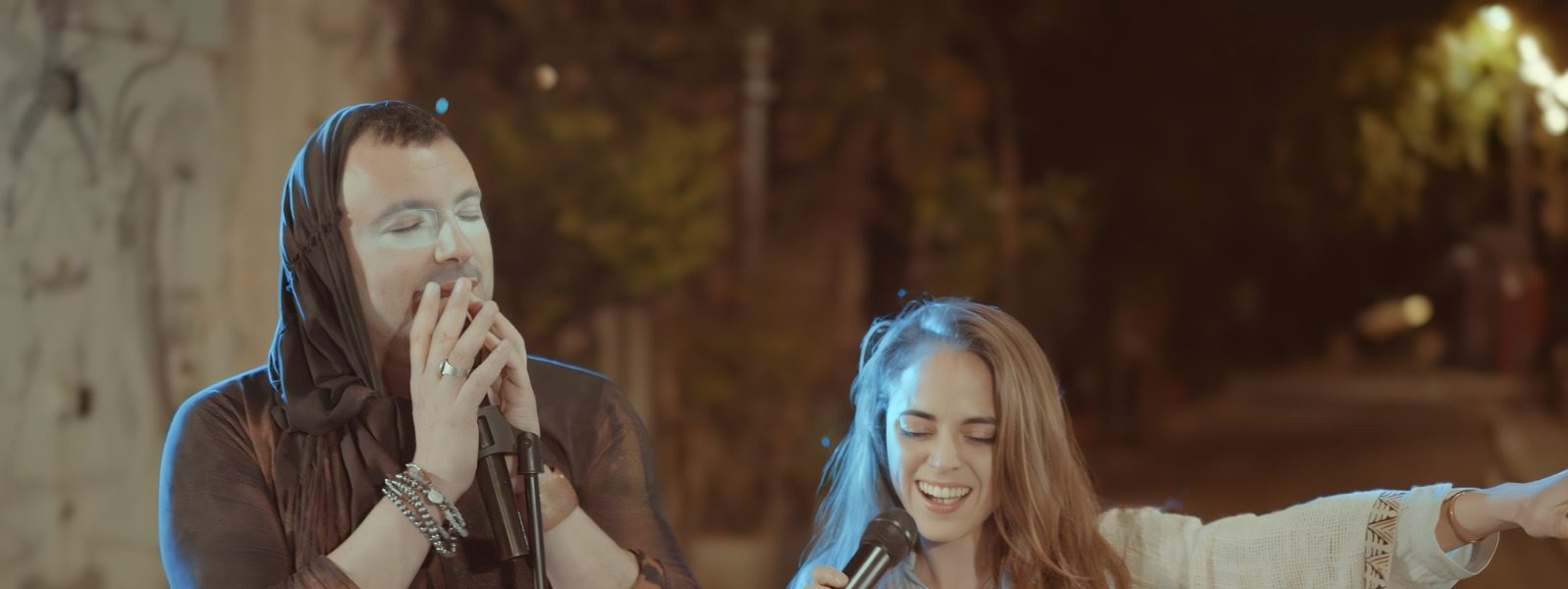
Hello everyone it’s your host Daniel and today I have with me Mikey La Luna from Tbilisi, Georgia. Mikey La Luna is here to discuss about his recent single “Hallelujah. الحمد لله .הללויה”. Welcome Mikey. Before we begin our interview here is what you need to know about this artist. It is important to know that “Hallelujah. الحمد لله .הללויה” by Mikey La Luna is a trance-infused electronic single released on 29th Dec, 2025, blending sacred chant phrases from three cultures into a rhythmic mantra-techno experience.
Before we begin our interview here is what you need to know about this artist: Mikey La Luna is an electronic artist whose work lives between ritual and rave, spirit and club. Raised in the Caucasus mountains and trained in Georgian ballet, his early discipline in movement shaped a deep physical understanding of rhythm and emotion. He first emerged as Tash Tash, electrifying traditional Georgian songs with live folk energy, synths, and celebratory rebellion. Drawn deeper into electronic music, Mikey evolved into a self-taught producer exploring melodic techno, tribal house, and mantra-infused soundscapes inspired by shamanic ritual and nocturnal dancefloors. Known as The Shaman of the Night, his music blends deep bass, hypnotic percussion, Middle Eastern textures, and spiritual vocals. His single “Hallelujah,” released December 29, 2025, stands as a statement of connection, unity, and shared vibration in divided times.
Having this brief Introduction, I’m sure new and current fans must be excited about our Interview today.
INTERVIEW
Daniel: Before we dive into the music, can you describe how your upbringing between Europe and Asia, and your training in Georgian ballet, shaped your approach to music and performance?
Mikey La Luna: Growing up between Europe and Asia gave me a natural sense of contrast and connection at the same time. Different cultures, rhythms, and emotional languages were always present around me.
Georgia is a place that deeply honors dance, with a very unique tradition of its own. Georgian dance has rises, falls, drops, and peak moments, much like a club set. That similarity stayed with me.
Georgian ballet taught me that rhythm starts in the body, not in theory. Unlike European classical ballet, Georgian ballet is driven by strong percussion and groove, and that rhythmic force is what ultimately pulled me toward music.
Daniel: You taught yourself music production from scratch. Which challenges along the way were most transformative, and how did they impact your current sound?
Mikey La Luna: The biggest challenge for me was learning where to go deep and where to let go.
I know I’m strong in vision and in shaping the overall picture. When it comes to the smallest details, mixing and mastering, I prefer working with people who do this day and night, rather than trying to master everything myself.
I learned exactly what I need in order to build a track so it sounds and feels the way I imagine it, and to clearly guide the engineers I work with toward the final adjustments. That clarity comes from years of experience, thousands of live shows and six albums released with my earlier, more Georgian-focused project, Tash Tash. That balance between hands-on creation and trusted collaboration is what defines my current sound.
Daniel: Having evolved from Tash Tash’s electrified folk performances to mantra-electronic production, how has this transition influenced your workflow and creative mindset?
Mikey La Luna: In the early days, I was more naïve, and in many ways, the world was too. The first decades of this century felt lighter, more innocent. My focus back then was on celebration and escape. Music as joy, as release. Dance like there’s no tomorrow.
Over time, both the world and I changed. Things became louder, more fractured, and I went through a personal awakening as well. That shift naturally changed my creative mindset.
Today, I’m less interested in escapism and more drawn to intention. The music still moves bodies, but the message underneath is about moving forward together, toward coexistence, shared responsibility, and a future guided less by power and hierarchy, and more by care for people and the planet.
Daniel: Your song “Hallelujah. الحمد لله .הללויה.” uses vocal lines inspired by both the Bible and the Quran as emotional and sonic tools rather than doctrine. How did you approach arranging these elements without it feeling forced?
Mikey La Luna: I wasn’t trying to please or represent any religion. I’m a believer, deeply so, but I’m very anti religious institutions.
There are already enough forces in the world explaining how different we are. As an artist, I feel a responsibility to point at the opposite. When you strip things down, the Bible and the Quran are telling the same human story and pointing toward the same one source.
What hurts is that instead of creating unity, these similarities have been used to produce separation, suffering, and violence. With this track, I wanted to reclaim the emotional core of those words and remind people how much closer we actually are.
Daniel: You describe yourself as “The Shaman of the Night.” How does this persona inform the music you create and the experiences you aim to craft for listeners?
Mikey La Luna: Shamanism, at its core, is about using rhythm, sound, and repetition to shift energy and bring people into connection. In many ways, that’s already what electronic music does.
I don’t see these worlds as separate. People say “God is a DJ.” I say DJs are modern shamans. They hold space, guide energy, and move people through emotional and physical states using sound.
When I use the name “The Shaman of the Night,” it’s not about adopting a role, it’s about recognizing that the club already functions like a ritual space. I simply bring that awareness into the music, adding healing intention and sacred mantras to a culture that was always meant to unite bodies, hearts, and minds.
Daniel: The song features angelic counter-voices by Daniela Dvash. What drew you to collaborate with her, and how did her presence shape the track’s emotional landscape?
Mikey La Luna: Daniela is not just a collaborator for me. She’s a teacher and a spiritual inspiration in my life, and also for my children.
She was the one who introduced me to the world of sacred singing circles. In one of those circles, she sang a Hallelujah prayer from Psalms in her own melody. While listening, the same words started playing in my head in a completely different tune – the one that later became the track.
Because of that, her presence in the song felt inevitable. Her voice doesn’t decorate the music; it completes it. It brings a softness and clarity that balances the darker textures and gives the track its emotional center.
Daniel: Your track “Hallelujah. الحمد لله .הללויה.” blends Hebrew and Arabic vocals with club beats and ritual energy. How did you conceptualize this fusion, and what message were you hoping to convey through it?
Mikey La Luna: I didn’t really conceptualize it as a fusion. It came from a feeling.
Hebrew and Arabic are often framed as symbols of separation, but to me they’re two voices reaching for the same source. When placed inside rhythm and repetition, that intention becomes physical, not ideological.
The message is simple: beneath the noise of politics and power, the human impulse is shared. Club beats and ritual energy just help that truth land in the body. It’s not about making a statement. It’s about reminding us how close we actually are.
Daniel: The track balances late-night dancefloor energy with meditative, ritualistic depth. What techniques or creative choices allowed you to maintain this duality?
Mikey La Luna: For me, that duality isn’t something I try to balance. it’s how I experience music.
I’ve danced during quiet shamanic ceremonies while others were meditating, and I’ve found deep inner stillness standing in the middle of a packed dancefloor. Those experiences shaped how I create.
Musically, it meant choosing grooves that lift and move the body, but avoiding elements that dominate or overwhelm the space. The rhythm supports the moment rather than controlling it. That’s what allows the track to function both as meditation and as release.
Daniel: Your music often blends psychedelic, spiritual, and club influences. How did artists like Pink Floyd and Faithless specifically inspire “Hallelujah. الحمد لله .הללויה.”?
Mikey La Luna: What I took from Pink Floyd and Faithless wasn’t a sound reference, but an approach.
They understood the power of patience. Letting tracks unfold slowly, trusting atmosphere, and allowing emotion to build without rushing. Psychedelia as depth, not escape.
In Hallelujah, that influence shows up in the pacing and restraint. Space is just as important as rhythm. The track invites immersion rather than demanding attention, and that balance is what gives it emotional weight.
Daniel: When listeners hear “Hallelujah. الحمد لله .הללויה.”, what feeling or realization do you hope resonates most after the track ends?
Mikey La Luna: I hope they feel a sense of closeness.
Not just to the music, but to themselves and to others. A quiet realization that beneath different words, cultures, and beliefs, the emotional source is shared.
If the track leaves behind a feeling of openness, of being a little less separate, a little more connected, then it has done what it needed to do.
Daniel: With “Hallelujah. الحمد لله .הללויה.” turning outward toward connection after your debut EP Embrace the Light, how do you see this thematic evolution shaping the rest of your discography?
Mikey La Luna: Embrace the Light was a very inward chapter. It was about opening something inside.
Hallelujah turns the focus outward, toward connection and shared space. That direction will continue. There’s already more music ready, and more being created, each track carrying its own story but coming from the same intention.
I’m also very much looking forward to being invited to events and festivals, to travel, meet people, and let those encounters feed back into the music. A big part of my inspiration comes from shared moments, and I want the next chapters to grow directly from that exchange.
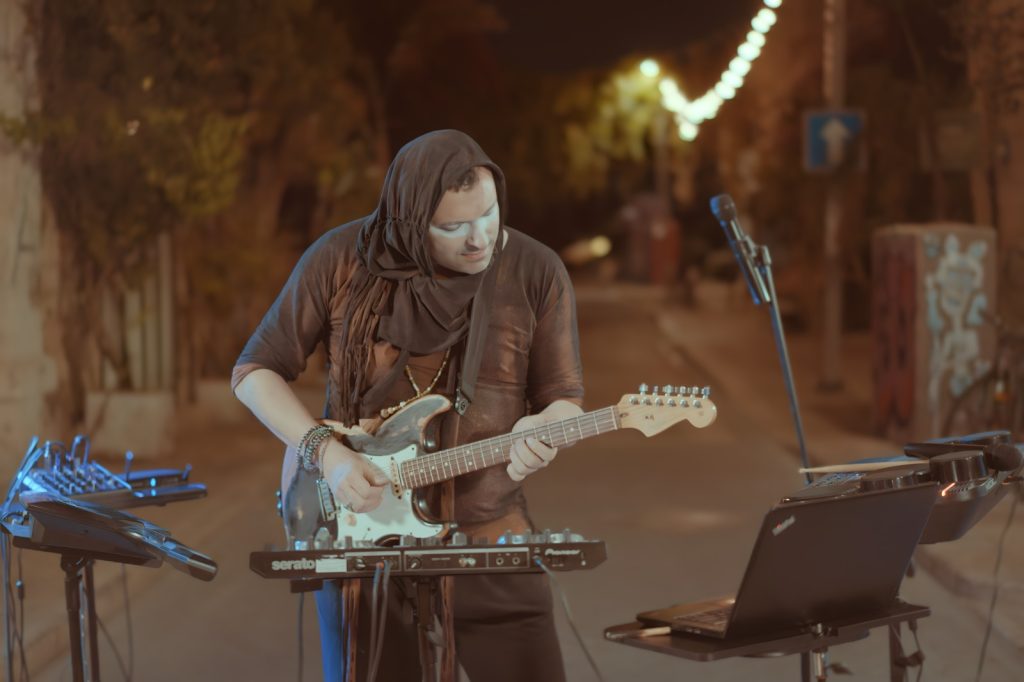
Daniel: The track incorporates deep electric guitar textures alongside melodic techno and tribal percussion. How did you balance these layers so that each element complements the others without overwhelming the listener?
Mikey La Luna: That balance is exactly what I love about melodic electronic music.
It’s not about impressing as a musician or playing complex parts. It’s about choosing sounds and lines that actually touch something. Simple roles, played with intention, leave space for emotion to come through.
That approach also allows me to express myself as a guitarist within the electronic context. The guitar doesn’t compete with the groove, it breathes inside it. When each element knows its place, nothing needs to overwhelm. Everything supports the feeling.
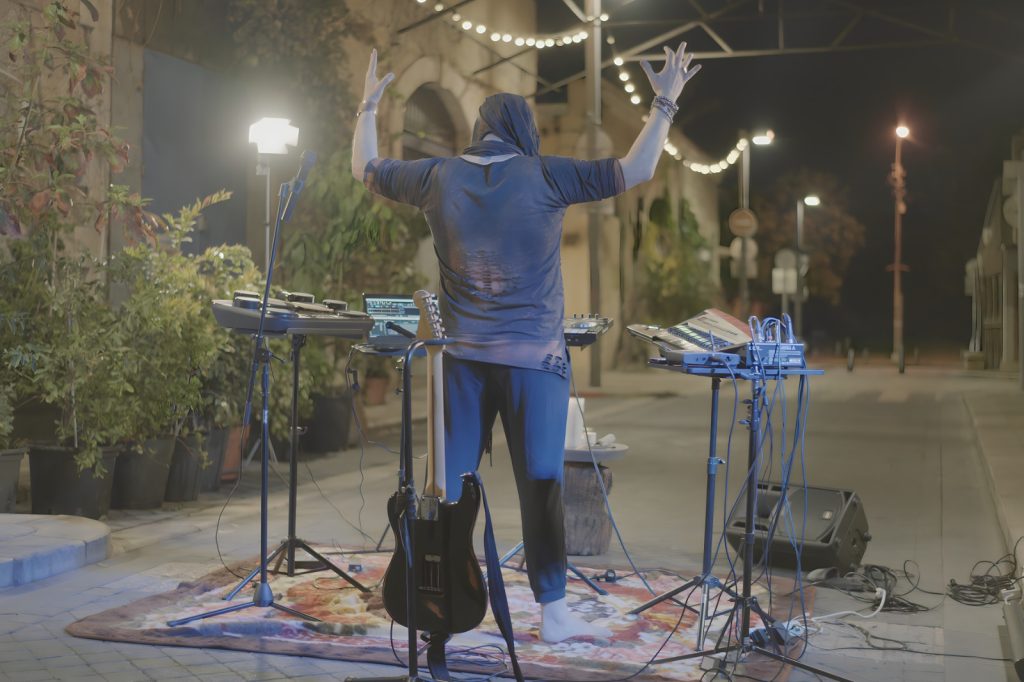
Daniel: In your live performances, how do you translate the spiritual and ritualistic aspects of your music into the physical energy of the stage?**
Mikey La Luna: For me, the ritual becomes real only when it’s embodied.
On stage, I’m fully live. I play percussion, guitar, and keys, and I sing while performing the set in real time. Nothing is mimed, nothing is “for show.” The energy comes from actually doing the work in the moment.
And yes, just to keep things balanced I light a bit of incense at the booth and carry a few energy stones in my pockets. Mostly for my own grounding, but it keeps the vibe aligned.
Daniel: Do you approach future tracks with a particular message or emotional intention first, or do the musical ideas come before the concept?
Mikey La Luna: With this project, the message always comes first.
Everything I’ve recorded so far is built around mantras, either ones I discovered and deeply connected with through sacred singing traditions, or mantras I wrote myself. Because of that, the conceptual layer has to be clear from the start.
Once that intention is set, the music becomes a playground. The freedom is in the sound design, the groove, and the production choices. The message stays grounded, while the sonic expression is free to evolve.
Daniel: Looking ahead, how do you envision your sound and performances evolving, especially as you continue exploring cross-cultural influences and spiritual dimensions in your music?
Mikey La Luna: I see the evolution as something organic.
The sound will keep deepening, shaped by new places, people, and encounters. The live experience will grow in the same way, more presence, more connection, and more shared energy with each audience.
I’m much more comfortable creating than promoting, so I prefer to let the music speak and invite people to follow along. If listeners stay curious and walk the path with me, they’ll hear where the journey is heading.
CHECK OUT HALLELUJAH. الحمد لله .הללויה ON SPOTIFY
HAVING HAD A CLOSE LISTEN TO THE WORK OF ART, HERE ARE MY THOUGHTS
“Hallelujah. الحمد لله .הללויה” is a meticulously crafted electronic ritual where rhythm, texture, and voice function as a single spiritual organism. Its steady, trance-driven percussion and deep bass establish a meditative pulse, while atmospheric synth pads expand the sonic space with restraint and clarity. Subtle guitar tones and ambient effects add warmth without distracting from the hypnotic core. Vocals are used as pure sonic elements: Mikey La Luna’s grounded delivery contrasts beautifully with Daniela Dvash’s ethereal, floating harmonies. Repetition replaces traditional structure, turning language into mantra. The production is balanced, immersive, and intentional, merging club energy with contemplative depth.
Daniel – Dulaxi
Finally to our audience, I urge to listen to “Hallelujah. الحمد لله .הללויה”, add it to your playlist and be Inspired by it and on behalf of Dulaxi I like to appreciate you all by saying thank you everyone, See you on our next interview.
For more information about Mikey La Luna, click on the icons below.