

Mortal Prophets is a New York City–based project led by John Beckmann, operating as a fluid creative platform rather than a fixed band. Rooted at the intersection of avant-garde composition, Americana, and shadowy electronic atmospheres, the project evolves through a rotating network of collaborators, vocalists, and producers shaped by Beckmann’s songwriting and conceptual vision. Across numerous albums and EPs, Mortal Prophets traverse twisted blues, kosmische drift, psychedelic dream-pop, and noir-tinged balladry, unified by lyrical intensity and restlessness. Beckmann’s visual art background lends the music a cinematic, narrative quality, while his lyrics draw from Romantic poetry, mysticism, and surrealism. Balancing American folk ghosts with European experimental influences, Mortal Prophets explore desire, mortality, and transcendence without nostalgia or pastiche.
“Hide Inside The Moon”, released on January 2, 2026, finds The Mortal Prophets deepening their commitment to atmosphere, introspection, and cinematic storytelling. Guided entirely by John Beckmann’s writing, musical direction, and production, the album unfolds as a carefully constructed dream-state rather than a conventional pop record. Beckmann treats sound as narrative architecture, allowing songs to drift, hover, and dissolve into one another, creating a continuous emotional environment that feels immersive and inward-looking. Rooted in psychedelic dream-pop and noir-cinematic pop, the album absorbs its influences with subtlety rather than imitation. Traces of Syd Barrett–era Pink Floyd and Robert Wyatt surface through fragile melodies and hushed emotional clarity, while ambient haze and kosmische restraint shape the record’s spacious pacing. The addition of Tanner McGraw’s lead vocals and Lawson Mars’ backing harmonies introduces a spectral warmth, with voices emerging and fading like half-remembered thoughts, reinforcing the album’s fixation on memory and altered perception.
Sonically, “Hide Inside The Moon” prioritizes texture over momentum. Synths ripple like distant light, guitars blur into luminous afterimages, and rhythms resist urgency, allowing the music to breathe. Visual art influences, particularly Cy Twombly’s abstract emotional landscapes—echo through the album’s balance of restraint and eruption, silence and release. Lyrically and thematically, the record explores longing, fractured timelines, and doubled realities, evoking a world where past and future coexist in fluid tension. Cinematic echoes of Lynchian surrealism and Badalamenti-style melancholy further enrich the atmosphere. Ultimately, “Hide Inside The Moon” stands as a tender, immersive work, psychedelia grounded in emotion, inviting listeners to step outside linear time and inhabit its luminous half-light.
Hide Inside The Moon Album Track List:
Mad Girl’s Love Song (Sylvia Plath):
The thematic core of “Mad Girl’s Love Song” by Mortal Prophets is emotional uncertainty, love experienced as memory, hallucination, and self-doubt. Drawing directly from Sylvia Plath’s poem, the lyrics oscillate between devotion and disbelief, creating a fragile psychological loop where affection feels imagined yet painfully real. The vocalist delivers his lines with hushed restraint, allowing vulnerability to shape every phrase rather than force emotion outward. His performance feels internal, almost whispered to the self, while the backing vocals act like intrusive thoughts, echoes that return and distort meaning. The repetition within the lyrics mirrors obsessive thinking, reinforcing the theme of emotional instability and longing that cannot be resolved. The song’s emotional power lies in how the vocals never fully assert certainty; instead, they hover between conviction and collapse, embodying the poem’s question of whether love exists at all or only within the speaker’s fractured perception.
Musically, the track abandons conventional structure in favor of an ambient, cyclical design. Soft, tremolo-treated guitars melt into thick reverb, while airy synth pads expand the emotional space rather than define harmony rigidly. There is no dominant rhythm; instead, a subtle pulse breathes beneath the arrangement, creating motion without grounding the listener. The production emphasizes spatial depth, reverb tails stretch phrases into the distance, and silence is used as deliberately as sound. Harmonic choices remain unresolved, reinforcing the song’s psychological tension. Every sonic element feels suspended, as though time itself has softened. Rather than climaxing, the track dissolves inward, prioritizing emotional resonance over resolution. This approach transforms the song into an immersive emotional environment rather than a traditional composition.
Eyes In The Sky:
Mortal Prophets’ “Eyes In The Sky” centers on observation, introspection, and the feeling of being watched, by memory, by conscience, or by one’s own thoughts. Lyrically, the song suggests distance and elevation, implying perspective gained at the cost of emotional closeness. The vocals are controlled and measured, delivered with calm detachment rather than overt expression. The vocal feels deliberately restrained, as if narrating from a higher vantage point, while subtle harmonies drift in and out like fleeting realizations. The lyrical tone avoids specificity, allowing the theme to feel universal, surveillance becomes metaphorical, representing self-awareness and internal judgment. This emotional distance gives the song its quiet tension, with vocals acting less as confession and more as reflection, maintaining a sense of calm that conceals deeper unease beneath the surface.
From a musical standpoint, the track is built on hypnotic minimalism. A low, pulsing bass establishes slow momentum, while soft percussive textures suggest movement without defining a beat. Synth layers hover continuously, creating a floating harmonic field that feels expansive and weightless. Guitar accents appear sparingly, shimmering briefly before dissolving back into the mix. The production avoids sharp edges; everything is smoothed, blurred, and spatially wide. Reverb and delay are used not for drama but for continuity, allowing sounds to bleed into one another. This restraint creates tension through patience rather than escalation. The track’s strength lies in how it sustains atmosphere without interruption, maintaining emotional focus through consistency and subtle evolution rather than dynamic contrast.
Devil Doll:
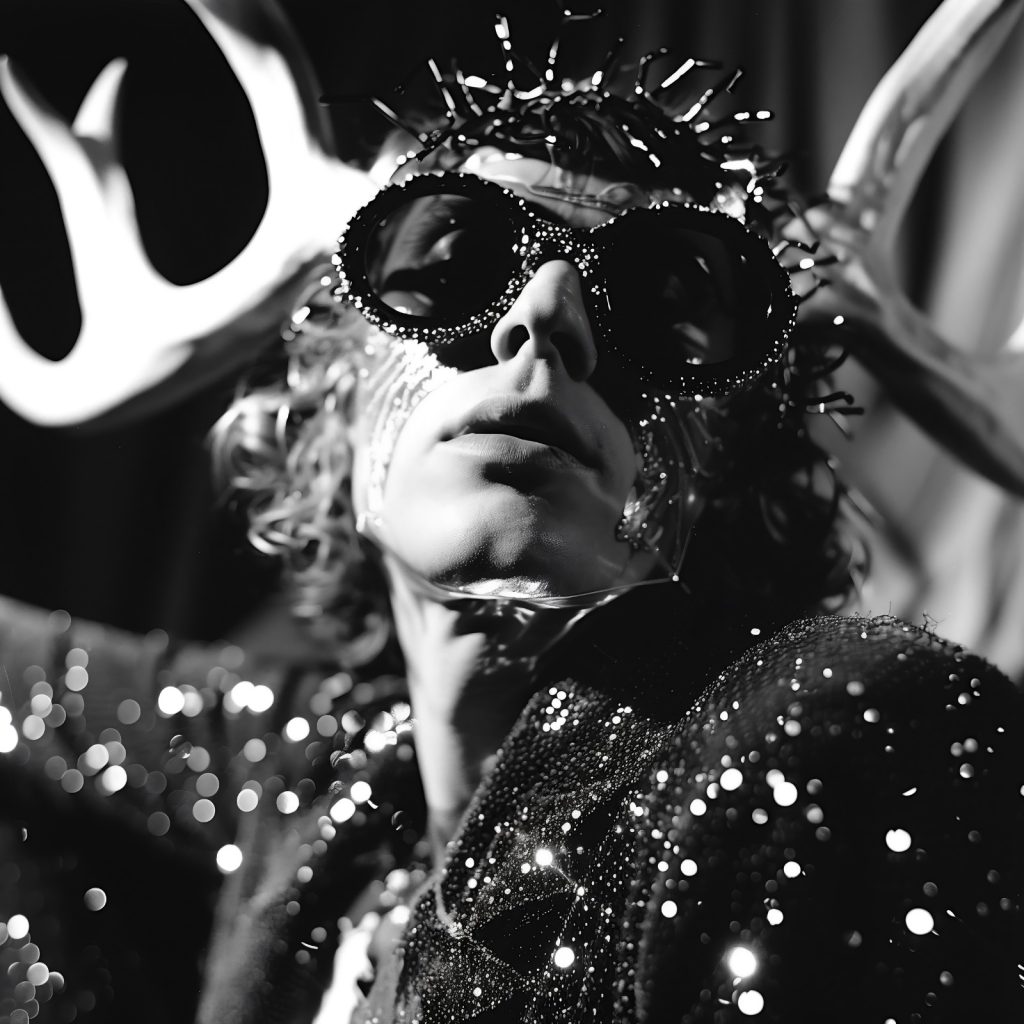
The theme of “Devil Doll” by Mortal Prophets revolves around allure, manipulation, and emotional ambiguity. The lyrics suggest a figure that is both captivating and unsettling, blurring innocence with danger. Vocally, the delivery is intimate yet emotionally distant, creating contrast between closeness and mistrust. The phrasing is deliberate, with pauses that feel calculated, as though every word carries hidden implication. Backing vocals appear briefly and vanish, reinforcing the sense of illusion and impermanence. Rather than explaining the narrative outright, the song allows suggestion to lead, making the listener complicit in constructing meaning. The emotional tension stems from restraint, the vocals never fully reveal intention, mirroring the song’s central idea of attraction without clarity or safety.
Musically, “Devil Doll” leans heavily into noir-influenced atmosphere. Light percussive elements provide a slow heartbeat, while chimes and flute-like tones introduce eerie elegance. Guitar lines are sparse, drenched in delay, and used as texture rather than melody. Harmonic choices favor minor and suspended chords, keeping emotional resolution just out of reach. The mix is intentionally spacious, allowing each sound to breathe and decay naturally. Production emphasizes contrast between intimacy and distance, with vocals sitting forward while instruments drift behind. This careful balance gives the track its cinematic quality, unfolding like a shadowed scene rather than a linear song, rich with mood and unresolved emotion.
Hide Inside The Moon:
“Hide Inside the Moon” by Mortal Prophets explores retreat, refuge, and emotional withdrawal as acts of preservation rather than escape. Lyrically, it suggests the moon as a symbolic hiding place, distant, quiet, and untouched by immediate pain. Vocals are gentle and enveloping, delivered with warmth and introspective calm. The vocals blend seamlessly into the instrumental fabric, emphasizing unity rather than separation. The lyrics avoid confrontation, choosing softness and inward motion instead. Emotional expression here is tender and accepting, presenting isolation not as despair but as sanctuary. This theme is reinforced by the vocal treatment, which prioritizes presence over prominence, allowing emotion to settle rather than demand attention.
Musically, the track functions as the album’s gravitational center. A warm bass anchors the composition, while expansive ambient pads fill the upper spectrum. Percussion is minimal and textural, more atmospheric than rhythmic. Synths and guitars drift slowly, evolving over time rather than progressing toward a climax. Reverb is expansive, creating the sensation of boundless space. The harmonic structure remains stable, reinforcing emotional safety and continuity. Production choices emphasize cohesion, no element competes for dominance. Instead, everything contributes to a singular emotional field. The track’s power lies in its patience, allowing sound to exist without urgency, embodying the album’s central philosophy of emotional stillness and introspective depth.
Hide Inside The Moon immerses listeners in cinematic, introspective dream-pop, blending emotion, atmosphere, and hypnotic, luminous psychedelia.
Daniel – Dulaxi
“Hide Inside The Moon” is a masterful journey through introspection, emotion, and dreamlike soundscapes, where The Mortal Prophets fuse cinematic ambition with delicate, immersive psychedelia. John Beckmann’s vision transforms every note, texture, and voice into a reflective, otherworldly experience that lingers long after listening. The album doesn’t just invite attention, it demands a patient, thoughtful immersion, rewarding listeners with layers of atmosphere, subtle emotion, and hypnotic nuance. For anyone seeking music that transcends conventional boundaries, blurs reality with imagination, and offers both intimacy and expansiveness, “Hide Inside The Moon” is an essential voyage into the luminous, mysterious spaces of sound.
For more information about Mortal Prophets, click on the icons below.