
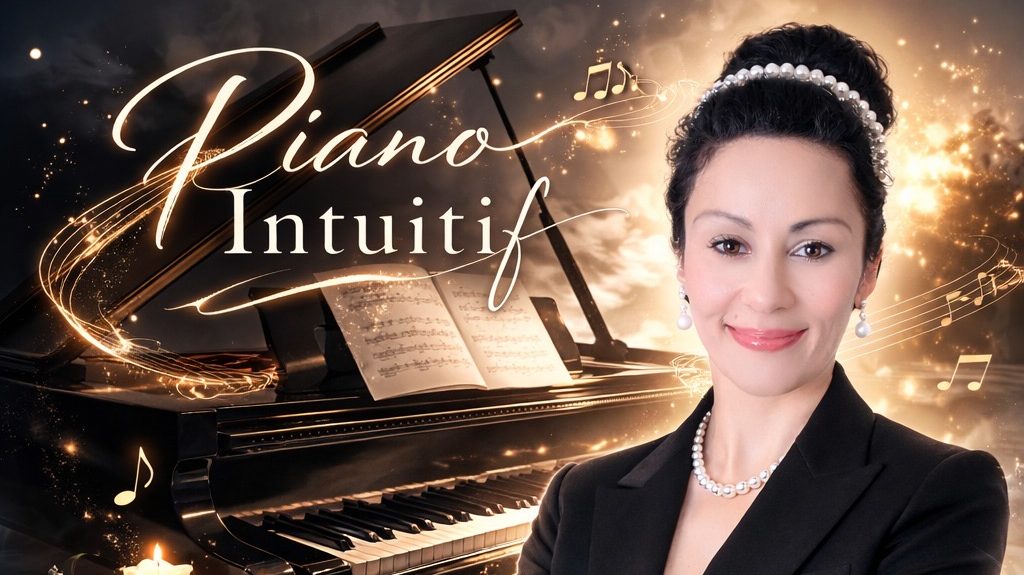
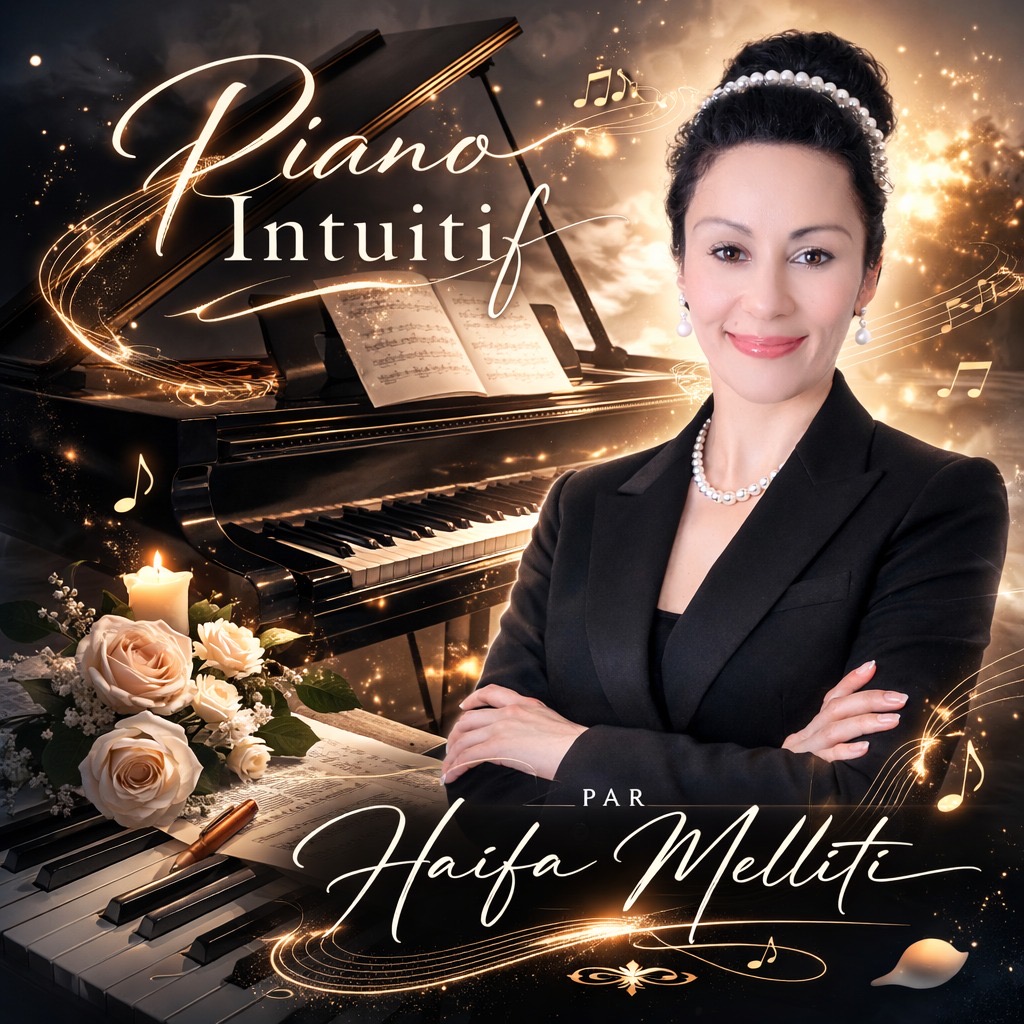
Hello everyone, it’s your host Faithfulness, and today I have with me Haifa Melliti from Montpellier, France. Haifa Melliti is here to share more about her musical journey while diving into her latest album, “Mélodie de la Déesse,” released on February 26, 2026. In her words, “Each melody unfolds like a quiet prayer, inviting the listener into a moment of calm, contemplation and emotional connection.” The album features intimate solo piano pieces born from intuitive improvisation, inspired by meditation, inner silence, and the sacred feminine. These delicate and emotional melodies create a peaceful space designed to calm the mind and guide listeners into reflection and serenity.
Welcome, Haifa Melliti. Before we begin our conversation, here’s what you need to know about this extraordinary artist. Haifa Melliti is a French-Tunisian multidisciplinary artist, pianist, and painter whose work explores the spiritual and poetic dimensions of the sacred feminine. Her compositions emerge from sensitivity, spontaneous inspiration, and inner listening, crafting musical landscapes that feel both personal and universally resonant. Beyond her music, Haifa’s paintings depict symbolic feminine figures, guardians, and goddesses, blending mystical imagery and vibrant color to create a world of protection, transformation, and spiritual awakening.
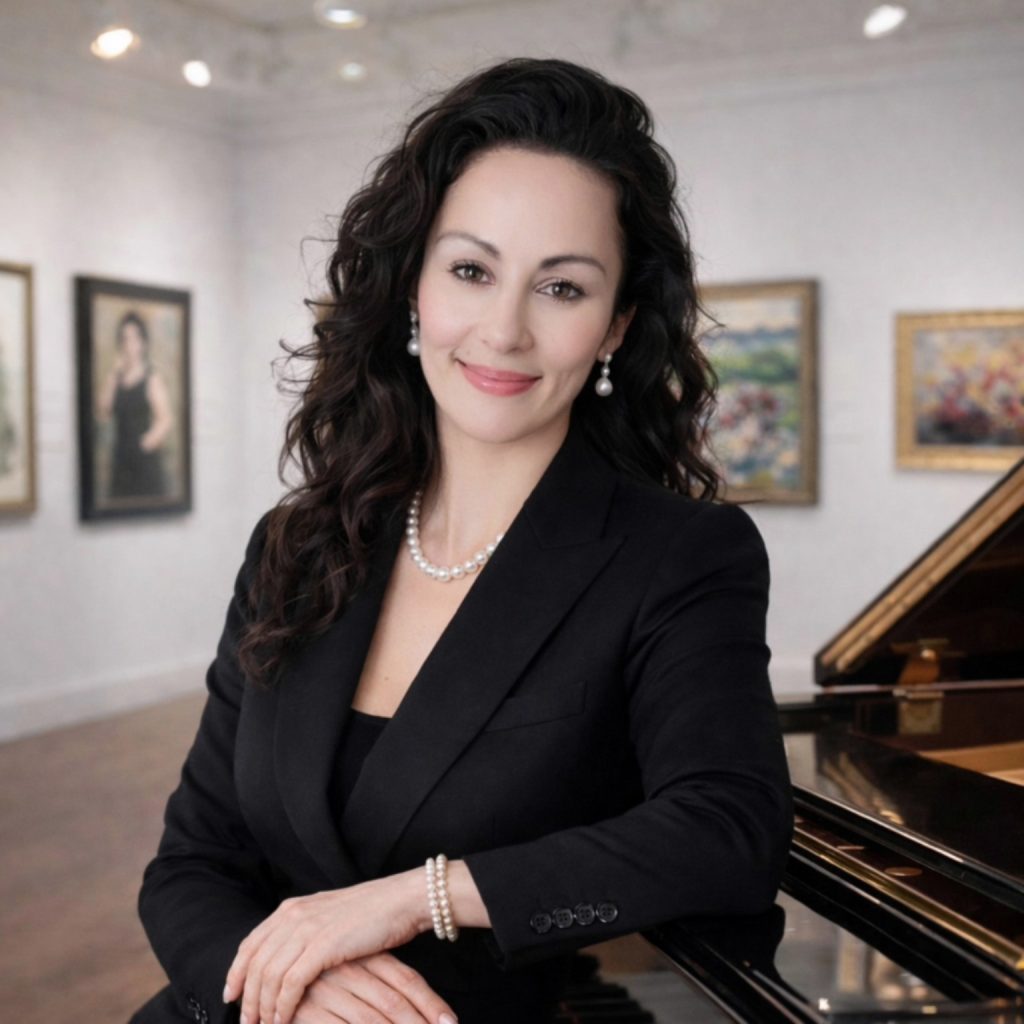
“Mélodie de la Déesse” reflects Haifa Melliti’s vision of art as a sanctuary for emotion, reflection, and inner harmony. Each piano piece unfolds like a gentle prayer, inviting listeners to reconnect with their intuition, their emotions, and the quiet power of the sacred feminine. By bridging music, painting, and spiritual exploration, Haifa Melliti creates an immersive experience where sound and image meet, offering a space of calm, beauty, and contemplation in a fast-moving world.
Having this brief Introduction, I’m sure new and current fans must be excited about our Interview today.
INTERVIEW
1-Faithfulness: Haifa, you are both a pianist and a painterwhose work explores the sacred feminine. How did yourjourney across these two disciplines begin, and how have theyinfluenced each other?
Haifa Melliti:
My journey into piano and painting was never a strategic choice, but a profound inner calling that emerged very early in my life. I have always felt that emotions, sensations, and spiritual experienceswere too vast, too subtle to be contained in language.
The piano became my breath a direct extension of my inner world while painting became a silent portal where the invisible could takeform.
Over the years, I realized that these two practices are deeplyintertwined. When I play, I perceive colors, textures, and femininepresences. When I paint, I hear melodies, rhythms, and vibrations. They are not separate disciplines, but two sacred expressions of the same energy flowing through me.
2-Faithfulness: Being French-Tunisian, you draw from diverse cultural roots. In what ways have your heritage and upbringingshaped your artistic voice and the stories you tell through music and visual art?
Haifa Melliti:
My French-Tunisian heritage is at the very heart of my artisticidentity. I was raised between two worlds one rooted in Mediterranean spirituality, ancestral memory, and sacredsymbolism, and the other shaped by structure, artistic openness, and intellectual refinement.
From Tunisia, I carry the echoes of ancient feminine lineages, protective symbols such as the hand of Fatma, and a deepconnection to ritual, silence, and the unseen. From France, I cultivated discipline, aesthetic sensibility, and the ability to translate these inner visions into a contemporary artistic language.
My work exists as a bridge between these two dimensions betweentradition and modernity, between the earthly and the divine.
3-Faithfulness: Your compositions are born from intuitive improvisation, guided by silence and inner listening. Can youshare a moment when intuition completely led the way in yourmusic or painting?
Haifa Melliti:
There are moments in my creative process where I completelydissolve… where the ego, the mind, and intention disappear.
I remember one night, sitting alone at the piano, surrounded by silence. I closed my eyes, entered a state of deep inner stillness, and simply allowed my hands to move. There was no thought, no control.
What emerged became one of the central pieces of Mélodie de la Déesse. It felt as though I was not composing, but receiving a transmission — something sacred, something beyond me.
4-Faithfulness: Your art often explores themes of the sacredfeminine and spiritual reflection. How did you first becomedrawn to this concept, and why does it continue to inspire yourwork?
Haifa Melliti:
My connection to the sacred feminine emerged through mypersonal journey as a woman, a mother, and also through myprofessional path in holistic care.
I hold a Doctorate in Naturopathy from the University of Metaphysics in Montreal, and through years of working closelywith women, I have witnessed deep emotional wounds, but alsoextraordinary resilience, beauty, and inner power.
The sacred feminine, for me, is not a concept it is a living force. It is the union of softness and strength, vulnerability and creation, intuition and transformation. It continues to inspire me because it isinfinite, and because it lives within every woman as a forgottentreasure waiting to be remembered.
5-Faithfulness: When audiences experience your music or paintings, what feelings or reflections do you hope to awakenwithin them?
Haifa Melliti:
I do not create to be seen… I create to make people feel.
I hope my work awakens a sense of peace, presence, and innerrecognition. That moment where something inside gently whispers: “I remember…”
If my art can reconnect someone to their essence, even for a few seconds, then it has fulfilled its purpose.
6-Faithfulness: “Mélodie de la Déesse” is a deeply intimate solo piano album. What inspired you to create this collection, and what story were you hoping to tell with it?
Haifa Melliti:
Mélodie de la Déesse was born during a period of deepintrospection, silence, and inner transformation.
It is an intimate offering, almost like a sacred diary of my soul. Each piece reflects a state of being a prayer, a surrender, a moment of presence.
Rather than telling a linear story, I wanted to create a space asanctuary where each listener can enter, feel, and reconnect withtheir own inner world.
7-Faithfulness: Many of your tracks feel like quiet prayers or meditative reflections. How do meditation and inner silence shape the melodies and pacing of the album?
Haifa Melliti:
Meditation is at the core of my creative process. Before playing, I enter a state of deep inner silence, almost like a sacred preparation.
From that silence, the first note emerges naturally… and the melodyunfolds without force.
The pacing of the album reflects this organic rhythm —slow, spacious, breathing. It follows the pulse of the soul rather than the structure of the mind.
8-Faithfulness: Improvisation plays a central role in yourmusic. Can you recall a particular piece on this album where an unplanned moment became essential to the final track?
Haifa Melliti:
Yes, there was a moment where I played what could be perceived as an error. But instead of correcting it, I chose to trust it and follow it.
That unexpected note opened a completely new emotionaldimension and became the essence of the piece.
It reminded me that beauty often emerges from surrender, not control.
9-Faithfulness: Some tracks evoke very specific emotions or imagery. Is there a piece that holds the most personal meaningfor you, and why does it stand out?
Haifa Melliti:
There is one piece in particular that carries a deeply personalvibration. It was created during a moment of vulnerability, where I allowed myself to feel everything without resistance.
When I listen to it today, I reconnect with that version of myself fragile, yet deeply powerful.
That is why it stands out… because it is pure truth.
10-Faithfulness: Your music blends technical skill withspontaneous emotion. How do you balance precision withintuition when performing your compositions?
Haifa Melliti:
Technique is essential, but it remains a foundation, not the essence.
When I perform, I allow intuition to guide me, even if it meansmoving beyond technical perfection. Music must breathe, must live.
For me, emotion leads… and technique supports.
11-Faithfulness: Many of your piano pieces feel like they’re part of a sacred ritual or space. How do you hope listeners connectspiritually or emotionally with the album?
Haifa Melliti:
I perceive my music as a sacred space a sanctuary.
When someone listens, I hope they feel held, supported, and safeenough to slow down and reconnect.
It is an invitation to return inward… to breathe… to remember… and perhaps, in their own way, to pray.
12-Faithfulness: Your painting often includes symbolic femininefigures and guardians. Did any visual motifs from your artwork directly influence melodies or themes on this album?
Haifa Melliti:
Yes, absolutely. My paintings are deeply alive, they carry energyand presence.
Sometimes, while painting a feminine figure or a sacred symbol, I feel a melody emerging from the canvas itself.
It is as if the painting sings… and I simply translate that vibration into music.
13-Faithfulness: Looking back at the creative process, what wasthe most surprising or transformative experience you had whilemaking “Mélodie de la Déesse”?
Haifa Melliti:
The most transformative experience was learning to trust completely.
To let go of control, expectations, and fear… and to allow creationto flow freely.
This album taught me that true creation does not come from effort, but from surrender.
14-Faithfulness: Moving forward, are there new directions or collaborations in music or visual art that you’re excited to explore?
Haifa Melliti:
I feel a strong calling toward immersive artistic experiences wheremusic, painting, and presence merge into one.
I would also love to collaborate with dancers, poets, and spiritual artists, to embody the sacred feminine in a living and multidimensional way.
15-Faithfulness: For someone discovering “Mélodie de la Déesse” for the first time, what invitation or message would youlike to extend through this album?
Haifa Melliti:
I would invite them to listen with their heart, not their mind.
To allow the music to touch them, to guide them inward, and to awaken something within.
Mélodie de la Déesse is not just an album… it is an experience, a presence, a sacred encounter.
CHECK OUT THE RELEASE OF ‘Mélodie de la Déesse’
HAVING LISTENED TO ‘Mélodie de la Déesse’, HERE ARE MY HONEST THOUGHTS
Haifa Melliti’s “Mélodie de la déesse” is a profoundly meditative and immersive five-track album that immediately draws the listener into a serene, introspective world. The solo piano work radiates emotional depth and spiritual presence, with every chord, arpeggio, and dynamic nuance feeling deliberate yet naturally flowing. I was struck by Melliti’s mastery of touch, phrasing, and harmonic interplay, which balance gentle dissonance with warm consonance, allowing the music to breathe and resonate like a living, expressive voice. The improvisational sensibility throughout gives the album a fluid, organic quality, where no two moments feel alike, and every passage encourages reflection and mindfulness. Beyond technical skill, the album conveys vulnerability, patience, and spiritual introspection, creating a sense of calm that lingers long after listening. “Mélodie de la déesse” is more than a collection of piano compositions, it is a transformative journey that reveals Haifa Melliti as an artist whose music embodies emotional subtlety, artistic intuition, and sacred beauty.
~ Faithfulness (Dulaxi Team)
Finally to our audience, I urge to listen to “Mélodie de la Déesse“, add it to your playlist and be Inspired by it and on behalf of Dulaxi I like to appreciate you all by saying thank you everyone, See you on our next interview.
For more information about Haifa Melliti, click on the icons below.