
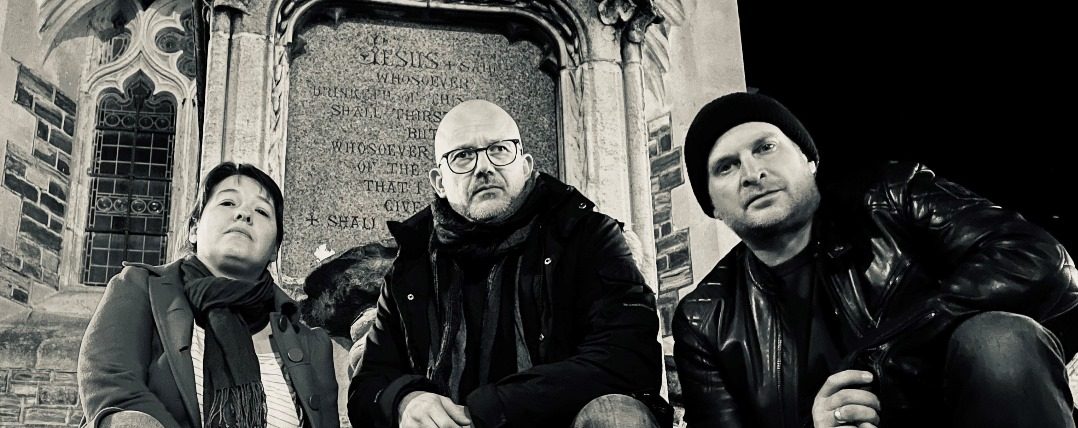
23 Fields is the creative project of Hastings-based songwriter Step, whose journey into music has been anything but conventional. Growing up in the 1990s, Step immersed himself in the sounds of Pearl Jam, Metallica, Rage Against the Machine, Soundgarden, and The Levellers, bands whose intensity and energy ignited his passion for songwriting. Yet even amid those powerful influences, he always carried a quiet affection for acoustic music, a softer thread that would later define his artistic identity. For over 20 years, Step wrote songs while balancing a demanding career as an emergency nurse, his music tucked away in the background of his life. It wasn’t until his partner Paula persistently encouraged him to return to his craft that he finally answered the call.
Armed with new material and a renewed sense of purpose, Step entered the studio three years ago and began collaborating with two musicians who would become central to the 23 Fields sound: Lou Driver on violin and Jason M. Smith on percussion. Lou’s connection to the sea runs deep, with over two decades of volunteer service for the Royal National Lifeboat Institution (RNLI), while Jason’s rhythmic sensibility gave the music its heartbeat. Together, they forged an alternative folk sound that embraces a wide emotional spectrum, songs of love and family, reflections on life and loss, and at times politically charged expressions of frustration. Their debut single, The World is Raining (2023), introduced listeners to their heartfelt storytelling, while To Follow This Year’s Fashion (2024), recorded in just one day with producer James McMillam, showcased the band’s ability to merge cultural influences into music that resonates on a deeply human level. With three album masters now in hand and a commitment to releasing their music steadily, 23 Fields have positioned themselves as artists who write, play, and sing from the heart, without pretense, but with purpose.
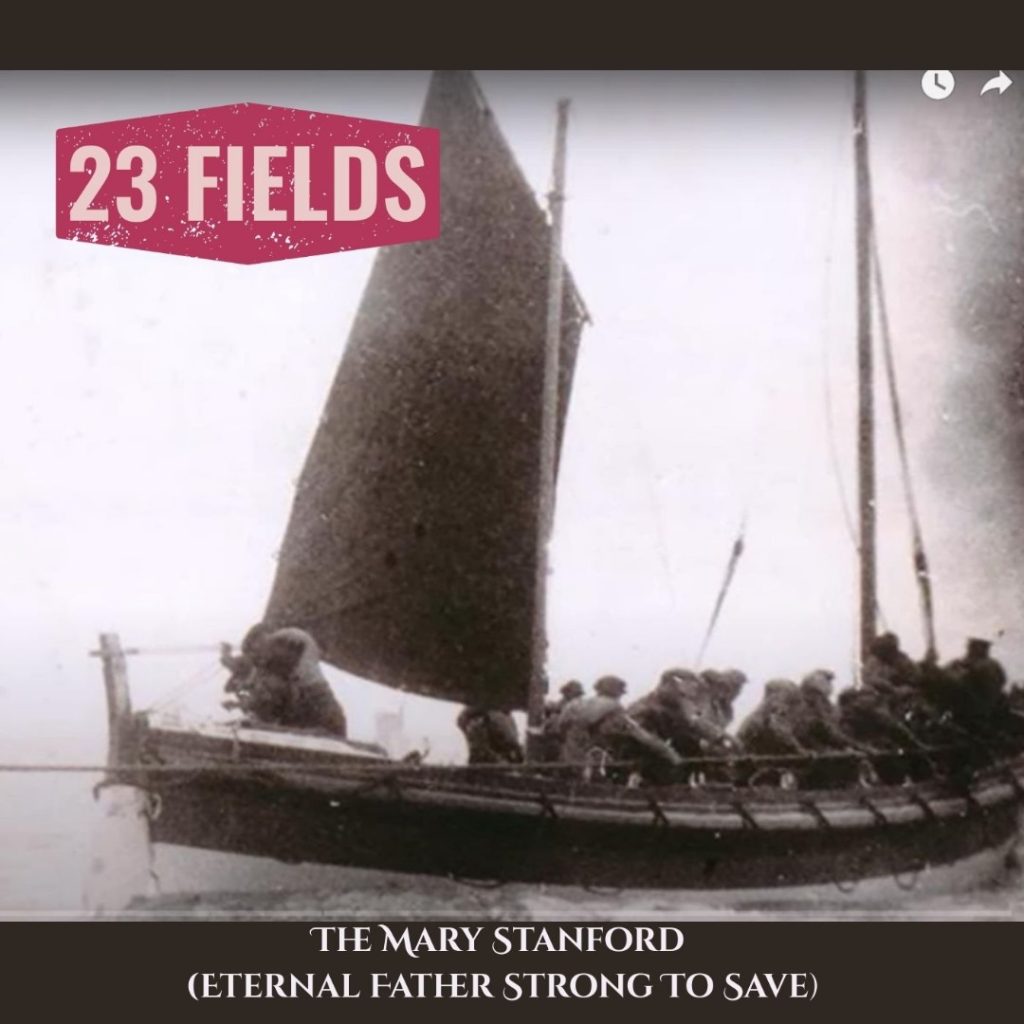
On 26 September 2025, 23 Fields released their most poignant work to date, “The Mary Stanford (Eternal Father Strong To Save).” This powerful single pays tribute to the Mary Stanford lifeboat tragedy of 1928, when all 17 crew members from Rye Harbour were lost in hurricane-force seas, the greatest single loss of life in RNLI history. Nearly a century later, the story still echoes through coastal communities, and 23 Fields capture that memory with music that is at once haunting, reverent, and profoundly moving. Blending acoustic warmth, mournful violin, and solemn percussion, the song channels both heartbreak and enduring bravery. At its core, it is not just a memorial to those lost but also a recognition of the thousands of RNLI volunteers who continue to embody the same courage and selflessness today. The band’s connection to this story runs deep, violinist Lou Driver has served with the RNLI for over 20 years, making this release far more than a song. It is a hymn of remembrance, a prayer set to melody, and a reminder of the timeless bond between music, memory, and community.
“The Mary Stanford (Eternal Father Strong To Save)” by 23 Fields begins with a striking sense of reverence, opening the listener’s ears to a soundscape that feels more like a sacred ritual than a typical folk song. The first few seconds establish the tone with a warm, resonant acoustic guitar strum that is both steady and contemplative, like a gentle tide rolling in at dawn, accompanied by sweet piano melodies and a solemn percussive beat creating a hypnotic sonic experience. The atmosphere is immediately expansive and immersive, pulling you into a reflective space where silence and sound coexist in perfect balance. The introduction is not hurried; it takes its time, allowing each note to breathe, giving the listener space to prepare for the emotional journey that lies ahead. The song feels like it has been carefully crafted to mirror the stillness before a storm, the kind of calm that carries both peace and a hint of sorrow. From this very beginning, there’s a sacred quality in the air, as if the track itself is offering a prayer for those who have gone before us on perilous seas.
As the piece develops, the instrumentation blossoms into a rich, layered arrangement that balances intimacy with grandeur. The acoustic guitar remains the foundation, grounding the song with a steady, earthy rhythm, while the violin floats delicately above, its long, mournful notes adding a haunting beauty that immediately captures the heart. The gentle hum of bass underpins the track, giving it a depth that resonates physically as well as emotionally, while light percussion enters almost imperceptibly, introducing a heartbeat-like pulse that carries the song forward. Each instrument seems to have a role not just in creating melody, but in shaping the atmosphere, the guitar provides structure, the strings brings emotion, the bass adds gravity, and the drums underscore the solemnity of the message. The way these elements are layered is subtle yet powerful, each one coming in like a wave, cresting, and then blending seamlessly into the larger sea of sound.
The vocals emerge with a presence that is both commanding and vulnerable, giving voice to the heart of the song. The lead singer’s tone is raw and deeply human, carrying a weight of history and memory as if recounting the sorrow of generations past. The phrasing is deliberate, every word sung with conviction, and the emotion behind the delivery is unmistakable. It feels less like performance and more like storytelling, an oral tradition set to music, where each lyric is imbued with reverence for the lives remembered. The harmonies are equally stirring, arriving at key moments to lift the melody higher, creating an almost choir-like effect that reinforces the hymn-like quality of the song. These layered voices do not just complement the lead, they envelop it, filling the space like a congregation echoing a prayer in unison. Together, the vocals achieve a balance between intimacy and grandeur, making the listener feel both personally addressed and collectively embraced.
The progression of the song is a journey in itself, unfolding gradually with dynamic shifts that mirror the ebb and flow of the sea. The verses maintain a quiet, reflective tone, allowing the listener to focus on the story and the emotional pull of the lyrics, while the choruses swell with intensity, introducing fuller instrumentation and more pronounced rhythmic elements. The percussion grows more confident here, adding steady beats that feel like the crash of waves against a lifeboat, while the violin soars higher, its melodies carrying a plaintive cry that cuts through the mix with piercing emotion. The arrangement builds organically, never rushing, yet always moving forward with an inevitability that keeps the listener engaged. This ebb and flow gives the song a cinematic feel, a sense of storytelling that rises and falls with a natural rhythm, much like the sea itself, sometimes calm, sometimes overwhelming, always in motion.
The emotional atmosphere is enriched by the tonal and rhythmic choices, which are as expressive as the lyrics themselves. The minor tonalities imbue the song with a sense of mourning and solemnity, but the harmonic progressions avoid sinking into despair, instead maintaining a quiet dignity. The groove is not driving or dance-like; it is steady, contemplative, and reverent, the kind of rhythm that guides the listener into deep thought rather than urging them to move physically. The strings and vocals together create a texture that is lush but never crowded, giving the impression of open space, like standing at the edge of a vast ocean. The way the instruments interlace, the guitar’s steady pulse, the violin’s expressive lines, the bass’s grounding resonance, and the percussion’s subtle emphasis, creates a tapestry of sound that is as moving as it is intricate. This balance between sorrow and strength, between fragility and power, allows the song to touch on grief while also carrying the listener toward a sense of hope and reverence.
“The Mary Stanford (Eternal Father Strong To Save)” is a haunting folk tribute, blending history, courage, and reverence into timeless musical remembrance.
As the song closes, it does so with grace and intentionality, tapering down in a way that feels natural and conclusive. The instrumentation gradually recedes, peeling back to its most essential elements, until the focus returns to the acoustic guitar and softened vocals, echoing the solemnity of the opening. The melody lingers like a final breath, drawing out one last emotional swell before fading into silence. The ending does not crash or conclude abruptly; instead, it feels like the tide retreating, leaving behind a stillness that resonates deeply within the listener. This conclusion gives the piece a sense of closure, but also an afterglow of reflection that lingers long after the final note fades. “The Mary Stanford (Eternal Father Strong To Save)” is not merely a song to be listened to, it is a song to be felt, an experience that resonates in the chest and soul, carrying with it the echoes of loss, memory, and reverence for those who gave their lives at sea.
For more information about 23 Fields, click on the icons below.