

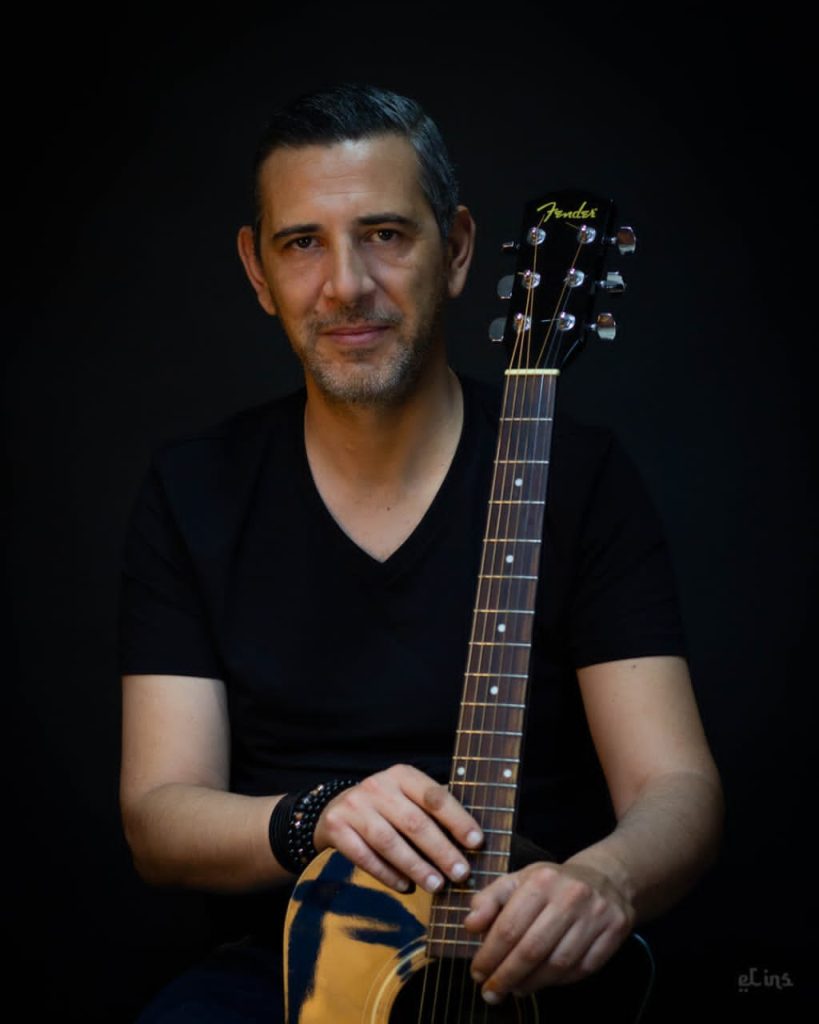
Hello everyone it’s your host Daniel and today I have with me Max Marginal from Algeria. Max Marginal is here to discuss about his recent single “Home Ain’t On The Map”. Welcome Max Marginal. Before we begin our interview here is what you need to know about this artist.
Max Marginal is an independent Algerian musician, songwriter, and guitarist whose artistic journey is defined by emotional honesty, creative duality, and an unwavering commitment to personal expression beyond conventional boundaries. Emerging as a singular voice within the alternative music landscape, he is distinguished by his rare ability to move fluidly between extremes, channeling brutal technical death metal as a member of Silent Obsession while simultaneously crafting introspective, melancholic acoustic works as a solo artist. His 2023 debut acoustic album “Bloodline” introduced this dual nature with striking clarity, blending raw intensity and delicate melodic restraint, a balance he deepened in 2024 with “Memories of Exile”, a profoundly reflective record centered on themes of inner displacement, solitude, and the persistence of memory. In May 2025, Max Marginal further solidified his artistic identity with the single “Uncertainty”, a gripping fusion of grunge, alternative rock, and atmospheric folk that emphasized emotional vulnerability over stylistic conformity. Continuing this trajectory, he returns in 2025 with “Home Ain’t on the Map”, a wordless instrumental driven by acoustic guitar and enriched by guest guitarist Khaled Ambes, where sound alone narrates the idea of “home” as an inner state rather than a geographical location. Beyond his musical output, Max Marginal is also the founder of Café Le Boulevard, a vital cultural initiative in Algeria that has hosted nearly 300 artists for interviews and creative exchange, reflecting his dedication to nurturing artistic dialogue. Today, he continues to carve an independent path outside traditional industry frameworks, offering music that is intimate, sincere, and deeply human, guided by the belief that true expression transcends genre, language, and borders.
Having this brief Introduction, I’m sure new and current fans must be excited about our Interview today.
INTERVIEW
1. To start on a relaxed note, how have you been feeling lately as an artist and as a person, especially with everything you have been creating and building?
Answer: Lately, I feel calm and grounded. I’m not chasing anything aggressively anymore. As an artist, I’m focused on creating honestly, without pressure or illusion. As a person, I’ve learned to accept my reality, my limits, and my rhythm. That acceptance has brought a sense of clarity and peace that helps me create more sincerely.
2. Looking back, what first drew you to music, and do you remember the moment when you realized it would become an important part of your life?
Answer: Music came to me very early as a refuge. I don’t remember a single moment when I decided to become a musician, it slowly became part of who I am. I realized it would be important when music stopped being entertainment and became a way to understand myself and the world around me.
3.You have chosen to follow an independent path, outside traditional industry expectations. What has that journey been like, and what has it taught you about yourself?
Answer: Being independent taught me patience, humility, and realism. It showed me that freedom has a cost, but also a value. I learned to rely on my own judgment, to work without guarantees, and to create without expecting validation. It helped me understand who I am beyond industry expectations.
4. Beyond making music, you also run Café Le Boulevard, where you support and interview other artists. How has working closely with so many creatives influenced your own music?
Answer: Café Le Boulevard exposed me to many artistic realities. Interviewing and listening to other creatives made me more attentive and more human in my own work. It reminded me that music is not only about performance, but about connection, context, and transmission.
5. When you sit down to write or compose, what usually comes first for you, an emotion, a memory, or a sound?
Answer: Usually, it’s an emotion or a mood. Sometimes it’s a feeling of distance, silence, or nostalgia. The sound comes after, as a way to translate that inner state into something audible.
6. You work in very different musical spaces, from heavy metal with Silent Obsession to acoustic and alternative solo work. How do these different styles connect for you as an artist?
Answer: Even though metal and folk-rock sound very different, they come from the same place for me. Both are honest expressions of intensity. Metal allowed me to release raw energy, while my solo work allows space, breathing, and reflection. The connection is emotional, not stylistic.
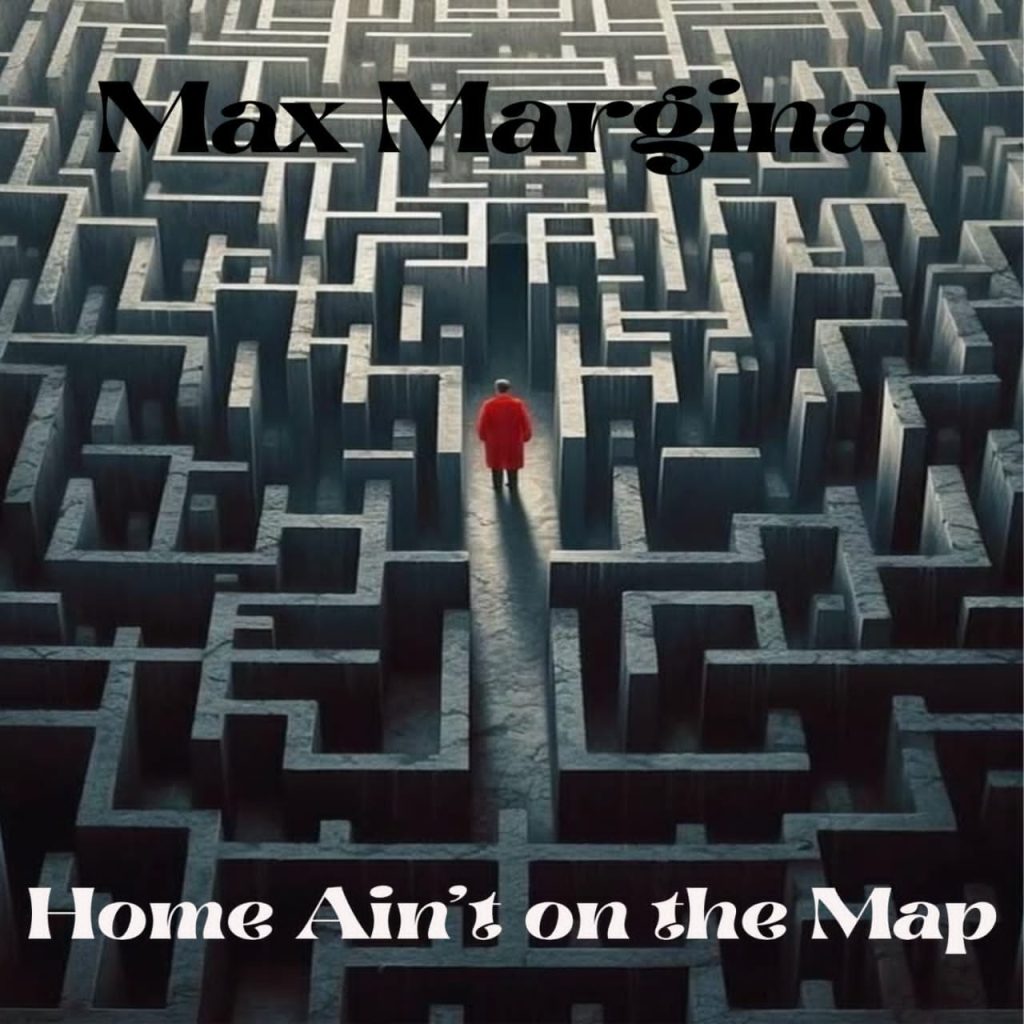
7. In your latest release, Home Ain’t On The Map, the song focuses on the idea that home is a feeling rather than a place. What does “home” personally mean to you?
Answer: Home is not a fixed place for me. It’s a state of inner balance, a moment when you feel aligned with yourself. Especially when you live between cultures or feelings of exile, home becomes something internal rather than geographical.
8. What was the most challenging part of creating Home Ain’t on the Map, and what part of the process did you enjoy the most?
Answer: The most challenging part was keeping the song simple and honest, without overthinking it. The most enjoyable part was allowing space, letting the music breathe, and trusting the emotion without forcing it.
9. You collaborated with Khaled Ambes on this track. How did that collaboration come about, and what was something special he added to the song?
Answer: The collaboration came naturally through mutual respect. Khaled brought sensitivity and restraint to the track. What he added was subtlety knowing when not to play too much, which served the song perfectly.
10. Compared to Bloodline and Memories of Exile, how do you feel this release represents where you are now as an artist?
Answer: Home Ain’t on the Map reflects a more mature and peaceful stage. Compared to earlier releases, it’s less about tension and more about acceptance. It represents where I am now emotionally and artistically.
11. Working with both solo projects and collaborations, how do you decide when a song should remain personal and when it should be shared with others creatively?
Answer: If a song feels deeply introspective, I usually keep it personal. When I sense that another perspective could enrich it without altering its core, I open it to collaboration. It’s always about serving the song, not the ego.
12. Since releasing Home Ain’t on the Map, what kind of responses have stood out to you the most from listeners?
Answer: What touched me most were listeners who said the song felt honest and calming. When people connect emotionally rather than technically, that matters the most to me.
13. How has your relationship with your band, Silent Obsession, shaped you not just as a musician, but as a person?
Answer: Silent Obsession taught me discipline, endurance, and teamwork. Beyond music, it shaped my character, my work ethic, and my understanding of collective effort. It was a very important chapter of my life.
14. Looking back at your body of work so far, what do you feel has changed the most in the way you see yourself as an artist?
Answer: I no longer define myself by external recognition. I see myself as someone who documents inner states and experiences through sound. That shift changed everything.
15. Finally, for someone discovering Max Marginal for the first time, what would you like them to understand about your music and the person behind it?
Answer: I’d like them to understand that my music is not about trends or ambition. It’s about sincerity, human emotion, and quiet reflection. What you hear is exactly who I am.
IN SUMMARY
This has been an exciting session for us all Max Marginal, I believe fans and anyone out there just discovering your music for the first time are equally excited about this project. Thank you for the privilege to experience this masterpiece, it’s been an honor.
Listening to “Home Ain’t On The Map”, I feel like I’m being gently pulled into a quiet, internal journey where emotion replaces direction and memory replaces destination. The guitar doesn’t just play notes; it breathes, hesitates, and wanders, carrying a fragile warmth that feels deeply human, as if Max Marginal is speaking directly through the strings rather than performing for an audience. There’s a soft melancholy woven into the progression, but it never collapses into sadness, instead, it settles into acceptance, like realizing that belonging isn’t something I arrive at, but something I carry with me. The minimalism is intentional and powerful; every pause, every fading resonance gives me space to reflect, to project my own experiences of displacement, longing, and quiet hope onto the sound. What makes the song especially beautiful to me is how it says so much without words, allowing the idea of “home” to remain undefined yet deeply felt. By the time it ends, I’m left with a calm, introspective stillness, as though I’ve just finished a short but meaningful walk through my own thoughts, reminded that some places aren’t meant to be found on a map, only within.
Finally to our audience, I urge to listen to “Home Ain’t On The Map”, add it to your playlist and be Inspired by it and on behalf of Dulaxi I like to appreciate you all by saying thank you everyone, See you on our next interview.
For more information about Max Marginal, click on the icons below.