
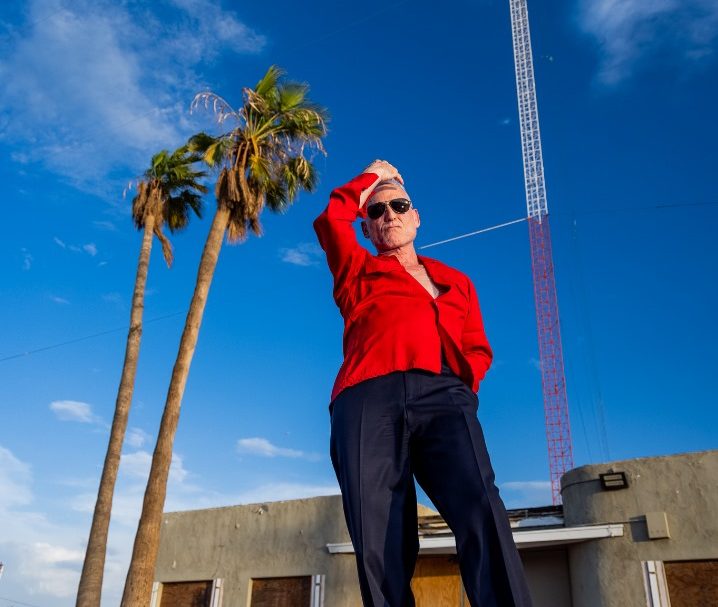
From the radiant heart of Phoenix, Arizona, emerges Allan Jamisen, a composer, painter, and boundary-defying creative whose art flows effortlessly between the realms of sound and sight. A true outsider artist in every sense, Jamisen’s story is one of evolution, persistence, and fearless expression. His music defies easy categorization, embodying a rare balance between emotional depth and sonic innovation. Whether through the brushstrokes of his paintings or the pulsing rhythms of his compositions, his work reflects a lifetime of introspection and an unending fascination with human emotion. Jamisen’s musical journey began early, his natural talent evident when he joined the district honor choir as a child in Phoenix. By eighteen, he had already stepped into the Los Angeles music scene as the lead singer and co-songwriter of a local band performing in city clubs, where he collaborated with guitarist and future producer Danny Saber, a name later associated with industry icons like The Rolling Stones and Michael Hutchence (INXS). His artistry has always been rooted in curiosity and courage, guided by the mentorship of industry veterans such as Gaynel Hodge, the writer behind the 1950s classic “Earth Angel” and a founding member of The Platters. Hodge not only encouraged Jamisen’s songwriting but also connected him with legendary producer Kim Fowley, opening the door to Los Angeles’ underground recording scene and the opportunity to submit demos to SST Records.
In 1991, Allan Jamisen’s creative path took him across the Atlantic to Copenhagen, Denmark, where he found a new home among the European art and music community. There, he began a fruitful collaboration with Claes Cornelius of Mega Records, who was then working with internationally renowned acts like Ace of Base (“The Sign,” “All That She Wants”) and Laid Back (“White Horse”). The two recorded several songs in Cornelius’ studio, located inside the art gallery Galleri Projekt, a space where Allan also showcased his visual art. These experiences broadened his artistic vision, leading to further collaborations with Frederik Birket-Smith (2000 F), a Danish DJ, music promoter, and festival director whose influence within the Scandinavian electronic music scene further shaped Jamisen’s evolving sound. After returning to the United States in the mid-2000s, Jamisen rekindled his creative chemistry with John X Volaitis, an accomplished recording engineer and producer who had worked with major artists such as Whitesnake, Bonnie Raitt, Tracy Chapman, and The Rolling Stones. Their partnership yielded a collection of original material, including a reinterpretation of Ace of Base’s “All That She Wants.” Though the 2006 project saw only a limited release, it cemented Jamisen’s ability to blend heartfelt songwriting with sophisticated production, a trait that would later define his distinctive electro-pop sound.
Throughout his journey, Allan Jamisen has drawn inspiration from an eclectic range of musical giants, from Burt Bacharach, Leonard Cohen, and David Bowie to The Velvet Underground, James Brown, and Bob Dylan. These influences, layered with his personal experiences, have shaped a style that is both introspective and universal, effortlessly bridging the soulful sincerity of classic songwriting with the modern dynamism of electronic production. With his latest single, “Gotta Do,” released on October 21, 2025, Allan Jamisen transforms a simple phrase into a profound exploration of human endurance. Seamlessly merging his painter’s sensitivity with his composer’s precision, Jamisen crafts an electro-pop meditation on resilience, self-preservation, and collective spirit. Written during one of the most challenging chapters of his life, a time defined by personal loss, caretaking for his terminally ill mother, and emotional exhaustion, the track distills raw experience into rhythm and reflection.
Built upon lush synth textures, pulsing basslines, and hypnotic repetition, “Gotta Do” draws inspiration from minimalist classics like “Warm Leatherette” by The Normal (famously reimagined by Grace Jones), turning repetition into revelation. The song’s refrain, “I gotta do what I gotta do”, emerges as both a declaration of survival and a universal truth. Yet as the lyrics evolve from “I” to “We,” Jamisen transcends individuality, affirming the shared struggle of the human condition. Recorded between Phoenix and Copenhagen, the track carries emotional weight beyond its electronic pulse, featuring the faint, angelic voice of Jamisen’s late mother woven delicately into the background vocals. In doing so, he not only honors her memory but immortalizes their final creative collaboration. The result is a track that feels both intimate and expansive, personal and collective, a soundscape that dances between grief and hope, solitude and unity. “Gotta Do” is more than just a song; it’s a mantra for perseverance, a rhythmic affirmation that in life’s most uncertain moments, movement itself becomes meaning. With this release, Allan Jamisen reasserts his place as a true modern storyteller, one who finds transcendence not in complexity, but in the profound simplicity of doing what we all must do: keep moving forward.
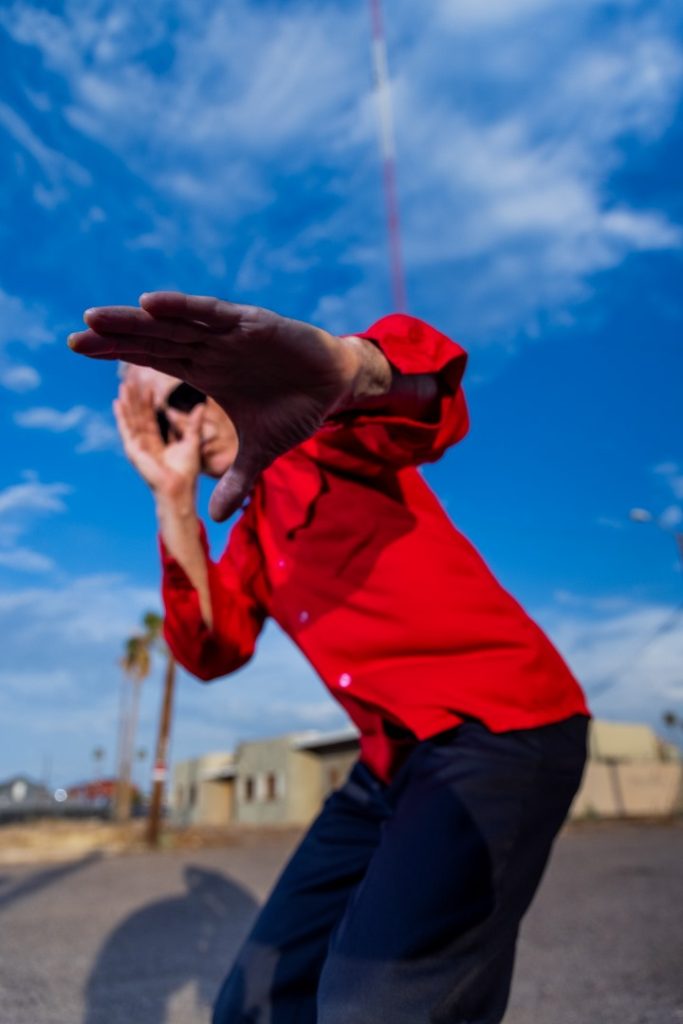
“Gotta Do” by Allan Jamisen begins with an arresting wave of sound that feels both cinematic and immediate, drawing the listener in before a single lyric is sung. The opening moments are carefully designed to build anticipation, ambient pads slowly fade in, drenched in reverb, creating an airy spatial atmosphere that almost feels like a deep breath before action. Then comes the rhythmic pulse of a warm synth bass that starts low and steady, joined by a crisp hi-hat that subtly ticks in the background. There’s a faint shimmer of electronic arpeggios weaving around the main chord progression, giving the track a sense of momentum and forward drive. The sound is sleek yet emotional, setting the tone for what will unfold as a mantra of persistence and determination. It feels cinematic, like a slow sunrise building into full daylight, and the precision of each sound choice signals that this is not just a song built for movement but one designed to communicate feeling through sound itself.
As the song progresses, the groove deepens, and the arrangement becomes fuller and more engaging. A steady kick drum locks into place, giving “Gotta Do” a heartbeat-like rhythm that grounds the floating synths and pulls the listener into its rhythmic trance. The percussion is both tight and spacious, you can hear every clap, every snare accent, every small percussive flick placed with purpose. The combination of layered synth basslines, punchy electronic drums, and light percussive fills creates a driving force that feels impossible to resist. There’s an electric guitar shimmer tucked faintly into the background, slightly distorted but melodic, giving texture and a human edge to the electronic backbone. The sound palette feels alive and constantly shifting, the production doesn’t stay static; instead, it evolves, with filters opening and closing, tones brightening and dimming, as though the track itself is breathing. The result is an immersive rhythm that keeps the listener anchored while still inviting them to move.
When Allan Jamisen’s vocals enter, the energy transforms from purely instrumental motion to emotional storytelling. His voice cuts through the electronic haze with clarity and calm power, warm and expressive yet measured. The tone carries a quiet confidence, embodying the song’s central theme of perseverance. There’s a soulful undercurrent to his delivery, slightly raspy around the edges but smooth in phrasing, making each lyric sound like a statement of personal truth. As he repeats the line “I gotta do what I gotta do,” the delivery feels less like performance and more like affirmation, almost meditative. The producer uses layering effectively here: faint harmonies trail Jamisen’s lead in the background, while reverb and delay give his vocals an ethereal glow, making them blend into the instrumental without losing focus. The result is an emotional connection that feels real and immediate. His voice rides the rhythm effortlessly, synchronized with the beat but never overwhelmed by it, creating a sense of balance that anchors the entire song.
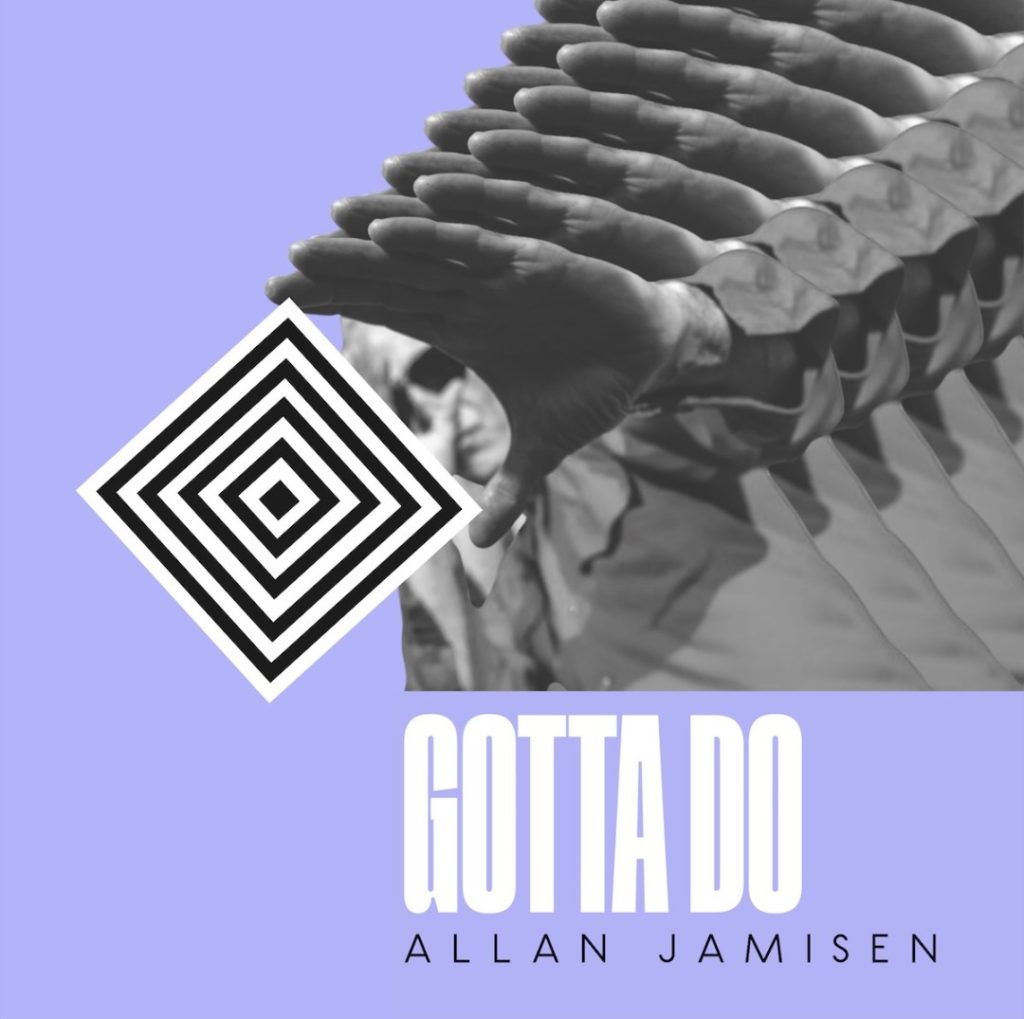
The chorus is where “Gotta Do” reaches its full sonic bloom, exploding into a mix of uplifting synths, bright percussion, and rhythmic intensity. The hook is infectious, repetitive yet empowering, turning a simple phrase into a powerful emotional motif. The bass thickens, the synths stretch wide into the stereo field, and there’s a crisp electronic snare that hits right on the beat, driving home the urgency of the song’s message. The chords underneath shimmer with gentle modulation, creating a sense of expansion that mirrors the lyrics’ determination. It feels liberating, the kind of moment where every sound aligns to make you feel unstoppable. There’s also a subtle use of sidechain compression that makes the synths pulse rhythmically with the kick drum, giving the track its hypnotic dance-pop groove. The soundscape here feels like release, the sonic equivalent of letting go and pushing forward at the same time. Every element, from the deep bass to the sparkling top synths, reinforces that feeling of motion and resolve.
The bridge introduces a shift in energy that’s both unexpected and beautiful. The instrumental pulls back, and the percussion momentarily softens, allowing the listener to catch a breath. Atmospheric textures rise again, a combination of ambient pads, faint vocal echoes, and reversed synths that create a floating, dreamlike feeling. Here, the song becomes reflective; it feels like a moment of self-contemplation before the final push forward. You can hear faint piano notes tucked deep in the mix, adding a layer of warmth and melancholy. Then, just as gently as it faded, the rhythm rebuilds. The percussion swells, the bass thickens again, and the vocals return stronger, carrying a renewed energy that leads into the final chorus. This dynamic shift adds emotional depth, it transforms “Gotta Do” from a simple groove into a complete musical journey. The return of the beat after this atmospheric section hits with satisfying power, pulling the listener back into the momentum of the track’s message: keep moving, no matter what.
Gotta Do turns struggle into rhythm, a hypnotic electro-pop mantra of resilience, unity, and emotional strength through life’s uncertainty.
By the closing moments, “Gotta Do” resolves with the same intensity it began with, but now it feels like victory. The production closes in layers, the drums fade first, then the bass, leaving only the airy synths that linger like an echo of perseverance. It’s the kind of ending that doesn’t just conclude but resonates. The full track feels meticulously crafted, every synth pad, every percussion hit, every vocal phrase serving a purpose. The groove is infectious, the message universal, and the sound design intricate enough to reward repeated listening. The overall rhythm feels alive, shifting from meditative reflection to determined propulsion, creating a sonic experience that mirrors the act of pushing through struggle. Allan Jamisen has created more than just a song; “Gotta Do” is a statement, a beautifully engineered, emotionally charged, and rhythmically captivating piece that fuses heart with precision. It leaves you not only moved but inspired, a reminder that persistence has its own rhythm, and that rhythm sounds exactly like this.
For more information about Allan Jamisen, click on the icon below.