

Dead Feather, originating from Edmond, United States, is a deaf multidisciplinary artist whose work spans poetry, painting, masks, short films, and music, all deeply rooted in the exploration of Native American identity, particularly that of the Mvskoke-Creek community. As a self-taught musician, Dead Feather has consistently used his art to examine the effects of assimilation and the civilization process on his people. His projects are not merely creative expressions but intentional acts of cultural preservation and reflection, blending personal experience with broader historical narratives. His latest endeavor, ‘Cate Heleswv (Red Medicine) Vol. 1’, embodies this mission, intertwining visual and musical storytelling with themes of heritage, spirituality, and resilience. Collaborating with Adam Stanley and Isaac Nelson from Stanley Hotel, Dead Feather translates his multidisciplinary vision into a compelling auditory experience that bridges the gap between traditional Native American narratives and contemporary music.

“Red Poem,” released on 22nd July 2025, is a mesmerizing and deeply immersive track that serves as the opening statement of Dead Feather’s ‘Cate Heleswv (Red Medicine) Vol. 1’. The song immediately draws listeners into a carefully crafted sonic world, beginning with subtle ambient crowd noises that gradually give way to Dead Feather’s evocative spoken word delivery. Structured as a narrative-driven composition rather than a conventional verse-chorus song, it feels almost ritualistic, like stepping into an intimate storytelling circle. Lines such as “Somebody tell me a Red Poem, somebody tell me the one about the hidden…” set a reflective and meditative tone, inviting listeners into a layered exploration of personal, cultural, and spiritual themes. Musically, the track merges elements of vintage rock with experimental textures, creating a soundscape that feels both grounded in nostalgia and strikingly contemporary. The careful balance of ambient sounds, intricate instrumental motifs, and Dead Feather’s commanding voice ensures that the song is experienced as an emotional and intellectual journey, not merely a piece of music.
The origins of “Red Poem” trace back to around 2006, a period when Dead Feather was deeply engaged in exploring poetry and spoken word as artistic forms. Written during a time of personal and cultural isolation, the song captures the perspective of a young, deaf Mvskoke-Creek man grappling with spiritual uncertainty and the long-standing effects of assimilation on Native American communities. The lyrics reflect the artist’s search for identity, knowledge, and meaning, while simultaneously addressing the broader historical relationship between the United States and Native peoples. “Red Poem” functions as both an autobiographical account and a cultural commentary, giving listeners insight into the lived experience of navigating displacement, historical trauma, and the complexities of contemporary Native life. The depth of these themes ensures that the track resonates beyond its immediate musicality, offering a reflective and immersive experience that is both personal and communal in scope.
The vocal performance in “Red Poem” is extraordinary, displaying a nuanced interplay between authority and vulnerability. Dead Feather’s spoken word delivery shifts seamlessly between meditative introspection and declarative intensity, each phrase articulated with rhythmic precision that transforms the voice into a percussive and melodic instrument. The use of layering and subtle reverb effects adds spatial depth to the vocal performance, making it feel simultaneously intimate and expansive. This tension between quiet reflection and sonically denser sections mirrors the dualities explored throughout the song, such as tradition versus modernity, silence versus noise, and cultural suppression versus resilience. Every spoken word inflection is deliberate, adding emotional weight and musical texture that reinforces the thematic content of the track.
Instrumentally, “Red Poem” is a masterful fusion of jazz-funk, rock, and experimental soundscapes, shaped by the collaboration of Adam Stanley, Isaac Nelson, and Dead Feather, with additional contributions from Elizabeth Swindell on saxophone and horn, and Kansas-based backing vocalists including Elexa Dawson and her collaborators. Syncopated rhythms, fluid basslines, and nuanced harmonic progressions provide a rich foundation for the spoken word, while subtle guitar and keyboard motifs punctuate the narrative without ever overpowering it. The production carefully balances clarity and depth, ensuring that each instrumental element has space to breathe while interacting dynamically with others. The intricate layering of instruments creates a textured soundscape that mirrors the complexities of cultural memory and identity, offering listeners both an accessible musical experience and a canvas for deep reflection.
Thematically, “Red Poem” is a profound meditation on identity, cultural survival, and spirituality. Dead Feather examines the ongoing effects of assimilation and the disruption of Native American cultural practices, while also delving into personal resilience and spiritual inquiry. The song engages with the historical oppression of Native communities, the reclamation of cultural heritage, and the lived experience of navigating life as a deaf artist. This thematic depth is conveyed not only through lyrics but also through the interaction of musical textures and spoken word, creating a contemplative space where the listener is invited to engage with both the historical and personal layers of the narrative. The reflective pacing of the track allows the themes to resonate fully, making “Red Poem” intellectually and emotionally compelling.
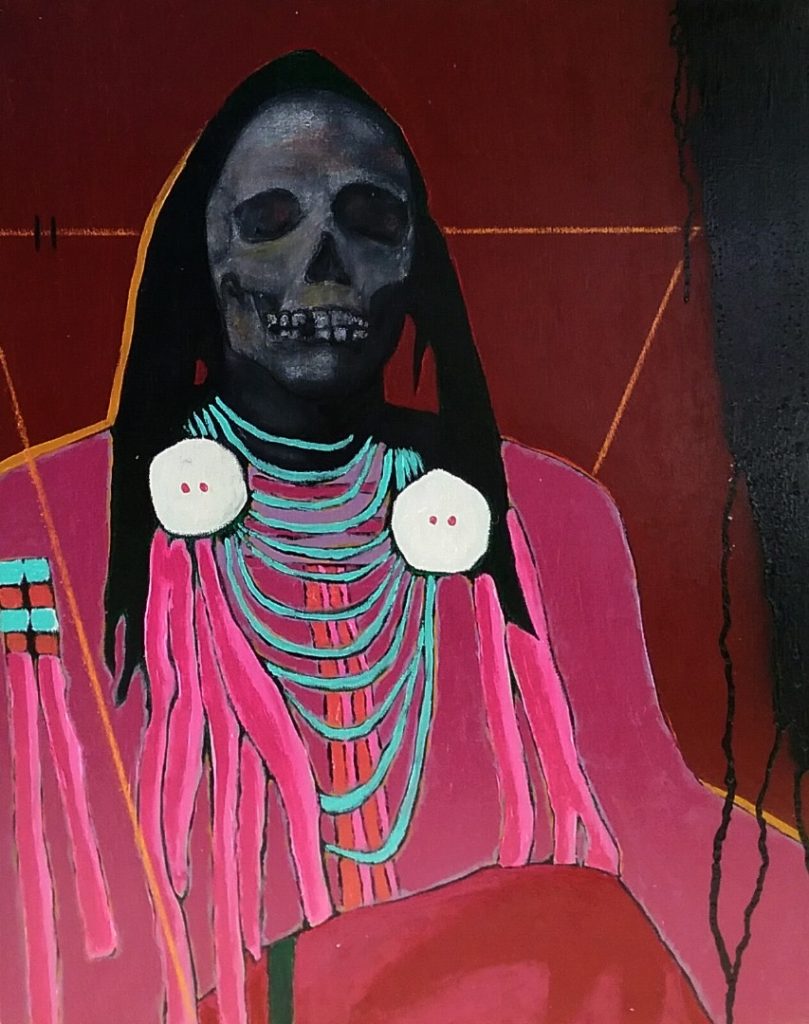
The collaborative environment in which “Red Poem” was recorded further enriches its sonic and emotional texture. Recorded at Remote Studios in Wellston, Oklahoma, the track benefited from a familial and community-oriented atmosphere, with contributions from multiple artists adding depth and warmth to the composition. The supportive studio environment is reflected in the nuanced interplay of vocals and instruments, which feel organic and alive. The presence of family members, close collaborators, and a welcoming creative space contributes to the track’s vibrancy, reinforcing the sense of shared purpose and communal storytelling that runs throughout the song. This collaborative energy enhances the emotional resonance of the track, making it feel both intimate and expansive at once.
“Red Poem” is also notable for its innovative approach to structure and form. By prioritizing narrative and spoken word over conventional musical arrangements, the track challenges listeners to engage with music as a multidimensional experience. The careful integration of ambient sound, instrumental flourishes, and layered vocals creates a dynamic tension that mirrors the song’s thematic dualities. Moments of sonic density are balanced with meditative pauses, giving the listener time to absorb the lyrical and emotional content. The track’s experimental approach does not alienate but rather invites deeper attention, revealing new details and emotional nuances with each listen. This structural innovation underscores Dead Feather’s commitment to crafting music that is both reflective and exploratory, pushing the boundaries of what a song can achieve.
Red Poem is a Hauntingly Immersive Track That Blends Spoken Word, Experimental Instrumentation, And Cultural Storytelling To Explore Native American Identity, Spirituality, And Personal Resilience
Ultimately, “Red Poem” stands as a triumph of artistic vision, combining meticulous musical craftsmanship with emotionally and culturally resonant storytelling. Dead Feather’s integration of spoken word, genre-blending instrumentation, and reflective thematic content creates a work that is intellectually stimulating, emotionally profound, and culturally significant. The track exemplifies the power of music as a medium for personal expression, cultural preservation, and social reflection. Its release as part of ‘Cate Heleswv (Red Medicine) Vol. 1’ marks a significant milestone in Dead Feather’s career, cementing his place as a pioneering voice in contemporary Native American music. “Red Poem” is not merely a song but a multidimensional experience that invites listeners to explore identity, history, and spirituality through an unparalleled auditory journey.
For more information about Dead Feather, click on the links below.