
INTRODUCTION
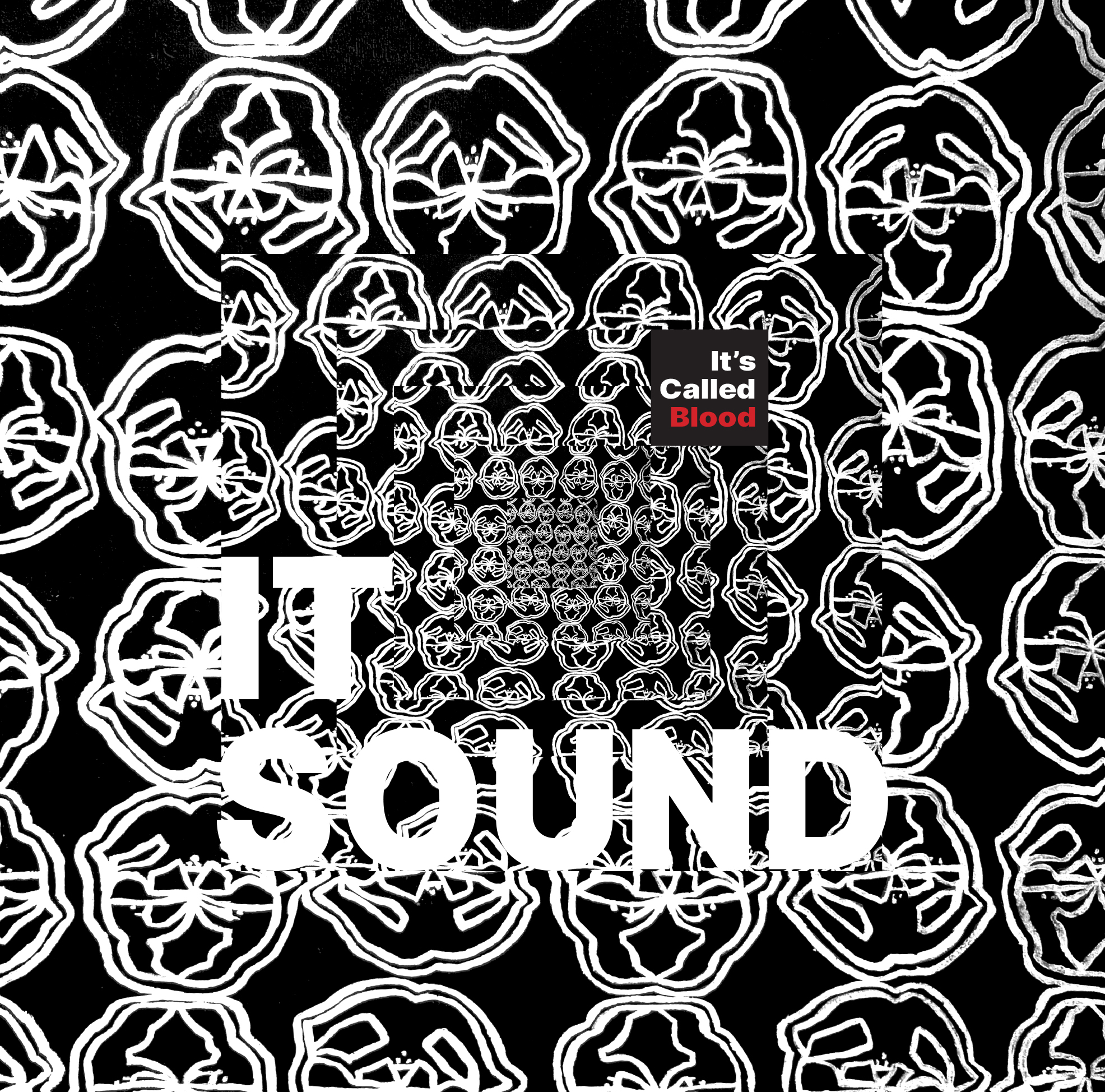
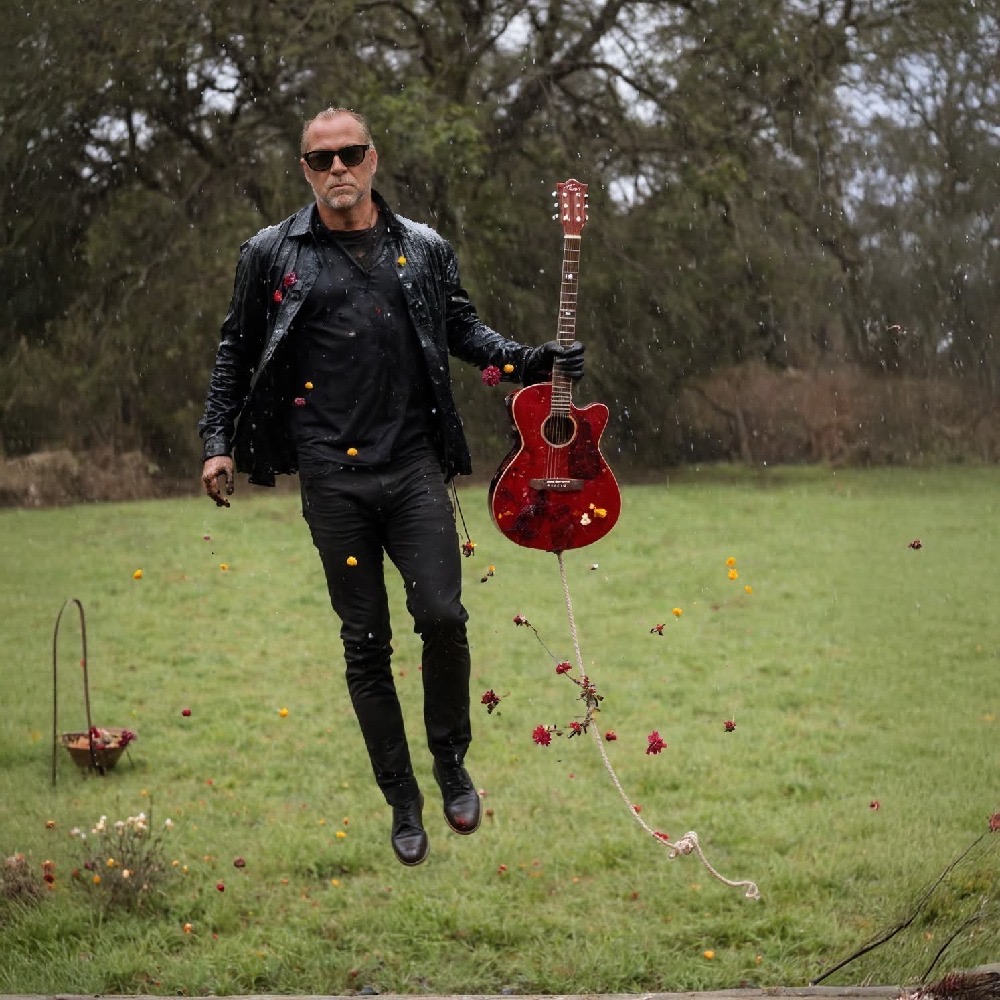
Hello everyone it’s your host Faithfulness and today I have with me It Sound from United States, Seattle. It Sound is here to discuss about his recent album “It’s Called Blood”. Welcome It Sound. Before we begin our interview here is what you need to know about this artist.
Born and raised in Seattle, Jesse Damm creates under the name It Sound, shaping music that channels the raw pulse of the Pacific Northwest while embracing a primal, atmospheric edge. Working closely with Parisian visual artist Pascal Le Gras, known for his striking covers for The Fall and The Jazz Butcher, he pairs his sonic experimentation with imagery that is equally bold and evocative. Though primarily a one-man project, It Sound expands through meaningful collaborations, including contributions from Caithlin DeMarrais of Rainer Maria, mastering by avant-garde innovator Weasel Walter, and even the voices of his own children. Together, these elements form a deeply textured artistic world where rebellion, emotion, and experimentation meet, defining It Sound’s distinctive and unconventional identity.
Having this brief Introduction, I’m sure new and current fans must be excited about our Interview today.
INTERVIEW
1. To begin with, let’s review your recent work. You’ve described your work as something that lives between instinct and intention. How do you personally navigate the line between raw impulse and careful craftsmanship when creating as It Sound?
Answer: My concept behind It Sound is about treasure amongst urgency. I will build a korg groove, a dan electro riff and if the groove captures me, I immediately set to capture it like a fisherman with a spear. Typically on tape. It’s prolific and it sounds that way.So much beauty in life is fleeting. My strongest ideas tend to be unpracticed and raw, and I’ve learned to trust that instinct. It may be unorthodox—especially when so much music is built through careful planning and rehearsal—but I’m drawn to sounds that feel honest and immediate. In a world full of polish, I’m interested in the opposite: pure impulse, no distractions.
2. You were born and raised in Seattle, a city known for its raw, experimental energy. How has the Pacific Northwest shaped the vision behind It Sound?
Answer: Seattle isn’t a particularly social town, but its natural setting shapes all of us who grow up here. The wind, moss, rain, mountains,seaweed salt air, barnacles, and trees become part of your inner landscape—just as beaches and surf culture shape people in Southern California. I also grew up during the height of the grunge era, when music was treated first and foremost as art. I was able to see wild bands in wild settings, playing with pure intention. I’m grateful I got to experience that—it exhibited what authenticity in music really looks and feels like. Something like complete abandon.
3. Your project blends music with striking visual art, especially through your collaboration with Pascal Le Gras. How did this partnership begin, and what role does visual storytelling play in your creative process?
Answer: My brother was listening to the Fall – with Pascal creating many of those covers. Then, I remember visiting him at The Evergreen State College and I saw The Jazz Butcher – Cult of the Basement tape in his room. That moment was like a lightening strike. I looked for all of his album covers, tried to find out more about Pascal and learned more about his beautiful work and elusive character. When I was putting out the first record, I could only think of Pascal Le Gras making the cover and he said he would. And not only that, but we could do this forever. Destiny is simply a belief and a dream crossed with unrelenting intent. Now we are friends.
4. You work largely as a one-man project but also bring in unique collaborators like Caithlin DeMarrais, Weasel Walter, and even your children. How do these collaborations influence the emotional and sonic direction of your music?
Answer: I fully understand the limits of my own musical ability. I am not living in a vacuum. Working with Caithlin and Weasel and Rob Vasquez (Night Kings) and George Seminara (Ramones) and Aaron Hawks (photography) and Pascal is rock and roll. Building anything requires the help of others. I look at this team and find it to be inspiring.
5. When you think about your evolution from your earliest creative attempts to where you are now, what personal transformation stands out the most?
Answer: I like to start from zero. This sensation feeds a lot of what I do as I aspire to learn. It Sound was birthed later than most bands. My friends have all been in bands. Mine came afterwards. My first recordings were seeds. I recorded my first 150 seeds and they sounded unique, inspired, like records I love. I then went on a whirlwind and recorded hundreds of pop tunes.
6. “It’s Called Blood” creates an immersive, ritualistic atmosphere from the very first second. What sparked the idea for this intense, fully formed soundscape? and was this intentional from the beginning, or did the atmosphere evolve as you worked on it?
Answer: I understood this phrase had a power. The music came in fiery moments. The lyrics arrived immediately after, inspired by the music. I’m almost in a trance when I make the works. I take no influence and am comfortable saying this. I’m barely in control of the output, in fact, I’m so surprised at first listen at what has been created. As for this record vs the first one, “Hard Pop for Blue Trees”, I wanted to include more synths, have more subtle tunes and have the energy subside like waves. I love how Blows Against the Empire by Paul Kantner really settles into a quieter space on its second half and this album has that to a degree. It was very clear that these songs belonged together.
7. The track leans heavily into tension, distortion, and repetition rather than traditional structure. What drew you to this approach for the title track?
Answer: Many of my songs are reactions to the previous song I’ve written. Simple to complex. Big bass to acoustic. Songs about nature to songs about girls. Go nuts or stay within the tent. Much of these songs were recorded on a Tascam 4-track tape player and for some song I wanted an intensity of sound where almost every space on the tape was filled with sound, like a big machine that hadn’t been started for years where all the creaks and groans are heard.
8. Many listeners describe your music as emotionally raw and spiritually charged. In your own words, what emotions or human experiences do you find yourself returning to repeatedly as an artist, and How do you interpret the emotional core of “It’s Called Blood”?
Answer: There is an underly theme of solitude. A one-man band that uses metaphors of nature to channel some truths. I grew up next to two very distinct, very old, very large trees in West Seattle. I’m not Native American but having a childhood in Seattle gave me access to a true local’s understanding of nature (which is business, art, culture and sustenance). I look at a tree and can come up with dozens of ideas to write about. I am also intrigued by the big deep bass beat like you would find in a club in LA or Miami. This contrast defines the emotional core. Layer on top the accidents, found sound, out of sorts percussion and I see a world that I like to be a part of. Then I find the balance between what is known and what is completely unknown and out of sorts.
9. You’ve mentioned drawing voices from your children into the project. How has fatherhood shaped or expanded your artistic perspective?
Answer: Mostly volume. lol. I have an acoustic record called Sticks that was made when they were largely sleeping. Drums from the base of my thumb on a table. A bird. The wind. Slight guitar. Repetition. The song Seventeen was a no brainer for their voices though it came years after I’d thought I’d finished the song.
10. Your vocal delivery in “It’s Called Blood” sits between spoken word and chant, almost like an invocation. What inspired this vocal style for the song?
Answer: Leonard Cohen.
11. The instrumentation feels raw, industrial, and intentionally unstable. How did you craft the layers of guitars, bass, and textures to achieve that sense of unpredictability?
Answer: Raw is correct. Industrial perhaps, because my drum machine is an old beautiful Korg. Unstable because I’m learning the song as I play it on guitar. I have no patience for practice. Not because I don’t appreciate it, but because others do it for me. I prefer an unkempt path, untrodden. I actually have no choice. It’s more like a destiny. It’s how I was raised.
12. The production balances chaos and control, allowing the track to feel both gritty and meticulously shaped. What was the most important production decision you made while forming this sound?
Answer: The Korg Univox SR-120 was given to me by my roommate in NYC — the great DJ Tropical Jeremy. You basicallycan only play it live. Nothing can be recorded and repeated. This provides a backdrop of industrial that I accept – even though I’m not an industrial-head at heart. There is certainly an energy that is almost too much to bear. There is a tension between the depth of the song and the somewhat intense and unsettling percussion.
13. This album carries a strong emotional weight and intensity. What does “It’s Called Blood” mean to you personally at this stage of your journey?
Answer: I’ve said “It’s Called Blood” is the answer to every question. Everything you do or say is important. It’s called blood. Sometimes a phrase can be intended as a personal expose and at other times it resonates on a larger scale. This phrase presents the latter.
14. What are some of the difficulties you encountered and some of the highlights in “It’s Called Blood” making process?
Answer: No difficulties. Highlights have to be finding a label that heard my intentions and others who have helped to get it out.
15. Your artistic choices seem to be driven by atmosphere and feeling rather than conventional songwriting roles. How do you define success for yourself as an artist operating outside the mainstream structure?
Answer: Yes, nice insight. Brian Eno helped further sound as song while also generating pop. These inspirations were certainly a part of my process. And I love repetition from the Fall, Guru Guru, Kraftwerk and others. I believe that anything and everything and everyone has potential and it bleeds into how I create. I distain early assessments that are based on people or popularity. I prefer a song to sound more like a tree (something I recognize) than a song only because that’s what I’m built to do. It’s important to know oneself and I’m certainly not a purveyor of popular culture.
16. Every long-term creative project has a core belief at its heart. For It Sound, what is the central idea or emotional truth that everything else is built upon?
Answer: Understand and exhibit a true sense of who you are. Appreciate it, and refine it, but not too much.
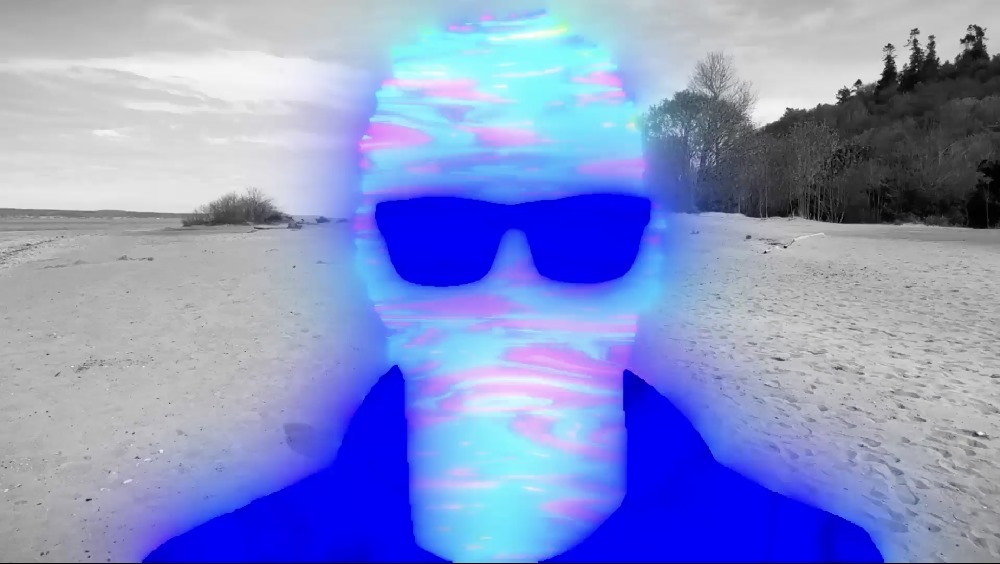
17. The music video, directed by Rockland Bazemore, mirrors the song’s surreal and shifting sense of perception. What was the creative vision behind the video, and how closely does it align with the world you imagined for the track?
Answer: Besides my own early videos (see Cry, Cry, Cry) and one with my brother, I’d never collaborated on video. Working with Rocky was fantastic as he’s been around video forever. My number one imperative was that it was not bleak and blood, more fantastical. I have a long way to go in terms of communication, but the end result had moments that communication couldn’t generate.
18. “It’s Called Blood” is the lead single from your upcoming LP. How does this track represent the album as a whole, and what can listeners expect from the full project?
Answer: The lyrics are the better representation than the music. My first record is probably more typical for It Sound but for this record I wanted to take a step back and have a stillness imbued in the songs. The reviews all mention a darkness which I had no idea it was presenting, but I accept it. Listeners can continue to expect a version of pop music from an individual, unadulterated and probably more like a relic of the distant past than the future. A trivial concoction that I hope sounds sexy and beat driven. Lyrically, I have intent that I’m happy to explain if it is too esoteric (I don’t try to be this way, but I am.)
19. Your music consistently pushes against conventions, leaning more into sensation than structure. What drives this artistic philosophy, and what do you hope listeners take away from experiencing your work?
Answer: The artistic philosophy is simple: make pop songs. And personally, I find accidents to be quite beautiful. So the unkempt, makeshift, raw style is me not straying far from what makes sense. I’m not the right person to follow a more traditional process. It’s all an experiment.
20. Outside of music, what experiences, rituals, or personal habits feed your creativity and keep you grounded in the work?
Answer: Walking has always been important. There is a song which will come out on the next album or the one after called “Have you ever really really walked alone” and perhaps I was signed because of this song. Walking doesn’t require anything, no ball, no money, no watch, no map, no sun, no safety, yet it has provided some of my greatest ideas and the world’s greatest ideas. Not bad for a simple action.
21. How can your fans reach you and your music whether through the internet or in person?
Answer: IG: itsoundmusic or email at hardpopoffice@gmail.comand Youtube videos @hardpopoffice
22. Would you like to add any concluding thoughts to your fans or new listeners hearing about you for the first time?
Answer: Believe in everything.
IN SUMMARY
This has been an exciting session for us all It Sound, I believe fans and anyone out there just discovering your music for the first time are equally excited about this project. Thank you for the privilege to experience this masterpiece, it’s been an honor.
Here is my thought on what i have to say after listening to “It’s Called Blood”:
Listening to “It’s Called Blood” felt like being slowly drawn into a world that I wasn’t entirely prepared for, yet couldn’t resist entering. The album unfolds with this dense, shadowy aura that seeped in rather than struck, and I found myself sinking into its tension almost without noticing. The fractured guitars, the deep rumble beneath them, and the voice that moves somewhere between speaking and summoning, all work together to create an atmosphere that feels ritualistic and strangely intimate. What lingered with me most was the way the album blurs emotion and texture until they become inseparable, leaving me with a sensation rather than a conclusion. By the time it ended, it felt less like I had listened to something and more like I had moved through it, quietly unsettled, deeply absorbed, and carrying a piece of its world with me.
Finally to our audience, I urge to listen to “It’s Called Blood“, add it to your playlist and be Inspired by it and on behalf of Dulaxi I like to appreciate you all by saying thank you everyone, See you on our next interview.
For more information about It Sound, click on the icons below.