

Emerging from Mobile, Alabama, United States, Eye of TJ is an alternative rock project built on the powerful intersection of lived human experience and forward-thinking digital expression. At the heart of the project lies a clear and intentional philosophy: “Real Life Stories // Digital Voice.” Eye of TJ operates as both lyricist and creative director, crafting songs drawn directly from personal reflection, emotional memory, and unspoken moments, then giving those stories life through an innovative AI-assisted vocal performance. This creative choice is not a novelty but a narrative tool, one that mirrors themes of distance, introspection, and emotional separation that frequently define the project’s music. Musically, Eye of TJ is deeply rooted in the emotional legacy of 2000s alternative and hard rock, drawing inspiration from artists such as The Fray, Daughtry, Three Days Grace, Secondhand Serenade, Lifehouse, and Breaking Benjamin. These influences surface through soaring melodies, heartfelt lyricism, and arrangements that balance vulnerability with scale.
Yet, Eye of TJ does not simply replicate this era; instead, the project reframes its emotional intensity through a modern lens, blending nostalgia with contemporary production sensibilities. Since its emergence, Eye of TJ has shown strong organic growth and momentum. The debut album, “Everything I Didn’t Say”, surpassed 24,000 streams within its first month, signaling a receptive and emotionally connected audience. Meanwhile, the earlier single “Don’t Trip” continues to gain over 500 streams daily, reinforcing the project’s steady upward trajectory. This growing impact has been further validated through features on respected platforms such as GRUNGECAKE, FVMusicBlog, and The Route of Rock, positioning Eye of TJ as a rising voice within the alternative rock landscape. What ultimately defines Eye of TJ is authenticity. Every release is framed as a chapter of lived experience, stories shaped by memory, regret, longing, and emotional truth, translated into music that prioritizes connection over spectacle. It is this commitment to honest storytelling, paired with experimental delivery, that sets Eye of TJ apart as a project both emotionally grounded and creatively progressive.
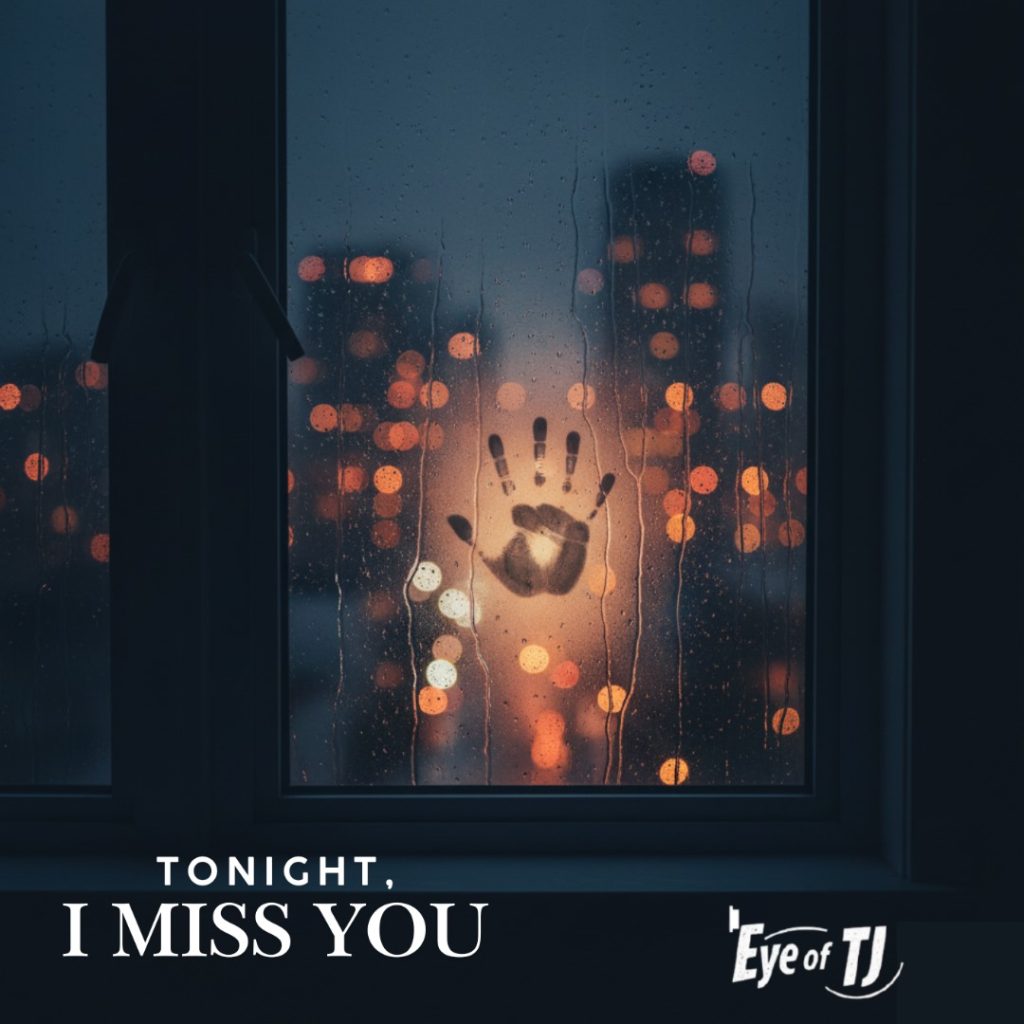
Released on December 19, 2025, “Tonight, I Miss You” stands as one of Eye of TJ’s most emotionally resonant offerings to date. Positioned as a “Blue Christmas” anthem for 2000s rock fans, the single captures the quiet ache of loneliness during the holiday season—a time often associated with joy, but for many, defined by absence. From its intimate acoustic opening to its cinematic, stadium-sized rock chorus, the song unfolds as a melancholic yet powerful reflection on longing and emotional isolation. Blending introspective storytelling with expansive alternative rock energy, “Tonight, I Miss You” channels the emotional spirit of Lifehouse and Breaking Benjamin, delivering a sound that feels both familiar and deeply personal. Designed for “Sad Winter” and “Emotional Rock” playlists, the track does not shy away from melancholy; instead, it embraces it, offering listeners a space to sit with their emotions rather than escape them. As part of Eye of TJ’s ongoing mission to tell real-life stories through a digital voice, “Tonight, I Miss You” is more than a seasonal release, it is a quiet confession, a late-night thought left unspoken, and a reminder that even in moments of celebration, longing can speak the loudest.

“Tonight, I Miss You” by Eye of TJ begins with an understated yet intentionally evocative introduction that immediately draws the listener into a contemplative space. The song opens with a delicate mix of ambient tones and a clean, reverb-washed guitar that feels as though it is echoing within a vast emotional chamber. This opening passage does not rush; instead, it patiently unfolds, much like the sensation of waiting for a long-anticipated message that never arrives. At first listen, the sparse arrangement suggests stillness, but upon closer attention, one can hear the nuanced layering of subtle synth textures beneath the guitar’s warm resonance. These sonic elements work in tandem to create an atmosphere that is intimate, almost fragile, like a whispered secret in a quiet room. The intentional pacing here establishes an immediate sense of vulnerability, inviting the listener to slow down, breathe, and enter into the internal world the song is about to reveal.
As the verses begin, the instrumentation carefully expands, revealing the thoughtful craftsmanship behind each musical choice. The guitar remains central, but now it is joined by a minimalist rhythm section that enters with a gentle, unhurried pulse. The bass does not dominate; instead, it provides a grounding warmth that anchors the harmonic structure while letting the higher frequencies breathe. Subtle flourishes, such as the soft, almost imperceptible brush of percussion or the gentle swell of an underlying pad, enhance the emotional texture without ever calling attention to themselves. This layering is sophisticated in its restraint; there is no sense of overcrowding, only a deliberate selection of tones that together evoke a sense of yearning. Each instrument seems to be whispering rather than shouting, mirroring the thematic core of the song: the quiet, persistent ache of missing someone whose presence once felt indispensable.

The progression throughout the song is shaped more by emotional accumulation than by conventional dynamics. Rather than building toward a dramatic crescendo, the music deepens through increasingly rich textural interplay. What begins as a simple set of musical gestures gradually reveals itself to be more complex, with harmonies that shift subtly and chord voicings that carry a bittersweet resonance. The arrangement’s evolution feels organic, much like the unfolding of a memory, one moment leads naturally to the next, yet each shift carries its own emotional weight. This slow, deliberate progression keeps the listener fully engaged, not with sudden changes but with a continuous unfolding of sentiment. The result is a sense of quiet urgency: a lingering pull that does not need to shout to be felt, but that grows more affecting the longer the song persists.
Vocally, Eye of TJ delivers one of the most compelling aspects of the track with a performance that is intimate, vulnerable, and nuanced. The lead vocal enters with a softness that perfectly complements the sparse instrumentation, as though the singer is confiding directly into the listener’s ear. There is an expressive fragility in the delivery, an unvarnished emotional honesty that makes each lyric feel deeply personal. Subtle variations in phrasing, the slight quiver of a sustained note, and the way certain syllables are drawn out or nestled quietly into the melody all contribute to a performance that feels lived-in rather than polished to perfection. There is a conversational quality to the vocals that enhances the lyrical themes of longing and emotional reflection, making the listener feel as if they are present within the singer’s thoughts rather than merely observing them from a distance. Harmonies, when they appear, are employed sparingly but with striking effect, adding depth without diluting the raw emotional impact of the lead voice.
As the track progresses into its midsection and eventual emotional peak, the interplay between voice and instruments becomes increasingly poignant. The arrangement swells in a way that feels purposeful yet controlled, never overpowering, but insistently present. Additional layers, such as subtle backing vocals or delicately placed guitar fills, are introduced, not to distract, but to reinforce the emotional narrative that has been steadily building. The texture here feels denser, richer, and more emotionally charged, as if the music itself is echoing the internal swell of longing expressed in the lyrics. This is a point at which the song transitions from a quiet reflection to a deeper, more resonant confession. Rather than relying on bombast, the track reaches its emotional climax through steadfast commitment to its own introspective voice, reminding the listener that power can be found in quiet persistence as much as in dramatic flourishes.
Tonight I Miss You is a cinematic rock confession where digital voice meets human longing, turning holiday loneliness into a powerful, intimate anthem of emotional truth.
In its closing moments, “Tonight, I Miss You” allows itself to retreat with grace, leaving behind a lingering sense of unresolved yearning. The instrumentation gradually thins, with layers receding back into the same quiet space from which they first emerged. This decrescendo does not signal resolution; instead, it mirrors the often unclosed emotional loops that define the experience of missing someone deeply. As the final notes fade, they leave an echo that feels less like an ending and more like a continuation of the emotional landscape the song has traversed. The listener is left with a profound sense of intimacy, a feeling that, in sharing this emotional terrain, they have been given access to a deeply human moment. In every aspect, from the initial ambient textures to the sustained emotional resonance of the vocals, “Tonight, I Miss You” stands as a richly detailed musical meditation on absence, memory, and the quiet power of heartfelt expression.
For more information about Eye of TJ, click on the icons below.