
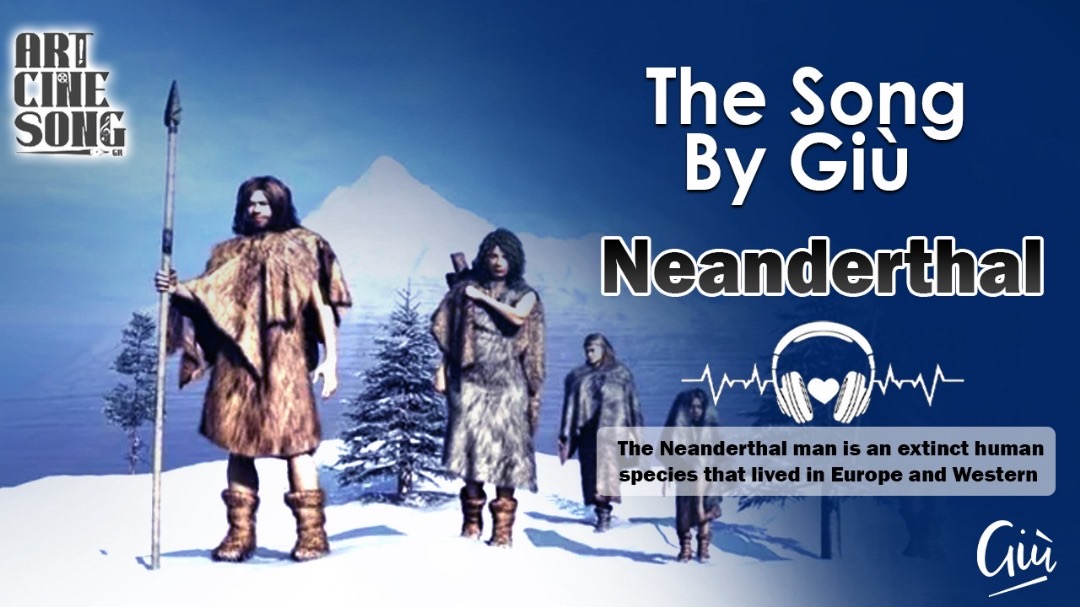
Giù is a singular force in French music, carving out a path as unconventional as it is authentic. Based in Embrun, France, he is an autodidact artist, novelist, essayist, and painter. Since launching his music career in 2021, Giù has shown that his creative drive knows no bounds, crafting song after song with inspiration drawn straight from his soul. With over 700 compositions tucked away on his computer, Giù embodies the spirit of a true melodist and storyteller. He writes not for acclaim but from a sincere desire to share music that stirs thought and evokes beauty. In an era where French variety finds itself longing for the great voices of the past, Giù stands as a new kind of artist; grounded in craft, enriched by vision, and uncompromising in authenticity. His art is personal, poetic, and charged with emotional depth, as seen in his latest haunting release, “Neandertal”.

The music video for Giù’s “Neandertal,” released on June 19th, 2025, opens in a snow-covered expanse that immediately sets a tone of isolation and survival. The first image viewers are met with is a lone man walking solemnly through a white, barren landscape. The snow lies thick on the ground, the skies above are gray and cold, and everything seems to stand still except for the determined figure moving through it. This visual introduction is minimal yet profoundly symbolic. It invites viewers to consider the emotional and physical weight of solitude, while the stark silence of the setting is pierced only by haunting, industrial sounds that mirror the harshness of the natural environment. Giù constructs not just a visual setting, but an emotional terrain that guides the viewer deep into the world of the last Neandertal.
As the man walks forward, writing appears across the screen, offering insight into the identity of the figure. This creative choice functions as both an exposition tool and a philosophical bridge, linking the prehistoric character to modern consciousness. The text reminds us that the Neandertal man is not simply a forgotten ancestor but a part of us, embedded in our DNA, living still within the folds of our genetic memory. This moment transforms the video from a narrative piece into an emotional and spiritual reflection. It is not just about documenting the last days of a species but about meditating on what it means to be human, to belong, and to be left behind by time. The music, built more on texture and rhythm than melody, reinforces the meditative atmosphere with eerie undertones and subtle pulses.
In the next sequence, the figure is shown standing at the edge of a cliff, facing into an abyss of snow and wind. His presence at this precipice is both literal and metaphorical. It suggests a moment of deep introspection, a confrontation with fate, and perhaps a reckoning with extinction. The visual is striking in its simplicity. The wind howls around him, his fur-covered body held steady against the storm, and the music mirrors this natural fury with metallic reverberations and steady, pounding beats that mimic a distant war drum. This creates a visceral connection between the visual and the auditory, making the viewer feel the weight of time, the harshness of the elements, and the emotional gravity of being the last of a kind.

Close-up shots follow, focusing on the man’s cold, dry hands. These details carry immense symbolic weight. They are cracked and reddened by the cold, emphasizing the brutal struggle for survival in an unforgiving world. The hands, though rough and primitive, are deeply human. They remind viewers that the Neandertal, often portrayed as a crude figure in history books, possessed the same emotional and physical vulnerabilities we experience today. As the camera lingers on these weathered fingers, the music thickens with layers of ambient sound and subtle dissonance, building an atmosphere of tension and sorrow. Giù uses sound to channel physical discomfort into emotional resonance, transforming sensory details into storytelling tools.
The transition to the interior of the cave marks a significant turning point in the video. Inside, a bonfire flickers gently, casting a soft, warm light on the otherwise gray and cold surroundings. The glow of the fire contrasts beautifully with the pale chill of the outside world, offering a fragile moment of respite and safety. This imagery is both comforting and melancholic. The cave is a place of refuge, but it is also empty, a shelter without companionship. The warmth of the fire becomes symbolic of the last flicker of life in a dying lineage. Musically, this scene is supported by a gentle hum, a low ambient drone that introduces a meditative calm into the sonic palette, signaling reflection and vulnerability rather than danger or urgency.

Throughout the video, Giù’s attention to detail is striking. Each frame is carefully composed to support the atmosphere of the piece, from the whiteness of the snow to the texture of the cave walls. His use of sound design, blending mechanical noises with primal rhythms, creates a tension between the ancient and the modern. This clash mirrors the central message of the song: that the past lives on in the present, that the Neandertal man, though extinct, is still within us. By focusing not on grandeur but on elemental emotion, Giù crafts a music video that feels both deeply personal and universally resonant. The audiovisual harmony evokes a quiet but overwhelming sense of loss, beauty, and connection.
Neandertal is a Haunting Audiovisual Meditation On Extinction And Ancestral Memory, Blending Primal Imagery With Poetic Sound To Explore The Raw Essence Of What It Means To Be Human
In its final moments, “Neandertal” does not end with a dramatic climax but rather with a fading stillness. The fire continues to burn, the snow still falls, and the figure remains alone. This refusal to offer closure is what makes the video so emotionally authentic. Giù does not attempt to romanticize the Neandertal’s fate or inject unnecessary hope. Instead, he allows the sadness to linger, the silence to speak, and the viewer to carry the weight of what has been witnessed. With “Neandertal,” Giù has created a powerful visual and sonic meditation on extinction, memory, and identity, offering a rare and poignant look into a story long forgotten yet deeply embedded in who we are.
For more information about Giù, click on the icons below.