
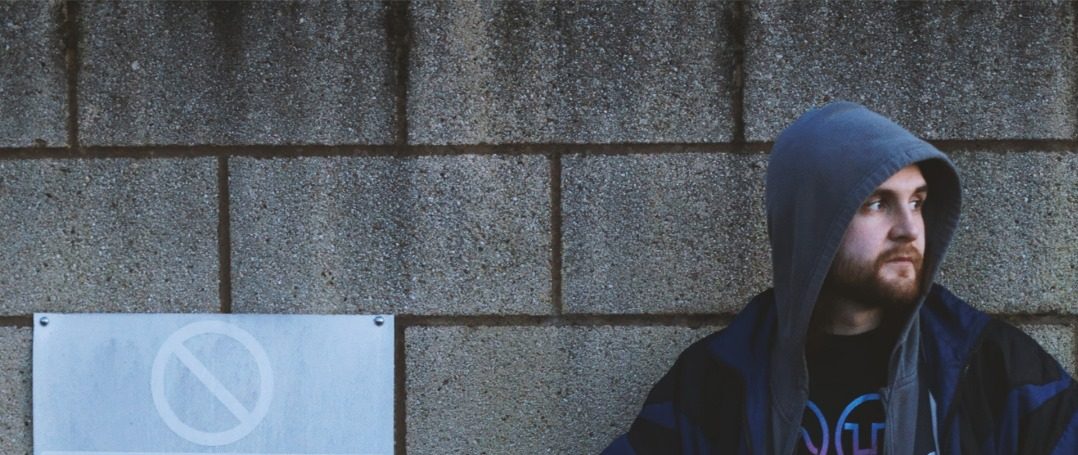
JeezJesus is the creative alter-ego of Joe McIntosh, an artist who has carefully carved his place within the fringes of England’s alternative music scene. Based in London but musically shaped by his formative years in Manchester, Joe’s path into music began academically with a degree in Music Technology at the University of Salford. While studying, he immersed himself in Manchester’s vibrant live circuit, performing guitar and keyboards with indie outfit VALA and psychedelic rock collective The Peace Pipers. His collaboration with The Peace Pipers extended into production, where he was responsible for shaping their Patterns EP and their double single Helicopter/The Towers.
Before adopting his current identity, McIntosh explored darker sounds under the alias GIMP, releasing the Reject EP alongside a handful of standalone singles. These early electronic experiments foreshadowed the unflinching aesthetic that would later become a hallmark of JeezJesus. The reinvention came in 2022, when Joe launched the JeezJesus project with his debut album Dr. Electro Love. This record positioned him at the intersection of post-punk, synth-driven darkwave, and indie industrial, crafting music that was atmospheric, emotionally stark, and unapologetically experimental. The sound balanced homage to retro influences with a sharp, modern edge, establishing JeezJesus as an artist unafraid to dig deep into mood and texture. In 2023, he released a series of EPs that experimented with a variety of alternative dance and electronic genres, showcasing his eclectic interests. By 2024, JeezJesus had refined his approach and found a more stable artistic voice.
That year saw the release of Super Creeps & Spooky Beats, a more stylistically secure, song-based album that doubled as a love letter to the darker industrial goth albums of the 1980s. Not long after, he delivered Sound Art: Vol. 1, a New-Age experimental electronic album that gave him space to release pieces written in between the production of Super Creeps, further broadening his range. Now, in 2025, JeezJesus is working towards his fourth studio album, Somewhere Between Love & Misery. In preparation, he has been releasing singles that push his sound further into the darker corners of industrial, post-punk, synthpop, and darkwave, continuing the stylistic progression that began with Super Creeps. With each release, JeezJesus demonstrates that while his approach is eclectic and prolific, it is also authentic, crafted for a unique subsection of alternative society that seeks music as both an experiment and an experience. His art remains an authentic expression of alternate creativity in the digital age, unafraid to satisfy listeners who crave the unconventional.
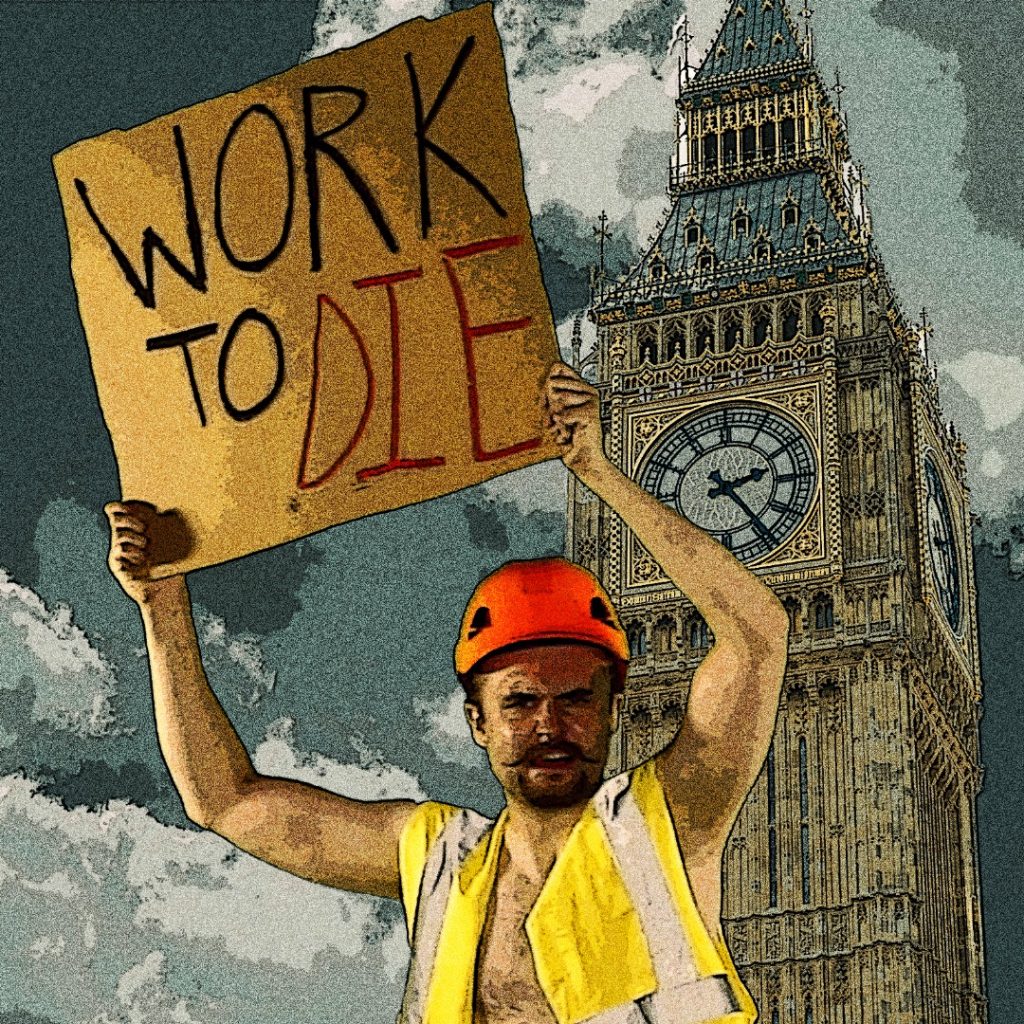
On 29 August 2025, JeezJesus released “Work to Die”, his fourth single of the year. Following the anthemic synthpop direction of his previous track “We Could Be Friends”, this new single adds a sharp alternative rock influence, broadening his sonic palette. At its core, “Work to Die” is a biting reflection of economic struggle. JeezJesus describes it as an expression of his frustrations with the economy, where no matter how hard he works, he feels he goes nowhere, each year ending worse off than the last. Framed with tongue-in-cheek irony, it is a working person’s anthem, capturing the exhaustion and futility of relentless labor while also offering solidarity. Yet the single is not purely cynical. JeezJesus hopes listeners will find unity in its message, recognizing that they are not alone in these difficult times. With the economy in tatters and wealth concentrated in the hands of the few, “Work to Die” transforms despair into connection. Its big, anthemic synthpop sound infused with alt-rock energy makes it both a protest and a rallying cry, ensuring its relevance far beyond the studio.
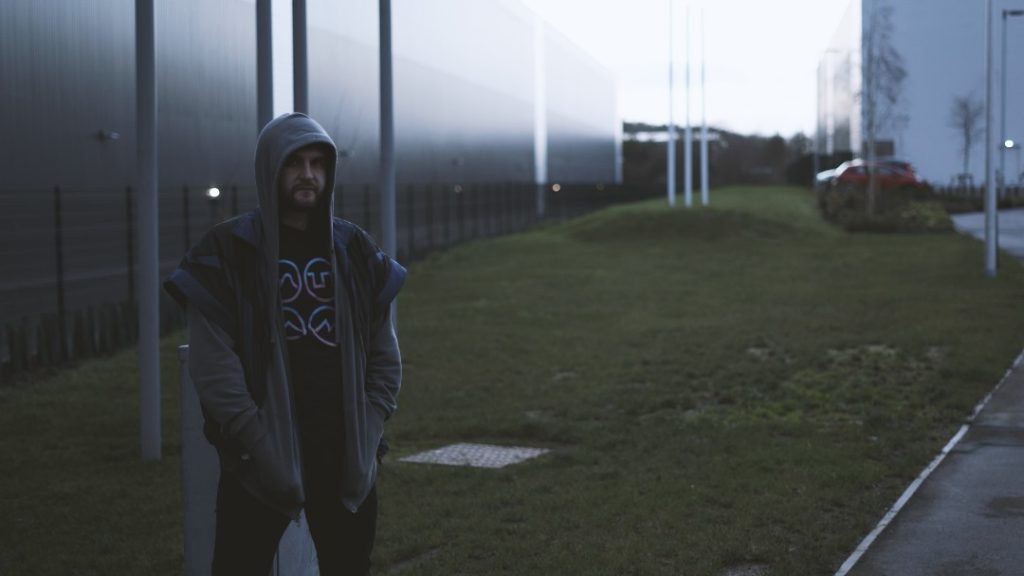
From the very first second, “Work to Die” by JeezJesus makes its presence felt with an intensity that grips the listener and refuses to let go. The introduction is dominated by a heavy pounding kick pads, followed by distorted synth tone that drones with a mechanical precision, instantly creating an industrial atmosphere that feels both hypnotic and unsettling. It is the kind of opening that doesn’t just start a song, it sets a scene, immersing you in a sonic world that mirrors the cold, grinding weight of modern labor. There’s no softness here; instead, the music hits with the rawness of steel clashing against steel, with the faint shimmer of electronic textures adding layers of depth. The way the synths are programmed gives them a metallic sheen, almost like sparks flying off machinery in a factory, and this imagery perfectly frames the theme of exhaustion and endless cycles of work that the track revolves around. Right from the outset, you sense that this is not simply a song to be enjoyed casually but a visceral experience meant to be absorbed, dissected, and felt on a deeper level.

As the track unfolds, the instrumentation grows thicker, more aggressive, and more demanding. The percussion enters with a pounding, almost militant quality, sharp electronic snares cut through the mix while the kick drum pounds steadily with a thumping relentlessness, like the heartbeat of a machine that never stops. Layered beneath, a growling bass synth rumbles with such heaviness that it feels like it’s crawling under your skin, holding everything together with a suffocating weight. Bright, arpeggiated synths flicker intermittently like neon lights against the dark backdrop, and subtle electronic pads add atmosphere, giving the track a sense of vast space despite its claustrophobic heaviness. What makes this section so effective is how the groove slowly begins to emerge; though oppressive and heavy, the rhythm is undeniably infectious. There is a pulse to it, a sense of dark energy that makes the listener want to move even as the soundscape feels overwhelming. It’s both danceable and disturbing, a duality that makes the music gripping and unique.
When the vocals arrive, they cut through the dense instrumentation like a blade. JeezJesus delivers each line with a raw, almost abrasive tone, his voice carrying the weight of frustration and defiance. It’s not a polished vocal meant to please, it’s a voice meant to confront, to make you feel the exhaustion and anger of being trapped in a system that demands work until death. The delivery has grit and edge, sometimes almost shouted, sometimes half-spoken, giving the performance an urgent, confessional quality. The way his voice blends into the industrial soundscape makes it feel less like a separate element and more like another instrument, distorted and gritty, working in tandem with the synths and drums. The lyrics are accentuated by the emotion in his voice, turning words into an experience. The effect is raw honesty, you don’t just hear what he is saying, you feel it in the way his voice strains against the suffocating wall of sound surrounding it.

As the song progresses, the intensity refuses to plateau; instead, it escalates in a way that keeps the listener on edge. The middle section of the track feels like the boiling point, where all the instrumental elements begin colliding with greater force. The drums become more aggressive, pushing forward with a sense of urgency, while the synths grow harsher, adding distortion and feedback that make the sound almost overwhelming. This section feels chaotic, like the breaking point of someone who has endured too much, and it mirrors the psychological toll of relentless labor. There are moments where the rhythm feels like it is spiraling out of control, yet it never fully loses cohesion, maintaining a hypnotic groove that pulls you along no matter how intense it becomes. The progression here feels like a storm building, loud, unruly, and impossible to ignore. It’s a brilliant representation of frustration manifesting as sound, a climax that embodies both collapse and rebellion at the same time.
Much of the song’s power lies in its production choices, which elevate the composition from simply being industrial electronica to being a fully immersive emotional statement. The mixing is thick, every layer pushing against the other, yet somehow each element finds space to be heard. The percussion punches through the wall of synths, the bassline anchors everything with its chest-rattling depth, and the vocals sit in the middle, cutting through without ever sounding too clean. The deliberate use of distortion adds abrasiveness, ensuring that nothing about the track feels smooth or polished, it’s all jagged edges and sharp corners, which perfectly reflects the harsh reality the song critiques. Even the quieter moments, when layers briefly strip back, feel loaded with tension, like the calm before another surge of industrial chaos. These production decisions don’t just shape how the track sounds, they shape how it feels, making the listener inhabit the emotions behind the song rather than simply observe them.
Work to Die by JeezJesus is a raw, industrial synthpop anthem capturing economic frustration, unity, and resilience in relentless times.
By the time the track reaches its conclusion, the listener has been taken on a journey that feels equal parts musical and emotional. The closing doesn’t offer resolution or relief; instead, it leaves you suspended in the same tension that started the piece, as though to remind you that the cycle of work and struggle has no easy ending. The final moments echo with the same industrial energy and heavy synths, fading out not with comfort but with the weight of stark reality. This lack of closure is powerful, because it mirrors life itself, the work continues, the struggle remains, and the exhaustion lingers. What JeezJesus has achieved with “Work to Die” is more than just a song; it’s a sonic embodiment of frustration, a protest wrapped in industrial sound, a cathartic release for anyone who has felt crushed by the monotony of survival. It grooves, it pulses, it overwhelms, and it lingers long after the music stops, making it not just an impressive piece of artistry but an unforgettable experience.
For more information about JeezJesus, click on the icons below.