
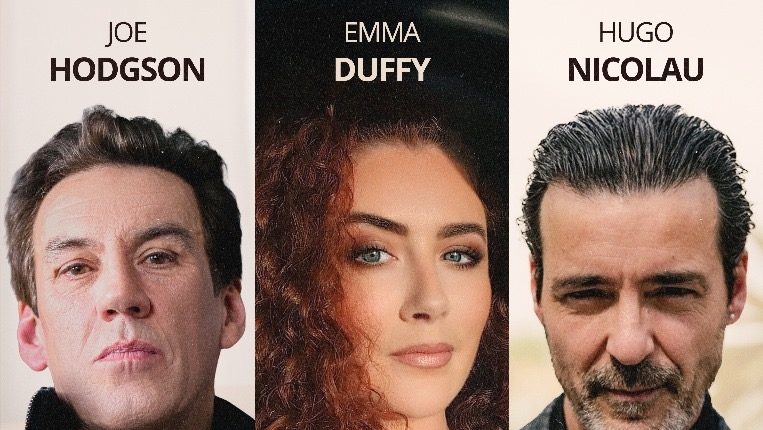
Joe Hodgson is an Irish guitarist from the village of Ballymagorry in County Tyrone, Northern Ireland, whose musical identity has been profoundly shaped by both place and history. Growing up during The Troubles, his sound reflects the emotional weight of that environment, echoing the fierce rain, wind, and tension of the Emerald Isle itself. His playing is sweeping and intense, yet deeply controlled, drawing together rock, blues, jazz, classical influences, and Irish musical traditions into finely crafted instrumentals that reveal a multifaceted and emotive performer. After many years performing, recording, and touring with London based bands across Europe, Hodgson returned to his birthplace in 2018, reconnecting with the landscape and experiences that first shaped his musical voice.
In 2020, Hodgson released his debut solo album “Apparitions” to widespread critical acclaim, with Guitar World describing his playing as “elite,” Steve Newton calling him “the best guitarist you’ve never heard of,” and ANR Factory hailing the record as a modern day masterpiece. Building on this momentum, he released his second solo album “Fields Of Redemption” on June 20th, 2025, a 15 track work dominated by instrumental compositions. The album was preceded by a series of carefully curated singles, including double A sides and orchestral recordings with the Czech Philharmonic Orchestra, all contributing to a project that was ambitious in scope and cinematic in spirit. Following the album’s strong reception, Hodgson turned his focus toward translating this musical world into a visual form, culminating in the release of “Fields Of Redemption (The movie)” on November 21st, 2025.
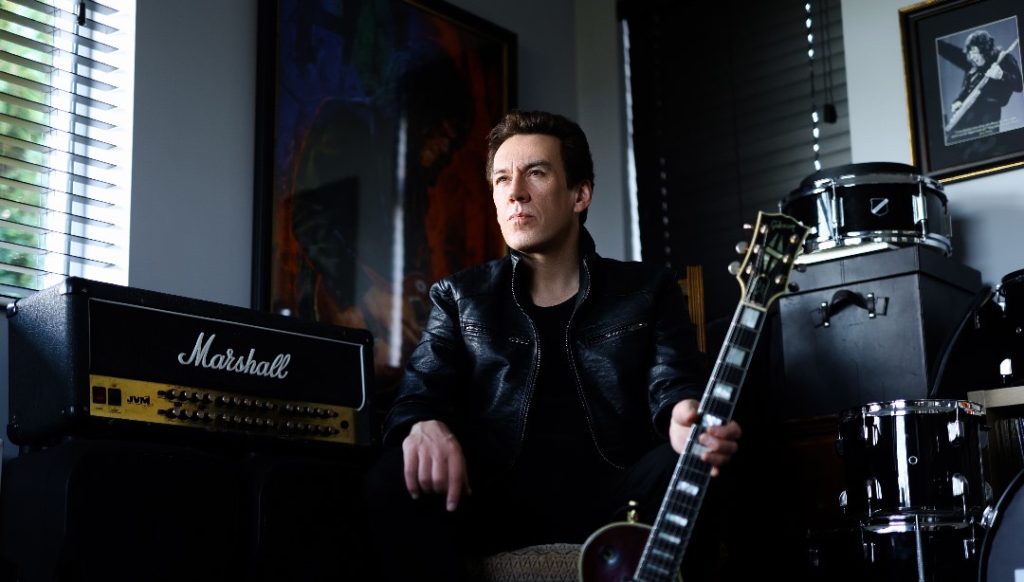
“Fields Of Redemption (The movie)” is an ambitious and immersive short film released on November 21st, 2025, running for a substantial duration of 46 minutes and 53 seconds. From the outset, the film asserts itself as far more than an extended music video, presenting a fully realized cinematic experience built around Joe Hodgson’s instrumental album of the same name. The opening passages establish a contemplative rhythm that immediately draws the viewer into its emotional terrain. Rather than rushing toward narrative clarity, the film allows mood, texture, and musical phrasing to guide perception. This slow and deliberate introduction reflects confidence in its artistic language. The guitar score assumes narrative authority almost instantly, shaping how images are received and interpreted. The length of the film becomes an asset rather than a challenge, allowing themes to unfold organically. There is a clear intention to let the audience settle into the world rather than observe it from a distance. From its earliest moments, the film positions itself as a self contained audiovisual statement.
At its narrative core, the film follows an Irish musician portrayed by Joe Hodgson on a quest to find the love of his life after her mysterious disappearance. This premise is intentionally restrained, functioning more as an emotional through line than a conventional plot structure. The absence of sustained dialogue places expressive weight on gesture, movement, and musical evolution. Each sequence feels like a memory fragment or emotional state rather than a step in linear storytelling. This approach invites the viewer to interpret meaning through feeling rather than explanation. Long stretches unfold without verbal guidance, trusting the audience to connect emotionally rather than intellectually. The result is a story that feels intimate and subjective. Love and loss are not explained but experienced. This narrative minimalism aligns seamlessly with the instrumental nature of the music itself.
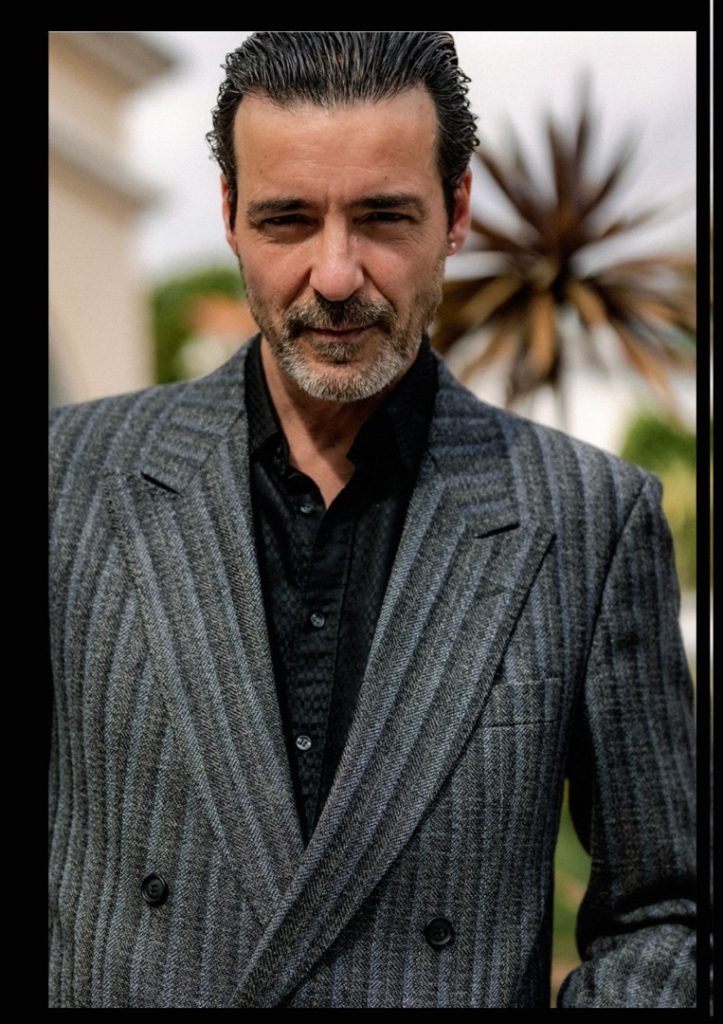
The performances play a crucial role in grounding the film’s abstract ambitions in human emotion. Joe Hodgson’s on screen presence feels sincere and unembellished, reinforcing the autobiographical undertones of the project. Hugo Nicolau brings a compelling intensity that deepens the dramatic tension of the journey, while Emma Duffy provides emotional warmth and vulnerability that anchor the story’s sense of longing. Their interactions are understated but resonant, relying on facial expression and physical proximity rather than overt dramatics. These performances ensure that the film never loses its emotional center. Even during its most surreal passages, the memory of human connection remains present. The cast collectively contributes to a sense of authenticity that balances the film’s experimental elements. This human grounding is essential to the film’s emotional credibility.
One of the film’s most distinctive qualities is its integration of conventional live action footage with AI generated imagery created by AI artist Nico Frye. The live action sequences represent tangible reality, capturing physical spaces and emotional interactions with restraint and clarity. In contrast, the AI sequences open portals into surreal landscapes, impossible architecture, and symbolic environments that defy physical logic. These visuals do not function as decorative spectacle but as psychological extensions of the protagonist’s inner turmoil. Obsession, temptation, and spiritual conflict are given visual form through heightened symbolism. The transition between these realms is guided by musical shifts rather than abrupt visual cuts. This careful integration ensures coherence rather than fragmentation. The AI imagery becomes a narrative language rather than a novelty.
Visually, the film demonstrates a strong command of atmosphere and contrast. Natural environments and intimate interiors are framed with patience, allowing space for reflection and emotional resonance. These grounded visuals are then disrupted by dreamlike sequences that fracture reality into abstract forms. Light and shadow are used expressively, often obscuring clarity in favor of mood. The visual design mirrors the protagonist’s psychological state, shifting as his emotional journey evolves. The film avoids visual excess, even within its most fantastical moments. Each image feels purposeful and emotionally motivated. This visual discipline reinforces the film’s thematic seriousness. The aesthetic cohesion allows diverse visual styles to coexist within a unified cinematic identity.
Musically, “Fields Of Redemption (The movie)” places extraordinary trust in instrumental storytelling. Hodgson’s guitar work functions as narrator, emotional guide, and dramatic catalyst throughout the film. Themes recur and transform, signaling shifts in emotional perspective and narrative focus. Gentle passages create space for introspection, while more forceful sections convey urgency and inner conflict. The blend of rock, blues, jazz, classical, and Irish influences gives the score emotional depth and versatility. Without reliance on spoken exposition, the music carries narrative weight with remarkable clarity. This approach recalls the traditions of silent cinema, where music was central to storytelling. The film demonstrates how instrumental music can communicate complex emotional narratives when given full expressive freedom.

Thematically, the film explores love, illusion, temptation, endurance, and redemption with notable restraint and maturity. The protagonist’s journey unfolds as a spiritual and emotional odyssey rather than a simple search narrative. Moments of temptation and disorientation are visualized through surreal imagery, while moments of grounding return the story to human vulnerability. Redemption is portrayed not as triumphant conquest but as emotional reconciliation. Resolution arrives quietly, through acceptance rather than spectacle. This thematic subtlety gives the film lasting emotional resonance. It resists simplistic conclusions in favor of reflective closure. The film’s emotional honesty is one of its strongest achievements.
Fields Of Redemption (The movie) Is A Bold, Immersive Short Film That Transforms Joe Hodgson’s Instrumental Album Into An Emotionally Driven Cinematic Odyssey Where Music Becomes Narrative Voice And Meaning
Under the direction of David J Ellison, the film maintains coherence despite its hybrid structure and experimental ambitions. Ellison’s pacing respects the musical architecture of the album, allowing scenes to breathe and evolve naturally. Editing choices prioritize emotional continuity over narrative efficiency. The collaboration between director, performers, musician, and AI artist results in a unified artistic vision. “Fields Of Redemption (The movie)” ultimately stands as a bold synthesis of music and cinema, released on November 21st, 2025, that challenges conventional definitions of both forms. It invites immersion rather than observation and emotion rather than explanation. By transforming an instrumental album into a cinematic narrative, Joe Hodgson expands the possibilities of audiovisual storytelling. The film lingers long after its final note, leaving a sense of quiet reflection and earned catharsis.
For more information about Joe Hodgson, click on the icons below.