

Nico Guzzi is an Italian composer, singer, and musician recognized for his artistic versatility. His passions include music, writing, technology, and football. As a multifaceted creator, he has composed songs, instrumental works, soundtracks, short stories, poems, articles, and novellas. Notable works include Instrumental Love and Disasters (2019), the rock album Rec in Rum (2019), and the 2024 albums Disagio identitario post virale (pop-rock) and Instrumental Love Pt.2 (instrumental). His 2025 releases blend classical, electronic, melodic, and rap elements, exemplified by Follow Me Now, which explores life and death. He has collaborated with Dharma, Mattia Zappile, Fujiko Studio, and Luca Mastrotaro, won multiple competitions including Villa Petriolo and Raccontiamo di Reporter, led Air Raid Sirens, and authored poetry and books, including La decadenza splendida and L’arte della SEO User First.
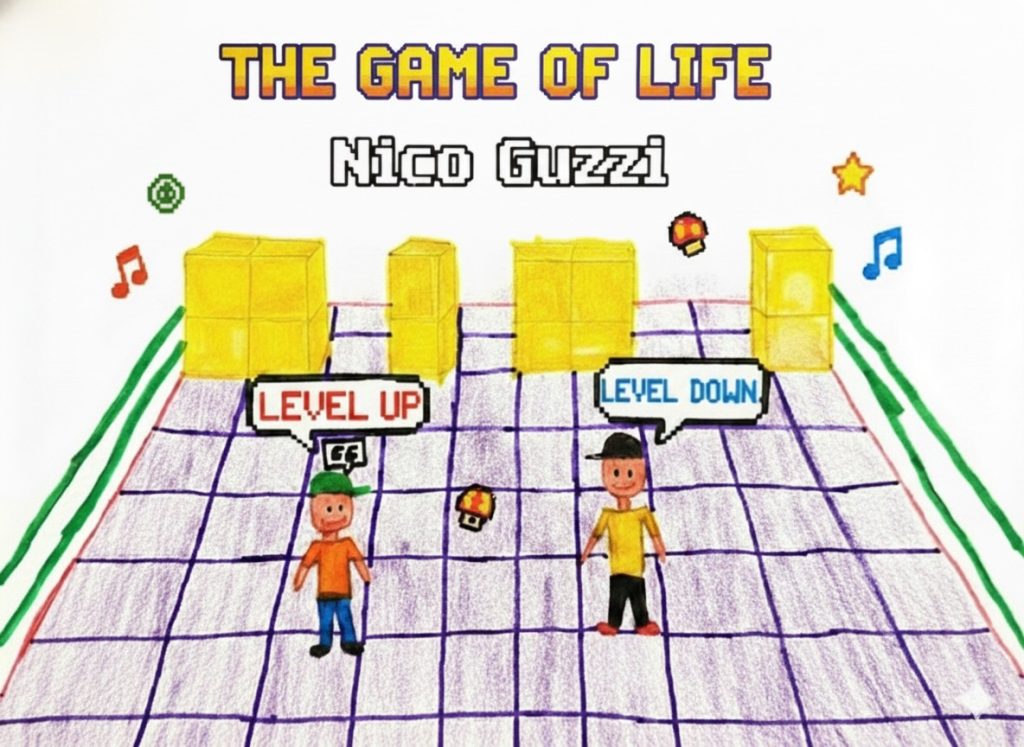
Nico Guzzi’s “The Game of Life”, released on January 15, 2026, is a bold, genre-defying album that masterfully blends Classical music, Electronica, and Rap into a cohesive artistic statement. Across its nine tracks, Guzzi constructs a sonic collage that mirrors the complexities and absurdities of modern existence. Orchestral strings intertwine with dubstep bass lines, while melodic pop hooks and heavy synth textures provide rhythmic and harmonic depth. From the collision of double basses and violins with electronic beats to the dynamic layering of vocals, the album creates an intricate soundscape that is both intellectually stimulating and viscerally engaging. Lyrically, it navigates contemporary themes such as digital distraction, “crypto’s kiss,” quiet quitting, and existential apathy, presenting a satirical yet introspective commentary on life in 2026.
Thematically, “The Game of Life” explores three core pillars: Modern Satire, critiquing society’s obsession with status and spectacle; The Search for Transcendence, offering cinematic and messianic escapes from life’s monotony; and Personal Liberation, championing self-reliance and freedom from societal expectations. The album bridges the club and the concert hall, allowing listeners to engage both physically and mentally, offering moments of danceable energy alongside reflective, cinematic passages. Guzzi’s fusion of electronic production, classical instrumentation, and thoughtful lyricism transforms the record into a reflective meditation on identity, human connection, and our place in a digitalized, status-driven world. “The Game of Life” is an emotionally layered, genre-fluid experience, inviting listeners to confront modernity’s contradictions while discovering catharsis, introspection, and a shared sense of rebirth through music.
The Game of Life Album Track:
Play the Game:
“Play the Game” opens The Game of Life as an instrumental reflection on the rhythms and challenges of daily existence. Without vocals, the track conveys motion, tension, and contemplation through evolving synth pads and precise percussion. A subtle reggae-inflected swing in the rhythm adds a gentle lilt, inviting calm reflection. Analog pads drift and interact, suggesting the rise and fall of life’s choices, while harmonic movement provides a narrative arc that hints at exploration, challenge, and engagement with the world.
Deep, punchy basslines anchor the track, complementing crisp, detailed percussion. The interplay of evolving pads and fluid synth lines mirrors the unpredictable rhythms of life. Layers grow richer as the track progresses, creating an immersive yet clear soundscape. Ethereal textures combined with steady rhythm establish a contemplative space, allowing the listener to sense both tension and serenity. Without lyrics, “Play the Game” sets the album’s emotional tone, establishing a thematic foundation of human experience, reflection, and decision-making.
Loser:
“Loser” reflects on modern society’s focus on superficial success and digital validation. Lyrics like “Did you ever make more difference than sorting trash in the rain?” highlight the emptiness of hollow accomplishments, while “Forgive us if we seem aloof, it’s just we’re barely present in our own demise” reveals emotional disengagement and subtle isolation. Nico Guzzi’s vocal delivery, measured and intimate, amplifies these themes, allowing listeners to feel the quiet weight of reflection and societal disconnection. The words dominate the track, emphasizing its central message of introspection, awareness, and societal observation.
Instrumentation enhances the thematic focus. Dense synth layers and precise electronic beats create tension that mirrors the pressures of modern life, while hip-hop–inspired rhythms provide momentum. Sparse sections allow space for lyrical reflection, ensuring moments of clarity emerge amid sonic density. Sharp synth stabs and resonant bass deepen emotional resonance, reinforcing the song’s critique of distraction and detachment.
The interplay between vocals and instrumentation makes the theme tangible. Percussive accents maintain forward motion, while textures echo the emptiness of constant busyness. “Loser” engages listeners emotionally and intellectually, letting them inhabit the very disconnection it portrays. Through lyric, vocal tone, and musical design, the track communicates its thematic essence fully, leaving a lasting impression of reflection, presence, and conscious awareness.
I’m Not Yours:
“I’m Not Yours” explores independence, self-liberation, and personal growth. Lyrics such as “So don’t wait up for me, cause this time I’ve got work to do” assert deliberate focus on personal priorities, while “Long abandoned I learn the weight of silence” conveys introspection and inner awareness. Nico Guzzi’s vocal delivery alternates between quiet vulnerability and confident determination, making the lyrical narrative emotionally tangible. The words dominate, carrying the track’s thematic core of autonomy, self-reflection, and resilience.
Instrumentation reinforces the lyrical journey. Upbeat synths and pounding bass melodies symbolize internal momentum, while flowing pads mirror the evolving thoughts and emotions of personal reflection. Percussion provides a steady foundation, supporting forward movement without overshadowing the vocals. Dynamic synth textures reflect the tension between external expectation and inner resolve, emphasizing the track’s focus on self-discovery and personal agency.
The arrangement allows vocal subtlety to emerge alongside energetic instrumentation, highlighting the balance between action and contemplation. Melodic and rhythmic variations underscore growth, while bass and synth layers convey emotional depth. “I’m Not Yours” is a statement of self-determination, where vocals, lyrics, and thematic essence guide the listener through an immersive journey of independence, reflection, and human resilience.
Her Temptations:
“Her Temptations” by Nico Guzzi is an instrumental meditation on introspection, beauty, and emotional depth. Opening with expressive piano melodies, the track evokes celestial landscapes and invites personal reflection. The delicate piano chords and notes communicate subtle nuance, guiding listeners to contemplate their emotions and inner self.
Strings gradually enter, enhancing the piano’s cadence with flowing harmonies, while bass layers provide richness and grounding. Subtle percussion and delicate heavy pounds maintains the rhythm without disrupting the contemplative atmosphere. This combination creates a majestic, calming environment that amplifies the listener’s sense of presence and serenity.
The track progresses deliberately, with piano solos and harmonic interplay drawing attention inward. Its serene melody, rich textures, and flowing harmonies foster an immersive meditative space. “Her Temptations” encourages reflection, allowing listeners to experience calm, awe, and introspection, serving as a thematic and emotional close to the album.
The Game of Life is a genre-defying, emotionally layered journey that fuses classical, electronic, and lyrical depth to reflect modern existence.
“The Game of Life” is a daring, genre-bending journey that challenges listeners to confront the chaos and contradictions of contemporary life. Nico Guzzi’s seamless fusion of classical instrumentation, electronic textures, and incisive lyricism creates an album that is simultaneously thought-provoking and viscerally enjoyable. It invites reflection on identity, human connection, and personal liberation while offering a soundscape that is both emotionally resonant and intellectually stimulating. For anyone seeking music that excites the senses, challenges the mind, and provides a space for introspection, “The Game of Life” is an essential experience, an audacious, transformative work that rewards repeated listening.
For more information about Nico Guzzi, click on the icons below.