
Originally from Russia and now based in Miami, pianist Rina Kharrasova is carving a distinctive path in the classical music world with a strong focus on Romantic and early 20th-century repertoire. Her artistic vision is one steeped in emotional richness, expressive narrative, and a dedication to works that often lie outside the mainstream spotlight. With a background deeply rooted in the Russian piano tradition, Kharrasova brings a unique blend of technical refinement and emotional storytelling to her performances. Her current musical journey is not just about reviving classical compositions, but about infusing them with renewed perspective and personal expression. Each project she undertakes becomes a piece of a larger portfolio aimed at celebrating the evocative beauty of the Romantic era, and her latest release does exactly that. In her new cover single, “Tchaikovsky’s Dumka, op.59”, Kharrasova reimagines a dramatic and often overlooked gem from the great composer’s catalogue, offering a performance that is both vividly expressive and intimately detailed.

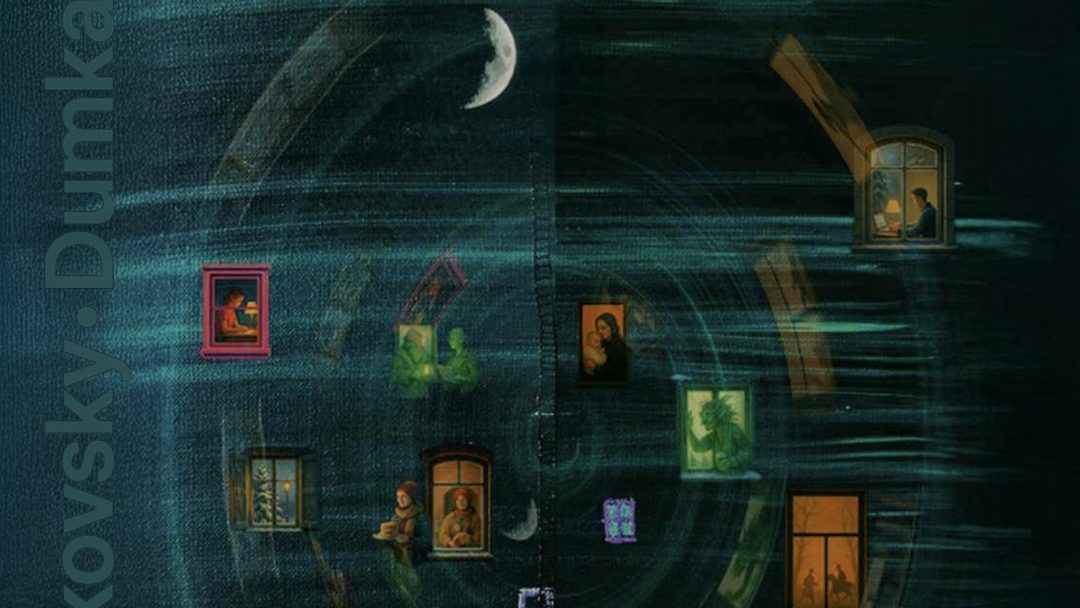
Released on June 26th, 2025, pianist Rina Kharrasova’s interpretation of “Tchaikovsky’s Dumka, op.59” is a masterful and emotionally engrossing reading of one of the composer’s most character-rich piano works. Subtitled “Russian Rustic Scene,” the piece was composed in 1886 and is often considered a singular gem within Tchaikovsky’s oeuvre, notable for its rhapsodic structure and shifting emotional landscapes. With this recording, Kharrasova brings to life the contrasts embedded in the piece by emphasizing its narrative spirit and emotional intensity. Her interpretation reflects a deeply personal engagement with the music, shaped by her background in the Russian piano tradition and her current artistic mission to explore Romantic and early 20th-century repertoire with nuance and expressive depth. Through this release, she positions herself not only as a skilled technician but as a sensitive storyteller and interpreter.
The performance begins with a slow and contemplative introduction that Kharrasova handles with extraordinary tenderness and deliberation. This opening section, rich with melancholic overtones, sets the emotional tone of the piece and draws the listener into a world of introspection and subtle drama. Each note is allowed to breathe, suspended with care, as though carrying unspoken thoughts. Kharrasova’s touch is refined and patient, revealing the depth of feeling that lies beneath the simplicity of the opening lines. Her tempo choices invite the listener to linger in this space of reflection, giving the impression of a story being slowly and carefully unfolded. The control she exhibits here is not just technical but emotional, as she maintains a delicate balance between restraint and expression.
As the piece begins to shift from its somber introduction into the more rhythmically animated folk-inspired section, Kharrasova unveils another layer of her artistry. The transition is handled with remarkable fluidity, never jarring or abrupt, but rather as a natural evolution of emotional energy. The piece blooms into rustic vitality, capturing the essence of a vibrant folk dance, and her playing takes on a new vibrancy and spark. The energy she brings is lively but never aggressive, full of buoyant rhythms and spirited motion that pay homage to Slavic musical traditions. Here, she exhibits a sense of rhythmic precision and dynamism that enhances the texture and life of the music.
Kharrasova’s ability to navigate these emotional shifts so smoothly is one of the defining strengths of this performance. The Dumka’s structure is inherently rhapsodic, built on contrasting sections that alternate between brooding introspection and extroverted dance. In her interpretation, these contrasts are unified by a clear narrative thread, giving the piece a cohesive emotional arc. Her voicing of melodies remains expressive and clear even through the denser, more energetic passages. The control with which she manages the crescendos and tempo fluctuations reflects a deep understanding of the music’s architecture. She keeps the listener anchored through the most intense sections, always ensuring that the emotional intention remains at the forefront.
The technical demands of “Dumka, op.59” are significant, even if they are not always overt. The piece calls for not only finger dexterity but also maturity in interpretive choices, particularly in phrasing, rubato, and dynamic shading. Kharrasova meets these challenges with grace and conviction. Her technique never becomes a spectacle; rather, it is a vehicle for communication. The clarity of her articulation and her sensitivity to touch allow the full range of the piano’s expressive capabilities to emerge. She voices inner lines with care, balances textures effectively, and brings out the thematic material with a sense of phrasing that feels organic rather than imposed. At no point does the performance feel forced or overly theatrical. Instead, it flows naturally, like a conversation shaped by sincerity and purpose.
What makes this interpretation especially captivating is Kharrasova’s sense of purpose throughout the performance. She treats every phrase as meaningful, every gesture as intentional. The Dumka is often underrepresented in classical programming, sometimes viewed as a modest or transitional work. Yet in her hands, it becomes a fully realized emotional narrative, elevated by the depth of her insight and interpretive choices. She does not merely play the notes; she reveals the soul of the piece. Her commitment to exploring the music’s emotional truth gives this rendition a weight and resonance that transcend the limitations of a simple cover. It becomes an artistic statement in itself, shaped by her identity, her musical values, and her intimate connection to the Russian repertoire.
Tchaikovsky’s Dumka, op.59 Cover by Rina Kharrasova is a Deeply Expressive And Emotionally Rich Reinterpretation That Revives The Romantic-Era Gem With Technical Finesse
Rina Kharrasova’s performance of “Tchaikovsky’s Dumka, op.59” is more than a polished execution of a lesser-known composition. It is a living interpretation that captures the complexity of human emotion through music. Her ability to unify the contrasting moods, maintain technical integrity, and evoke a strong narrative flow makes this a performance of rare quality. It is a recording that invites multiple listens, each time revealing new layers of detail and expression. With this release, Kharrasova not only affirms her place as a thoughtful and accomplished pianist but also contributes meaningfully to the modern appreciation of Tchaikovsky’s piano repertoire. Her “Dumka” is not merely a study in technique or form; it is an intimate musical dialogue, shaped by sensitivity, intention, and deep artistic conviction.
For more information about Rina Kharrasova, click on the icons below.