
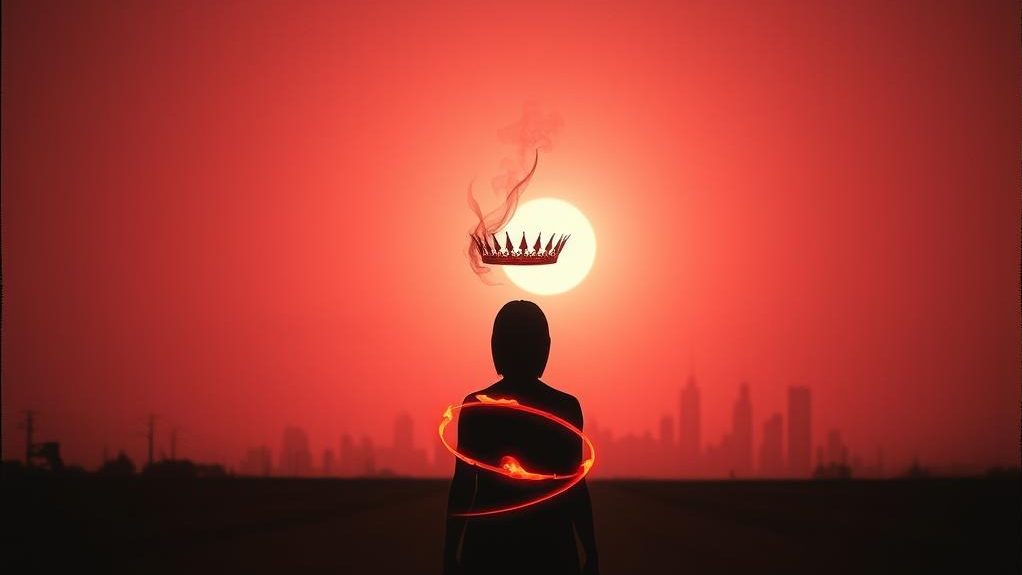
Emerging from the vibrant and experimental music scene of Warsaw, Poland, wsemsz is a one-man project carving out a distinctive space at the intersection of human emotion and cutting-edge technology. Eschewing traditional band structures and standard production methods, wsemsz approaches music as both an intimate personal expression and a forward-thinking exploration of sonic possibilities. His work is defined by a meticulous blending of human feeling and artificial intelligence, where raw compositions crafted in a DAW are transformed and enhanced through AI processing, creating tracks that are rich, layered, and emotionally resonant. While his sound carries subtle echoes reminiscent of alternative and melodic metal acts such as Breaking Benjamin, wsemsz remains a wholly original voice, driven by his own vision rather than conventional influences.
Through his music, he builds immersive emotional landscapes that balance introspection, melancholy, and innovation, inviting listeners to experience both the heart and mind of the artist simultaneously. On December 18, 2025, wsemsz released his latest original single, “Midnight Fire,” a track that encapsulates the essence of his innovative approach to music. Built on a foundation of DAW-composed riffs, refined and transformed through AI processing, and enriched with poignant lyrics, the single offers a striking fusion of human emotion and technological ingenuity. “Midnight Fire” follows the narrative and emotional universe established by Renounce, exploring the lingering tension and unresolved heat that remains after letting go. Its soundscape is dark, nocturnal, and deeply reflective, prioritizing mood and texture over immediacy. Designed for listeners drawn to thoughtful, melancholic alternative music, the single is a testament to wsemsz’s ability to craft music that is both emotionally charged and forward-looking, signaling a bold vision for the future of musical storytelling.
“Midnight Fire” by wsemsz begins with a sense of subdued anticipation that borders on the cinematic, a careful, atmospheric introduction that immediately positions the listener in a space that feels both intimate and vast. The opening guitar work is textured rather than aggressive, a tapestry of tones that drift in and out of focus, hinting at emotional complexity hidden beneath a calm surface. Ambient layers float above and around the core instrumentation, creating a sense of spatial depth. This intro doesn’t simply start the song; it invites the listener into a world, a moment of quiet before the inevitable storm. There is an almost deceptive serenity in these opening bars, as every note seems placed to cultivate calm without revealing the fire that is building underneath. What feels like gentle ambiance at first gradually reveals emotional tension as subtle musical cues, slightly darker harmonics, a touch of reverb here, a deeper bass note there, begin to hint that this song is not content to remain still for long.
As “Midnight Fire” progresses beyond its initial calm, the instrumentation begins to bend and shift in ways that are both surprising and deeply satisfying. The atmospheric textures that once hovered in the background start taking on more defined shapes, and the guitars begin to introduce melody and harmonic weight with increasing clarity. At first, these melodic elements feel like soft brushstrokes against the canvas of sound; soon, they blossom into fully articulated phrases that carry both emotion and purpose. What is remarkable about this transition is how naturally it unfolds, the song doesn’t leap into intensity but grows into it, as though each instrument is contributing to a collective realization that restraint must give way to expression. The bassline increases in prominence, its low-end rumble adding gravitas to the sonic palette, while percussive elements shift from heartbeat rhythm to something more assertive. Every change in this section feels intentional, designed to heighten the emotional stakes and prepare the listener for the next phase of the musical journey.
When “Midnight Fire” finally erupts into its metal incarnation, the transformation feels like a release of all the energy that has been meticulously coiled up to this point. The guitars, once gentle and atmospheric, now cut with precision and power, delivering riffs that are both complex and memorably melodic. These guitar lines carry dual identities, at times soaring with a sense of melodic beauty, at others shredding with a ferocious edge that feels almost primal. The drum work evolves into something thunderous and kinetic, each strike of the snare and kick drum resonating with sheer force and rhythmic drive. What might have felt like restraint earlier now becomes contrast, this intensity feels earned, a payoff to the patient buildup that preceded it. The bassline in this section is not merely supportive but becomes a driving force in its own right, pounding with authority and enhancing the song’s overall visceral impact. There is a sense here of controlled chaos, where technical precision and unfettered energy coexist, producing a musical landscape that feels both aggressive and emotionally rich.
Despite the song’s energetic shift into full metal territory, ambient textures remain an essential part of the soundscape, giving “Midnight Fire” a dimensional complexity that separates it from straightforward metal compositions. Rather than fading into the background once the intensity ramps up, these atmospheric layers expand and interact with the core instrumentation, adding an almost orchestral richness to the sound. Synth-like elements swirl beneath the surface, filling spaces between guitar riffs and drum fills with tones that feel ethereal yet potent. This interplay between heaviness and ambience creates a feeling of grand scale, as though the song is simultaneously grounded in raw power and elevated by something more transcendent. The result is a sonic experience that feels larger than the sum of its parts, an immersive fusion of aggression and beauty that keeps the listener engaged on multiple levels. The production here is particularly notable, as it manages to balance clarity with density, allowing both the metallic force and the nuanced atmosphere to shine without muddling the mix.
Vocally, wsemsz delivers a performance that is as transformative as the instrumental arc of the song itself, moving from a restrained, almost subdued tone in earlier sections to a fierce, impassioned delivery that perfectly matches the track’s heightened intensity. There is a raw, emotional grit in the voice once the song transitions into its metal phase, a sense of urgency and expressive power that feels cathartic and unfiltered. The vocals ride the wave of the music, at times harmonizing with melodic elements and at others cutting through the dense instrumentation with commanding presence. What stands out in this vocal performance is its dynamic range, how it mirrors the emotional and musical evolution of the song, beginning quietly and then ascending into something powerful, confrontational, and deeply felt. Rather than serving merely as another layer, the vocals act as an emotional guide, helping the listener navigate the track’s dramatic shifts and anchoring the heightened energy with human expression.
Midnight Fire fuses human emotion and AI innovation, guiding listeners through introspective tension, melancholic beauty, and explosive musical release.
The transition from the initial calm into the explosive melodic metal force that defines the core of “Midnight Fire” is the fundamental strength of the song, and it is executed with remarkable musical intelligence. This shift feels narrative in nature, taking the listener on an emotional and sonic journey that feels complete and purposeful. Instead of relying on abrupt contrast or gimmicks, the song uses gradual evolution, textural layering, and dynamic shifts to create a sense of momentum that is both compelling and satisfying. By the time the track reaches its climactic moments, every instrument, every vocal inflection, and every ambient layer feels aligned with the emotional intent of the piece. What remains after the final notes is not simply the memory of intensity, but the resonance of a song that understands how to balance restraint and release, atmosphere and aggression, melody and power. “Midnight Fire” stands as a masterful composition that commands attention and rewards the listener with depth, complexity, and unrelenting emotional impact.
For more information about wsemsz, click on the icons below.