
INTRODUCTION
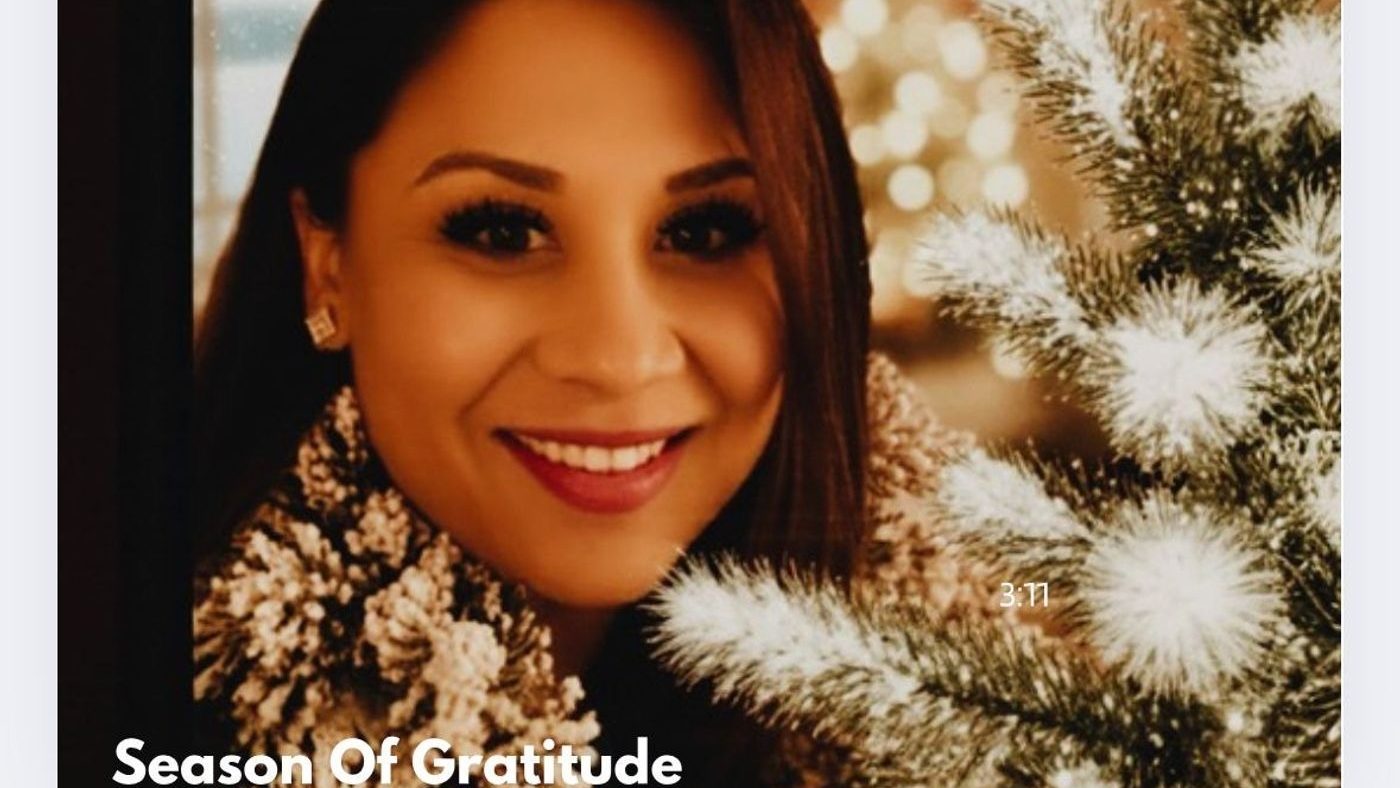
Hello everyone it’s your host Faithfulness and today I have with me Seema Farswani from England, London. Seema Farswani is here to discuss about her recent single “Season Of Gratitude”. Welcome Seema Farswani. Before we begin our interview here is what you need to know about this artist.
Seema Farswani is an Indian American multilingual singer-songwriter, producer, and interior designer based in Singapore, shaped by a life across the Middle East, United States, and Southeast Asia. Her globally informed artistry blends blues intensity, pop-rock energy, and world influences with strong visual and emotional storytelling. An ICMA Finalist 25 and Berklee Summer Alumni 25, she merges music and design into a unified creative language. Her debut EP Got My Mojo (2024) showcased multilingual, genre-crossing originality, while later releases deepened her blues-rock, pop-rock, and Middle Eastern–influenced sound, affirming creativity as a universal, borderless language.
Having this brief Introduction, I’m sure new and current fans must be excited about our Interview today.
INTERVIEW
1. Having lived across multiple regions and cultures, how has geographic movement altered the way you frame emotional storytelling in your music?
Answer: I love my travels as I pick up sounds and textures, and am fascinated by the art and architecture from every place that I visit! I absorb and weave in these stories and my personal experiences into story telling and blend these as I pen new songs. It resonates with people, and in music I end up adding new textures, colors and layers.
2. Season of Gratitude is your first jazz composition. What expressive tools did jazz give you that you could not access through your earlier genre work?
Answer: Jazz opened up a new emotional vocabulary for me. Unlike my earlier genre work, it gave me the freedom to bend time and intention—to sit behind the beat, lean into syncopation, and let silence speak just as loudly as sound. Through jazz, I accessed micro-expressions: subtle phrasing shifts, conversational dynamics, and the courage to leave things unresolved. Scatting, in particular, allowed me to express emotion without language—pure instinct, breath, and mood. Most importantly, jazz invited vulnerability without polish. It taught me to trust rawness, to let imperfections become texture, and to allow gratitude to unfold organically rather than being neatly structured. That openness is what made Season of Gratitude feel honest in a way I hadn’t experienced before.
3. From Got My Mojo through Sketches on the Walls to this release, have you noticed any shifts in the quality, approach, or growth of your work, and what do they reveal about you as an artist?
Answer: Absolutely. Got My Mojo began as a cover-song EP—multilingual in expression, but still rooted in interpretation rather than authorship. At the time, I didn’t fully realise how deeply those languages were shaping my musical instincts until I penned my very first original single. From there to Sketches on the Walls and now this release, I see a clear and confident leap across every layer of my work: vocal maturity, melodic composition, and production direction. I’ve grown more intentional in my use of instrumentation, more instinctive in blending cultures and sounds, and more fearless in writing my own material—often fusing languages naturally rather than consciously. In short, this journey has revealed the artist within me. Not just a vocalist, but a storyteller and creator who trusts her instincts and allows her lived experiences, languages, and influences to coexist as one authentic voice.
4. As both a musician and interior designer, how does your understanding of physical space inform the way you build atmosphere in sound?
Answer: I always think deeply about the smallest details. Just like in interior design, the warmth, textures, and sense of space matter. In my music, that translates to leaving headroom—allowing the vocals and instruments to breathe so the sound feels live, open, and emotionally immersive. As both a musician and an interior designer, I approach sound architecturally. I’m mindful of how layers interact, where to create intimacy, and where to allow openness. Silence, dynamics, and restraint function like negative space and ceiling height, shaping how the listener experiences the song. Ultimately, whether through a room or a piece of music, my aim is to create an environment that feels inhabitable, honest, and emotionally resonant.
5. International radio recognition arrived alongside deeply personal milestones. How did that convergence affect your confidence in your own creative judgment?
Answer: Having international radio recognition arrive alongside personal milestones didn’t make me bolder overnight—but it gently affirmed that my instincts were leading me in the right direction. It helped me trust my creative judgment more deeply and reminded me that sometimes the risks we take are already aligned with who we are becoming as artists. I’m also deeply grateful to my collaborators, listeners and the radio stations that embraced my song, giving it far more love than I could have imagined!
6. This song emerged from a year defined by quiet personal wins rather than visible milestones. What little win were you tempted to integrate into the meaning of the song but never did?
Answer: This song grew out of a year filled with quiet personal wins. One moment that stayed deeply with me was seeing my sibling find renewed strength after a period of uncertainty. It reminded me that relationships matter far more than anything material. While I didn’t reference this directly in the song, the gratitude and love it inspired quietly shaped its heart.
7. Did you ever consider giving up while making this song? If so, what challenges brought you to that point, and how did you regain your momentum?
Answer: Not exactly giving up, but there was a moment of doubt—especially when it came to working with scat! I even considered dropping that section and coming up with something else. But I took the scat seriously, practiced with intention, and pushed through, even though knowing I might not be perfect. There’s always a first time for everything, and I’m so glad I stuck with it—looking back, it really paid off and added a layer of expression I wouldn’t have had otherwise.
8. Winter environments like Chicago, Whistler, and Vancouver are embedded in the song’s emotional memory. Which would you say influenced the melodic decisions of this song more?
Answer: All three places hold precious family memories, but I’d say Whistler had the strongest influence on the song’s melodic choices. The serene snowy landscapes and quiet moments there shaped the reflective, intimate tone of the music.
9. The song is shaped by the return of someone deeply significant to your life. How were you able to convert that significant happening into a seasonal song instead?
Answer: The return of someone so significant naturally sparked a wave of gratitude in me. To turn that personal moment into a seasonal song, I focused on the essence of the season itself—reflection, warmth, and appreciation—and let those feelings guide the melody and lyrics. In doing so, the song became a celebration of gratitude that anyone could connect with, even if they hadn’t lived the exact experience.
10. Silence plays an active role in the arrangement. At what point did you decide it was best to aim for restraint rather than a different approach?
Answer: In jazz, emotion comes alive when each phrase has room to breathe. By embracing restraint and letting silence punctuate the music, each phrase could speak clearly, giving the listener space to connect with the emotion and allowing the story to unfold naturally.
11. Gratitude here feels earned through endurance rather than joy. How did that shape the emotional progression of the piece from beginning to end?
Answer: Gratitude in this piece comes from endurance rather than instant joy—it’s the feeling that emerges after navigating challenges and celebrating milestones. Unexpected personal wins like ICMA award, International radio airplay, Radio interviews, and my Berklee experience all made me pause and truly reflect. The emotional progression mirrors that journey: it starts with quiet resilience, builds through recognition and accomplishment, and ends in a sense of overwhelming gratitude—far beyond anything I could have expected.
12. Instead of traditional Christmas references, you centered the piece on stillness and presence. How do you personally define a “seasonal” song when celebration is removed?
Answer: For me, a seasonal song isn’t defined by symbols or traditions, but by a shared emotional state. When celebration is removed, what remains is stillness, presence, and reflection—feelings that naturally surface during certain times of the year. I see a seasonal song as one that invites people to slow down, be present, and reconnect with what truly matters, beyond the noise and festivities.
13. After confronting jazz as a new discipline, what kind of creative discomfort did you discover, and how will it guide your next evolution?
Answer: Confronting jazz was a whole new world for me, and it definitely brought some creative discomfort. Scatting, phrasing, and improvising moved me out of my usual comfort zone and made me rethink how I approach timing and emotion. It was challenging, but also so rewarding—I learned to let the music breathe and embrace imperfection. That experience will guide my next step by giving me the confidence to take risks, explore new sounds, and trust my instincts even in unfamiliar territory.
14. As a multilingual, genre-crossing artist, how do you decide which language or musical style to explore in your next release? Is it a deliberate choice, or do you let inspiration guide you in the moment?
Answer: It really depends on my mood and what’s inspiring me at the moment. For Sketches on the Walls, the fusion wasn’t planned—it grew organically from my present moments, situations, and experiences. I let the sounds I’m hearing and the emotions I’m feeling guide the song, and that’s what shapes the language and style I explore. 🙂
15. In 2026, do you have plans to further explore jazz or other genres that challenge your previous stylistic boundaries?
Answer: I’m always excited by the idea of new musical adventures—whether that’s exploring jazz more deeply or writing in a language that’s new to me. For me, every song is a chance to chart a part of my journey, leaving room to grow, experiment, and discover fresh ways to express what I feel.
IN SUMMARY
This has been an exciting session for us all Seema Farswani, I believe fans and anyone out there just discovering your music for the first time are equally excited about this project. Thank you for the privilege to experience this masterpiece, it’s been an honor.
Here is my thought on what i have to say after listening to “Season Of Gratitude”:
“Season Of Gratitude” feels like a deliberate step away from excess, choosing reflection over immediacy. What stands out most is how confidently the song embraces stillness, allowing each element to arrive with intention. The jazz harmonies are warm and expansive without becoming dense, creating an emotional openness that invites close listening. Seema Farswani’s vocal performance is controlled and expressive, conveying feeling through nuance rather than force. The restrained instrumentation and relaxed tempo support this intimacy, while the clean, warm production keeps the focus on emotional clarity. As a listener, the song leaves an impression of quiet resilience and earned appreciation, unfolding gently and lingering long after it ends through its sincerity and thoughtful composition.
Finally to our audience, I urge to listen to “Season Of Gratitude“, add it to your playlist and be Inspired by it and on behalf of Dulaxi I like to appreciate you all by saying thank you everyone, See you on our next interview.
For more information about Seema Farswani, click on the icons below.