

Hilgrove Kenrick Photo Credit: James Greenoff Photograph
From the sacred halls of Birmingham Cathedral to jazz stages across the West Midlands, Hilgrove Kenrick has cultivated a musical journey defined by versatility, precision, and emotional depth. Beginning his life as a cathedral chorister, Kenrick developed an early appreciation for vocal harmony, choral tradition, and the evocative power of acoustic space. This foundation seamlessly merged with his explorations of jazz, before ultimately leading him to Worcestershire, where he became an award-winning composer for film, television, and games. His work has reached audiences worldwide through terrestrial and streaming networks, earning him three Best Score awards for his feature film Suicide Club, while tracks have been featured on Netflix, the BBC, Channel 5, Canal+, and more.
Hilgrove Kenrick’s musical influence spans multiple mediums. From contributing additional music to series like 12 Monkeys for NBC Universal and Shadowhunters for Freeform/Disney, to crafting classical commissions for chamber choirs and soloists performed internationally, his artistry combines technical mastery with cinematic sensibilities. Beyond composition, he serves as Music Director for The Film Orchestra UK, hosting and leading flagship concerts, while also producing intimate solo piano works and experimenting with spatial audio. His prior solo album, “Fragments Part 1”, released on 24 April 2024, garnered critical acclaim on BBC Music Introducing, while the track “Melt” achieved over a million streams on Spotify’s “Fall Asleep” playlist and contributed to his 12.5 million streams on Pandora in North America. Central to Kenrick’s recent work is Ǣfendrēama (styled Ǣfendrēama, meaning “Evening Song”), a choir he co-founded with composer Chloe May Evans.
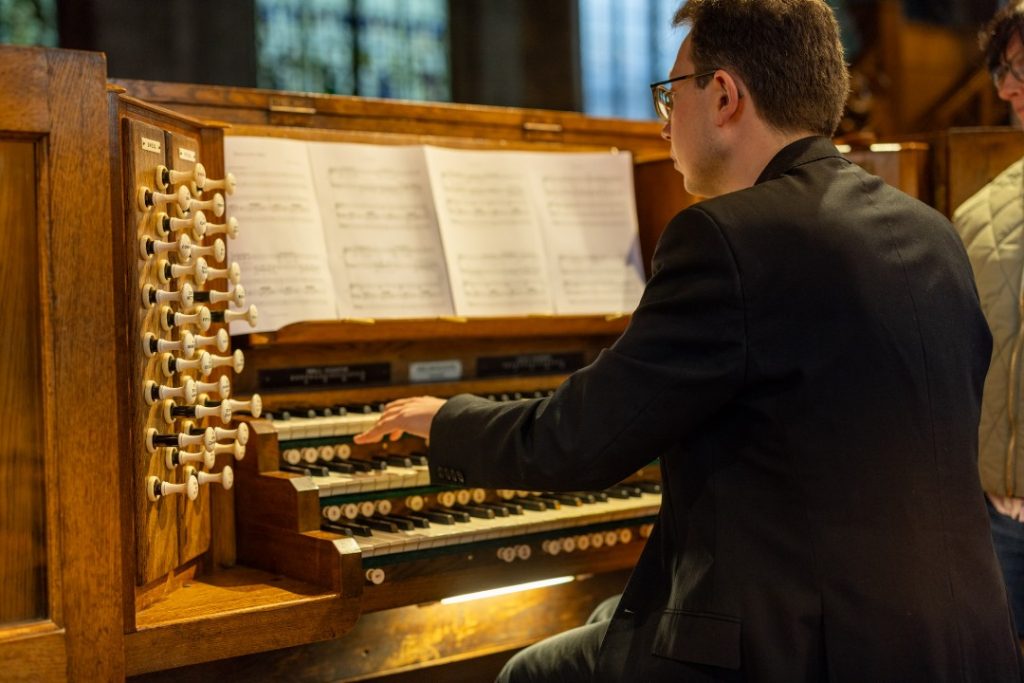
This ensemble brings together voices from the Three Choirs Cathedrals at Worcester, Hereford, and Gloucester, as well as international choral and close-harmony artists. Their performances blend technical excellence with expressive warmth, capturing the ethereal beauty of live choral music, often recorded in historically resonant spaces such as Leominster Priory. Aefendreama embodies Hilgrove Kenrick’s vision of bringing cinematic sensibilities into the choral realm, forging music that is both spiritually profound and emotionally immersive. Released on 7 December 2025, “Ǣfendrēama: Four Songs for Christmastime” is a luminous choral EP that captures the magic, wonder, and intimacy of the holiday season. The EP features four original compositions and commissions, performed live by Aefendreama under the expert direction of Chloe May Evans and recorded within the 900-year-old walls of Leominster Priory. At its heart, the EP marries Kenrick’s cinematic expertise with the sacred textures of choral music, creating a soundscape that is at once immersive, reflective, and celebratory.
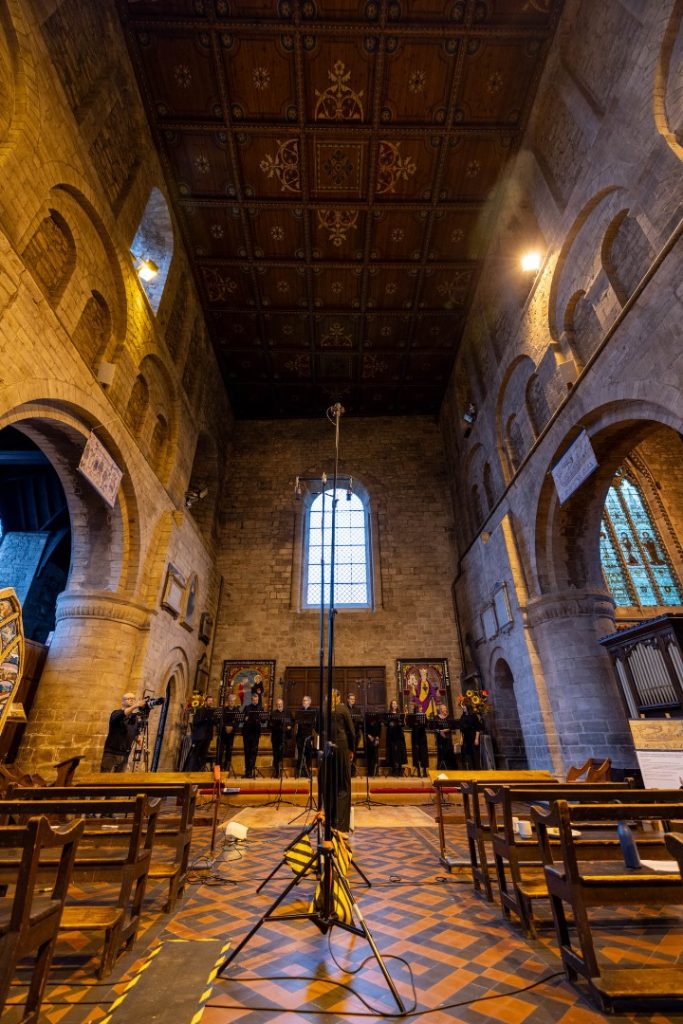
Opening with the ambient, wordless textures of “Winter’s Breath”, the listener is immediately transported into a serene winter landscape, where delicate soprano lines and ethereal harmonies evoke both cold stillness and intimate warmth. The EP also includes the premiere of Kenrick’s commissioned piece “Here is the Man”, set to debut at the Worcester Cathedral Carol service on Christmas Eve 2025, as well as Chloe May Evans’ contemplative “When They Saw the Star” and the reflective “I Wonder as I Wander”. Each track is a carefully sculpted meditation on the season, combining live acoustic space, choir, and organ with Kenrick’s spatial mixing to create an enveloping and emotionally resonant experience. “Ǣfendrēama: Four Songs for Christmastime” is a testament to Hilgrove Kenrick’s mastery of choral storytelling and his commitment to creating music that transcends the ordinary. It is an invitation for listeners to experience the wonder of Christmastime through the lens of both history and contemporary artistry, offering a seasonally timeless journey of sound, space, and spirit.
Ǣfendrēama: Four Songs for Christmastime EP Track List:
Winter’s Breath:
“Winter’s Breath” by Hilgrove Kenrick, Ǣfendrēama, Chloe May Evans opens with an atmosphere that feels carved out of the cold air of December itself, immediately enveloping the listener in a spacious, reverent stillness. The piece begins with a slow-blooming swell of wordless voices, arranged in layered harmonies that rise like mist above a frozen landscape. Each vocal line enters with calculated gentleness, giving the impression of fog rolling across an ancient cathedral floor. The timbre is soft but resonant, shaped by the natural acoustics of the 900-year-old Leominster Priory where the track was recorded. This ambience becomes the heart of the introduction, tones linger in the air just a moment longer than expected, expanding the sonic horizon and drawing the listener into a contemplative, winter-lit world. Right from the outset, the composition leans heavily on emotional immersion rather than melodic immediacy, creating a delicate tapestry of sound that feels both intimate and immense.
As the piece deepens, the soprano line, performed with angelic clarity, ascends gently from within the choral mass and becomes the guiding voice of the track. Chloe May Evans’ phrases never push aggressively; instead, they glide effortlessly, like a single bird tracing steady arcs across an icy sky. Beneath her, the lower sections maintain a cushion of warm, breathy harmonies that subtly shift between minor and suspended chords, creating a fluid blend of tension and calm. This harmonic movement is executed with such precision that it almost dissolves into the acoustic environment, allowing the listener to experience the music as a living space rather than a conventional song. The interplay between the lead soprano and the ensemble is handled with meticulous care, every swell, every release, and every resonance is crafted to evoke the quiet emotional gravity of a winter evening. The pacing is unhurried, allowing the listener to savor the slow unfolding of each chord, each texture, each breath of the choir.
By the time the piece reaches its final progression, the emotional temperature has subtly shifted from cold stillness to something more tender and human. The harmonies grow warmer and fuller, as if the choir itself is exhaling into the space, releasing a sense of solace and peaceful closure. The soprano floats above the final chords with a serene, almost translucent quality, letting her final notes fade into the vastness of the Priory’s natural reverb. The ending does not feel like a conclusion but a soft return to silence, capturing the fleeting, ephemeral nature of winter’s beauty. This final moment lingers with remarkable purity, leaving the listener with a sense of reflective calm. “Winter’s Breath” stands not only as a beautifully crafted choral piece but as an immersive winter soundscape, a contemplative meditation shaped by harmony, acoustics, and an exquisitely controlled vocal performance that transforms a simple idea into an emotionally resonant experience.
When They Saw the Star:
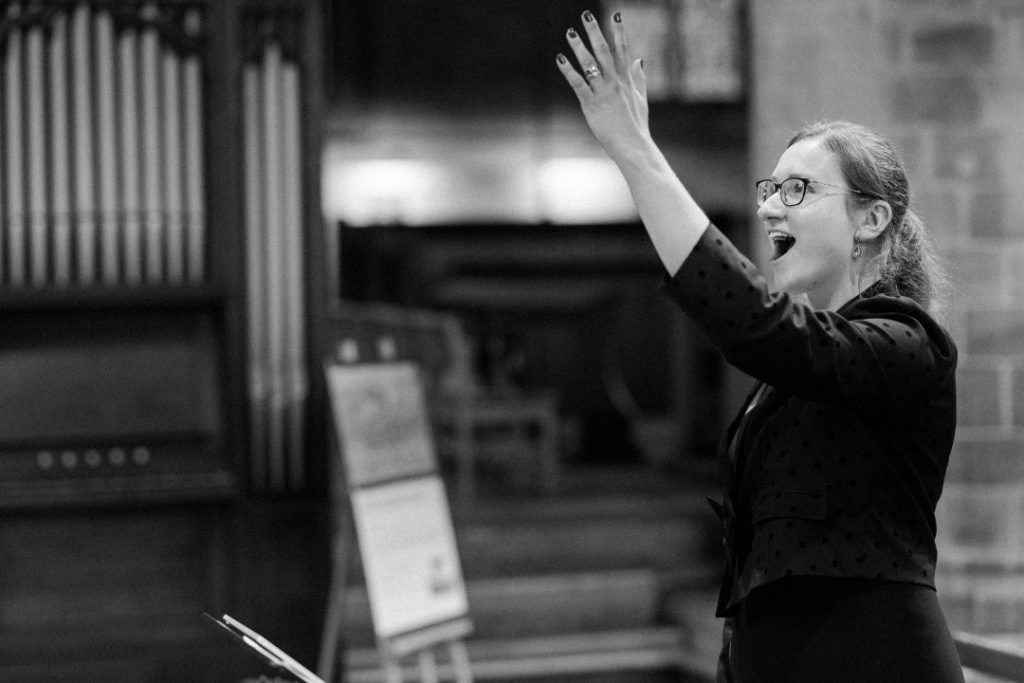
“When They Saw the Star” unfolds with an immediate sense of sacred anticipation, capturing the quiet mystery surrounding the biblical moment it represents. Written by Chloe May Evans, the song opens with a gentle, glowing bed of choral harmony delivered by Ǣfendrēama, the choir performing the piece under the skilled direction of Evans herself. The ensemble’s voices enter with soft, breath-infused tones, creating a shimmering atmosphere that resembles starlight scattered across a dark winter sky. Each chord is allowed to bloom fully within the vast acoustics of the Leominster Priory, enhanced by the production and spatial mixing by Hilgrove Kenrick, giving the introduction a luminous spaciousness. Rather than relying on melodic ornamentation, the song draws strength from subtle harmonic shifts—carefully layered intervals that move with patient elegance, setting the emotional tone with the kind of grace found in traditional sacred choral music. Engineered by Hugh Robjohns and later mastered by John Elleson-Hartley at MusikLab, the opening maintains crystalline clarity, giving each voice its own delicate presence. The result is an opening that feels contemplative yet full of expectancy, mirroring the slow approach of distant travelers guided by a celestial sign.
As the piece progresses, the voices intertwine with greater complexity, creating a dynamic interplay between the upper and lower sections. The sopranos illuminate the texture with bright, crystalline lines that float above the ensemble like a guiding star itself, while the altos, tenors, and basses form a stable harmonic foundation that carries both warmth and solemnity. This section is further enriched when the organ, played by Nicholas Freestone, enters slightly after the middle, providing a heavier, more resonant texture that grounds the choir while adding emotional depth and grandeur to the arrangement. The rhythmic pacing remains unhurried, allowing the listener to fully absorb the interplay of voices and the organ’s majestic contribution. Subtle crescendos rise and fall with organic ease, shaped by the Priory’s natural reverberation, which adds both depth and a sense of sacred distance to every note. Every swell of harmony feels like a breath of wonder, every soft diminuendo like an introspective pause, reinforcing the song’s contemplative and reverent nature.
The final section brings the emotional core of the track into full bloom. The choir expands into richer voicings, allowing the harmonies to broaden with a sense of revelation and fulfillment. The higher voices soar with ethereal clarity, while the lower registers and the organ provide steady, resonant warmth. Conducted by Chloe May Evans, the performance achieves perfect cohesion, while Hilgrove Kenrick’s production and spatial mixing ensures every layer, choral or instrumental, is perceptible yet perfectly balanced. The sound grows fuller without losing its delicate refinement, culminating in a closing passage that feels gracefully suspended in time. As the last chord fades softly into the cathedral-like space, the listener is left with a lingering sense of serenity and gentle awe. “When They Saw the Star” stands as an exquisitely crafted choral meditation, rich in atmosphere, spiritual depth, and masterful vocal blending, offering a serene, luminous experience that captures the quiet miracle at the heart of its title.
Hilgrove Kenrick’s Ǣfendrēama: Four Songs for Christmastime exquisitely blends cinematic choral artistry and sacred tradition, creating an immersive, reflective, and timeless Christmas experience.
“Ǣfendrēama: Four Songs for Christmastime” is a masterfully crafted choral EP that exemplifies Hilgrove Kenrick’s unparalleled ability to fuse cinematic sensibilities with the timeless beauty of sacred music, creating an immersive and profoundly moving listening experience. Across its four carefully curated tracks, the EP transports listeners from the ethereal stillness of “Winter’s Breath” through the celebratory reverence of “Here is the Man”, the luminous anticipation of Chloe May Evans’ “When They Saw the Star”, and the reflective nostalgia of “I Wonder as I Wander”, each piece demonstrating meticulous attention to harmonic detail, spatial acoustics, and emotional narrative. The live recording within the 900-year-old Leominster Priory imbues the music with an authenticity and resonance that few modern productions can achieve, allowing every vocal line and organ flourish to breathe with organic life. For audiences seeking both seasonal reflection and artistic sophistication, this EP offers a rare convergence of technical mastery, spiritual depth, and cinematic storytelling, making it an essential addition to any choral or holiday music collection. Whether experienced as a contemplative winter meditation or as a celebration of Christmastime’s enduring wonder, “Ǣfendrēama: Four Songs for Christmastime” stands as a testament to Kenrick’s artistry, and it comes highly recommended for listeners who appreciate music that engages the heart, evokes imagery, and lingers in memory long after the final note fades.
For more information about Hilgrove Kenrick, click on the icons below.