
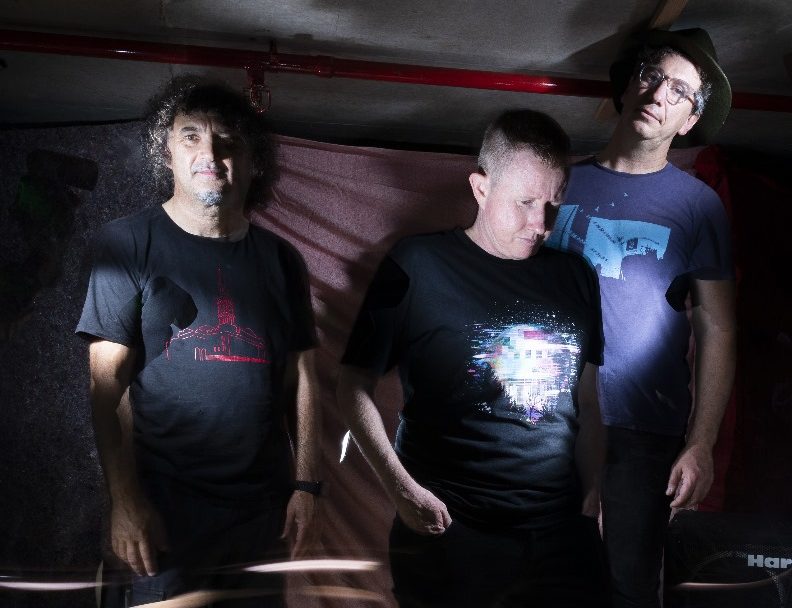
Remit Photo Credit: Tobias TItz photography
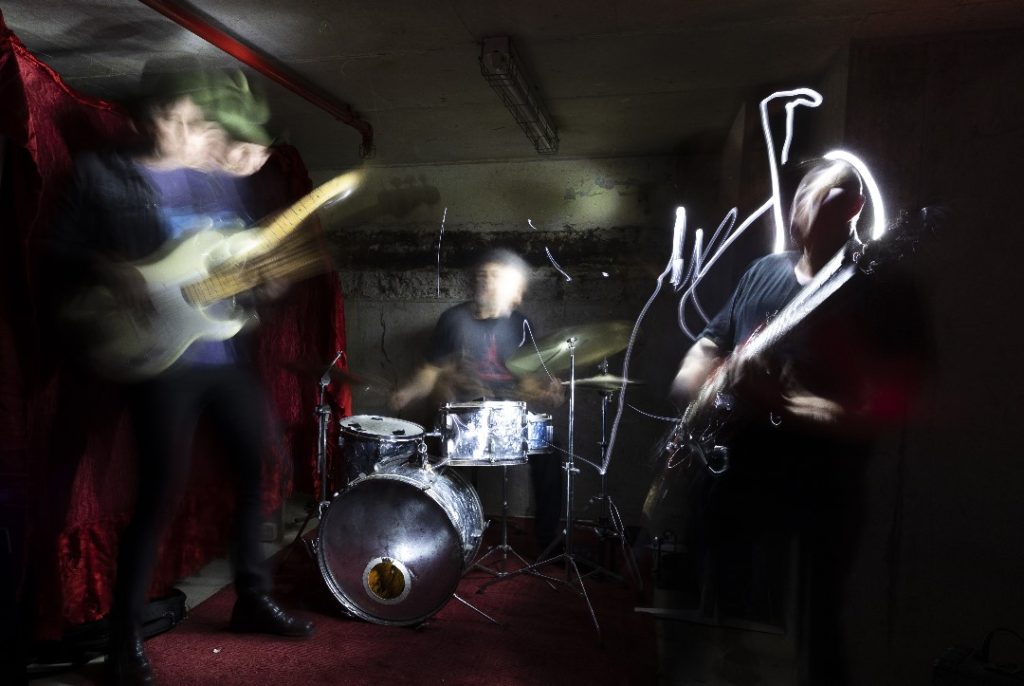
From the depths of Naarm-Melbourne’s underground, Remit has emerged as one of the city’s most arresting new forces. A trio shaped by the stark realities of their environment, the band has forged a reputation on the live circuit for their uncompromising sound and intensity. Sharing stages with both local peers and international touring acts such as Buddhadatta, Vogli Bonze, and Sister Paul, Remit quickly became known for their raw performances, where their music blurred the line between assault and catharsis. Their creative home is an infamous concrete bunker, a damp, dimly lit rehearsal space that feels more like a post-apocalyptic shelter than a studio. It is here, in the thick air and vibrating walls, that Remit shaped their sound: a fusion of rock, post-punk, and krautrock, sharpened into something urgent and unflinching. Beyond their music, they have extended their vision into visual collaborations with acclaimed filmmakers Dirk de Bruyn and Paul Rogers, cementing their status as artists who view creativity as a multi-dimensional act rather than a singular pursuit.
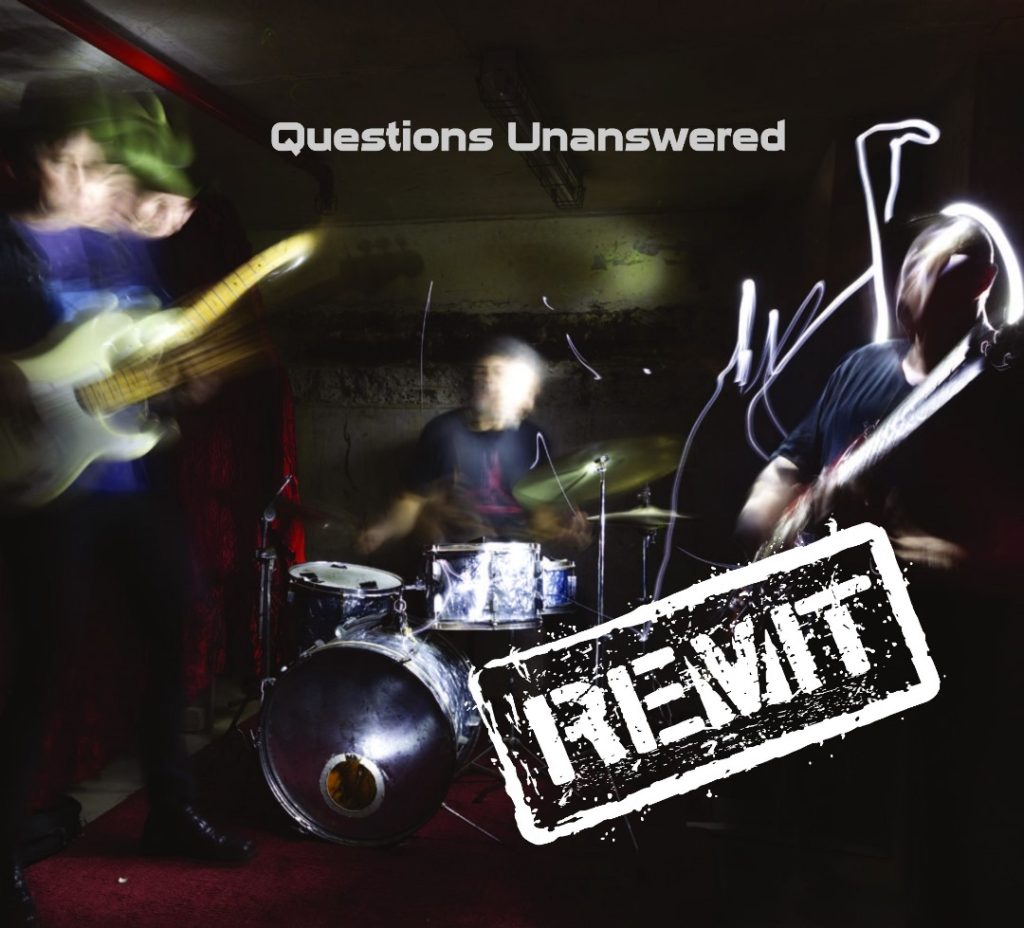
Through years of relentless live shows and bold creative statements, Remit has built momentum toward a debut that reflects both their origins and their ambition, a sound born underground, yet reaching outward with intensity and purpose. Released on July 11, 2025, Remit’s album, “Questions Unanswered”, is not just a record but a time-stamped document of resistance and unrest. Co-produced and mixed by Simon Maisch!at Lily Street Studios in Coburg, and mastered by Don Bartley, the album captures the very essence of the bunker it was written in: tense, raw, and alive with emotional turbulence. Across its tracks, the record unfolds like a journey through fractured states of being, poetic heartbreak, existential howls, and politically charged defiance, each bound together by an urgency that feels impossible to ignore. It is a powerful blend of serrated rock, relentless post-punk, and hypnotic krautrock, shaped into a sonic assault that mirrors the chaos of living in an increasingly disjointed world.
Questions Unanswered Album Track List:
Are You Compliant:
“Are You Compliant?” opens the album “Questions Unanswered” by Remit with a sonic force that immediately sets the tone for the rest of the album. From the very first seconds, the track bursts in with serrated guitar tones that slice through the mix like warning sirens, accompanied by a militaristic drum pattern that feels almost ritualistic in its precision. The bassline doesn’t just support the rhythm, it pushes against it, creating a sense of propulsion that feels urgent, like being swept into a storm of resistance. There’s no easing in; the song is designed as a confrontation, a challenge hurled at the listener that mirrors the raw, subterranean environment where the album was written and rehearsed. The raw energy is underscored by its unpolished textures, which give the song an immediacy, as though it’s being performed in the listener’s ear, in a dimly lit bunker where walls sweat with the vibrations of rebellion. This opening establishes not just the soundscape of the album, but its mission, to unsettle, to provoke, and to force introspection.
As the track unfolds, the interplay between instrumentation intensifies, layering angular riffs with abrupt rhythmic shifts that never let the listener settle into complacency. The guitars work like sonic weapons, jagged and relentless, at times recalling the experimental edge of post-punk pioneers but delivered with a modern urgency that leans into industrial grit. The percussion is both metronomic and chaotic, moving between precise, marching-like beats and bursts of frenzied fills that mimic the unpredictability of unrest. Vocally, the delivery is raw and uncompromising; half-plea, half-demand, as the repeated refrain “Are You Compliant?” becomes less of a question and more of an accusation. It captures the essence of being caught in a fractured world where conformity is demanded, but resistance simmers beneath the surface. There’s a sense of paranoia and claustrophobia embedded in the vocal tone, heightening the intensity of the song and locking the listener into its tightly coiled energy. This is not music for comfort, it is music designed to mirror a fractured reality, uncompromising in its confrontational stance.
What makes “Are You Compliant?” so striking is not only its sound but its thematic resonance. The track feels like a protest chant for a society teetering between collapse and awakening, questioning the listener directly while echoing the political and existential unease of the times. It thrives on dissonance, both musical and emotional, creating an atmosphere that leaves no easy resolution. The distorted riffs, the unrelenting rhythm, and the confrontational lyricism form a soundscape that is as much about resistance as it is about survival. It places the listener in the uncomfortable position of introspection, forcing them to consider complicity in systems that thrive on control and silence. By the time the track concludes, there is no catharsis, only a lingering intensity that leaves the listener suspended in its haze, ready or not, for the rest of “Questions Unanswered”. As an opener, it succeeds brilliantly, it doesn’t just invite you into the album, it drags you into its underground world of raw defiance and refuses to let go.
Debunker:
“Debunker” by Remit is one of the most electrifying moments on “Questions Unanswered”, and it wastes no time in carving its identity with a jagged, riff-driven intensity that cuts straight to the bone. From the opening seconds, the guitar enters with a serrated edge, unpredictable in its phrasing and reminiscent of Tom Morello’s angular, almost mechanical approach to riff-making, yet filtered through Remit’s darker, grittier lens. The rhythm section immediately locks in, providing a taut framework that allows the guitar to weave in and out with both aggression and precision. The drums are sharp and clipped, their syncopation adding tension, while the bass underpins everything with a throbbing menace that makes the track feel as if it is vibrating from beneath the floorboards. The result is a sonic assault that feels meticulously structured but raw at its core, balancing chaos and control in a way that keeps the listener on edge throughout. This is music designed not just to be heard but to be felt, its physicality undeniable.
As the song progresses, “Debunker” reveals itself as a track that thrives on confrontation, not just musically, but thematically. The instrumentation mirrors its central concept: stripping away facades, exposing what is hidden, and dismantling illusions with a ferocity that cannot be ignored. The vocals are delivered with an urgency that borders on accusatory, snarling lines that feel as though they are aimed directly at systems of manipulation and deceit. The phrasing is clipped and forceful, each word landing like a blow, reinforcing the relentless momentum of the music. What makes it even more powerful is the unpredictability of its structure; the guitar refuses to stay confined to standard patterns, spiraling into sudden angular bends, jagged bursts, and dissonant chords that feel like sonic manifestations of tearing apart falsehoods. The tension between rhythm and melody amplifies the sense of instability, leaving the listener unsettled yet energized, caught in a constant push and pull between coherence and collapse.
What elevates “Debunker” beyond being just another riff-heavy track is the way it marries its sonic aggression with atmosphere and depth. The song doesn’t simply pummel, it creates an ominous space, an atmosphere that feels dystopian, where truth and distortion battle in every measure. Its raw textures give it a live-wire energy, as though the band recorded it in one furious take, yet the precision of its shifts shows a mastery of control. The interplay between guitars, bass, and drums creates layers of tension, each instrument feeding off the other to form a soundscape that is dense but never cluttered. By the time the song closes, it leaves the listener not with resolution but with an aftertaste of unease, as if the very act of exposing lies only leads to more questions. In this way, “Debunker” is not just a highlight of the album, it is a microcosm of “Questions Unanswered” as a whole: fierce, questioning, and unrelenting in its demand that the listener confront uncomfortable truths.
Good Friends:
“Good Friends” is one of the most atmospheric and cinematic tracks on Questions Unanswered, carving out a space that feels worlds apart from the more aggressive and riff-heavy moments of the record. From its opening bars, the song immediately conjures a sense of unease, with eerie synth textures that shimmer like neon lights flickering in a rain-soaked alleyway. There’s a clear nod to the suspense-laden soundscapes of John Carpenter, with pulsating electronic motifs and minimalist layers that evoke the tension of an ’80s horror score. The guitars, rather than attacking with angular riffs, move in the background like shadows, distant, reverberating, and unsettlingly patient. The drums creep in gradually, not with brute force but with deliberate, calculated hits that heighten the suspense, as if marking the steady pace of an approaching danger. Every note and every pause in “Good Friends” feels carefully measured, as though the song thrives on anticipation, building an atmosphere of paranoia and dread that never quite releases its grip.
What makes “Good Friends” stand out is its ability to create a narrative entirely through its sonic palette. Unlike tracks that rely heavily on lyrical urgency, here the instrumentation itself becomes the storyteller. The synths swell and contract like a living organism, guiding the listener through shifting moods, sometimes cold and detached, other times deeply hypnotic. The bass provides a grounding pulse that keeps the track tethered while still maintaining its sense of disorientation, moving with a subtle groove that adds depth to the otherwise stark soundscape. The vocals arrive with a haunting quality, subdued and spectral, blending into the arrangement rather than dominating it. Instead of demanding attention, the voice lingers like a ghost within the music, amplifying the feeling that the song is less about confrontation and more about immersion into a psychological thriller. This dynamic makes “Good Friends” less of a song in the traditional sense and more of a cinematic experience, an audio scene set within the album’s larger world of existential unease.
By the time “Good Friends” reaches its conclusion, the listener is left suspended in its haze, as if the music has transported them to a dim, otherworldly space where time feels elastic and meaning slips through the cracks. The lack of catharsis is deliberate, reinforcing the track’s haunting quality and ensuring that its tension lingers long after it ends. Within the context of Questions Unanswered, it acts as a tonal shift, proving that Remit is not confined to sheer aggression or raw post-punk energy but is equally capable of crafting moody, textured pieces that lean into cinematic suspense and psychological depth. It serves as an interlude of sorts, a moment of eerie reflection within the album’s broader chaos, but its subtle power makes it one of the most memorable tracks on the record. “Good Friends” demonstrates that true intensity doesn’t always come from volume or speed, it can also emerge from restraint, atmosphere, and the unsettling power of suggestion.
My Transformation:
“My Transformation” is perhaps the most emotionally charged and gothic-leaning track on “Questions Unanswered”, by Remit plunging the listener into a soundscape that is drenched in drama and shadow. From the very beginning, the atmosphere is thick with tension, with deep, resonant basslines and reverberating guitar tones that echo like tolling bells in a cathedral of despair. The instrumentation is slower and more deliberate than many of the other tracks on the record, creating a sense of weight and inevitability. Each note feels heavy with significance, dragging the listener deeper into its abyss. The drums, though restrained, carry a ritualistic quality; steady and deliberate, like the slow march of time itself, while the guitar layers weave around them in brooding textures that alternate between haunting stillness and surging crescendos. This sonic approach immediately sets “My Transformation” apart as a piece of gothic theater, channeling an atmosphere reminiscent of Christian Death and other forebears of darkwave and gothic rock, but brought into Remit’s own post-punk urgency.
Thematically, the song captures the essence of change not as a liberating act but as an agonizing metamorphosis. The vocals are steeped in anguish and theatricality, oscillating between mournful vulnerability and searing intensity, as though embodying the duality of a self being torn apart and remade. The lyrics suggest a struggle between despair and rebirth, a painful shedding of old skin in the face of alienation and inner conflict. The voice doesn’t sit comfortably in the mix; instead, it hovers like a presence above the instrumentation, echoing with a spectral quality that amplifies its haunted message. The interplay between voice and instrument mirrors the very theme of transformation, shifts between light and shadow, beauty and decay, resistance and surrender. The guitar’s mournful tones often rise into jagged, almost wailing outbursts, reflecting the turbulence of identity and the painful beauty of growth. The result is a piece of music that feels less like a traditional song and more like a ritual, an invocation of inner demons and the painful process of facing them.
What makes “My Transformation” particularly compelling within the arc of “Questions Unanswered” is the way it brings depth and emotional gravity to the record’s confrontational energy. Where other tracks rely on angular riffs, frenetic rhythms, or militaristic urgency, this song slows the pace to allow the darkness to seep in, forcing the listener to dwell on the emotional weight of its themes. It highlights the versatility of Remit as a band, showing they are not only capable of unleashing sonic assaults but also of sculpting haunting, gothic soundscapes that linger long after the final note fades. By the time the track ends, the listener is left with a profound sense of catharsis, not the triumphant release of victory, but the quiet, haunting acknowledgment of transformation as a process of both destruction and renewal. In this way, “My Transformation” acts as one of the emotional anchors of the album, a moment of raw vulnerability that deepens the record’s resonance and ensures its impact extends far beyond its immediate sound.
Questions Unanswered* is a raw, unflinching release, melding post-punk, krautrock, and gothic intensity into a visceral soundtrack of resistance and reflection.
In its entirety, “Questions Unanswered” stands as a debut of remarkable weight, one that captures the urgency, unease, and emotional turbulence of our times with both precision and raw power. Rather than offering comfort, Remit confronts the listener with serrated riffs, hypnotic rhythms, and atmospheric dread that challenge as much as they captivate, weaving together themes of heartbreak, existential despair, and political fury into a cohesive sonic narrative. This is not an album to be played in the background, it demands attention, introspection, and emotional engagement. For listeners drawn to the raw intensity of post-punk, the motorik pulse of krautrock, or the gothic gravity of darker soundscapes, “Questions Unanswered” is a must-hear, a work that will resonate deeply with those unafraid of confronting uncomfortable truths. It is an album that not only marks Remit as a band to watch, but also as one capable of translating the chaos of the present moment into music that lingers long after the final note has faded.
For more information about Remit, click on the icons below.