

Rosetta West is a blues rock band whose music often goes beyond the traditional framework of the genre. Their sound incorporates elements of psychedelia and world folk music, while their lyrics frequently explore themes of mysticism and spirituality. Known for their refusal to follow mainstream industry paths, they have sustained a long, unconventional, and fiercely independent underground career. Their music is not confined to standard platforms; while they do have a global base of fans, many of their non-Spotify releases can be found on outlets like Bandcamp and YouTube, as well as in more imaginative corners described as “haunted shipwrecks” and “graveyards.” This distribution reflects their unique identity as an underground act committed to cultivating authenticity over commercial conformity.
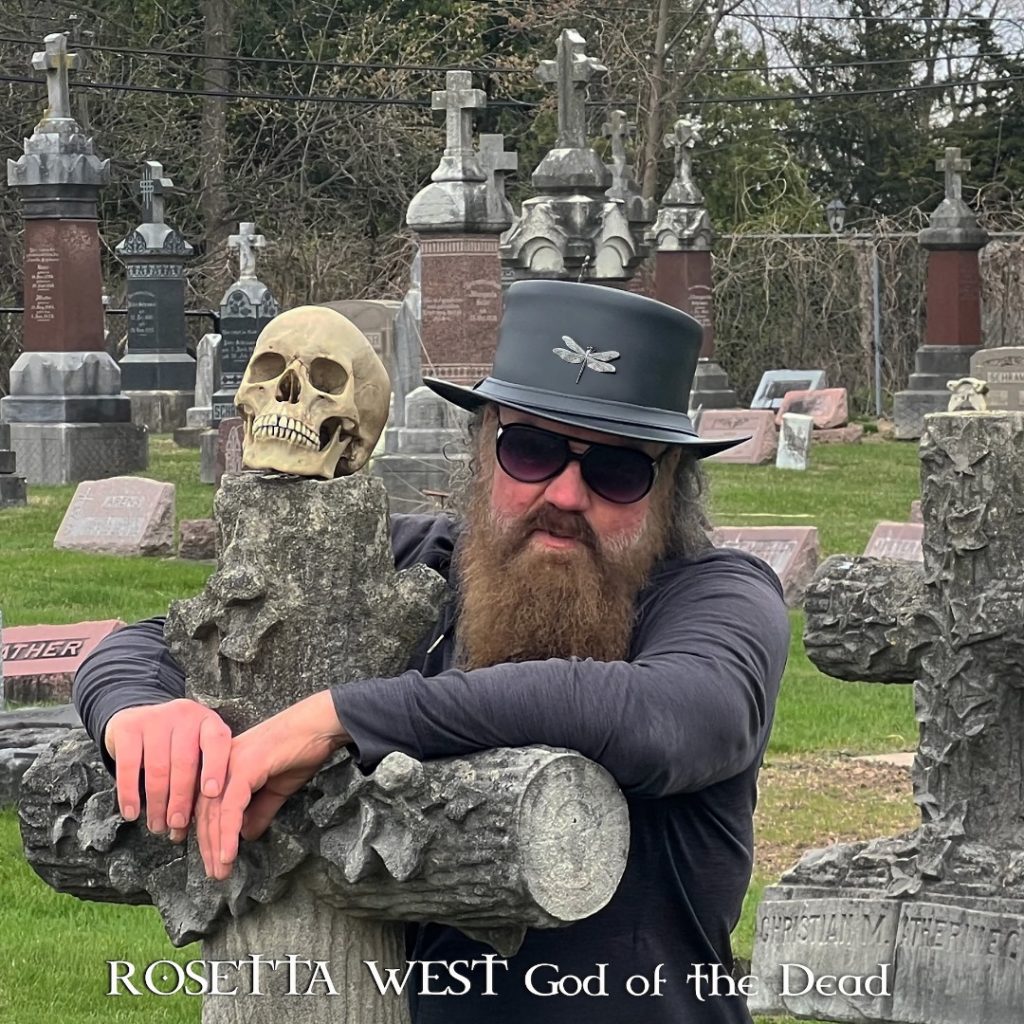
Released in 2025, Rosetta West’s new album, “God of the Dead”, represents a significant evolution from their last project, “Gravity Sessions”. Where “Gravity Sessions” was short and concise, “God of the Dead” is long, sprawling, and ambitious, yet held together by a cohesive artistic vision and emotional depth. The album is a collection of raw and wildly diverse works, ranging from strange blues rock to punk and funk, alongside emotional acoustic pieces, piano ballads, and searing feedback instrumentals. It showcases the band’s ability to stretch their sound into new territories while maintaining the intensity that defines their artistry. “God of the Dead” is more than just a set of tracks, it is a record that demands time, patience, and immersion. For listeners who give themselves fully to it, the album offers a powerful and unforgettable experience.
God of the Dead Album Track List:
Boneyard Blues:
“Boneyard Blues,” the opening track of Rosetta West’s “God of the Dead”, emerges as a commanding invocation, instantly pulling listeners into the sonic ritual that the album promises to be. From its very first moments, the track thrums with raw energy, its fuzzy guitar riffs coated in grit, its drumline moving with a steady, swamp-like pulse that feels both primal and deliberate. There is a haunting density to the production, as though each note is suspended in a fog of distortion and decay, beckoning listeners into a liminal space between the earthly and the otherworldly. Vocals arrive with equal weight, gritty, impassioned, and steeped in a blues heritage that recalls the ghosts of Delta crossroads, yet sharpened with a psychedelic modern edge. The effect is one of transcendence, where the traditional architecture of blues-rock is reimagined as something more atmospheric, ceremonial, and deeply rooted in mysticism. As an opening statement, “Boneyard Blues” is less a song and more an invocation, laying down the bones of the journey ahead.
What makes “Boneyard Blues” particularly arresting is its balance between raw muscularity and subtle intricacy. The song pushes forward with an undeniably heavy blues-rock swagger, yet beneath the distorted riffs and stomping groove, there are delicate textures that shimmer with intention. This instrumental meditation reframes the aggression of the opening sections, allowing space for reflection, almost as though the track exhales after the storm of its own creation. It’s in these dynamics that Rosetta West reveals its craft: the ability to conjure something visceral and immediate while embedding within it quiet details that reward deeper, repeated listening. “Boneyard Blues” doesn’t just grab attention; it lingers, its riffs and echoes resonating in memory long after the track has ended.
Beyond its musical architecture, the track resonates thematically as well. The title itself, “Boneyard Blues”, suggests decay, mortality, and the eternal dance between life and death, ideas that permeate the wider “God of the Dead” project. The music amplifies this imagery: the heavy riffs conjure visions of ritual dances around fire-lit graveyards, while the drawn-out outro feels like a requiem for the departed. There is a cinematic quality to the song’s construction, almost as though it is scored to an unseen film, each chord drenched in atmosphere and symbolic weight. For listeners, the song becomes more than just entertainment; it is an experience, one that demands surrender and rewards immersion. By fusing gritty blues traditions with psychedelic mysticism and emotional depth, Rosetta West makes “Boneyard Blues” a track that encapsulates the spirit of the album while also standing tall on its own. It is both an initiation and a promise: that the journey through “God of the Dead” will be as haunting as it is unforgettable.
I Don’t Care:
“I Don’t Care” from Rosetta West’s “God of the Dead” strikes with a fierce immediacy, shattering the atmospheric haze established by the album’s opening tracks and instead delivering something raw, blunt, and unflinchingly direct. Built upon a tight, jagged guitar riff that gnaws its way forward with punk-like insistence, the track wastes no time in establishing its presence. The vocals cut through with a dismissive snarl, carrying the weight of indifference yet cloaked in an urgency that makes the performance anything but apathetic. This paradox; the assertion of detachment delivered with fiery conviction, gives the song its magnetic energy, pulling listeners into the tension between rebellion and resignation. There’s a rugged simplicity at its core, but within that simplicity lies the power of authenticity: no wasted embellishment, no forced ornamentation, just raw sonic expression shaped into a three-minute punch of blues-infused punk energy.
What elevates “I Don’t Care” beyond its surface abrasiveness is the way it draws from deep musical roots while channeling them into something brazenly modern. Echoes of long-dead Delta bluesmen reverberate beneath the track’s rhythmic thrust, as if the restless spirit of that tradition has been electrified and hurled into the present. The guitar tones are jagged and confrontational, reminiscent of barroom grit and garage-band sweat, yet they never feel amateurish; instead, they ride the fine line between chaos and control, grounding the song in authenticity. The rhythm section keeps the track taut, with drums snapping like gunfire, anchoring the chaos while also feeding its intensity. This balance of feral energy and structured momentum makes the song not only a standout moment in the album but also a testament to Rosetta West’s ability to stretch the boundaries of genre, melding blues, punk, and rock into a form that is both timeless and visceral.
Lyrically and emotionally, “I Don’t Care” embodies a spirit of defiance that resonates with listeners on a personal level. The dismissive refrain doesn’t just project indifference; it echoes a refusal to conform, a rejection of societal expectations, and an embrace of individuality at all costs. There’s catharsis in its bluntness, an invitation for listeners to shed their own burdens of pretense and speak with unfiltered honesty. Coupled with its relentless instrumentation, the track becomes a rallying cry for those who have grown tired of being weighed down by judgment or control. It’s music as rebellion, not in a grand political sense, but in the deeply personal act of refusing to care about anything that seeks to suppress one’s voice. By embedding this ethos in a soundscape that thrums with urgency and grit, Rosetta West transforms “I Don’t Care” into more than just a song, it becomes a statement, a pulse of liberation, and one of the most arresting declarations on “God of the Dead”.
My Life:
“My Life” from Rosetta West’s “God of the Dead” stands apart on the record as one of its most introspective and soul-baring moments. Where other tracks blaze with grit and fire, this one leans into vulnerability, pulling its strength not from sheer force but from the fragile, exposed honesty of its delivery. The arrangement is stripped to essentials, and this restraint is what makes the song so striking: guitar patterns ripple with quiet tension, each chord landing like a sigh, while the steady drum beat adds a heartbeat-like pulse beneath it all. The percussion doesn’t intrude or overwhelm; instead, it serves as a grounding presence, a rhythmic reminder of life’s persistence even in the midst of reflection. Layered against vocals that carry a confessional weight, this interplay creates a balance between fragility and resilience. The production choices emphasize space, letting the percussion breathe, so that every snare hit and cymbal wash feels like an extension of the song’s emotional core.
As the track unfolds, its hypnotic quality becomes more evident, and much of this effect comes from the way the percussion locks in with the spiraling guitar lines. The drums maintain a steady, almost trance-like tempo, anchoring the restless cycles of the guitars and vocals. There’s a sense of subtle propulsion here, the kind of momentum that doesn’t rush forward but instead keeps the song suspended in motion, like waves pushing against the shoreline. The snare crack has a dry, earthy tone, while the low-end thump of the kick drum provides warmth, preventing the introspection from ever drifting into cold detachment. This rhythmic consistency creates tension: it’s steady enough to feel reassuring but unyielding enough to echo the song’s undercurrent of struggle. Listeners are drawn deeper into the atmosphere not only by what’s sung or played on guitar, but by the drumbeat’s quiet insistence, which acts as a pulse of inevitability driving the song forward.
Thematically, “My Life” resonates as a meditation on existence, on endurance, choices, and the scars that shape identity. And here again, the percussion plays a vital role. The beat becomes almost symbolic, embodying the passage of time, the measured march of days, and the persistence of spirit. It underscores the lyrical themes without overpowering them, offering a sonic metaphor for resilience: no matter the hardship, the rhythm carries on. Against this backdrop, the vocals feel more urgent, as if pushing against the inevitability of the beat, and the guitars feel more searching, spiraling around the drums’ steady spine. By combining lyrical honesty, hypnotic instrumentation, and percussion that breathes with life itself, Rosetta West ensures that “My Life” isn’t just reflective but deeply immersive. Within the arc of “God of the Dead”, it provides an anchor, an emotionally raw moment where percussion, voice, and melody converge to remind listeners that even in struggle, the beat of life carries on.
Midnight:
“Midnight” from Rosetta West’s “God of the Dead” album is a track that thrives on atmosphere and tension, drawing listeners into a soundscape that feels both intimate and cinematic. From the very start, the song builds on a moody instrumental palette where brooding guitar riffs meet textured layers of bass and subtle atmospheric tones. There is a hushed, almost hypnotic quality to the instrumentation, which gives the impression of wandering through the stillness of night, accompanied only by the rhythm of one’s own heartbeat. Rosetta West uses this backdrop to explore themes of solitude, mystery, and the unspoken emotions that often rise to the surface when the world quiets down, giving “Midnight” a universal resonance that feels both personal and poetic.
The percussive structure of “Midnight” deserves special mention because of the way it shapes the track’s pacing. Rather than relying on forceful or overly pronounced drum lines, the song adopts a more restrained and deliberate approach to rhythm. The drumbeat carries a steady, muted pulse that anchors the music without disrupting its dreamlike quality. Each percussive element, whether the soft taps of the snare, the atmospheric cymbal work, or the deep, understated kick, feels intentional, serving the mood rather than overpowering it. This rhythmic subtlety mirrors the quiet intensity of midnight itself: calm on the surface, but with an underlying sense of momentum that suggests something hidden, something waiting. It’s this careful balance between restraint and presence that gives the song a haunting elegance.
Vocally, Rosetta West delivers a performance that complements the track’s dusky instrumental atmosphere. The vocals are emotive without being excessive, flowing almost like a whispered confession or a quiet conversation under the stars. The phrasing feels deliberate, lingering on certain words to heighten their impact and aligning seamlessly with the ebb and flow of the music. Lyrically, “Midnight” captures that liminal space between reflection and desire, painting vivid images that resonate deeply with the listener. The combination of introspective storytelling, haunting instrumentation, and carefully crafted percussion makes the track a standout moment on “God of the Dead”. It lingers long after it ends, not with bombast, but with a subtle, almost spectral presence that perfectly embodies the essence of its title.
God of the Dead is Rosetta West’s most haunting, expansive work, blending grit, mysticism, and raw emotion into timeless transcendence.
“God of the Dead” stands as Rosetta West’s most daring and expansive statement to date, an album that refuses to be boxed into one sound, instead moving fluidly between blues rock grit, punk energy, funk grooves, delicate acoustic ballads, piano-led reflections, and feedback-soaked instrumentals. It is sprawling in length and scope, yet it never loses its cohesion, bound together by the band’s mystic lyricism and unflinching emotional intensity. This is not a casual listen; it is a work that asks for time and patience, rewarding those who immerse themselves with an experience that is both haunting and deeply moving. For long-time followers of Rosetta West, it affirms their reputation as one of the underground’s most fearless voices, while for new listeners, it offers a powerful introduction to their world of grit, mysticism, and raw artistry. Recommended for anyone seeking music that is unafraid to challenge, surprise, and linger long after the final note, “God of the Dead” is a journey worth taking.
For more information about Rosetta West, click on the icons below.