

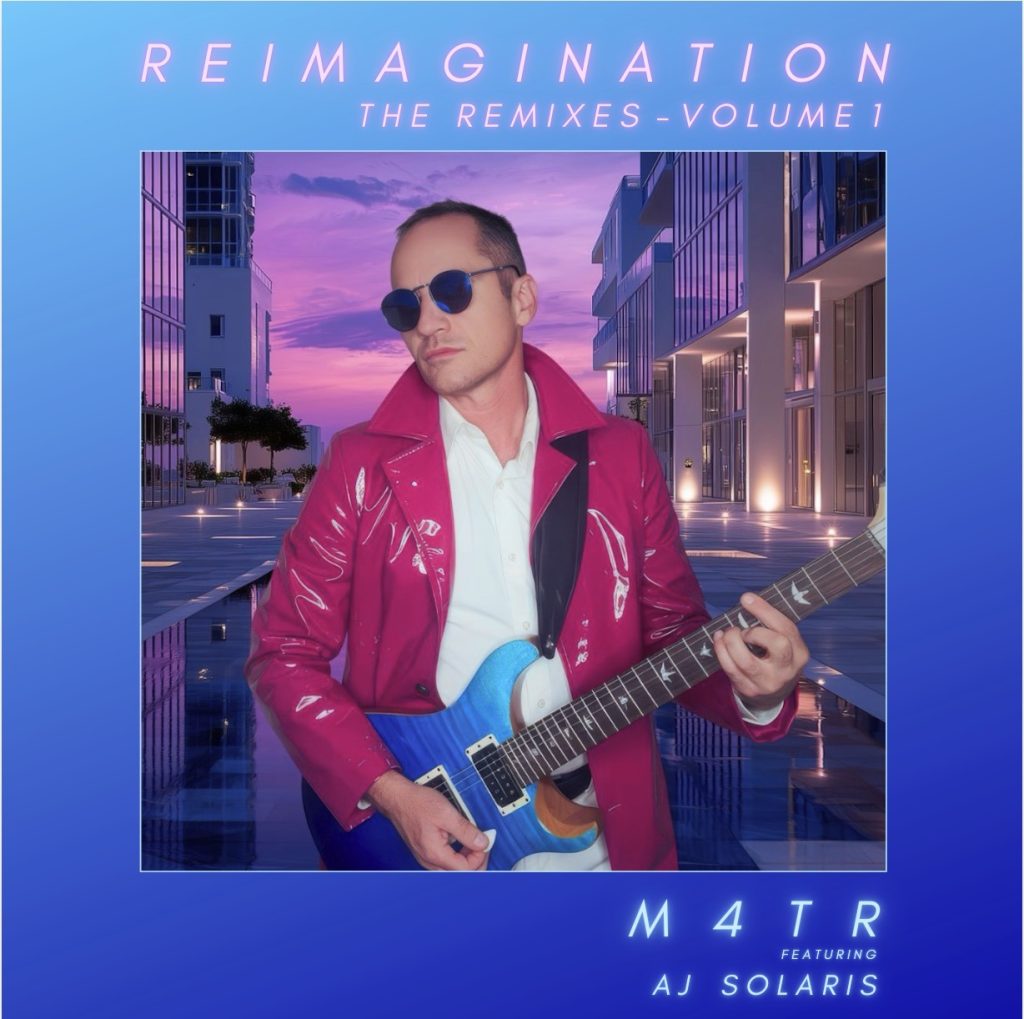
“Reimagination: The Remixes, Vol. 1,” released on 17 Apr 2026, stands as a meticulously constructed remix album that redefines M4TR’s sonic identity through a focused, club-driven lens. Spanning 10 tracks across 48 minutes, the project is built on a clear conceptual framework: transformation without loss of essence. By enlisting Grammy-winning producer Philip Larsen and Billboard chart-topping remixer Mr. Mig, the album achieves a refined balance between artistic preservation and rhythmic reinvention, presenting a cohesive body of work that prioritizes flow, atmosphere, and immersive continuity over fragmentation and repetition. At its core, the album reshapes the role of vocals, shifting them from narrative anchors into textural components that interact fluidly with the production.
Through repetition, processing, and precise rhythmic placement, the voice becomes part of the sonic architecture, reinforcing the album’s exploration of tension, release, and internal evolution. Thematically, it navigates ideas of conflict, memory, and liberation, expressed through controlled and cyclical structures that mirror psychological transitions. This conceptual consistency gives the project a sense of purpose that extends beyond its dancefloor orientation and creative direction. The production is sleek and modern, defined by pulsating low-end frequencies, crisp percussion, and layered synth arrangements that maintain clarity while delivering intensity. The sequencing is intentional, ensuring a seamless progression that allows the album to function as a unified listening experience. As the first entry in a planned series, this release establishes a confident foundation, merging conceptual depth with club functionality in a way that feels both deliberate and forward-looking.
Coup de Grace (Philip Larsen Albatross Remix):
The vocal performance in “Coup de Grace (Philip Larsen Albatross Remix)” by M4TR is constructed with a stark, deliberate precision that transforms the voice into a commanding rhythmic force. Rather than embracing melodic fluidity, the delivery is clipped, assertive, and strategically spaced, allowing each phrase to land with authority. Lines such as “Now the time has come, the battle is won, a preordination” are articulated with controlled intensity, reinforcing a sense of inevitability and final resolution. The lyrics present a narrative of calculated liberation, where the “albatross” symbolizes an enduring burden that must be decisively eliminated. “No tender mercy as I slay this albatross … No controversy, as I grant this coup de grâce” captures a moment of irreversible action, framing transformation as an act of necessary destruction. The message is unambiguous: clarity and peace emerge through confrontation and closure, and this moment is both destined and essential.
Musically, the track is built on a sleek, minimalist electronic framework that emphasizes precision and forward motion. Pulsating synth layers establish a hypnotic foundation, while the low-end delivers a steady, driving force that anchors the composition. The percussion is sharp and metallic, contributing to a clinical, industrial atmosphere that complements the vocal tone. The arrangement evolves subtly, introducing textural variations that sustain engagement without disrupting the track’s flow. The integration of vocals into the rhythmic structure enhances the track’s cohesion, blurring the line between voice and instrumentation. This balance of thematic intensity and refined production defines the track’s identity as both emotionally decisive and sonically controlled.

The Spektre (Philip Larsen Do Or Die Remix)”:
The vocal performance in “The Spektre (Philip Larsen Do Or Die Remix)” by M4TR is haunting and psychologically layered, merging ethereal phrasing with rigid repetition to create a sense of emotional dislocation. The delivery alternates between distant, reflective lines such as “you will remember, but you don’t know it yet” and sharper, more confrontational statements, establishing a dynamic interplay between introspection and tension. The lyrics explore memory and internal conflict, with references like “voices inside my head” and “I can’t stand you” illustrating a fractured mental and emotional state. This repetition is not incidental; it reinforces the cyclical nature of unresolved thoughts, trapping the listener within the same loop of tension. The theme centers on the persistence of the past and the struggle to reconcile lingering emotions, transforming personal turmoil into a structured, rhythmic experience that resonates with cold clarity.
The production amplifies this tension through a dark, driving electronic soundscape rooted in techno and house influences. A deep, distorted bassline provides a relentless foundation, while crisp, mechanical percussion maintains a steady, club-oriented pace. Layered synth textures introduce an evolving sense of unease, shifting subtly to maintain momentum without breaking the track’s hypnotic flow. The repetition of “Heat” functions as a central rhythmic anchor, grounding the arrangement while reinforcing its thematic intensity. The clean, polished mix ensures that each element is sharply defined, allowing the track’s emotional and sonic components to operate in perfect alignment. The result is a cohesive piece that channels psychological tension into a powerful, dance-driven form.
Kill The Self (Philip Larsen Mad Dogs Remix):
“Kill The Self (Philip Larsen Mad Dogs Remix)” by M4TR delivers a conceptually intense vocal and lyrical framework that revolves around transformation through self-confrontation. The vocal elements are sparse but impactful, functioning as mantra-like declarations that anchor the track’s thematic core. Lines such as “Come alive, kill the self, life goes on and time is slipping” and “To survive kill the self, ticking time hark the bell” are delivered with a detached, almost mechanized tone, emphasizing their philosophical weight. The repetition of “kill the self” frames identity as something that must be dismantled to achieve growth, presenting transformation as a deliberate and necessary act. Additional lines like “Lonely life, living hell, read the signs break the spell” deepen this narrative, suggesting a state of existential entrapment that demands awareness and decisive change. The message is direct: renewal requires the abandonment of limiting identities, and time imposes urgency on that process.
The production complements this theme with a relentless, high-energy electronic framework. A deep, pulsating bassline drives the track forward, supported by crisp, rhythmic percussion that maintains a steady, club-oriented groove. Metallic synth textures add tension and complexity, weaving through the arrangement without overwhelming its clarity. The vocal samples are heavily processed and integrated into the rhythm, reinforcing their dual role as thematic statements and percussive elements. The structure relies on repetition and gradual layering, creating a hypnotic effect that mirrors the track’s conceptual focus. This balance of philosophical depth and kinetic energy defines the track as both introspective and physically immersive.
Life Without Her (Philip Larsen Alchemy Remix)”:
The vocal approach in “Life Without Her (Philip Larsen Alchemy Remix)” by M4TR is abstract and highly stylized, prioritizing texture and rhythm over traditional lyrical storytelling. The vocals are fragmented, chopped, and manipulated into rhythmic patterns that function as integral components of the instrumental framework. This treatment removes the focus from narrative clarity and instead emphasizes sonic presence, with each vocal fragment contributing to the track’s overall momentum. The thematic essence is conveyed through repetition and atmosphere rather than explicit language. While the title suggests absence or loss, the execution transforms this concept into a state of sustained tension and internal pressure. The cyclical nature of the vocal loops creates a sense of emotional stasis, immersing the listener in a continuous flow of unresolved energy. The message is experiential rather than descriptive, inviting the audience to engage with the track on a purely sensory level.
The production is minimalist yet highly refined, built around a pulsating bassline and clean, precise percussion that maintain a steady rhythmic drive. Glitch-inspired vocal samples punctuate the arrangement, adding complexity without disrupting its clarity. The use of spatial effects, including reverb and delay, creates an expansive soundscape that enhances the track’s immersive quality. High-frequency elements provide brightness and definition, balancing the depth of the low-end. The structure evolves gradually, introducing subtle variations that sustain interest while preserving cohesion. This controlled, polished approach results in a track that captures both the physical energy of the dancefloor and the abstract intensity of its thematic core.
Reimagination: The Remixes, Vol. 1 By M4TR Embodies Transformation As Both Sound And Philosophy, Where Familiar Identity Is Dismantled And Rebuilt Into Rhythmic, Club-driven Evolution, Merging Emotional Depth, Motion, And Reinvention Into A Continuous Immersive Experience.
~ Daniel (Dulaxi Team).
M4TR, the Washington, D.C.–based future wave art-pop project led by AJ Solaris, operates as a multi-dimensional creative force shaped by the vision of a songwriter, multi-instrumentalist, producer, arranger, and sound engineer who defines the project’s identity as “good times for the end times.” Since its formation in 2016, M4TR has developed a sound rooted in new wave, synthpop, funk, and disco, using vibrant, danceable structures to confront themes of modern collapse, emotional tension, and cosmic renewal. Built on both solo performance and full live band configurations, the project has grown through more than 100 live shows across the DC area, steadily refining its performance identity alongside its recorded output. With a growing global footprint of 2.7 million streams across over 4,000 playlists in 150 countries, M4TR has established itself as a steadily expanding presence in contemporary electronic and art-pop spaces.
The critically recognized Love Is The Revolution marked a peak in its studio evolution, surpassing one million streams and cementing its reputation for combining conceptual depth with accessible, groove-driven production. Its earlier No Tomorrow EP further demonstrated this trajectory, earning a Wammie Award nomination for Best Electronic Album and reinforcing the project’s credibility within its regional scene. Viewed alongside “Reimagination: The Remixes, Vol. 1,” M4TR’s artistry reveals a consistent commitment to reinvention, where sound becomes both celebration and critique. This album stands as an ideal entry point into M4TR’s evolving universe, and it is strongly recommended for listeners drawn to electronic music that balances emotional weight with kinetic energy, offering a listening experience that is both immersive and conceptually rich.
For more information about M4TR, click on the icons below.