
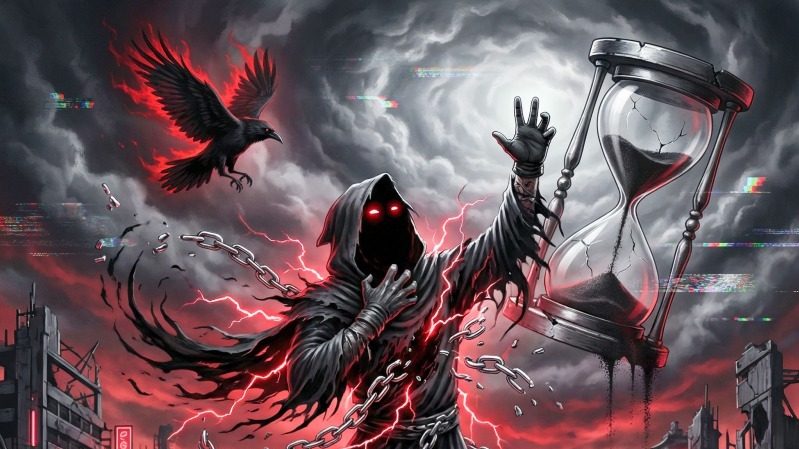
Hello everyone it’s your host Daniel from Dulaxi, and today I have with me the talented Grim Logick from Baton Rouge, United States. And Grim Logick is here to discuss his recent transformative single “The Maelstrom” which was released on March 30th, 2026. So, welcome, Grim Logick!. But before we begin our interview, to our audience; here is what you need to know about this artist.
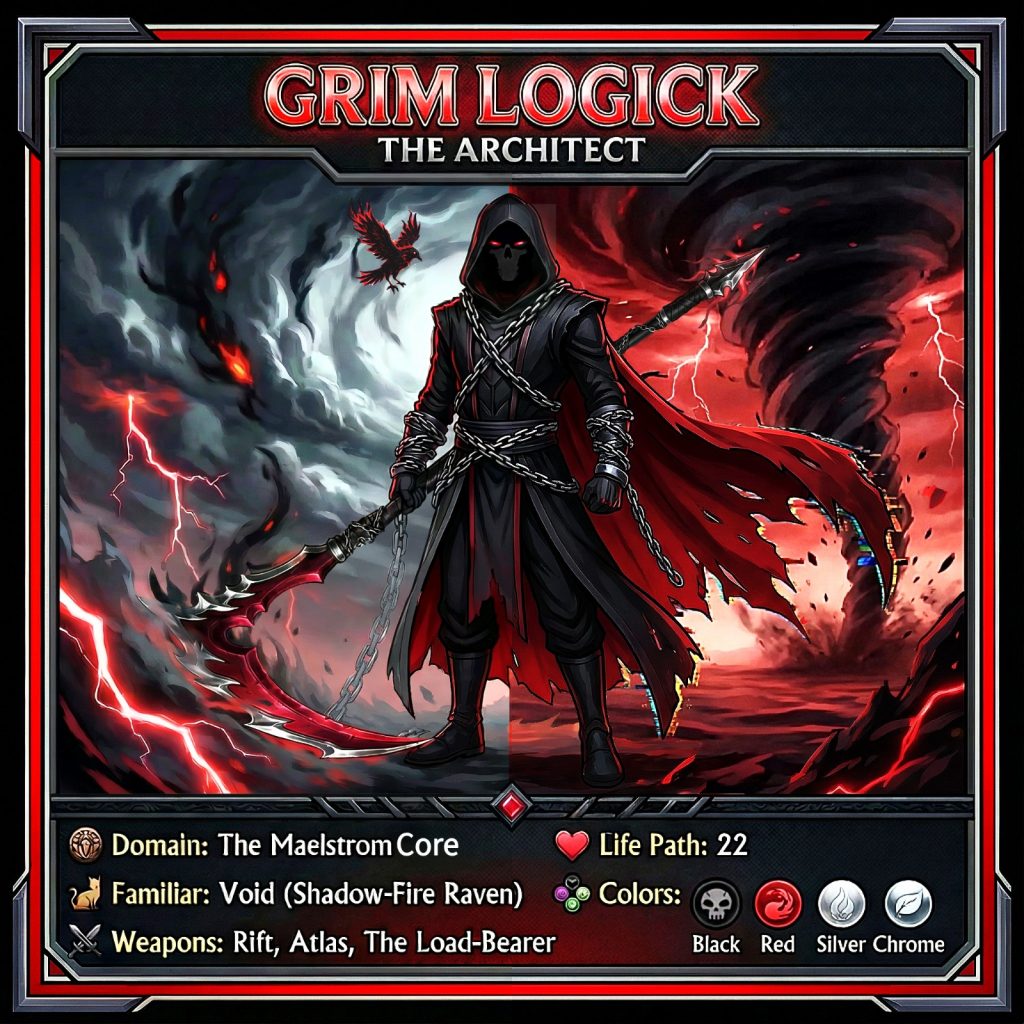
Grim Logick, born Dameon Wilson, is an underground hip-hop artist, producer, and published author from Ascension Parish, Louisiana, recognized for his deeply confessional sound and uncompromising creative independence. As the Founder and CEO of 3NIGMA BRED MUSIC, he has built a fully self-sustained label and creative ecosystem from the ground up, growing it into a platform with over 370,000 streams, more than 30 verified press features, and a thriving network of over 900 creators, all achieved without industry backing, management, or external funding. His artistry is defined by a hands-on approach, as he writes, records, produces, mixes, masters, and engineers every release himself while also leading the visual and conceptual identity of the brand. Grim Logick’s work is rooted in raw, autobiographical storytelling, exploring themes of mental health, addiction recovery, fatherhood, and perseverance with a cinematic and emotionally unfiltered edge. Guided by his “Phantom Architecture” philosophy, he prioritizes originality above all else, ensuring that every piece of music stands as a direct reflection of lived experience. More than just an artist, he represents the driving force behind a broader underground movement, positioning his work as both personal testimony and a gateway into an expanding, independently built creative universe.
Having this brief Introduction about Grim Logick, I’m sure new and current fans must be excited about our Interview today.
INTERVIEW SESSION
Daniel: You’ve built 3NIGMA BRED MUSIC into a fully independent, transmedia ecosystem with no external backing, what core mindset has allowed you to sustain that level of growth and resilience?
Grim Logick: It comes down to pure determination and an absolute commitment to building a lasting legacy. When you’re building a machine like 3NIGMA BRED MUSIC from the dirt with zero external backing, you don’t have the luxury of a backup plan. The mindset isn’t about business; it’s about survival.
First and foremost, it’s for my daughters, Harmony (Lyrick Logick) and Miley. I am out here architecting this entire ecosystem, the label, the music, the Cipher Chronicles universe, so I can leave a permanent blueprint and a legacy that outlasts me. But it’s also bigger than just my bloodline. It’s for the independent artists worldwide who feel completely voiceless. The ones fighting their own battles, drowning in their own maelstroms, who the industry ignores. I’m trying to build this so that the people who refuse to be silenced actually have a fortress to stand in.
Daniel: As an artist, producer, engineer, and digital architect all at once, how do you maintain creative control without compromising quality across so many roles?
Grim Logick: It’s difficult, and to be completely honest with you, at times it feels impossible. When you are carrying all of those roles simultaneously, there are so many things in life that are actively determined to deter you from growth. That includes our own algorithmic defiance against The Mainframe, the constant pushback against the systems designed to box us in or slow us down.
I do what I can to keep a grip on the vision, but I’m not perfect. That’s exactly why my entire foundation stands on the concept of “imperfect as progression.” If I waited for absolute perfection in every single role across the label, the machine would stall out completely. You have to accept the raw execution, keep building, and just try your absolute best not to let the sheer weight of it all drag you under.
Daniel: Your “Phantom Architecture” philosophy emphasizes originality at all costs, how do you practically protect your sound from outside influence in such a collaborative industry?
Grim Logick: You don’t listen to very much music outside of your own brand and from The Network, and ultimately, you create your own genre. We built our core sound, and it’s called 3NIGMA BRED.
But protecting your sound doesn’t mean you never collaborate; it means you control the blueprint.
“The Maelstrom”, for example, is a Benny Struggle production, and it actually lacks the heavy orchestral components that usually define the 3NIGMA BRED sound. But the reason it works, and the reason it stays protected from outside influence, is because I directed the architecture.
I went to Benny and asked for those specific instruments, the thunder sounds, that exact chaotic atmosphere. You protect your sound by keeping your circle microscopic and making sure that even when you step outside the strict boundaries of your own genre, you are still the one dictating the reality of the track.
Daniel: “The Maelstrom” is deeply autobiographical and dedicated to your brother, what emotional state were you in while writing this record?
Grim Logick: Heavy, isolated, and completely overwhelming. At the time, I was literally building TH3 TRIIINITY EP solo out of a foreclosed living room, carrying the weight of my own real-life chaos. My head felt exactly like the title of the track, a massive vortex pulling me under. I was drowning more than I was staying afloat. But in the middle of all that wreckage, I knew I had to leave a map for Matthew.
I had spent his whole life as the black sheep, out in the streets as an active criminal, and I was terrified he might repeat my mistakes. So my emotional state was a raw mix of deep isolation and desperate necessity. I had to harness all that chaotic energy and put it into the mic just to build a raft, not just for my own survival, but to give my little brother the exact blueprint of what not to do.
Daniel: The song carries a strong warning to your younger brother, what is the most important lesson you wanted him to take away from it?
Grim Logick: I touched on it just a second ago when I mentioned giving him the blueprint of what not to do. But if you want to distill the absolute core of the warning, it’s this: Stand for what you believe, keep your circle microscopic, and always pay attention.
The battleground of life is eventually going to bring war to his doorstep. That isn’t a maybe, that’s a guarantee. I spent his whole life out in the streets dealing with hidden intentions and making mistakes, so the ultimate lesson is for him to stay vigilant. Protect your own sanity at all costs, stick to your own script, and be prepared. Just look at my wreckage, learn from it, and don’t get caught off guard.
Daniel: The line “find it damaged, but maintained” marks a key production shift, what does that moment represent emotionally and symbolically in the song?
Grim Logick: It dictates the exact moment I shift from being an underground artist who just feels isolated, to a brother who is actively isolating himself to build something greater. That line is where the real storm starts. Up until that point, the message is broad and general, but right there, it becomes completely linear and direct. It’s that brief, quiet moment in the eye of the maelstrom right before you get entirely consumed by the narrative.
Daniel: “Don’t ever be like me” is a striking closing statement, why was it important to end the track with that level of honesty?
Grim Logick: Because hip-hop, and music in general, has turned into a cesspool of masks, facades, and misdirections. I love a good “cut-up” song, but it kills me that the form of expression I’ve used my entire life to cope has become this watered-down version of itself just for attention and clout.
I wanted to clearly cement my position and purpose in this track so that everyone who hears it knows exactly what I came to do. Fuck with it, or don’t. But don’t ever follow in my footsteps from the times before I had this purpose and this mission.
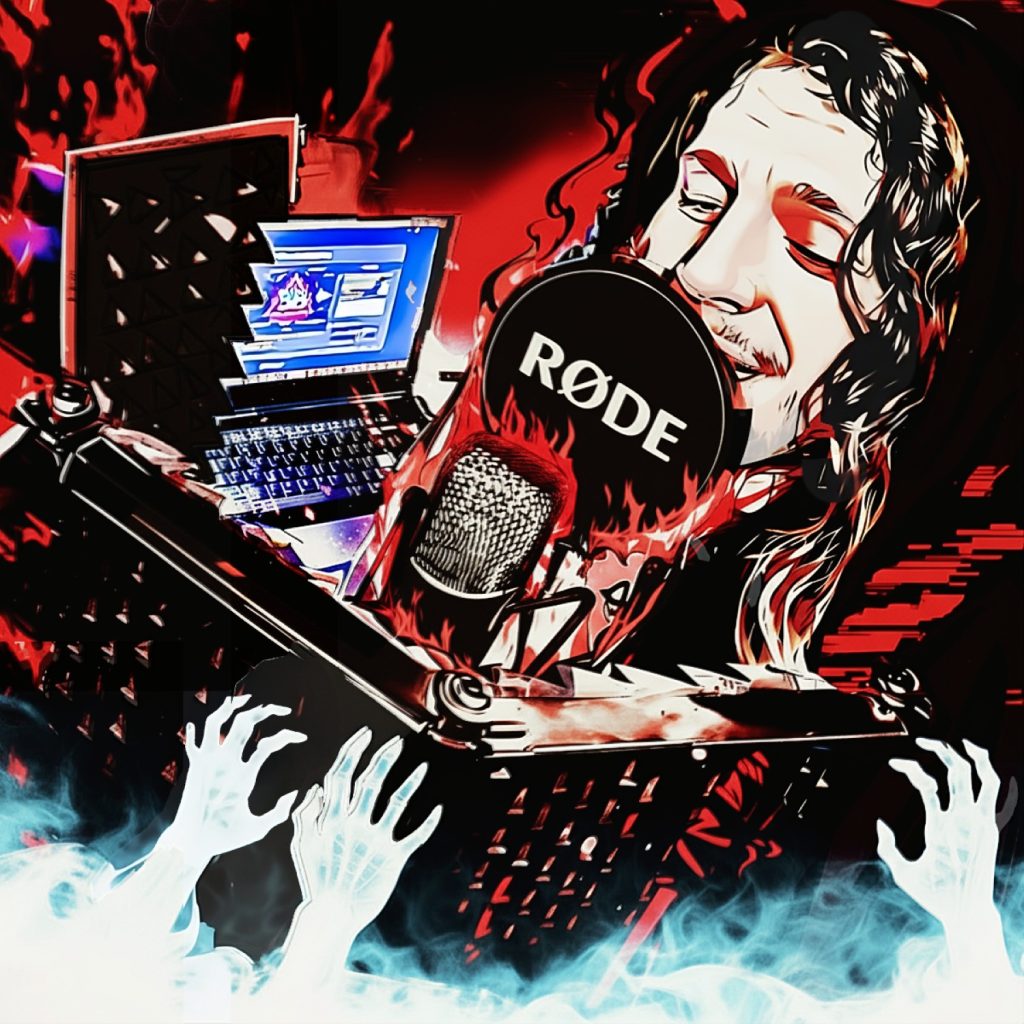
Daniel: The contrast between the warm piano instrumentation and the heavy lyrical content is powerful, how does that duality reflect the core message of the song?
Grim Logick: The duality is the literal anatomy of the maelstrom. I had Benny Struggle lay down that warm piano to act as the eye of the storm. It’s the one grounded, quiet place where the genuine message actually lives, it represents the raft I was trying to build. And that raft isn’t just for Matthew; it’s for everybody in the underground trying to make it who feels like they have absolutely no voice.
But everything else surrounding it? The heavy, dense lyrical content, the literal thunder rolling in the background, the chaotic, unpredictable production, that is the vortex tearing away at the edges. I couldn’t just give them the piano, because that’s a facade. The reality of the struggle, the years I spent in the streets, in addiction, and the isolation of building this track with no external support or industry studio, that’s the thunder you hear.
The core message of the song is survival. It’s about finding a way to maintain that warmth and truth at your center while the industry, the streets, and the storm are violently trying to drown you. That’s exactly why the beat strips back in the outro.
The storm finally breaks so I can speak directly to those voiceless artists, and then specifically to Matthew, right before dropping the final, undeniable warning: don’t ever be like me.
Daniel: The song uses an unconventional structure with asymmetric verses and re-performed hooks, what inspired you to break away from traditional hip-hop formats?
Grim Logick: The definition of “Enigma” is, at its root, the Egyptian/Latin word for a puzzle. Today, it’s more commonly known as something or someone that just cannot be explained.
When you are operating as the Phantom Architect of 3NIGMA BRED MUSIC, the only thing that actually makes sense is making deliberate structural deviations from the industry norm. I’m not here to build a standard track that fits neatly into the algorithm’s expectations.
Real chaos, like a literal maelstrom, doesn’t happen in perfectly symmetrical 16-bar verses. So breaking away from the traditional format wasn’t some forced creative exercise or industry gimmick. It just felt right.
Daniel: Can you walk through how the collaboration between you, Benny Struggle, and Hollow Logick came together across distance and time?
Grim Logick: It was a fragmented process that had to be stitched together over time, which is exactly how Phantom Architecture works. I actually wrote the song months before we even recorded it, back in a house I lived in before I was at Angie’s. I gave Benny Struggle the specific request for the beat, and he started building the foundation. But Benny had to leave for the oil rigs, and the beat he left me only went up to the end of the first verse.
That’s where the reality of distance hit, and we had to adapt. Hollow Logick swooped in to bridge the gap. He took the foundation Benny started, sampled his work, and finished building out the rest of the beat so we actually had a full structure for the narrative. Once the beat was finished and the vocals were laid down, I took it into post-production and personally added the storm elements and the thunder at the end to seal it. It wasn’t one neat studio session; it was three different architects passing the blueprint back and forth until the maelstrom was complete.
Daniel: Recording, mixing, and mastering everything in a living room setup adds a raw edge, how did that environment influence the final sound of “The Maelstrom”?
Grim Logick: Honestly, it surprised the hell out of me. You assume you need all this industry-standard acoustic treatment to get a record to sound right, but I guess the acoustics in the old Hub were just pretty swell in that living room.
There was no forced setup, no overthinking, and no manufacturing a vibe. It was a completely natural event when I stood up and hit record. The environment itself provided that raw edge because there was absolutely nothing filtering the reality of the room from bleeding straight into the mic
Daniel: This track captures themes of addiction, mental health, and fatherhood, how has your personal journey shaped the way you approach storytelling in your music today?
Grim Logick: To be completely blunt, “storytelling” is for artists who have the luxury of making shit up. My personal journey, the addiction, the isolation, the years spent in the streets, and that constant, heavy reality of missing my kids, forced me to abandon the concept of storytelling entirely. Instead, I document.
And that absolute necessity to document the unfiltered truth is exactly what birthed the 3NIGMA BRED genre. You cannot take the real, ugly weight of mental health or the failures of fatherhood and squeeze them into some traditional, clout-chasing hip-hop format. It wouldn’t fit, and it would be a lie. 3NIGMA BRED is about creating an entirely original sonic architecture to house that reality, completely protected from outside industry influence. So when I step up to the mic today, I’m not trying to craft a narrative. I am taking the literal wreckage of my life and engineering it into a 3NIGMA BRED structure. If it’s on the track, it’s not a story, it’s the exact reality I lived, built into a genre that refuses to wear a mask.
Daniel: Compared to your earlier releases, what does “The Maelstrom” represent in terms of your artistic evolution?
Grim Logick: When you’re building an independent label like 3NIGMA BRED MUSIC from the dirt, the isolation is deafening. You are putting your blood into architecting an entirely new movement, and the reality is that the people closest to you often don’t even blink at what you’re doing. Instead, it’s total strangers who end up holding the line and actually appreciating the art.
That disconnect creates a massive, heavy friction. You’re working out of a foreclosed living room, trying to build a structure that defies industry norms, while carrying the weight of being completely unrecognized by your own circle. The emotional weight of The Maelstrom is fueled directly by that present-day pressure. It’s the sound of me trying to engineer a raft for the underground while surviving the literal, isolating reality of being a Phantom Architect.
Daniel: You sang the chorus on this track, which marks a shift from your usual style, what pushed you to explore that side of your artistry now?
Grim Logick: It’s not entirely new. If you look at my catalogue on SoundCloud, you’ll find I’ve actually explored the concept several times in the earlier stages of my career. This is just the first time I’ve slapped it onto the major DSPs. There wasn’t some grand push to change my style, it’s completely situational. Sometimes, when the environment and the headspace are exactly right, I can really pull it off. Other times, and honestly most of the time, I just can’t make it happen. I don’t force it. If the raw vocal isn’t there naturally, I’m not going to manufacture it.
Daniel: Looking back at your journey from a bedroom concept to a 370,000+ stream platform, what has been the most defining moment for you personally?
Grim Logick: I touched on this a bit in a previous answer. It just blows my mind how much progress we can show, yet the algorithm and the saturated daily upload bottleneck, competing with hundreds of thousands of other artists dropping music every single day, makes it feel like we get no real headway. Don’t get me wrong, our growth in just one year is exponential compared to so many other independent labels out there fighting from the dirt.
But if I have to narrow down the most defining, incredible moments? It’s every single time someone in The Network reaches out to tell us we actually made them feel heard. That’s the real metric. You don’t even have to take my word for it; our Trustpilot and Google reviews document the absolute proof of it. Breaking through the noise to make that actual connection is everything.
Daniel: Your music often speaks directly to underground artists, what kind of responses have you received from listeners who relate to that struggle?
Grim Logick: From several publications, other artists in the trenches, and the actual listeners, there has been a very real resonance and relatability. Writing from a strictly personal narrative can sometimes be limiting, you always run the risk that people might not connect if they haven’t lived your exact wreckage. But when that raw truth actually hits with someone out there fighting the same algorithm and struggling from the dirt? God, does it feel good. It proves that the connection is real and the architecture is working.
Daniel: With such a raw and personal track, how do you hope listeners emotionally connect with “The Maelstrom”?
Grim Logick: I just hope they see the vision, and find a light in the darkness. When you’re putting something this heavy and unfiltered out into the world, you can’t force the connection. But if they’re out there in their own storm, I hope this track acts as that light. And if nothing else, even if they haven’t lived through the exact wreckage I’m talking about, I hope they at least catch the narrative.
Daniel: With the TH3 TRIIINITY series expanding into a larger narrative, what can listeners expect from the next phase of the project?
Grim Logick: They can expect the full timeline of the wreckage and the rebuild. TH3 TRIIINITY EP (Vol. I) shows the exact root of the descent, the literal steps leading to that inevitable fall. Then we transition right into the fallout of that exact pitfall in Vol. II. You’re sitting in the dirt, but that same volume is where the purpose is actually discovered. Finally, it pivots into Vol. III, where that objective is being actively pursued and it highlights the newfound architecture being built. It’s not just a collection of tracks; it’s a literal journey of collapse and rebirth.
Daniel: Beyond this release, what are your long-term plans for both your music and the continued growth of 3NIGMA BRED MUSIC?
Grim Logick: Honestly, the long-term plan is just hoping that targeted niche finally finds us so we can all grow together. There is so much potential in what we’re trying to build if we can just lock in that core unit of like-minded people. We’ve grown to over 900 members in our 3NIGMA BRED: Underground Music Network Facebook Group, and we’ve already covered 30+ underground artists through our publication. We survived a full year, and we are still kicking.
Our footprint is growing, and if we can get the right team in place, we could really start shedding a real light on other creators out there fighting the algorithm. But to be completely blunt with you? Me and iLLL are just exhausted. The work is paying off, but carrying the weight of this architecture is wearing us down. It will happen when the time is right.
Until then, we keep building. I’ve got my next track, “Trauma Pit (Call The Bluff),” dropping on my 30th birthday on April 29th. iLLLogick has “Belvidere” dropping on April 27th. We just signed Prodical Logick, who will be touching DSPs for the very first time next month. Add in Lyrick Logick’s “Clocking The Tea,” the rest of my TH3 TRIIINITY EP series, iLLL’s Stiff Person Stories EP series, and the Cipher Chronicles: The Crucible Begins album… it’s gonna be a relentlessly busy year.
Having Had A Close Listen To This Exceptional Song, Here’s My Thought.
“The Maelstrom” by Grim Logick feels like stepping directly into the artist’s inner world, where every element of the song works together to create an experience that is as emotionally heavy as it is sonically immersive. From my perspective, the vocal performance stands as the heart of the track, raw, unfiltered, and deeply human, moving between urgent bursts of intensity and moments of near-exhausted reflection, capturing the instability of a mind under pressure. Lines like “I’ve been losing all my focus. I’m not used to going fast” don’t just communicate struggle; they embody it, setting the tone for a narrative that explores isolation, mental strain, responsibility, and the weight of being a flawed example to someone you love. The instrumental complements this perfectly, built on a minimalist, atmospheric foundation where steady lo-fi drums provide structure while haunting, looping piano or synth textures create a sense of emotional entrapment, as though the sound itself is circling inward. The production’s gritty, close-miked quality makes everything feel intimate, almost uncomfortably so, as if the artist is confiding directly in me rather than performing, while the balance between crisp percussion and reverb-drenched melodies adds a cold, solitary depth to the listening experience. Structurally, the track avoids predictability, unfolding like a conversation or confession instead of a traditional song, with evolving chorus deliveries and a second verse that shifts into direct guidance for his brother, warning, teaching, and ultimately expressing pride and regret all at once. What resonates most is how the song transforms pain into purpose, documenting personal failures not for sympathy, but to create a roadmap for someone else to survive, and by the time it reaches its emotional conclusion, it no longer feels like just music, but a deeply personal statement of accountability, love, and resilience that lingers long after the final line.
~ Daniel (Dulaxi Team)
Finally to our audience, I urge to listen to “The Maelstrom”, add it to your playlist and let the deep rooted message of Grim Logick guide you. On behalf of Dulaxi I like to appreciate you all by saying thank you everyone, See you on our next interview.
For more information about Grim Logick, click on the icons below.