
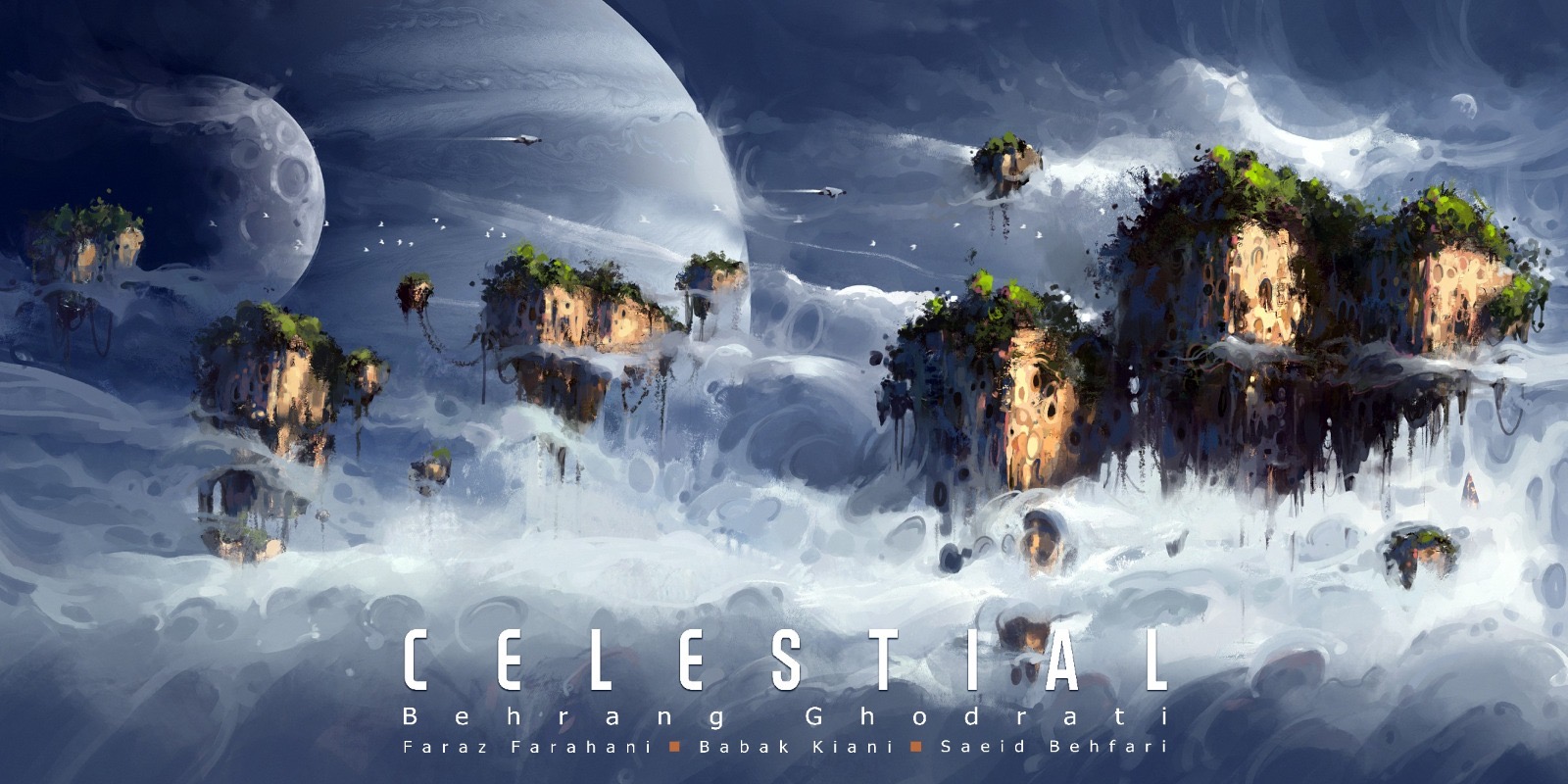
Hello everyone, it’s your host Faithfulness, and today I have with me Behrang Ghodrati from Manchester, England. Behrang Ghodrati joins us to shed light on his expansive musical journey while diving into his latest instrumental album, “Celestial”, a ten-track project released on 01 April 2023. Built around expressive, electric-guitar-driven compositions, the album gently weaves together New Age, Blues, Flamenco, and Smooth Jazz influences into a deeply cinematic listening experience. With its global release through OneRPM, “Celestial” invites listeners into an immersive world of atmosphere and emotion, raising questions about how instrumental music can tell stories without words and what kind of inner imagery it awakens in its audience.
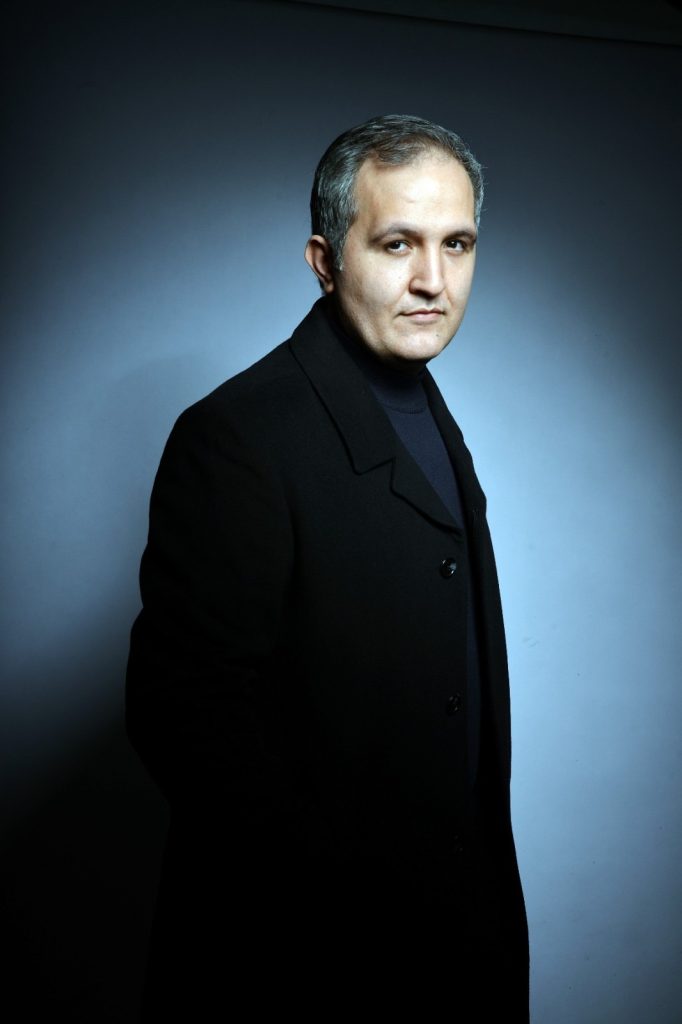
Before we dive deeper, Behrang Ghodrati is an Iranian composer, arranger, and producer born in 1977 in Tehran, with a long-standing career spanning film, theatre, animation, and instrumental composition. A member of the Iranian Alliance of Motion Picture Guilds (House of Cinema), he refined his craft under the guidance of acclaimed composer Alireza Mashayekhi and later studied piano performance at the University of Applied Science and Technology. His creative path began in 1996, composing for some of the earliest Iranian video games, and since then he has built an extensive portfolio that includes music for over 20 television films, 5 feature films, 15 theatre productions, 20 animation series, four instrumental albums, and more than 200 released pop tracks, alongside experience in media management and creative direction.
His latest work, “Celestial”, stands as a refined culmination of that vast artistic experience. The album is shaped by expressive guitar performances from several accomplished musicians, creating a layered sonic landscape that feels both intimate and cinematic. Warm tonal textures, melodic phrasing, and emotionally charged progressions flow throughout the project, giving each track a sense of movement and narrative depth despite its instrumental nature. Blending global influences with a strong compositional identity, “Celestial” positions itself as an evocative body of work designed for reflection, storytelling, and immersive listening, offering audiences and curators alike a richly textured experience in modern instrumental music.
Having this brief Introduction, I’m sure new and current fans must be excited about our Interview today.
INTERVIEW
Faithfulness: You have built a long and diverse career across film, theatre, animation, and instrumental music. Looking back, what first pulled you into composition as a lifelong path rather than just a creative interest?
Behrang Ghodrati: There is something in music that now, when I look back, I can understand only a very small part of it. But in the beginning, it was just an interest. It only made me feel different. Later, music trained me. It gave me a deep sense of peace. And it opened a window in front of me through which I could see all the planets and galaxies.
Faithfulness: Growing up and studying in Tehran, how did your early environment and training under Alireza Mashayekhi shape your musical identity today?
Behrang Ghodrati: Before I became familiar with Alireza Mashayekhi, I was working on music by self study and composing, but in the amateur league. When I took his courses, it was as if I became armed with a set of techniques and tools and, ultimately, a broader vision that made me feel more responsible, and for everything I knew, thousands of sub branches appeared. And I realized what professional work requires. Of course, I had only understood it — I hadn’t done it yet. Later, over time, and with more experiences and works that I created, in each one I understood the role of something I had learned from Mashayekhi, and like a puzzle, I completed it as much as I could over these years. But I believe that higher leagues still exist, and I am eager to be present in them.
Faithfulness: Your career spans video game music, television films, theatre, and pop production. How did working across such different creative worlds influence your approach to storytelling through sound?
Behrang Ghodrati: At the beginning of the variety of proposals, it was a bit difficult. Because normally, you are professional in one field and everyone comes to you for that. But the variety of work that, because of good friends I had in gaming, animation, theatre, cinema, and pop, put me into a kind of voluntary obligation. Because each of these fields, although they all produce music in the end, definitely have many differences in their nature and essence, and the culture and language embedded in each one is different. So to understand that medium and know its framework, you are forced to study more, to put yourself into the challenge of learning and trial and error. Now that I have become more familiar with the mediums, I feel like all of them are like a cone that is eventually supposed to reach one thing.
Faithfulness: You’ve also worked in media management and creative direction. How has that behind the scenes experience changed the way you approach your own music as an artist?
Behrang Ghodrati: Well, you could say that structurally I see many similarities between media management and directing and composing and arranging music. In both, you have to complete a process. It starts from the initial brief, goes to the initial sketch or draft, then you work on it and reach a more complete form, and in the final phase, we do the details and standardization of the content. You see? In music it’s exactly the same. Just as a director always manages behind the scenes and whatever you see or hear is the result of his idea and supervision, a media manager and composer and arranger act exactly the same way. They manage behind the scenes. But when you see or hear that specific content, you realize that thought and intelligence were behind it.
Faithfulness: At this stage of your journey, what would you say still drives your curiosity as a composer after so many years in the industry?
Behrang Ghodrati: For me, the word “still” is a bit strange! Because whenever I start creating a piece, I feel myself inside that process, and for me it is a deep, sweet, and beautiful experience. And each time it has a different path and feeling for me. It has never become repetitive for me, and I don’t think it will. Being able to turn the meanings and concepts you understand over the years — or even things you understood before but now have the chance to understand more deeply — into something in the world of vibrations, in my opinion, is nothing less than the mission of a prophet!

Faithfulness: “Celestial” blends New Age, Blues, Flamenco, and Smooth Jazz. What was the emotional or conceptual thread that held these genres together for you?
Behrang Ghodrati: I don’t want to exaggerate, but maybe Celestial is introducing itself as an example of a style. Everything you mentioned is myself — things I took from the depth of all the challenges I faced in each style and genre, as much as was necessary for the path I walked. Now when I look at what I have, I don’t see a collage. All of these, although different in expression, had common points that, after many trials and errors, passed through different filters and found a unified concept. Today they call such composers multi genre. Maybe that’s correct. But I think we have reached a time where if you don’t have this multi genre quality, you cannot create something for the contemporary human — someone who is connected to everything around them — that grabs their attention or makes them want to continue listening, or better yet, add it to their playlist.
Faithfulness: The album is heavily guitar driven with contributions from several accomplished guitarists. How did collaboration shape the emotional direction of the project?
Behrang Ghodrati: Well, Babak and Faraz are among the good electric guitar players, and I am very happy they gave me the opportunity to work with them. From the beginning of the project, I knew I didn’t want to limit my spaces to one person. Like a director who needs different characters for different parts of his film. One actor must have strong facial acting, another actor performs better in romantic scenes. These points were important for me too. My friendship with Babak and Faraz gave me the chance to spend more time together and talk more about the album’s concept. And during this time, our conversations were not one sided. I got very good ideas from them, many of which you can hear in each track. In the end, we all tried to bring our frequencies closer together, and it seems we succeeded.
Faithfulness: Was there a particular track on “Celestial” where everything clicked and you felt the project had found its true identity?
Behrang Ghodrati: Before I start anything, I think about it a lot. Even when they are just ideas, I share them with my friends and those who can tolerate me. Then little by little these ideas form the main concept, and after the concept, I design the execution plan. I mean, I want to say that the identity of the project was mostly clear before starting the tracks. But I don’t want to avoid answering your question. Certainly, there are moments in the work when you say to yourself: “Aha… this is it!” For me, this happened in the track Angel. The shape of the flamenco melody with the jazz flavor and seventh chords, and the modern atmosphere created without any special or noisy arrangement, made me very sure that everything was going right here. Even if you noticed, there are two versions of Angel: one guitar version and one piano version. The piano version was played by my very good friend Kamyar, who is one of the professional and well known R&B, blues, and jazz singers. In the piano version, our idea with Kamyar was to add a blues atmosphere to this combination, and the result was amazing.
Faithfulness: Instrumental music relies entirely on sound to communicate emotion. How do you decide what story each track should tell without words?
Behrang Ghodrati: Well, in music, just like in literature, there is sentence making. At the beginning, the sentences and sentence making have stutters and are not very expressive. But when a concept becomes internalized for you, you can write amazing sentences for it. Then you work on what words and what specific letters these sentences should be made of. It’s an enjoyable game that can produce a happy and cheerful output, or a sad and calm one, or any other feeling. Of course, many times silence also plays an important role in conveying emotion, and if you know how to use it, it has incredible impact. As Sohrab Sepehri, the Iranian poet, says: “Silence is full of unspoken things…”
Faithfulness: The album has been described as cinematic and atmospheric. When composing, do you see scenes or visuals in your mind before the music takes shape?
Behrang Ghodrati: The overall combination of the album is an emotional, romantic, and adventurous combination… Now, when we talk about love, we don’t necessarily mean love between two people. But love is the driving engine of everything. For example, in the track Way to Heaven, the music starts with a narrow, simple, and basic path and an electric guitar solo. Then rhythm is added, the rhythm becomes busy, and even the tone of the electric guitar changes. And at the end, everything stops and you hear the sound of a female choir… Well, this can itself be a sonic depiction of a romantic adventure. Again, I emphasize that this love is not necessarily love between two people. It can be, for example in this track, love for music — which at first is simple and pure, and then branches grow and many challenges appear along the way, even affecting the sonic character. And in the end, it’s as if you pass through that boundary and reach a shore of peace, which in this track is called heaven.
Faithfulness: Your compositions often carry warm textures and emotional depth. How intentional is your use of mood and atmosphere when building a piece from scratch?
Behrang Ghodrati: I take this as a compliment. Thank you. I think simplifying everything helps you bring the emotional and technical elements you have in mind into the piece in a proper way. Let me answer your question in another way: First, I try to put myself emotionally and mentally in a receiving state. Like someone who is meditating. A musical kind of meditation! Waves come toward you, each with its own color and frequency. You are just present and observing. You only feel and see. And if you can go one layer deeper, then you can start to hear. And when I say “hear,” I don’t mean the whole piece or the theme! But it gives you that initial essence — the place you know you should start from. And once you have it, you can do many things with it.
Faithfulness: “Celestial” is now distributed globally through OneRPM. What does reaching an international audience mean for you at this point in your career?
Behrang Ghodrati: From the beginning, my view has been beyond the borders of my country. The global audience has always been important to me. To have a global audience, you must have important things to say. Because if you are not important, you won’t be heard. So first, how can you reach a language through which they understand what you say? And then, what can you say that makes them listen to you? These are simple sentences, but when you want to actually do it, maybe you have to spend years — either to make your language global, or insist on your own language so much that everyone becomes familiar with it and understands it. In my case, I think the first part applies more.
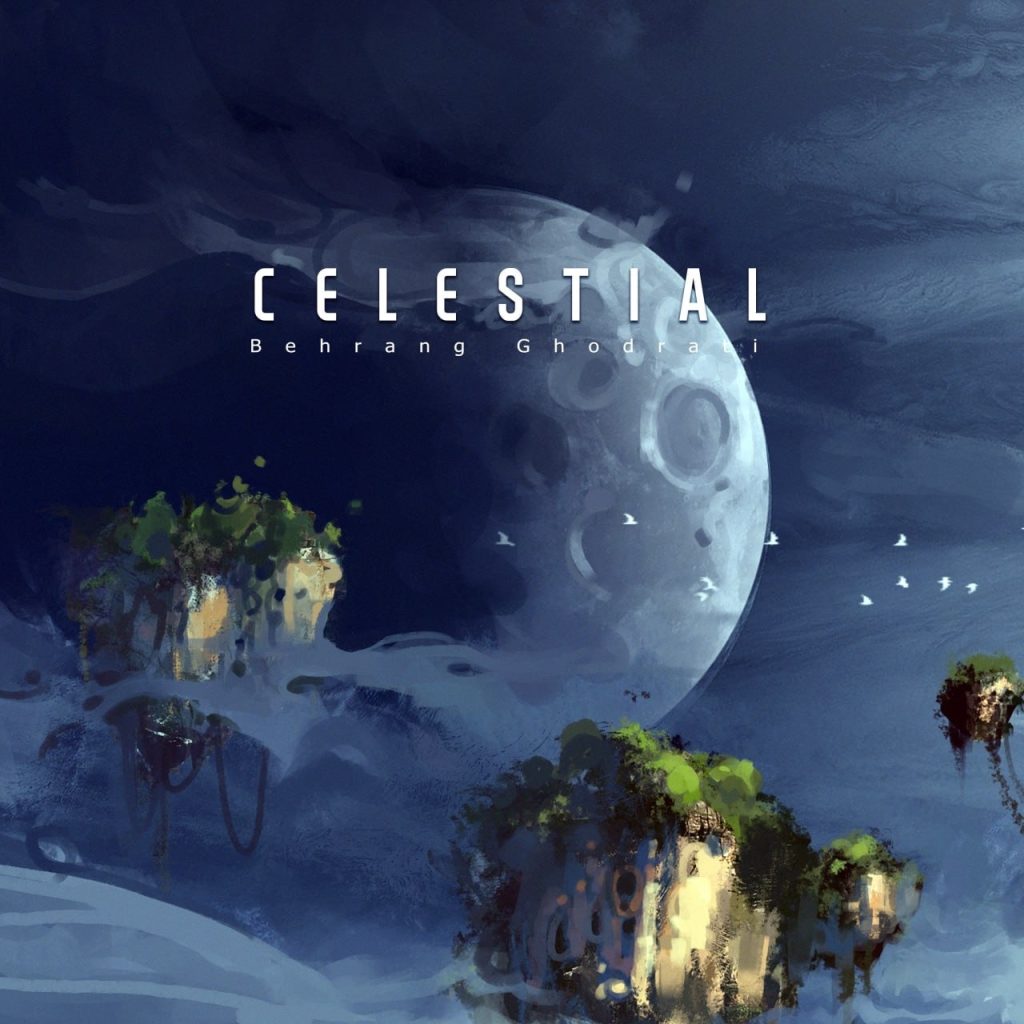
Faithfulness: Out of the ten tracks on the album, which one challenged you the most creatively, and why?
Behrang Ghodrati: To be honest, all the tracks had their own specific challenges. Maybe I can’t limit it to one track. For example, Way to Heaven, with the symbolic shape it has in its music, in my opinion is a creative and attractive example that can relate to all concepts and paths. Or the track Angel, whose melodic storytelling sometimes goes back centuries, and suddenly something modern is heard inside it. This back and forth between time and technique has been one of the biggest challenges I’ve ever had.
Faithfulness: If someone listens to “Celestial” five or ten years from now, what do you hope they feel or understand about you as an artist?
Behrang Ghodrati: You asked a beautiful question. Honestly, my goal was exactly this — that the album be designed in a way that my audience can enjoy listening to it even years later. That it doesn’t become old or repetitive. And for this, the tracks and the whole album have several different layers in themselves. Emotional layers, philosophical layers, technical layers, performance layers… And whenever you listen to these tracks, you can listen with attention to one of these layers. And this listening depth that has been created may keep my audience satisfied for years to come. Of course, time will prove everything.
Faithfulness: Finally, if you could describe this entire project in one emotional word that isn’t the title “Celestial,” what would it be and why?
Behrang Ghodrati: I think “Suluk” (spiritual journey) is a suitable word for this album. Because if you listen with the ear of the heart, it can feel like a spiritual journey inside yourself that makes you want to change some things within yourself. And when this happens, it means you have raised your awareness. I hope this happens for the listeners of this album — even if it’s just for one person.
CHECK OUT THE RELEASE OF ‘Celestial’
HAVING LISTENED TO ‘Celestial’, HERE ARE MY HONEST THOUGHTS
“Celestial” by Behrang Ghodrati is a ten-track instrumental album, presenting a refined fusion of New Age, Blues, Flamenco, and Smooth Jazz influences. Built around expressive electric guitar performances and cinematic ambient textures, the project focuses on emotional clarity, spaciousness, and restrained musical development. Rather than relying on complexity or intensity, it unfolds through slow, deliberate progressions where each sound is given room to breathe. Across its duration, “Celestial” maintains a consistent cinematic atmosphere shaped by minimalistic arrangements and carefully controlled dynamics. Guitar lines remain central, supported by soft harmonic layers and expansive reverb that create depth without overcrowding the mix. The production emphasizes openness and tonal balance, allowing transitions to feel seamless and organic. This approach results in a cohesive soundscape that feels both intimate and expansive, guiding the listener through a calm, reflective emotional journey. Ultimately, the album stands as a disciplined work of atmospheric composition rooted in patience, space, and introspective storytelling.
~ Faithfulness (Dulaxi Team)
Finally to our audience, I urge to listen to “Celestial“, add it to your playlist and be Inspired by it and on behalf of Dulaxi I like to appreciate you all by saying thank you everyone, See you on our next interview.
For more information about Behrang Ghodrati, click on the icons below.