
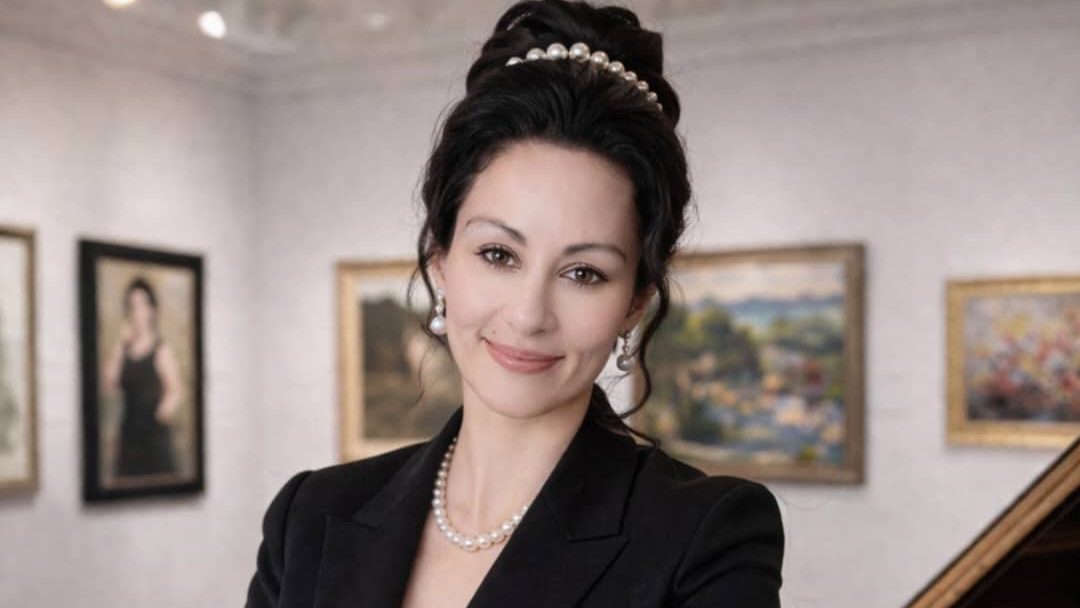
Hi everyone, it’s your host Faithfulness, and today I have with me Haifa Melliti from Montpellier, France. Haifa Melliti is here to share more light about her artistic journey while diving into her latest original album, “Mélodie de la Déesse Vol. II”, released on April 6, 2026. This new body of work continues her deeply immersive exploration of sound, spirit, and the sacred feminine, where music is experienced not just as sound, but as a quiet inner awakening shaped by emotion, silence, and presence. What does it mean when an album is described as a prayer rather than a performance, and how does that reshape the way listeners receive music in a modern world dominated by speed and noise? Let’s find out.
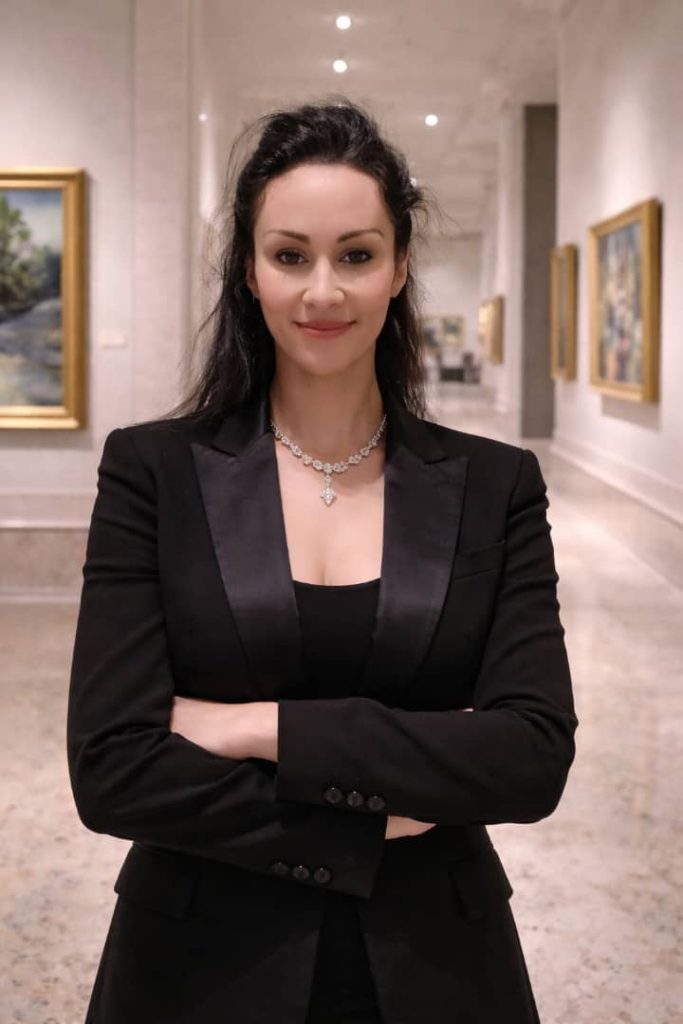
Welcome, Haifa Melliti. Before we begin, here is what you need to know about this remarkable artist. Haifa Melliti is a French-Tunisian multidisciplinary artist, intuitive pianist, and painter whose work bridges music, visual art, and spiritual exploration. Her artistic identity is deeply rooted in the sacred feminine, expressed through symbolic imagery, emotional depth, and a refined sensitivity to silence and inner listening. Through her intuitive piano improvisations, she creates atmospheric soundscapes that feel both fragile and expansive, where each note emerges as a natural extension of feeling rather than structure, guiding listeners into a space of calm reflection and emotional connection.

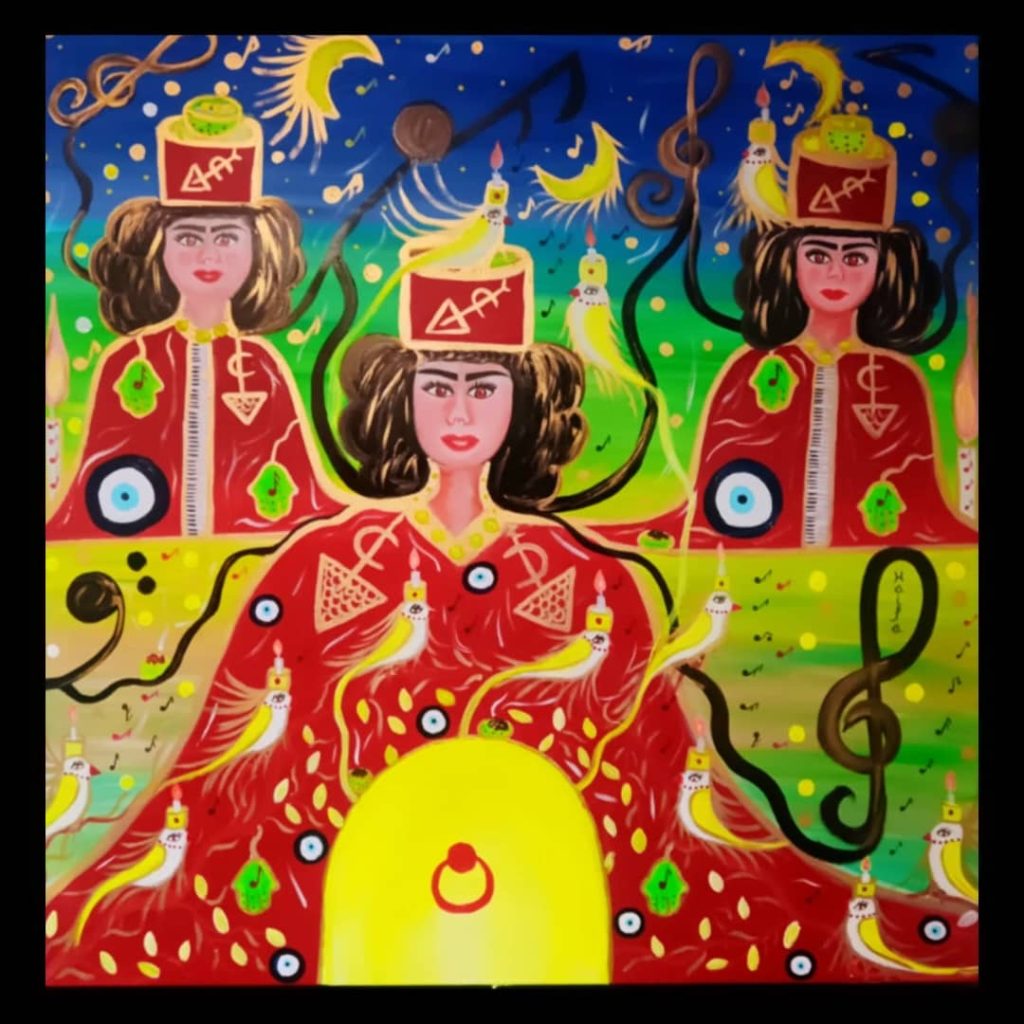
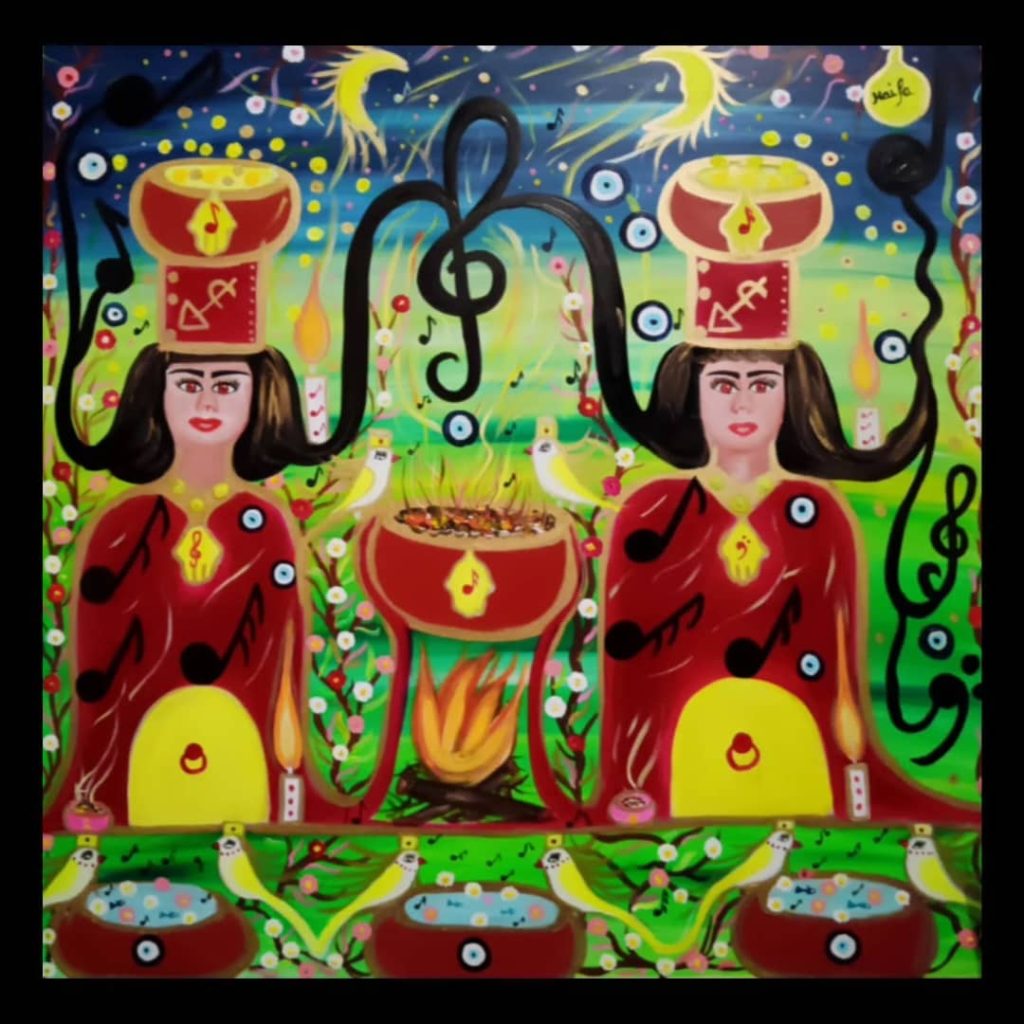
Alongside her musical world, Haifa Melliti’s visual art expands this universe through symbolic feminine figures, guardians, and goddess-inspired forms that embody transformation, protection, and awakening. Her paintings and compositions speak to each other in a shared language of intuition, spirituality, and emotional truth, forming a cohesive artistic signature that transcends medium. With “Mélodie de la Déesse Vol. II”, she continues to build this sacred space where art becomes presence, silence becomes sound, and music becomes a gentle invitation to reconnect with the self and awaken the soul.
Having this brief Introduction, I’m sure new and current fans must be excited about our Interview today.
INTERVIEW
Faithfulness: You are described as a French-Tunisian multidisciplinary artist. How has this dual heritage shaped the way you express your emotions through music and visual art?
Haïfa Melliti: My heritage is a living bridge between two worlds…
Tunisia gave me memory, roots, and a deep spiritual connection to the invisible, to ancestral voices, to the silent songs carried by women through time.
France offered me space, artistic freedom, and openness to express and explore different forms of creation.
Between these two lands, I learned to feel beyond words. I don’t create from one culture or one identity… I create from a vibrational memory of the heart.
My paintings carry Mediterranean colors, protective symbols, and the gaze of sacred feminine figures…
My music carries breath… like an ancient wind moving through the present.
It is within this harmony that my language was born—a universal expression where emotion becomes vibration.
Faithfulness: At what moment did you realize that music and painting were not separate paths for you, but a unified spiritual language?
Haïfa Melliti: It was not a decision… it was a revelation.
One day, while playing the piano with my eyes closed, I began to see colors, shapes, and faces… as if the music was painting within me.
Then, while painting, I started to hear melodies… as if each color carried a sound.
At that moment, I understood that I was not creating in two different ways…
I was channeling one single flow, one single energy.
Music and painting became two expressions of the same prayer…
Two doors leading to the same sacred space.
Faithfulness: Your work is often described as intuitive and guided by silence. What does silence personally mean to you in the creative process?
Haïfa Melliti: Silence is my inner sanctuary.
It is a sacred space where I withdraw to reconnect with myself.
In silence, I release expectations, control, and external noise…
I empty myself in order to receive.
It is within this space that the purest inspirations emerge…
Not the ones we search for, but the ones that arrive.
Silence is not emptiness…
It is a deep, powerful presence.
It is where I meet my soul… and where creation begins.
Faithfulness: How did your journey into the exploration of the sacred feminine begin, and what does it represent in your life beyond art?
Haïfa Melliti: It began as an inner journey… a path of healing and reconnection.
Through life experiences, silence, and transformation… I learned to return to myself.
To listen to my intuition.
To honor my sensitivity as a strength.
The sacred feminine is not just a concept… it is a lived experience.
A presence within.
Today, it guides not only my art, but my way of living, of caring for others in my institutes, of transmitting to my daughter, of loving and feeling.
It is a gentle yet powerful energy… a light I honor every day.
Faithfulness: When you sit at the piano without structure or planning, what usually happens internally before the first note is played?
Haïfa Melliti: There is a suspended moment… almost invisible.
A space where everything slows down.
I close my eyes… I breathe…
I connect to my heart.
It feels like a silent offering…
A moment of complete presence.
And then… something opens.
The first note does not come from thought… it comes from a deeper place.
I do not play…
I allow it to flow through me.
Faithfulness: “Mélodie de la Déesse Vol. II” feels like a continuation of a spiritual conversation. What inner message were you most trying to deepen in this second volume?
Haïfa Melliti: In this second volume, I went deeper into surrender…
Into truth, without holding back.
It is a more intimate and embodied exploration…
A more honest inner dialogue.
I wanted to invite the listener to go beyond the surface…
To enter a space of deep reconnection.
The message is simple… yet essential:
Return to yourself. Feel. Allow.
Faithfulness: You describe the piano as a prayer in this project. What emotional or spiritual state were you in while composing these pieces?
Haïfa Melliti: I was in a state of faith and complete surrender.
A state where I was not controlling anything.
Between gratitude, humility, and deep connection…
I felt guided.
Each note was an offering…
Each silence between the notes was a sacred breath.
It was an invisible dialogue…
Between myself… and something greater.
Faithfulness: Each composition is said to be born from spontaneity. How do you know when an improvisation is complete without overworking it?
Haïfa Melliti: It is a very subtle feeling…
Like a wave naturally returning to calm.
When the music has said what it needed to say…
A sense of peace settles.
The heart softens… the body relaxes…
And I know it is complete.
If I try to add or correct… I lose the truth of the moment.
Authenticity lives in the present.
Faithfulness: The album carries a strong sense of ancestral and meditative energy. Were there specific influences, memories, or sensations guiding this sound?
Haïfa Melliti: Yes… deeply.
I often feel presences… memories… ancient feminine energies.
Songs without words…
Vibrations from somewhere beyond… yet within me.
The sea, the wind, deep silence…
All of this lives inside me.
I do not think about these influences…
I simply allow them to express themselves.
Faithfulness: How do you translate something as intangible as the “sacred feminine” into musical notes and real textures?
Haïfa Melliti: I do not translate… I align.
When I am connected to this energy…
It flows naturally.
The sacred feminine is a vibration…
A gentle yet powerful presence.
And when I play…
It is no longer me deciding…
It is this energy expressing itself through me.
Faithfulness: What role does vulnerability play in this album, especially when creating in such an exposed and intuitive way?
Haïfa Melliti: Vulnerability is the doorway to truth.
Without it, there is no depth.
In this album, I allowed myself to be completely open…
Without masks… without protection.
It is in this emotional honesty that real connection happens.

Faithfulness: For listeners engaging with this project for the first time, what emotional journey do you hope they surrender to from beginning to end?
Haïfa Melliti: I hope they allow themselves to be carried…
Without trying to understand.
To close their eyes…
To feel the vibrations…
To reconnect with themselves.
It is an inner journey…
A moment to return… to remember… to feel.
Faithfulness: How does “Vol. II” differ from “Mélodie de la Déesse Vol. I” in terms of emotional depth or artistic evolution?
Haïfa Melliti: Vol. I was an opening… a birth.
Vol. II is deeper, freer, more embodied.
There is less restraint… more truth…
A more direct connection to essence.
Faithfulness: After creating such a spiritually immersive body of work, what has this album revealed to you about yourself?
Haïfa Melliti: It revealed that I must fully trust my intuition.
That I do not need to control… or understand everything.
Everything is already within…
I just need to open.
Faithfulness: When listeners leave your world after this experience, what feeling or realization do you hope stays with them the longest?
Haïfa Melliti: A feeling of peace…
A gentle inner softness…
And above all… a remembrance of their own light.
CHECK OUT THE RELEASE OF ‘Mélodie de la Déesse Vol II’
HAVING LISTENED TO ‘Mélodie de la Déesse Vol II’, HERE ARE MY HONEST THOUGHTS
Released on 6th April, 2026, “Mélodie de la Déesse Vol. II” by Haifa Melliti feels like a quiet refusal of musical excess, choosing instead to exist in patience, space, and emotional restraint. From my perspective, the album works less as a collection of compositions and more as a sustained meditative environment where the piano becomes a voice of inner reflection rather than performance. Each note is placed with intention, allowing silence to shape meaning just as strongly as sound. What stands out is how slowly everything unfolds, never rushing toward resolution or spectacle, but instead encouraging the listener to remain present with subtle shifts in tone and texture. The harmonic language moves gently between clarity and ambiguity, creating a floating sense of stillness. Rather than demanding attention, it invites it quietly, almost reverently, leaving behind a lingering calm that feels more experiential than musical, more spiritual than structural in its overall impact.
~ Faithfulness (Dulaxi Team)
Finally to our audience, I urge to listen to “Mélodie de la Déesse Vol II“, add it to your playlist and be Inspired by it and on behalf of Dulaxi I like to appreciate you all by saying thank you everyone, See you on our next interview.
For more information about Haifa Melliti, click on the icons below.