
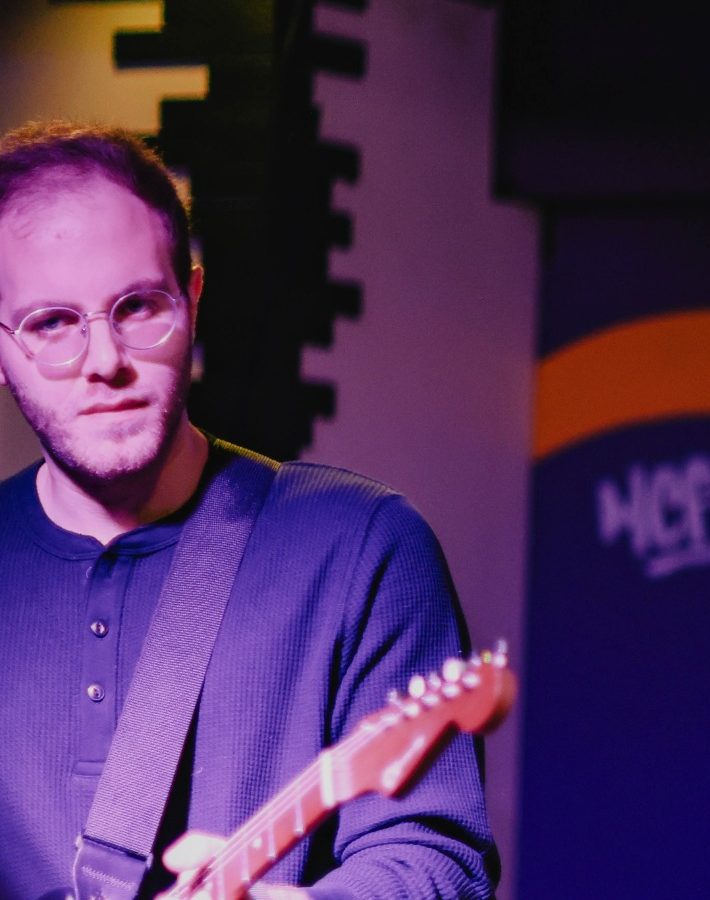
Hello everyone it’s your host Faithfulness from Dulaxi, and today I have with me the exceptional band, John Lebanon from Boston, United States. And John Lebanon is here to discuss their recent album “Kite Without a String” which was released on June 12th, 2026. So, welcome, John Lebanon!. But before we begin our interview, to our audience; here is what you need to know about this artist.
John Lebanon is a Boston-based indie-folk project led by Lebanese songwriter and physician Roy Souaid, born out of the underground music scenes of Beirut and later shaped across the American Northeast. What began as solitary demos gradually evolved into a full collaborative ensemble, reflecting a decade-long movement between Lebanon and the United States and the emotional experience of existing between two worlds. The project fuses the melodic warmth of Levantine musical heritage with the raw grit of Northeast alternative rock, creating a sound rooted in contrast, memory, and cultural duality. At its core, John Lebanon explores themes of identity, belonging, displacement, faith, and the search for stability in an increasingly unsettled world, using music as a reflection of lived experience and emotional geography. Their definitive album, “Kite Without a String” released June 12th, 2026 in Boston, Massachusetts, embodies this vision through a carefully structured sonic journey that moves from urgency and restlessness into clarity, connection, and renewal, blending stripped-down folk intimacy with layered indie rock and subtle electronic textures. Across its arc, the album captures moments of emotional tension and release through key works such as “Hurricane Eyes,” “Maksour,” “Vermontier (Dusk Edition),” and “Self Made World,” culminating in a stripped-back closing statement that returns to simplicity and authenticity. Supported by a collaborative lineup featuring Roy Souaid, Matt Deluccia, Gaby Carvajal-Poisson, Karl Deek, Khalid Razick, Marc Chehwane, and Stefanos Athinaios, John Lebanon crafts a deeply atmospheric and reflective sound for listeners drawn to artists like Vampire Weekend, The Shins, Wilco, and Bibio, positioning the project as a meditation on distance, identity, and emotional grounding.
Having this brief Introduction about John Lebanon, I’m sure new and current fans must be excited about our Interview today.
INTERVIEW SESSION
Faithfulness: Your music feels deeply tied to both Beirut and the American Northeast. At what point did you realize this project was becoming more than music and starting to feel like a documentation of two identities living side by side?
John Lebanon: It happened gradually. When I started writing under the name John Lebanon, I was simply trying to make sense of my own experiences living between different places and cultures. Over time, I realized the songs weren’t really about geography as much as they were about belonging. Living in New England has shaped the way I write and hear music, while my roots continue to shape how I see the world. Rather than choosing one identity over another, the project became a space where those influences could coexist naturally.
Faithfulness: You describe the music as “a guide home” and “a moral boost.” Was there a personal period in your life where creating these songs became emotionally necessary for you?
John Lebanon: Absolutely. Like many people, there were periods where life felt uncertain and overwhelming. Writing became a way to slow everything down and reconnect with what mattered. These songs helped me process change, distance, and the feeling of searching for solid ground. In that sense, the album became a reminder that home is not always a place; sometimes it’s found in relationships, memories, and the values that stay with you.
Faithfulness: Your background as both a physician and songwriter is fascinating because both professions deal with human vulnerability in different ways. Do those two worlds ever influence how you observe people and write music?
John Lebanon: Constantly. Medicine gives you a front-row seat to the human experience. You see people facing uncertainty, loss, resilience, hope, and recovery every day. It teaches you to listen carefully and pay attention to what people are carrying beneath the surface. Songwriting comes from a similar place. Both are rooted in empathy and observation, and both remind me how much we all have in common despite our different stories.
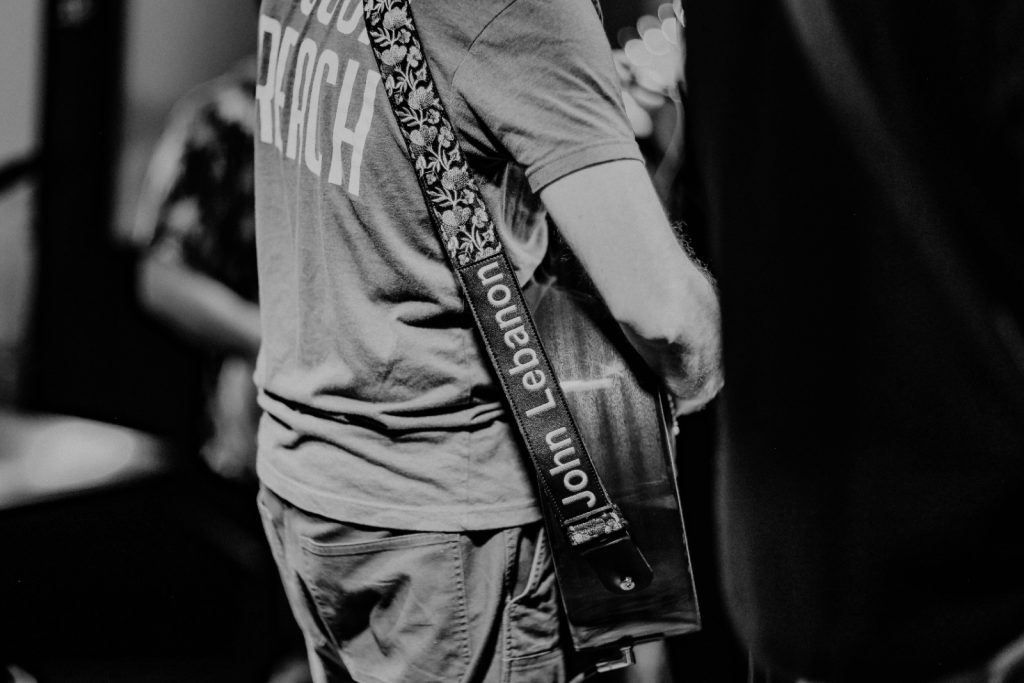
Faithfulness: The project evolved from solitary demos into a full ensemble spread across Boston, Providence, and Beirut. What changed emotionally or creatively once the music stopped being entirely yours alone?
John Lebanon: It opened everything up. The early demos were very personal and intimate, but once the songs reached the band, they took on a life of their own. Each musician brought different influences, ideas, and experiences that expanded the emotional range of the music. What started as individual reflections became something much more collaborative and universal.
Faithfulness: The melodic warmth of the Levant and the textured grit of alternative rock coexist naturally throughout your sound. Were there specific artists, memories, or environments that helped shape that balance early on?
John Lebanon: Definitely. I grew up listening to a wide range of music, from French songwriters and classic rock to alternative and folk artists. The landscapes have also played a huge role. There is something about New England’s changing seasons, long winters, and quiet rural spaces that naturally finds its way into the music. Over time those influences blended with the melodies and musical instincts I grew up with, creating something that feels honest to my own journey.
Faithfulness: “Kite Without a String” feels intentionally structured like an emotional journey rather than just a collection of songs. When you began writing the album, did you already envision that gradual movement from heaviness toward release?
John Lebanon: Not at all. The album revealed itself over time. Because I write and produce slowly, I had the chance to step back and notice common threads emerging between the songs. Looking at them together, I realized they all explored different versions of the same question: how do we stay grounded while navigating uncertainty? The emotional arc grew naturally from that.
Faithfulness: The title track speaks about letting go without losing your core. Was there a specific experience or realization that became the emotional foundation of “Kite Without a String”?
John Lebanon: The song came from realizing that change is unavoidable, but losing your direction isn’t. There are moments in life where familiar structures fall away and you’re forced to trust yourself more than you expected. The image of the kite captured that feeling for me. It can seem vulnerable and untethered, but it can also be free to find a new path.
Faithfulness: “Maksour” stands out as one of the most exposed moments on the record, partly because it’s stripped-back and performed in Arabic. Did writing that song in your native language unlock emotions that English couldn’t fully express?
John Lebanon: Absolutely. Certain emotions live closer to your native language. There are memories, expressions, and emotional textures that simply arrive more naturally in Arabic. Stripping the arrangement back allowed the song to speak for itself and created one of the most personal moments on the album.
Faithfulness: Songs like “Petit Pierre” and “Mizuri” focus on grounding elements such as faith, stability, and human connection. After exploring tension and displacement earlier on the album, why was it important for the second half to move toward comfort and balance?
John Lebanon: Because that’s where life eventually leads us if we’re fortunate enough to keep growing. The second half of the album is about rediscovering the things that truly sustain us: relationships, faith, nature, community, and gratitude. Those themes felt just as important as the uncertainty that inspired the earlier songs.
Faithfulness: When listeners finish this record from beginning to end, what feeling or realization do you hope quietly stays with them long after the music fades?
John Lebanon: I hope they feel a little more grounded. We all experience periods of uncertainty, transition, and self-doubt. If the album leaves listeners with a sense of reassurance that they can navigate those moments without losing themselves, then it has done its job.
Having Had A Close Listen To “Kite Without a String,” This Deeply Humane Body Of Work, Here Are My Thoughts.
Listening to “Kite Without a String,” released on June 12th, 2026, feels like stepping into a deeply personal and carefully constructed emotional landscape that I can’t easily detach from. As the definitive statement of John Lebanon, the Boston-based indie-folk project led by Roy Souaid, the album immediately strikes me as something shaped by years of lived distance between Boston and Beirut, where identity, faith, belonging, and meaning are not just themes but lived questions unfolding across every track. What I find most striking is how the album refuses spectacle in favor of intimacy; it speaks through memory, relationships, nature, and small human moments, and that restraint gives it a rare emotional honesty that stays with me long after listening. Sonically, I experience it as a continuous journey rather than a collection of songs, moving from restlessness and emotional fragmentation into clarity and acceptance, with warm acoustic guitar lines, textured electric layers, ambient atmospheres, subtle electronic touches, and understated Middle Eastern influences blending into a cohesive cinematic soundscape. The vocal performances consistently feel like the emotional center of everything, carrying vulnerability and conviction in equal measure, making even the quietest moments feel deeply alive. Tracks like “Hurricane Eyes” leave me unsettled in the best way, as its blurred line between memory and identity turns emotional attachment into something almost haunting, while its atmospheric production and shifting dynamics amplify that inner turbulence. The title track, “Kite without a string,” stands out to me as the philosophical anchor, framing freedom not as escape but as fragile self-realization, especially through its grounding lyricism and expanding folk-rock arrangement that mirrors emotional growth. “Mizuri” feels like a turning point, almost spiritual in tone, where renewal and self-discovery are expressed through rising optimism and lyrical confrontation of inner chains, while “Self Made World” opens into something more communal and uplifting, turning isolation into solidarity through its expansive pop-rock build and emotionally direct vocal delivery. Across all of this, I feel John Lebanon balancing introspection with universality in a way that makes the album feel both deeply personal and widely relatable, as if it is speaking simultaneously to individual memory and collective experience. Ultimately, “Kite Without a String” leaves me with a strong sense that even in emotional disconnection or uncertainty, there is still grounding to be found in connection, memory, and shared human experience, making it a work that feels both artistically ambitious and emotionally necessary.
~ Daniel (Dulaxi Team)
Finally to our audience, I urge you to listen to “Kite Without a String”, add its songs to your playlist and be inspired by them, and on behalf of Dulaxi I like to appreciate you all by saying thank you everyone, See you on our next interview.
For more information about John Lebanon, click on the icons below.