
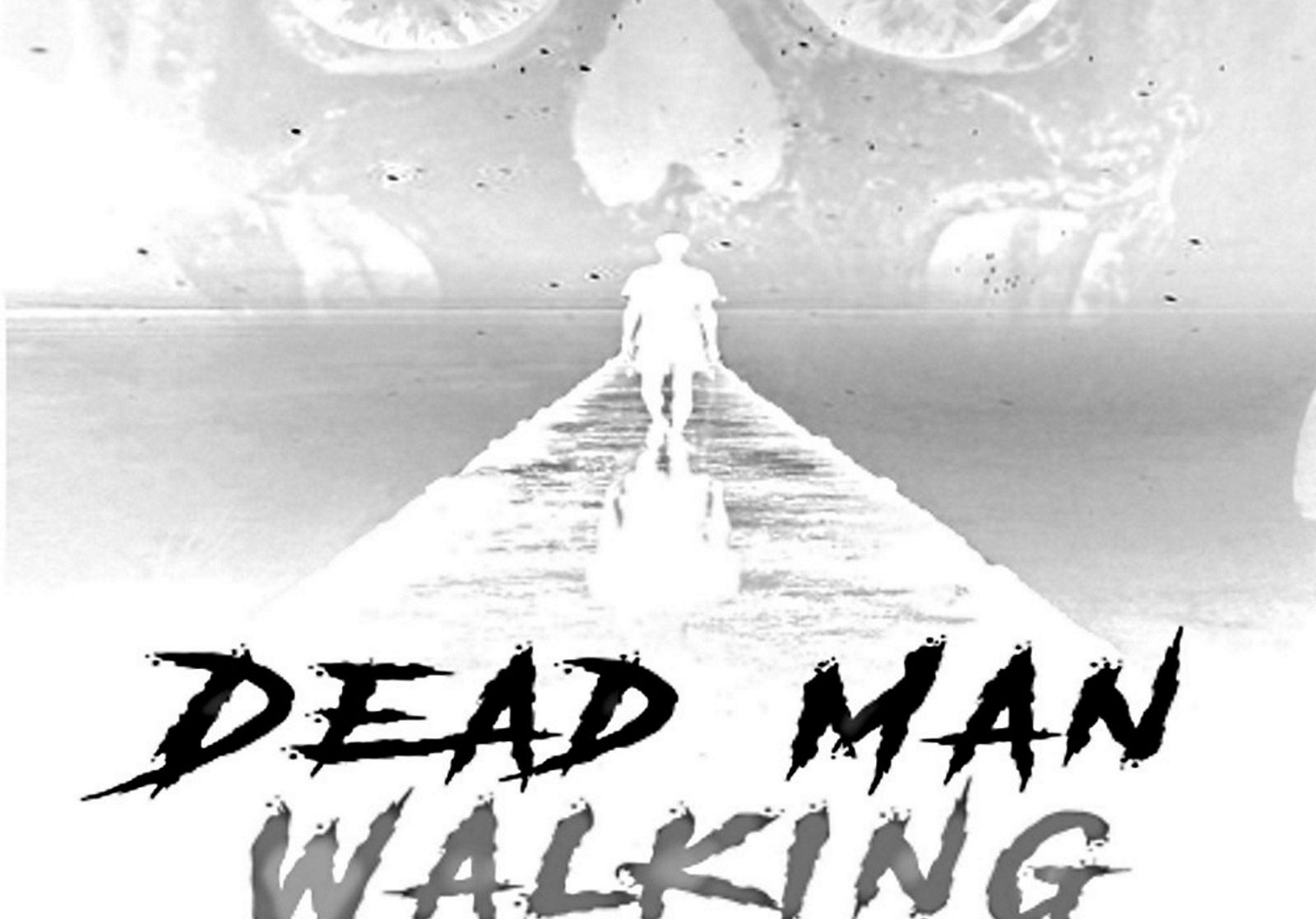
Hello everyone, it’s your host Oliver from DULAXI, and today I’m delighted to be joined by fantasy writer, music maker, and creative storyteller Zach Adams from Anchorage, Alaska. Known for blending literature, imagination, and heavy music, Zach Adams brings his alternative metal sound to life through his latest original single, “Dead Man Walking,” released on 24 June 2026.
Serving as the theme song for Zach’s horror and fantasy novel Dead Man Walking: Narrator’s Cut, the track introduces listeners to the larger world of the Ivyverse series while standing firmly as its own powerful musical experience. Before we begin our conversation with Zach Adams, here’s what you need to know about today’s featured project.
About Zach Adams
Based in Anchorage, Alaska, Zach Adams is an independent creative whose artistic world exists at the intersection of fantasy storytelling, music, and imaginative world-building. Describing themselves as a fantasy writer, music maker, and “general nuisance,” Zach has developed a unique approach to creativity by allowing different forms of expression to exist together rather than separating them into individual disciplines.
With a background shaped by both literature and music, Zach’s creative journey began at an early age. Storytelling developed through a lifelong connection with books and fictional worlds, while music became another powerful outlet through family influences, early performances, and years of experimenting with different sounds. These experiences eventually evolved into the creation of the Ivyverse, a fictional universe where music and narrative work alongside each other to create a larger artistic experience.
“Dead Man Walking” represents the first chapter of an ambitious musical collection connected to the horror and fantasy novel Dead Man Walking: Narrator’s Cut. Rather than simply functioning as background music for the story, the track serves as an introduction to the emotional atmosphere and psychological struggles found within the world Zach has created. The song explores themes of anxiety, inner conflict, fear, and perseverance, using alternative metal as the foundation for a narrative-driven experience.
Influenced by the intensity of Metallica, the haunting qualities of Alice in Chains, the darkness of Black Sabbath, and the cinematic imagination of Danny Elfman, Zach combines heavy instrumentation with storytelling elements to create a sound they describe as “progressive grunge.” The result is a blend of crushing guitar-driven energy, melodic exploration, and emotionally charged songwriting that reflects both the fictional universe and the personal experiences behind it.
“Dead Man Walking” also marks the beginning of an eleven-track soundtrack designed to accompany the Ivyverse series. The project was developed under Zach’s own label, Splitting Adams Entertainment, allowing them creative freedom throughout the writing, production, and recording process. By handling the production themselves, Zach has been able to experiment with different ideas while building a musical identity that closely connects with their storytelling vision.
The track’s connection to the novel is further strengthened by its exploration of anxiety and emotional turmoil. While the song follows the perspective of a fictional character facing supernatural challenges, its themes remain grounded in struggles many listeners can recognize. Zach uses fantasy and horror not only as storytelling devices but also as ways to examine human experiences, creating a space where fictional conflicts reflect real emotions.
Through “Dead Man Walking,” Zach Adams continues expanding the Ivyverse into a creative universe where music, literature, and visual imagination merge. With more chapters and songs planned for the future, the project represents an ongoing exploration of storytelling without traditional boundaries.

Having this brief introduction to today’s featured project, I’m sure both new listeners and longtime fans are excited to hear directly from Zach. So, without further ado, let’s begin today’s interview.
INTERVIEW SESSION
Oliver:
Before we dive into Dead Man Walking, I’d love to start with the person behind the project. You describe yourself as a fantasy writer, music maker, and “general nuisance” from Anchorage, Alaska. How has your journey through life, creativity, and self-expression shaped the artist and storyteller you are today?
Zach Adams:
As a large, free-roaming, gelatinous cube, I would say my journey through life has left me more or less cube-shaped. But being gelatinous, I can change my shape at will.
Oliver:
Many people discover either writing or music as their primary creative outlet, but you have built your identity around both. Looking back, what drew you to storytelling and music in the first place, and how have those two passions evolved alongside one another over the years?
Zach Adams:
Both interests started very early in my childhood, but books came first as some of my earliest memories are of my mom (also a gelatinous entity, though she is a sphere) reading to me, and every time I changed schools I ended up spending half of my time there in the library, getting gelatin all over the carpet and books. The main characters in the Ivyverse actually started out (in barely recognizable, non-gelatinous forms) when I was 8, 10, 12, and 14 (in gelatin years which are approximately 42 days for every human year) and evolved with me over time. Both of my parents are also musical, mom being a singer and dad (a gelatinous rhombus) having been a drummer in a band called Hammerfist when I was a kid so I got to see and hear them a lot. I started on percussion when I was 12 but switched to guitar in high school thanks in large part to the movies School of Rock and Tenacious D in the Pick of Destiny (plus a long-lasting hyperfixation on the Beatles), and the instrument became my primary obsession for several years before I returned to writing in my early twenties.
Oliver:
Creative people often have defining moments that change the way they see themselves. Was there a particular experience, challenge, or realization that made you understand that creating worlds, characters, and music was something you needed to pursue seriously?
Zach Adams:
I have one for each side of the Ivyverse. On my 7th birthday I got to join Hammerfist onstage for their cover of Green Jelly’s “Three Little Pigs” singing “Not by the hair on my chinny-chin-chin!” and from then on the daydream of getting back onstage somehow was permanently stuck in my brain (my next time performing for an audience would occur during a pep rally my sophomore year of high school, singing and playing guitar for a cover of Jet’s “Are You Gonna Be My Girl”). For the storytelling side, I was always writing little incomplete short stories as a kid but in 4th grade I had a cool teacher who would let me write on the class computers if I finished my work early, which I always did. That year the school principal gave me an award for one of my projects and so I just kept coming up with new ideas until either 8th or 9th grade when I took what I thought were my best ones and compiled them into a connected universe (Thanks for the idea, Marvel!).
Oliver:
Living in Anchorage places you far from many of the traditional entertainment and music industry hubs. In what ways has Alaska influenced your perspective, imagination, and the way you approach creativity compared to artists working in more conventional environments?
Zach Adams:
Alaska is an odd place to me. I’ve had plenty of good and bad experiences living here and interacting with the local musicians and other artists. In some ways the separation from major entertainment hubs can bring out a strong sense of community, but it can also be very isolating (particularly for cubes like me who lack social skills). That isolation has already become a recurring thread in my writing and I’ve had so many attempted collaborations fall apart (5 bands between ages 18 and 23) that now I just do everything by myself, or hire people for the parts I can’t do alone for whatever reason.
Oliver:
Your work seems to exist at the intersection of fantasy, horror, literature, and heavy music. How would you define your artistic identity, and what do you feel connects all the different forms of creativity you explore?
Zach Adams:
I identify as an unreliable narrator. Sometimes it feels like the only way my different projects connect is because I say they do, but it seems to be working so far.
Oliver:
Your influences range from Metallica and Alice in Chains to Black Sabbath and even film composer Danny Elfman. What specific qualities from those artists inspire you, and how do those influences come together to create the unique sound of Zach Adams?
Zach Adams:
Those are just a few of my influences, but I’ve always loved those bands’ intensity and raw honesty, and the first demo of Dead Man Walking came around after I tried to learn Danny Elfman’s 1989 Batman theme on guitar. Plus, I’m convinced it’s impossible not to enjoy Oingo Boingo. Taking those along with my many other inspirations (the Beatles, Sparks, Floater, Porcupine Tree, Nirvana, Smashing Pumpkins, Muse, Faith No More, Soundgarden, System of a Down, Rush, etc.) I make a fairly counterintuitive, hopefully entertaining blend of noises I call “progressive grunge”.
Oliver:
Rather than releasing a standalone metal track, you chose to create music that exists as part of a larger fictional universe. What inspired you to build the Ivyverse in a way that allows literature and music to coexist and strengthen one another?
Zach Adams:
Turning my universe into the fantasy/music hybrid it is now didn’t happen until 2020 when I had to cancel plans to rejoin my last band 3 Kisses in Wisconsin who I had been playing bass for, due to Something that Happened that year. I had a bunch of instrumental demoes that weren’t being used for anything so I wrote lyrics that followed the themes of Dead Man Walking: Narrator’s Cut and decided to continue writing soundtracks for its planned sequels. I still approach lyrics the same way I would if I weren’t writing them in character, but having that filter allows me to express the same feelings with more separation.
Oliver:
Dead Man Walking serves as the theme song for your horror and fantasy novel Dead Man Walking: Narrator’s Cut. At what point did you realize that this story needed a musical companion, and what made a metal anthem feel like the right vehicle for introducing audiences to that world?
Zach Adams:
I already had most of the songs in some form, and my playing style has always had a lot of metal influence. Writing what would become the title track is really what made the musical and literary projects click together for me.
Oliver:
As both the song title and the novel title share the same name, what deeper meaning does Dead Man Walking hold within the larger narrative, and why was it important for this phrase to become the centerpiece of both projects?
Zach Adams:
The title refers to the story’s main character, Isaac Falcone, but explaining the literal and figurative meanings of that description for him would spoil the story. All he knows is that there is a vampire and their gangster accomplice coming for him, and reality will break if they catch him. I’m not a kind author, I put my characters through a lot.
Oliver:
Anxiety plays a significant role in the emotional foundation of the track. Can you talk about how those feelings influenced the song’s themes and how you transformed something deeply personal into a powerful and relatable listening experience?
Zach Adams:
Anxiety and depression have been some of the biggest struggles of my life, and mental health is a major thread in Isaac’s story. The song is about his anxiety, but also a message from the villain, “You will see that I’m always watching, you’re a dead man walking!” Is as much a part of that message as it is part of how Isaac feels on his own.
Oliver:
Horror and fantasy often allow creators to explore real-world emotions through fictional lenses. How does Dead Man Walking use its characters, themes, or narrative elements to reflect struggles that people may face in their own lives?
Zach Adams:
Isaac starts off as just a regular guy with anxiety meds and a dead end job, who stumbles across magic completely by accident and has to panic his way through the chaos that follows. I think almost anyone can find something relatable in that.
Oliver:
The song balances crushing riffs, melodic moments, and emotionally charged vocals. When writing the track, how did you approach translating the atmosphere of the novel into a musical form that listeners could immediately feel even without reading the book?
Zach Adams:
The song began as its own thing, but it was the first new song I wrote around the time I decided to combine my music with my writing (Several tracks had been started when I was in my previous band). I gave it the book’s title, called it a theme song, and pieced it together from there.
Oliver:
As the producer of the track and the founder of Splitting Adams Entertainment, you had creative control over every stage of the process. How did that level of independence shape the final result, and what were some of the biggest creative decisions you had to make?
Zach Adams:
The song and book were both examples of me learning the creative process, for better or worse. Working independently with no corporate input or other collaborators gives me more freedom to experiment, and if something goes wrong there’s nothing stopping me from re-doing the whole thing if I feel like it’s necessary
Oliver:
Creating the first track in an eleven-song soundtrack is an ambitious undertaking. What challenges came with building a musical project that needed to function both as a collection of songs and as an extension of a larger story?
Zach Adams:
The biggest challenge for me is writing lyrics. Like I said previously, writing them in character gives me a filter that makes it feel less personal and allows me to be more open, but it also requires me to step into someone else’s brain which is a challenge on its own. It’s tough writing as a human rather than my authentically gelatinous self.
Oliver:
Every major creative project teaches its creator something new. Throughout the process of developing both the novel and its accompanying soundtrack, what lessons did you learn about yourself as an artist, producer, and storyteller?
Zach Adams:
I learned to plan my projects better, and I learned a lot about the recording and mixing/mastering process which is why I’m re-recording the soundtrack (track #2 …When Wishing Still Helped One is out now, and #3 Drown should be ready in the next couple of weeks)
Oliver:
Because Dead Man Walking touches on emotional turmoil and inner conflict, listeners may connect with it on very different levels. What conversations or emotional responses do you hope the song sparks among people who hear it for the first time?
Zach Adams:
As long as the conversation isn’t about how terrible the song is, I’m happy it’s even happening.
Oliver:
For readers who discover the music first and listeners who discover the book first, what experience are you hoping they have when they eventually explore both sides of the project together?
Zach Adams:
I envision the book and soundtrack together like a movie, and I hope that vision comes across when someone experiences them together.
Oliver:
Looking beyond this release, how do you envision the future of the Ivyverse evolving, and what long-term legacy would you like to leave through the combination of your music, stories, and imaginative world-building?
Zach Adams:
I have a lot of plans for the Ivyverse going forward, and without spoiling too much, it’s only going to get bigger, weirder, and more gelatinous.
“Zach Adams approaches creativity like a universe with no boundaries, where heavy music, fantasy storytelling, and unexpected humour can exist together as one unique artistic identity. Dead Man Walking is not simply a song inspired by a story, but a glimpse into a larger world built through imagination, emotion, and fearless experimentation.”
~ Oliver (DULAXI Team)
MY EDITORIAL PERSPECTIVE
Dead Man Walking represents the kind of creative ambition that exists beyond traditional genre boundaries. Zach Adams combines alternative metal intensity with fantasy storytelling, creating a release where the music feels connected to a much larger narrative. The track’s powerful instrumentation, emotional themes, and cinematic approach highlight an artist who views music as an extension of world-building rather than a separate medium.
~ Oliver (DULAXI Team)
CLOSING
Zach Adams, thank you for taking the time to share the story behind Dead Man Walking with DULAXI. This conversation offered a fascinating look into the creative process behind a project that brings together music, literature, fantasy, and personal experiences in a truly distinctive way.
Beyond the heavy riffs and atmospheric storytelling, what makes this project especially memorable is the personality behind it. Zach’s unique sense of humour, imaginative perspective, and willingness to embrace the unusual bring an extra layer of character to both the music and the world he is building. Whether describing creativity through the perspective of a gelatinous cube or discussing the challenges of writing as anything other than his “authentically gelatinous self,” Zach brings a refreshing honesty and playfulness that makes his artistic journey feel genuinely personal.
We encourage readers to experience Dead Man Walking and explore the wider Ivyverse that continues to grow around it. The combination of music and storytelling creates an experience designed to be discovered from multiple perspectives, inviting audiences to step into a world where heavy music and imagination collide.
Thank you for spending time with DULAXI, and we look forward to bringing you more conversations with artists, creators, and storytellers from around the world.