
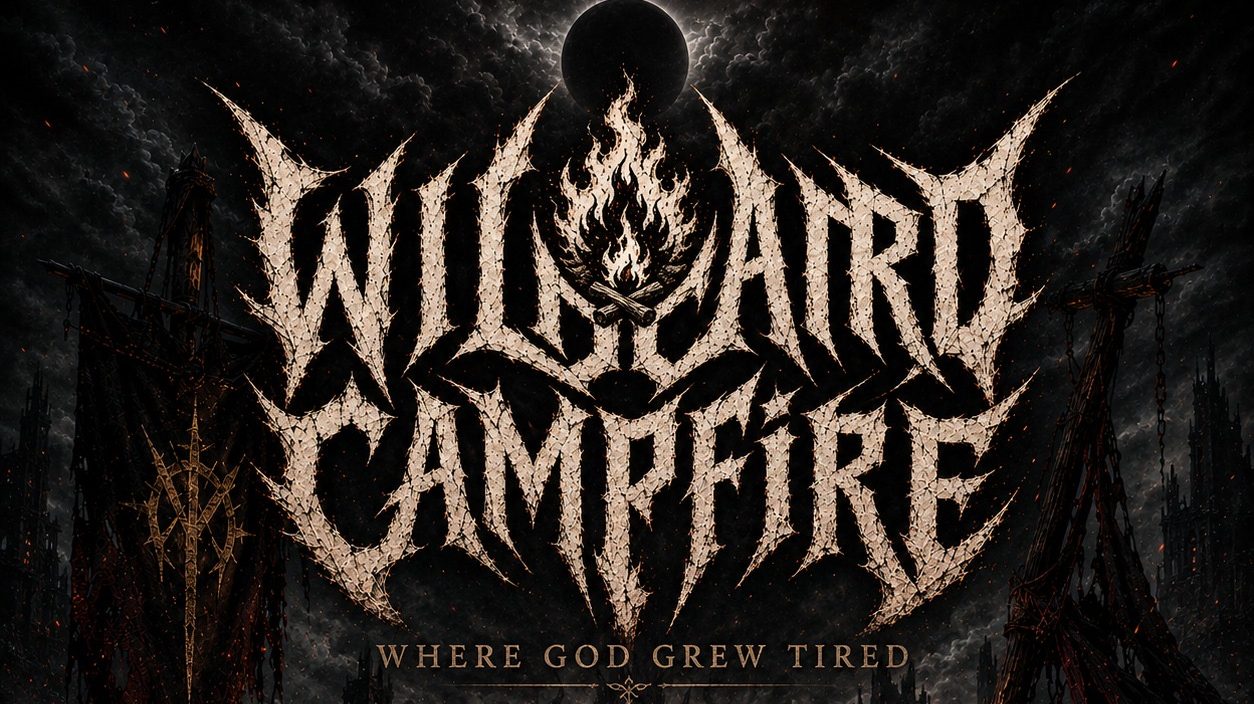
Hello everyone, it’s your host Oliver from DULAXI, and today I’m delighted to be joined by Rom Burla, the creative force behind Wildcard Campfire, a faceless, story-driven heavy music project based in Tbilisi, Georgia. Blending melodic metalcore, djent, progressive metal, deathcore and post-metal influences, the project recently released its ten-track debut album, Where God Grew Tired, on September 18, 2026. Bringing together aggressive guitar work, melodic passages and cinematic arrangements, the album introduces an expansive fictional world shaped by rebellion, war, faith, memory and survival.
Before we begin our conversation with Rom Burla, here’s what you need to know about today’s featured project.
About WILDCARD CAMPFIRE
Wildcard Campfire approaches heavy music through a combination of songwriting, visual storytelling and interconnected fictional histories. Rather than treating each release as an isolated composition, the project builds larger worlds in which individual songs represent different characters, experiences and historical moments. Written and creatively directed by Rom Burla, its musical identity is built around guitar-written riffs, emotional melodies, powerful breakdowns and contrasting arrangements that allow each story to develop its own character. The decision to remain faceless is also part of this creative direction, giving the music and its fictional universe greater prominence than the identity of the person behind them.
Released on September 18, 2026, Where God Grew Tired marks the project’s debut album, bringing together ten tracks across approximately 55 minutes. Its narrative unfolds through different periods of a civilisation, examining how promises of safety and hope can develop into systems of control, how rebellion can give way to further conflict, and how the consequences of violence can survive long after the original battles have ended. At the centre of the record is The Ashen Gospel, a three-part storyline following the rise of rebellion, the destruction of established powers and the eventual collapse of civilisation. Rather than following a straightforward chronology, the album moves between historical events and individual perspectives, allowing listeners to gradually discover the connections between its stories.
The record also finds room for experiences beyond its larger political and historical themes. Khinkali Inferno introduces humour and everyday human connection through the story of soldiers sharing a Georgian meal between battles, while The Ghosts of My Past examines the lingering psychological consequences of imprisonment, guilt and trauma. Paradise Has Walls draws from Burla’s personal experience of maintaining a relationship across international borders, transforming the difficulties of separation and bureaucratic restrictions into a broader story about love and social expectations. Elsewhere, The Legend of the Shanenigator brings an unexpectedly humorous perspective through a domestic story inspired by his young son. These contrasting subjects give the fictional world room to explore both the enormous consequences of human conflict and the smaller experiences that shape individual lives.
Burla has been developing the music and ideas behind Wildcard Campfire for many years, bringing together lyrics, guitar riffs, melodies, song structures and an extensive narrative history. His creative process begins with these original musical and artistic decisions, while generative AI is used during the performance and production stages to realise the material under his direction, followed by editing, arrangement and final mastering. Before the album’s release, three singles from the same creative era, A Hymn for the Unburied, Make It Pop and The Lowest Point, introduced different aspects of the project’s musical identity and received coverage and playlist support from several music publications and curators.
Having this brief introduction to today’s featured project, I’m sure both new listeners and longtime fans are interested in hearing directly from the creative mind behind Wildcard Campfire. So, without further ado, let’s begin today’s interview.
INTERVIEW SESSION
Oliver:
Wildcard Campfire operates without a visible artist identity, allowing the music and its fictional world to take centre stage. What led you to choose this faceless approach, and what does it allow you to express that a conventional artist identity might not?
Rom Burla:
Choosing to remain faceless was first and foremost an artistic decision. I wanted the music, characters, and worlds I create to be at the centre of the experience, rather than necessarily the person behind them.
That doesn’t mean my identity is a secret. I’m not really trying to be anonymous. I just wanted to create some separation between the person writing the music and the world listeners enter when they hear it.
The biggest freedom this approach gives me is that I don’t have to be the main character of every story. I can write from the perspective of someone fighting for their freedom, someone abusing power, or even a character who has committed terrible acts, without listeners having to assume that character represents my own beliefs or personal experiences.
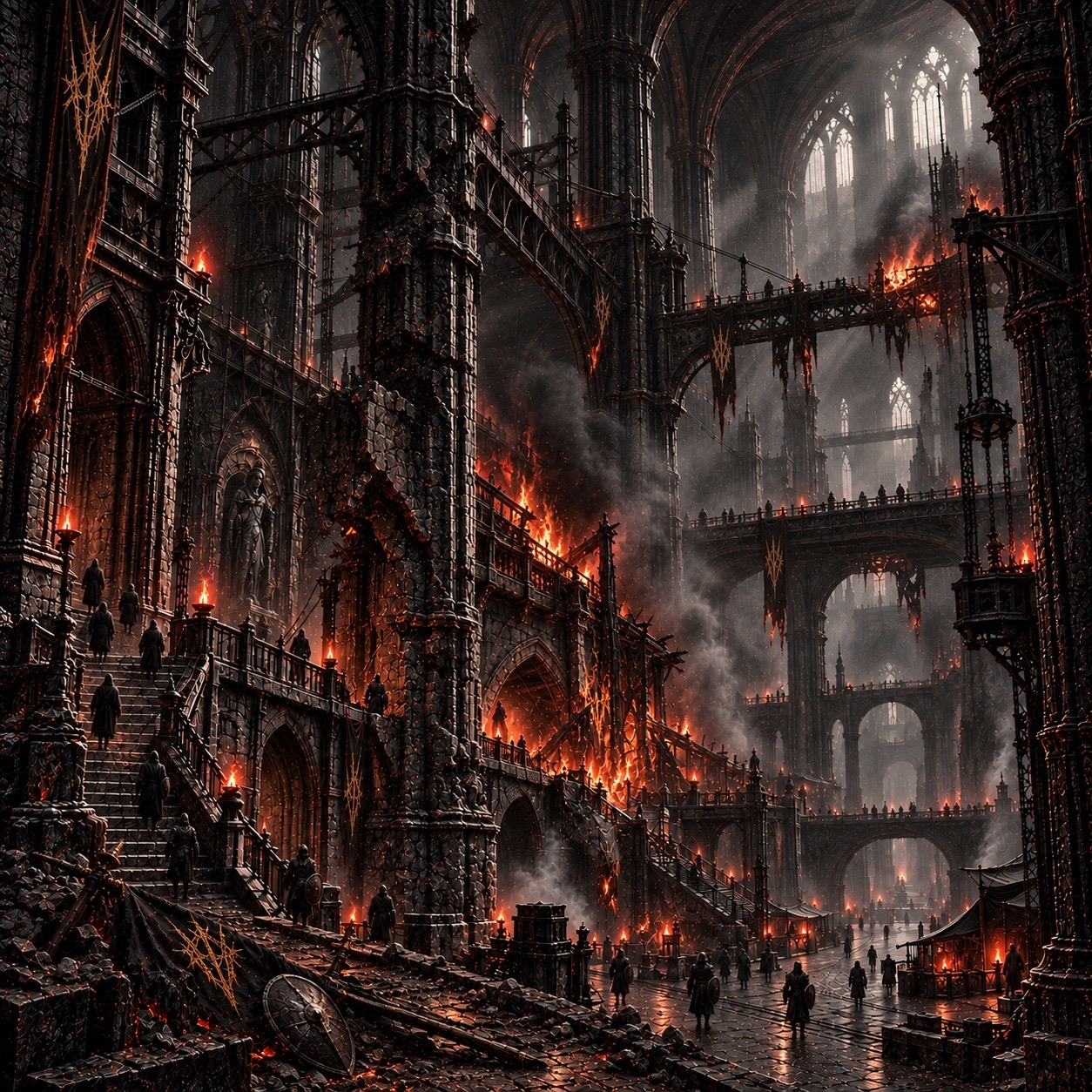
There’s also freedom in the visual identity. I want Wildcard Campfire to be able to move between different worlds, each with its own aesthetic. What works for Where God Grew Tired won’t necessarily work for the next world I’m building.
This approach allows me to create without being tied to a fixed personality or visual image, while also giving listeners more room to immerse themselves in the stories and interpret them in their own way.
Oliver:
Your work brings together heavy music, visual imagery, lyrics and an interconnected fictional history. Before this album took shape, what first drew you towards combining these elements, and when did you realise they could become one larger creative universe?
Rom Burla:
I think that connection originally came from the way I experience music myself.
When I listen to music, especially cinematic music or long progressive compositions, I don’t always just hear the instruments and melodies. I often imagine places, situations, and particular atmospheres. Naturally, I wanted to bring something of that experience into my own songwriting.
Over the years, I’d accumulated plenty of lyrics, riffs, melodies, and story ideas. Some of them weren’t originally connected at all, but when I started developing Where God Grew Tired more seriously, I realised I could give these different ideas a place within the same civilisation.
And that’s when the questions started coming. If a particular song takes place during a period of war, what led to those wars? What does everyday life look like for the people living through them? And what happens to their institutions, beliefs, and cultures hundreds or thousands of years later?
The more I explored those questions, the more the world started taking on a life of its own.
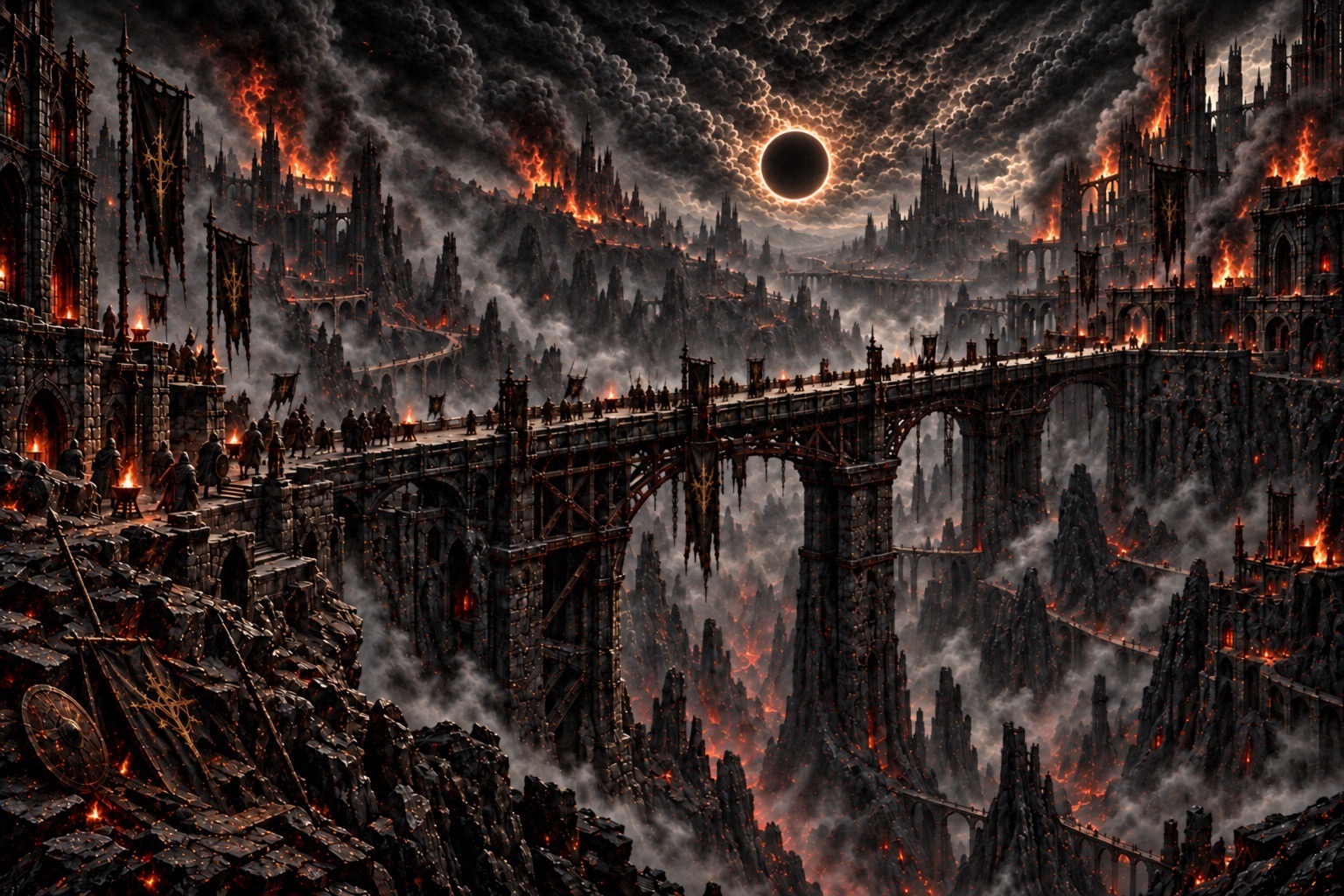
I also realised that each artistic element could serve a different purpose. The lyrics give us a character’s perspective, the music communicates emotion and atmosphere, and the visual imagery allows us to see something of the different cultures and periods. The lore connects everything into one history, even when not every detail appears directly in the songs.
The moment I stopped thinking only about the stories I wanted to tell and started wondering what was happening in the world beyond those stories was probably when I realised I wasn’t just working on a concept album anymore. I was building a universe that could continue to be explored.
Oliver:
Where God Grew Tired unfolds across different eras, memories and perspectives rather than following a straightforward chronology. What inspired this narrative structure, and how do you guide listeners through the story without explaining every connection directly?
Rom Burla:
I wanted listeners to discover the world gradually, almost like someone trying to piece together a historical picture from stories and accounts belonging to different periods.
After all, we don’t always understand the causes of events whose consequences we’re living with. Sometimes we encounter the result of something first, and only later learn what led to it. And once we have that additional information, our interpretation can change completely.
In Where God Grew Tired, the three parts of The Ashen Gospel act as historical landmarks. They provide the larger picture of the civilisation’s development, while the other songs show moments from the lives of people living in different periods.
There are also clues in the lyrics, musical motifs, and visual imagery. Sometimes an idea introduced in one song returns in another in a completely different form, without the characters themselves necessarily being aware of that connection.
But I didn’t want to explain every single detail. Part of the fun is discovering a connection you hadn’t noticed before, or returning to a song you already know and hearing it differently after learning something new about the world.
It was also important to me that the official track order worked musically, with tension, contrasts, and transitions between different styles, rather than simply following the story’s chronology.
That way, you can enjoy the album as a musical experience on your first listen, then revisit it through the world’s history and discover that some of the songs take on additional meaning.
Oliver:
The album’s wider story moves through the rise of rebellion, the destruction of established powers and the long consequences of conflict. What central idea did you want this history to explore about humanity, and did that idea change as you developed the album?
Rom Burla:
The central idea was to explore how beliefs, promises, and systems of power can continue existing long after the people who created them are gone, sometimes even after their original meaning has changed completely.
The story begins with the False Prophet, who appears during a time when people desperately need safety and hope. He promises them a better future, but uses those genuine needs to build a system of control and fear.
A rebellion emerges against that system. But even when the original powers fall, the wars don’t end. Different groups continue fighting in the name of freedom, faith, revenge, and their own interests, until the conflict no longer depends on the people who started it.
What interests me is the moment when an idea becomes something bigger than the person who introduced it. It can become a law, an institution, a tradition, or part of an entire group’s identity.
And then people continue acting according to it, sometimes without even knowing where it came from.
That central idea didn’t change significantly during the writing process, but as I developed the world, I began to understand just how many different forms it could take.
Initially, some stories focused on particular regions or events, but later I realised that the same patterns could emerge in different parts of the civilisation and across different periods.
That’s also what made the personal stories so important to me. I wanted to show that the consequences of big ideas don’t stop with kings, armies, and leaders. Eventually, they reach ordinary people who are simply trying to live their lives.
Oliver:
The three parts of The Ashen Gospel form an important thread through the album. How did you develop this central storyline, and what distinguishes the emotional and narrative purpose of each instalment?
Rom Burla:
I wanted each part of the trilogy to represent not only a different period, but also a completely different emotional state of the world.
The first part, Before the Banners Burn, begins in a time when people are searching for hope. The False Prophet promises them safety, peace, and a better future, but it gradually becomes clear that those promises are also being used to build a system of control.
At the same time, resistance begins to grow. People who realise something is wrong start coming together and acting against him and the powers operating in his name.
Emotionally, this part moves between fear, hope, faith, and the awakening of rebellion.
But I also wanted it to be clear from the beginning that the future wouldn’t be simple. The people joining the rebellion don’t necessarily share the same worldview. They might be fighting against the same enemy while imagining completely different futures.
The second part, When the Banners Burn, is where that tension erupts.
The original commanders fall, their banners burn, and their centres of power are destroyed, but the wars continue. Different groups fight for freedom, revenge, faith, and territory, until the original reasons for the rebellion almost lose their meaning.
Here, I wanted to communicate chaos, rage, and a complete loss of control. The war continues even without the leaders who were supposed to be directing it.
The third part, Where God Grew Tired, moves thousands of years into the future.
Civilisation has changed dramatically from a technological perspective, but those same patterns of fear and hatred continue. Weapons become more destructive, wars take on new names, and eventually humanity reaches a point where it almost destroys itself.
Emotionally, I wanted to create the feeling of something enormous and almost inevitable, as if we’re witnessing the final result of a process that began long before the generations living through its conclusion were even born.
The music develops alongside the story, too. There’s a melody introduced right at the beginning of Before the Banners Burn that returns throughout the trilogy with a different character each time, until it takes on a much heavier and more aggressive form in the third part.
I love the idea of the same melody accompanying the world through different periods while creating a different emotional response each time.
Together, the three parts tell a story of promise, war, and destruction. But what connects them is also the question of how an idea can continue existing even when the people acting in its name no longer understand where it came from.
Oliver:
In “The Beast With My Name,” power appears closely connected to the fear and hatred it creates. What interested you about exploring the destructive side of authority, and how does this track introduce the wider conflicts of the album?
Rom Burla:
The Beast With My Name began with the idea of a powerful character reaching a moment when there’s no longer any way to escape responsibility for their actions.
But as I developed the story, it became something bigger than a corrupt ruler simply facing punishment.
At the centre of the song is a character who built a kingdom founded on fear, lies, and hatred. Over time, that power becomes part of everything surrounding them. The streets, the institutions, and the people living under that system are all shaped by it.
But when the kingdom begins to collapse, it becomes clear that the greatest threat to the character isn’t necessarily an external enemy.
The beast coming after them was actually created through the decisions, lies, and hatred they spread along the way.
That’s what I loved most about the story. Sometimes someone creates a system designed to protect their power, but eventually that system grows beyond their control and becomes the very thing that brings them down.
I wanted the music to communicate that feeling, too. The song is aggressive, urgent, and chaotic, almost as if the listener is thrown into the events at the moment when everything is already burning and the end is approaching.
That’s also one of the reasons I chose it as the album’s opening track, even though it’s not the first event in the chronology.
We’re immediately introduced to a world where fear, hatred, and political power have become part of everyday life, and only later do we begin to understand how the civilisation reached that point.
To me, the song presents, through one character’s story, a pattern that repeats on a much larger scale throughout the album’s history.
Oliver:
“Khinkali Inferno” introduces a striking contrast through its humour, food and human connection amid a world shaped by conflict. Why was it important to include moments of absurdity and ordinary human experience within such a serious narrative?
Rom Burla:
Because even during times of war and destruction, people still need to eat, drink, talk, and laugh.
In Khinkali Inferno, we meet soldiers taking a break from the war to sit down together and eat khinkali, a Georgian dish I absolutely love.
The meal is described in a pretty exaggerated way, using imagery borrowed from battles and warfare. Even when the soldiers put their weapons aside, they still treat the food almost like another battle.
And that’s part of what makes the song funny to me.
But beneath the absurdity, there’s something very human. For a few minutes, these aren’t just soldiers fighting in the name of some kingdom or belief. They’re exhausted people who want to enjoy a good meal and the company of those around them.
That moment can actually make the war happening outside feel more tragic. It reminds us that these people have lives beyond the battlefield, and things they could lose.
I also like the musical contrast the song brings to the album. Among all these dark subjects, there’s suddenly something much more playful and absurd, without us ever really leaving the fictional world.
If the entire album were equally dark and serious, I think it would eventually start feeling a lot less human.
And besides, I genuinely love humour. Not everything I write needs to be philosophical or tragic to have a place in Wildcard Campfire.
Oliver:
“The Ghosts of My Past” turns towards guilt, trauma and the private consequences of earlier experiences. What perspective or emotional state did you want this song to capture, and how does its more personal focus fit into the album’s larger history?
Rom Burla:
The main feeling I wanted to communicate is that the world can keep moving forward while, emotionally, someone remains trapped in something that happened years ago.
The Ghosts of My Past continues the story of The Lowest Point, a single released before the album.
In that first song, we meet a character who is imprisoned and reaches the lowest point of their life, but despite everything that’s been taken away, something inside them still refuses to give up.
In The Ghosts of My Past, we meet that same character after the imprisonment has ended.
The door has opened and the outside world keeps moving, but that doesn’t mean the experience has ended psychologically. The memories, guilt, and things the character struggles to forgive themselves for continue to follow them.
I wanted the music to bring listeners into that emotional state before the song really begins to develop.
That’s why it starts relatively quietly, with vocals and a synthesizer pad underneath, without the other instruments. The opening gives listeners time to absorb the loneliness and the feeling of time continuing to pass, before the music becomes heavier and the internal struggle begins to surface.
There’s something about those emotions that feels very close to me personally, but I prefer not to explain exactly which experiences inspired them. It’s important to me that listeners have room to find meaning in the story that connects with their own lives.
Within the album’s larger world, the song presents history on its most personal level.
A war can end, a government can change, and a civilisation can continue developing, but the consequences of what happened don’t necessarily disappear from the people who lived through those events.
Sometimes history continues existing not only in books and monuments, but also in the memories people carry with them.
Oliver:
“The Tion Revolution” places rebellion and conflict at the centre of its story. What is the significance of the Tion within this world, and how did you approach giving this particular chapter its own identity through the music and lyrics?
Rom Burla:
The name The Tion Revolution actually came from a wordplay idea and a writing challenge I gave myself.
The “Tion” isn’t the name of a people, faction, or particular entity within the world. It’s connected to the song’s lyrical structure.
I wanted to try writing a song where almost every line begins with a word ending in “-ion,” such as Oppression, Depression, Division, Revolution, or Definition.
Initially, it was a creative challenge I found amusing, but as the writing progressed, I realised it suited the song’s subject extremely well.
The Tion Revolution deals with systems of control and oppression, where even language, definitions, and the information people receive can become tools that influence how they think and behave.
I liked the idea of the words themselves creating an almost mechanical repetition.
That repetition also gives the song a dense, driving lyrical rhythm. I wanted that steady stream of words to work alongside the music’s aggressive energy, almost as if we’re hearing a system constantly producing commands, definitions, and messages without stopping.
But there’s also an irony to it.
The same language that a system uses to define reality can eventually become a tool of resistance.
Words like Oppression and Submission describe the existing situation, while Revolution and Evolution already suggest the possibility of changing it.
The song also developed during the world-building process.
Initially, I imagined it as a story about a rebellion taking place in one particular region. But as the civilisation grew in my mind, I realised that in a world so vast and chaotic, resistance against systems of control probably wouldn’t emerge in just one place.
So the song began representing a broader pattern of uprisings taking place in different regions, not necessarily as part of the same organised revolution.
I think it’s one of my favourite examples on the album of how an idea that started almost as a songwriting game developed into something with a much larger meaning within the world.
Oliver:
“Paradise Has Walls” explores the pressure created by social and religious expectations, particularly around forbidden love. What interested you about examining personal relationships within systems that claim to define what is acceptable?
Rom Burla:
Paradise Has Walls is about two people who simply want to be together, but discover that the world around them believes it has the right to decide what their lives should look like.
They’re not trying to lead a revolution or overthrow a kingdom. They just want to build a life together.
But laws, beliefs, traditions, and social expectations turn something so simple into a struggle.
The song also has a very personal origin connected to my wife and me.
We were born in different countries, and we met when she came for a short visit to the country where I was born. What began as a meeting during that visit turned into a relationship, but afterwards we found ourselves dealing with a reality where laws and bureaucratic procedures made it difficult for us to be together.
We had to spend months apart, not because we didn’t want to be together, but because of circumstances that weren’t really within our control.
I think one of the most frustrating things about a situation like that is the gap between something that feels simple and obvious on a personal level and the complexity the outside world imposes on it.
You want to be together, but suddenly that decision also depends on systems, procedures, and laws you had no say in creating. There’s a lot of waiting, missing each other, and uncertainty, along with the feeling that your ability to build a life together doesn’t depend entirely on you.
I took those emotions and turned them into a broader fictional story, where faith, tradition, and social expectations also create barriers between two people who want to be together.
What particularly interests me is that the walls separating them aren’t necessarily physical.
Sometimes they’re laws, social conventions, or other people’s beliefs about what should or shouldn’t be considered acceptable.
I don’t see the song as an attack on the existence of faith or tradition. The question that interests me is what happens when those things become tools through which other people claim the right to dictate how someone should love or live.
And that’s also where the song connects to the album’s larger history.
Not every struggle in this world happens between armies and kingdoms. Sometimes the consequences of systems of power and belief are felt in the most private and intimate parts of our lives.
In that sense, the song presents a struggle for freedom on a very small scale, but with enormous emotional significance for the people experiencing it.
Oliver:
“The Legend of the Shanenigator” takes the album into deliberately unusual and humorous territory through its domestic-chaos storyline. Where did this idea originate, and how do you decide when an unexpected or absurd element belongs in the world you are building?
Rom Burla:
That idea came from my young son, who managed to turn a perfectly tidy living room into a disaster zone in about five minutes after coming home from daycare.
I think every parent of a young child knows that situation. You tidy up the house, and then a tiny creature with an unlimited supply of energy arrives and decides it’s time to rearrange everything you’ve just done.
I started thinking about how funny it would be to take that kind of everyday domestic chaos and describe it with the same exaggerated seriousness used to tell legends about kings, conquerors, and great wars.
And that’s how the Shanenigator was born.
What particularly amuses me is that the song uses the same language of power and control found elsewhere on the album, but this time everything takes place inside a house, and the great ruler is just a little kid.
No army, kingdom, or prophecy is needed. All it takes is the child entering the room, and within minutes the existing order completely collapses.
But there’s also something I like about it from a world-building perspective.
This civilisation isn’t made up only of prophets, rulers, and rebels. There are also parents, children, and families dealing with their own everyday chaos.
And that’s essentially my criterion for deciding whether a particular idea belongs in the world. It doesn’t necessarily have to advance the main storyline, but it should feel like something that could genuinely happen within it and offer a perspective we haven’t seen in another story.
And besides, sometimes I just want to write something silly and funny. I think there should be room for that in music, too.
Oliver:
In “Shackles of Blood,” the violence of the wider world appears to become something carried within an individual. What did you want to communicate about the way conflict can become internalised, and how does this change the listener’s understanding of the album’s recurring violence?
Rom Burla:
Shackles of Blood presents a different side of violence within this world.
Throughout the album, we encounter wars, governments built on fear, systems of oppression, and revolutions. Usually, those are things we see on the scale of groups, kingdoms, and entire civilisations.
But with this song, I wanted to explore what happens when violence no longer exists only within those larger systems, but becomes part of an individual’s behaviour and identity.
We meet a character who has committed terrible acts and become a source of violence themselves.
The character tries to escape the past and the consequences of those actions, but discovers there’s no simple way to free themselves from what’s already been done.
The shackles in the song’s title aren’t chains imposed from the outside. They’ve been forged through the character’s choices, actions, and the blood spilled along the way.
I think there’s an important moral distinction here.
Not everyone living in a violent world is simply a victim of that world. Some people choose to participate in violence, perpetuate it, and become new sources of it themselves.
That doesn’t mean someone’s environment or experiences have no influence on them, but that influence doesn’t necessarily erase personal responsibility for their actions.
And that’s what I wanted the song to add to the listener’s understanding of the album.
The great wars don’t exist only between armies and nations. Sometimes they continue living inside people, even after the fighting around them has ended.
That’s how violence can continue passing from one generation to another, not only through laws, institutions, and borders, but also through the behaviour and choices of the people living within that society.
Oliver:
The final instalment, “The Ashen Gospel – III. Where God Grew Tired,” brings the album’s title and central narrative together. What does the idea of God growing tired represent within this story, and what did you want listeners to consider as this chapter reaches its conclusion?
Rom Burla:
First of all, I think it’s important to clarify that the idea of God growing tired is a metaphor.
This isn’t a story where God decides to punish humanity or destroy the world. Humanity is the one that brings destruction upon itself.
Over thousands of years, civilisation continues developing. Kingdoms become nations, primitive weapons evolve into devastating technologies, and systems of faith and control take on new names and forms.
But despite all that progress, the same patterns of fear, hatred, and war remain.
Right at the beginning of the song, we hear how the prophets have disappeared, but their voices continue living through new centres of power.
That’s one of the main ideas I wanted to communicate: people change, technology changes, even the language used to justify wars changes, but certain ideas continue following the civilisation throughout its history.
I also wanted the music to communicate that enormous scale. The combination of heaviness, cinematic atmosphere, and echoes of the earlier parts was intended to create the feeling of a massive historical process reaching its climax.
The idea behind the album’s title is that after so many generations of violence and destruction, it’s as if even God has grown tired of watching humanity repeat the same mistakes.
I love the contrast between the enormous technological progress and the fact that human behaviour doesn’t necessarily progress alongside it.
Eventually, the civilisation develops a weapon whose consequences are greater than any border or war that was supposed to justify its use.
And the destruction that follows isn’t a victory for either side. It’s a failure of the entire civilisation.
But I didn’t want the song to end with nothing more than a feeling of destruction.
Even after the catastrophe, the question remains of what will survive from the old world, and what will happen to the ideas that brought it to that point.
Although this part closes the album, it doesn’t completely conclude the world’s chronology. The story continues beyond it and reaches the end of this era in A Hymn for the Unburied, where humanity returns to the surface after countless generations beneath it.
So to me, the question that remains isn’t only whether humanity can survive the destruction it created, but also what it will choose to carry from the past into the future.
Oliver:
Your creative process begins with writing lyrics, riffs, melodies and song structures on guitar, while generative AI is used during performance and production under your direction. How do you manage that relationship between your original creative decisions and the technologies used to realise the finished recordings?
Rom Burla:
The process starts with my musical and creative decisions, not with the technology.
I write the lyrics, riffs, melodies, and song structures. I also plan the tempo, keys and modes, vocal phrasing, and how the different sections should develop.
I also think about the performance itself: where there should be harsh vocals, where clean singing works better, when to use a choir or orchestral arrangements, and how those choices affect the emotion the song communicates.
After that, I use AI for the performance and production stages.
But I don’t take the first result and decide it’s good enough. I keep generating versions until I find one that comes close to what I’m hearing in my head, and from there I work on individual sections, changing and refining them to get closer to the original vision.
Sometimes a version can sound excellent and still be wrong for the song I wanted to create. The vocal delivery might communicate the wrong emotion, a particular transition might not work as I planned, or the dynamics simply aren’t developing the way I intended.
Those are good enough reasons for me to keep working.
Once I’m happy with the track, I also handle the final mastering myself.
I see this technology as a way to bring my music to life with the resources currently available to me. In the future, I’d love to reach a point where I can work and record with human musicians and vocalists, but even now, it’s important to me that the finished result remains faithful to the music I wrote and the artistic decisions I made.
Oliver:
The album moves between melodic metalcore, djent, progressive metal, deathcore and atmospheric post-metal elements. How do you decide which musical language best serves a particular song, especially when the music also needs to communicate a specific narrative moment?
Rom Burla:
I don’t really start a song by deciding that it has to belong to a particular genre. Usually, I begin with the story and the emotion, then try to figure out which musical language will serve them best.
In The Beast With My Name, for example, we enter a moment where everything the character has built is starting to collapse. I wanted the music to feel aggressive, urgent, and chaotic, almost without giving the listener time to prepare.
Paradise Has Walls, on the other hand, is a much more intimate story. We’re not on a battlefield, but inside a relationship under pressure from laws, beliefs, and social expectations.
There, I wanted to give the melodies and emotional atmosphere much more room, rather than relying on aggression alone.
Then there are songs like The Ashen Gospel – III. Where God Grew Tired, where I wanted to create the feeling of something enormous, almost beyond human scale. The combination of heavy guitars, cinematic atmosphere, and expansive arrangements serves the idea of an entire civilisation reaching its final moments.
Those contrasts are extremely important to me. If everything is equally heavy all the time, the heaviness itself starts losing its meaning.
Sometimes a melody or a quiet moment is exactly what makes the eruption that follows so much more powerful.
That’s why I love having the freedom to move between different styles, as long as the musical choices serve the song and the emotion I’m trying to communicate.
Oliver:
With ten connected tracks, multiple perspectives and a history that stretches across different eras, what was the most demanding part of keeping the album’s musical and narrative elements consistent while allowing each song to retain its own character?
Rom Burla:
The biggest challenge was finding the balance between a world with a clearly defined history and internal rules, and songs that still needed to work as independent musical pieces.
On one hand, I wanted everything to remain consistent. If a particular song takes place in an earlier period, it’s important to me that the world, culture, and systems of government appearing in it fit that period. And if another song takes place hundreds or thousands of years later, I need to understand how the civilisation evolved to reach that point.
But on the other hand, I didn’t want every song to sound like just another chapter of one enormous musical composition.
Each story needed its own personality.
There’s no reason why a story about someone dealing with trauma should sound like a story about a war between kingdoms, or why a song about a child turning a house into a disaster zone should use the same musical language as one describing an apocalyptic catastrophe.
The album’s non-chronological structure added another layer to that challenge. I needed to preserve the connections between the stories even when the songs didn’t appear next to one another, while also building a musical sequence that I genuinely enjoyed listening to from beginning to end.
Developing the history and lore helped me keep the bigger picture in mind, even when I was working on a song focused on a very small moment within it.
The goal was for every song to stand on its own, but for the album as a whole to reveal that all these pieces were presenting different sides of the same civilisation.
Oliver:
The album is designed to reward listeners who explore its lyrics, imagery and wider lore rather than approaching the songs as isolated recordings. What do you hope listeners discover when they begin connecting those details, and is there a particular aspect of the world you hope they will look at differently after hearing the album?
Rom Burla:
I’d love listeners to discover that the connections between the songs aren’t found only in historical events, but also in ideas that keep returning throughout the world in different forms.
The story begins with promises of safety, peace, and a better future. But as the civilisation develops, those promises take on new forms.
Sometimes they appear as religious faith, sometimes as laws, government institutions, borders, or justifications for war.
The people and periods change, but some of the ideas continue existing even after their original meaning has been forgotten.
What’s particularly interesting to me is that the characters living within this world aren’t necessarily aware of those connections.
Someone living hundreds of years after the events described in The Ashen Gospel – I. Before the Banners Burn doesn’t need to know who the False Prophet was to be influenced by systems and beliefs that developed in his wake.
In the same way, a story like Paradise Has Walls can show the consequences of those patterns on people’s personal lives without ever mentioning the leaders or wars that existed in earlier periods.
There are other connections to discover in the music and visual imagery, too, but I didn’t want to turn the album into a puzzle that listeners are required to solve.
Anyone who simply wants to enjoy the songs can do that, while those who want to explore the world can discover additional layers.
If there’s one thing I’d like listeners to look at a little differently, it’s the way we relate to ideas we’ve inherited from the past.
We tend to see some of the beliefs, norms, and institutions around us as if they’ve always existed, but each of them has a history and a series of decisions that led to its creation.
And sometimes, when we begin to understand where an idea came from and how it changed along the way, even things we once took for granted can take on a completely different meaning.
Oliver:
Now that Where God Grew Tired has introduced this world and brought its central story to listeners, what does this release represent for you creatively, and how do you see the Wildcard Campfire universe developing from here?
Rom Burla:
Where God Grew Tired represents the moment I stopped waiting for perfect conditions to finally bring my music into the world.
I’ve been playing and writing music for over twenty years, and throughout that time I’ve accumulated plenty of songs, lyrics, and ideas that never reached the point where other people could hear them.
So the fact that I’ve managed to release a full album and build an entire world around it, complete with history, characters, and connections between different stories, means a great deal to me.
But I don’t see Where God Grew Tired as a story I need to keep telling forever.
To me, this era reaches its conclusion with A Hymn for the Unburied, and I like that the ending leaves questions open without necessarily providing definitive answers.
I’ve already started working on the next world of Wildcard Campfire, and this time I want to take things in a very different direction.
Instead of a world that begins with a dark fantasy atmosphere and develops over thousands of years of wars and civilisations, I want to start in the near future, within a dystopian setting with a more psychological and clinical atmosphere.
What interests me this time is exploring identity, human psychology, and how people experience and interpret reality, as well as how those interpretations can influence the world they live in.
I’m still in the writing and world-building stages, so I don’t want to commit to every detail just yet.
In the meantime, there are still a few things I want to do with Where God Grew Tired, including the Lore Book and lyric books, a Deluxe Edition with additional material, and some guitar and vocal playthroughs that I’m trying to figure out how to release while maintaining the project’s faceless identity.
In the long run, I’d love to reach a point where I can work and record with human musicians and vocalists, and perhaps even explore the possibility of performing live.
But I don’t want to turn the project into a race. I have a family and a business to run, and I want to give every piece of music and every new world the time they need.
My ambition is for Wildcard Campfire to allow me to keep creating music I love and exploring different worlds and ideas for years to come, without feeling like I have to repeat what I’ve already done.
I think Where God Grew Tired is just the beginning of that journey.
“Behind Wildcard Campfire’s faceless identity lies a deeply personal creative vision, one that turns imagined histories, everyday experiences and the contradictions of humanity into stories that extend far beyond the music itself.”
~ Oliver (DULAXI Team)
EDITORIAL PERSPECTIVE
What stands out about Where God Grew Tired is the thought given to the relationship between its musical arrangements and the world surrounding them. The movement between aggressive guitar passages, melodic sections, atmospheric textures and unexpected humour gives individual tracks room to establish their own identities. Speaking with Rom also reveals the personal experiences and creative decisions behind several of these stories, particularly the relationship between historical conflict and individual responsibility. His plans for a new fictional universe suggest that Wildcard Campfire is an evolving creative project rather than a concept limited to one album.
~ Oliver (DULAXI Team)
CLOSING
Our conversation with Rom Burla offers a fascinating look into the creative thinking, personal experiences and extensive world-building behind Wildcard Campfire. From the historical conflicts connecting The Ashen Gospel to the intimate stories explored in Paradise Has Walls and The Ghosts of My Past, Where God Grew Tired demonstrates how heavy music can become a space for exploring different dimensions of human experience.
A special thank you to Rom for taking the time to share his creative process, explain the ideas behind the album and offer a closer look at the fictional universe he has spent years developing. His openness about the project’s artistic direction, the role of technology in its production and the personal experiences that have influenced its stories adds another dimension to understanding the record.
We encourage readers to experience Where God Grew Tired and explore the individual stories, musical contrasts and connections that bring its fictional world together. With additional material planned for this era and an entirely new creative direction already taking shape, Wildcard Campfire is certainly a project worth following.
Thank you for spending your time with us here at DULAXI. I’ve been Oliver, and I look forward to bringing you more conversations with fascinating artists and creative minds from across the international music scene. Until our next interview, keep discovering new music and supporting the artists who continue to push creative boundaries.