
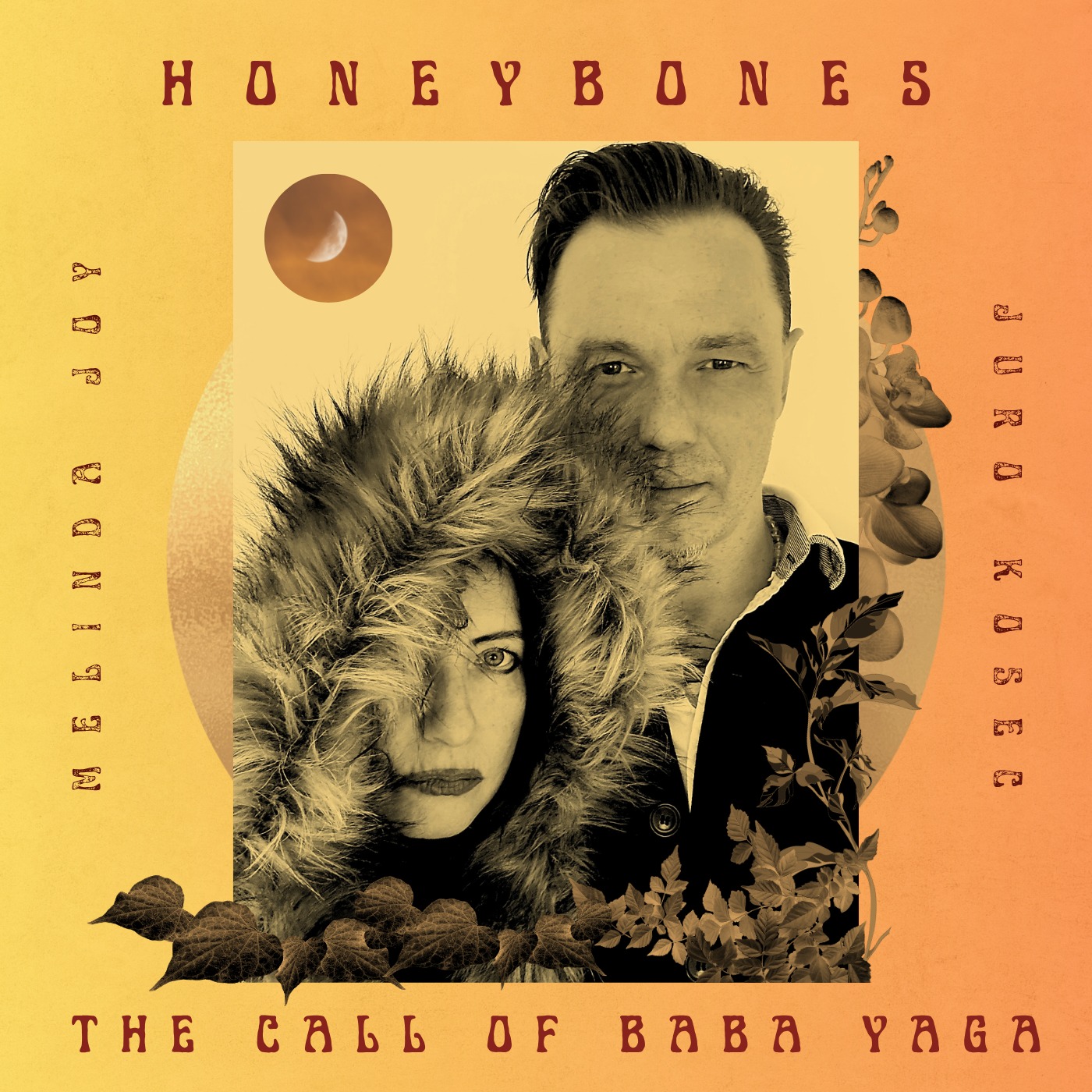
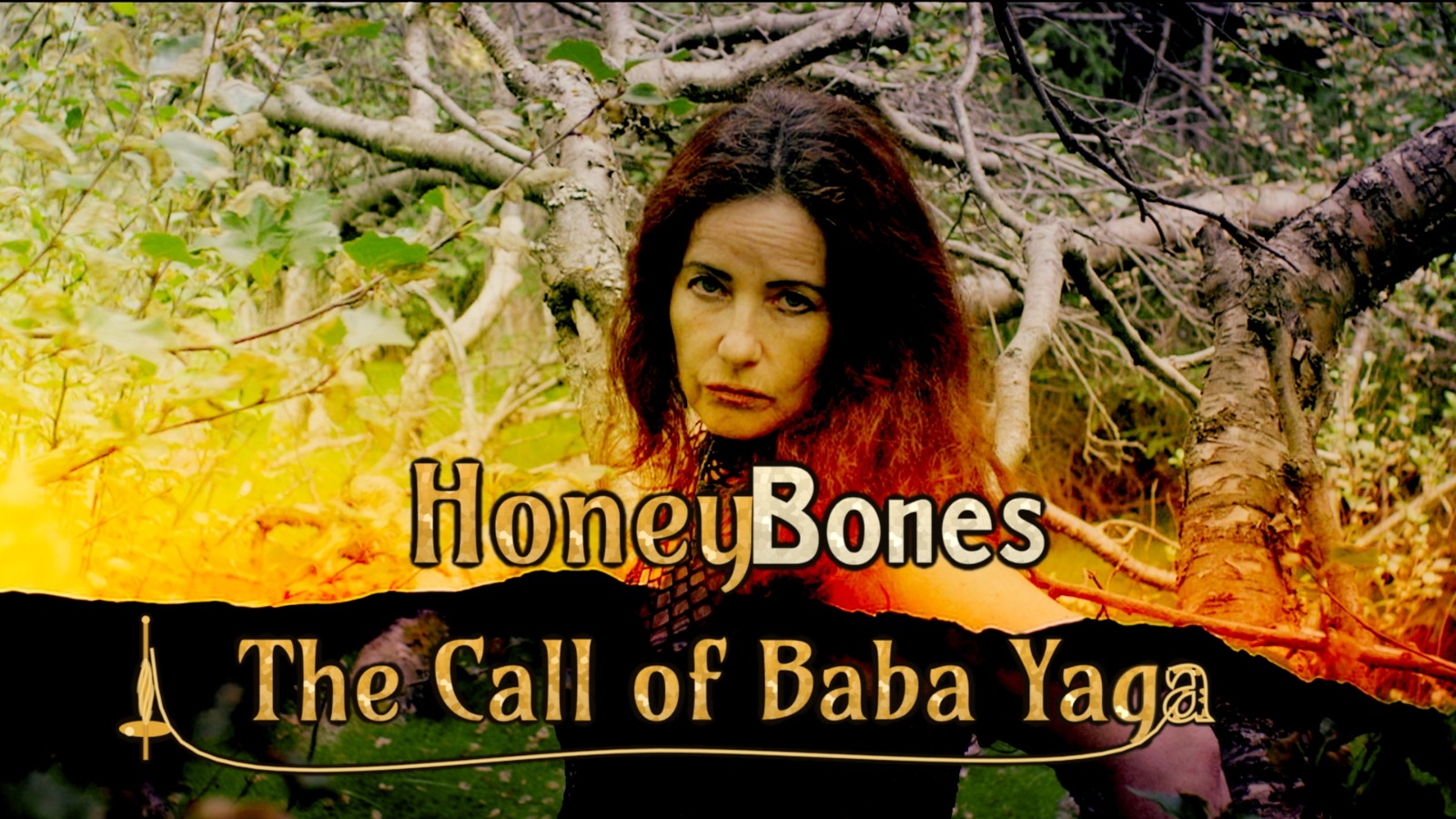
Hello everyone, it’s your host Oliver from DULAXI, and today I’m delighted to be joined by Melinda Joy and Juro Kosec, the creative minds behind HoneyBones, an electronic duo based in Akureyri, Iceland. Blending electronic, experimental, downtempo and rock influences, the duo recently released their second single, “The Call of Baba Yaga”, on October 23, 2026. Drawing from Eastern European folklore, spirituality and the natural surroundings of Iceland, the track offers an intriguing exploration of mythology and creative expression. Before we begin our conversation with Melinda and Juro, here’s what you need to know about today’s featured project.
About HoneyBones
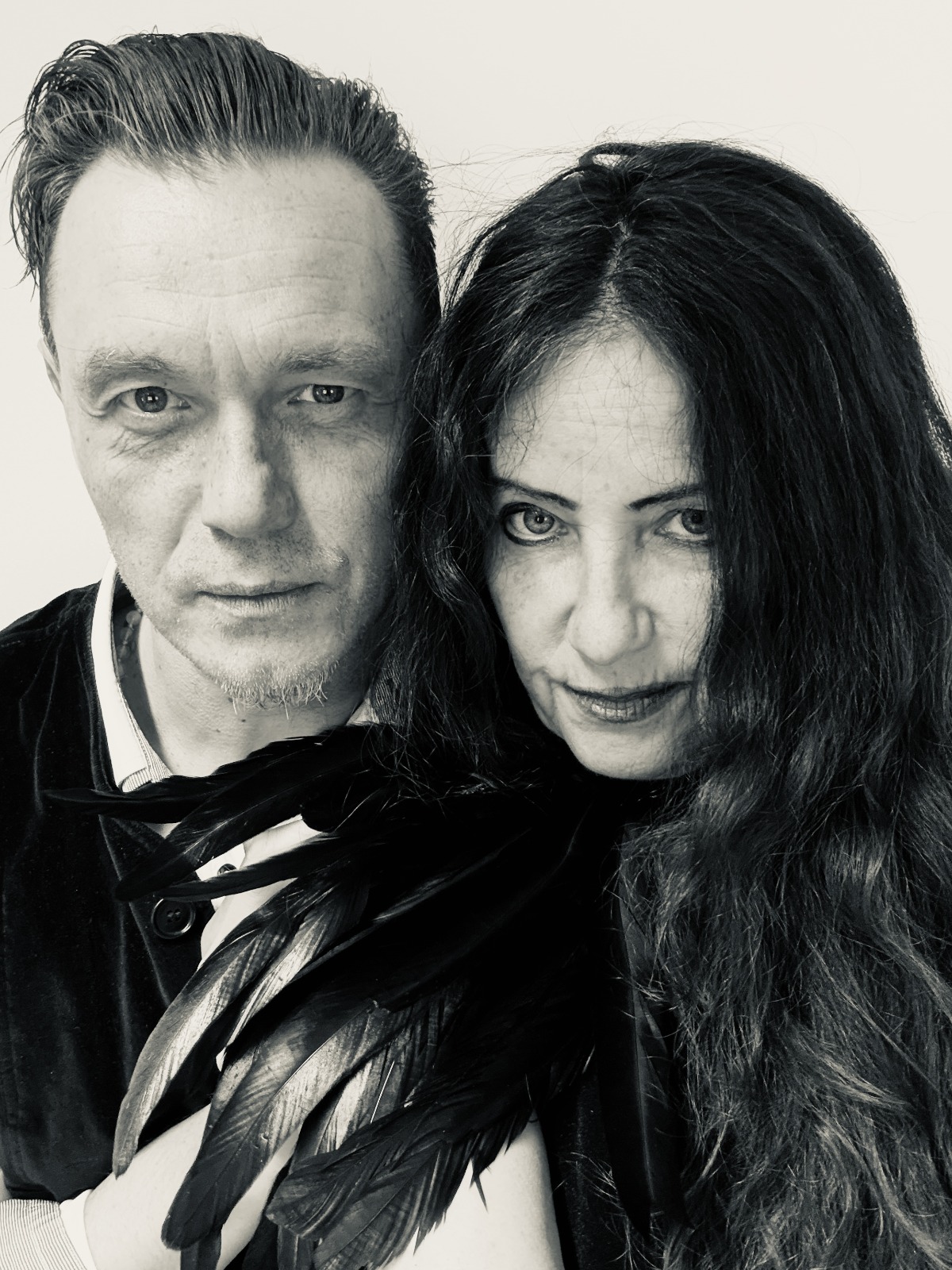
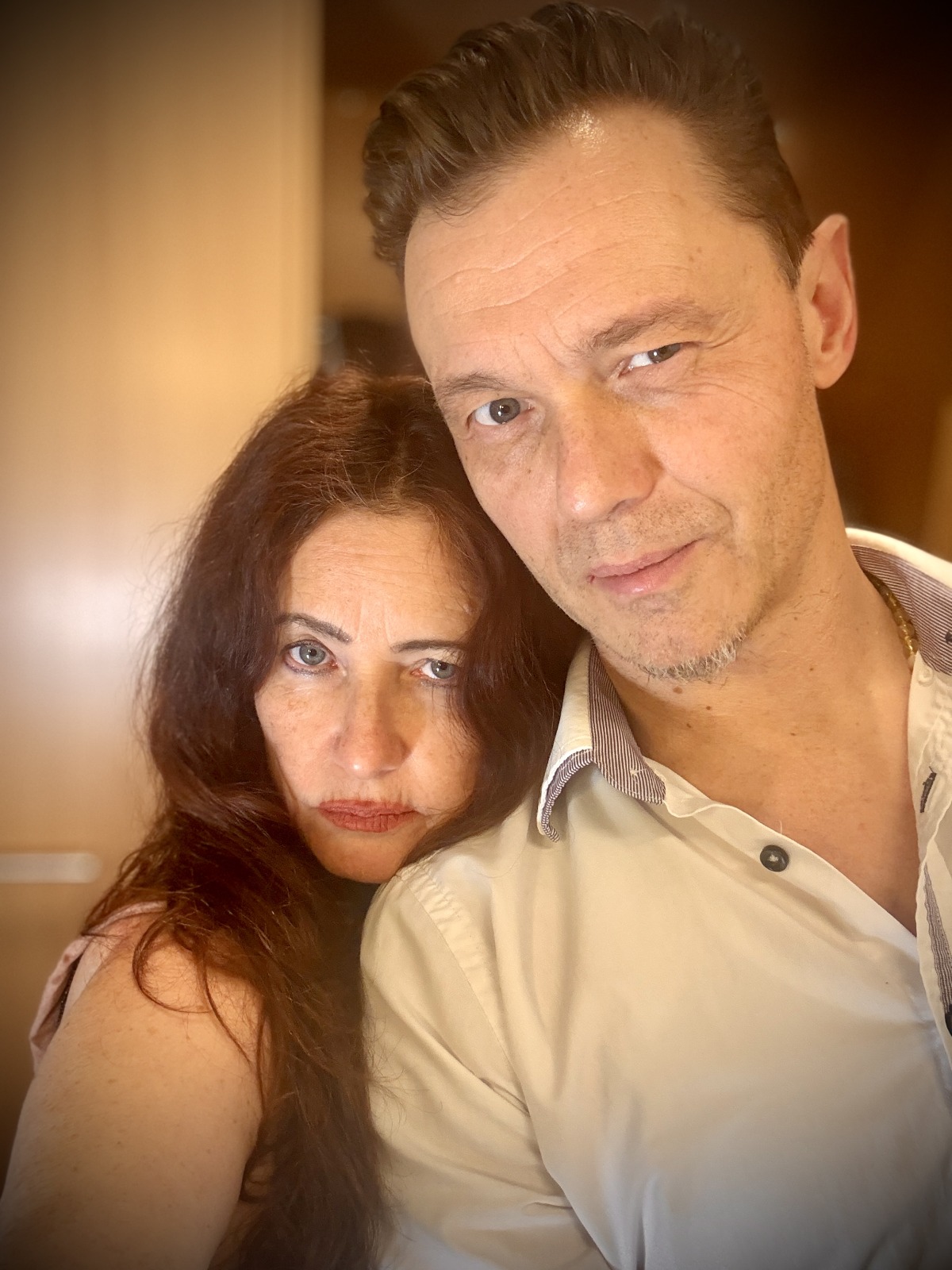
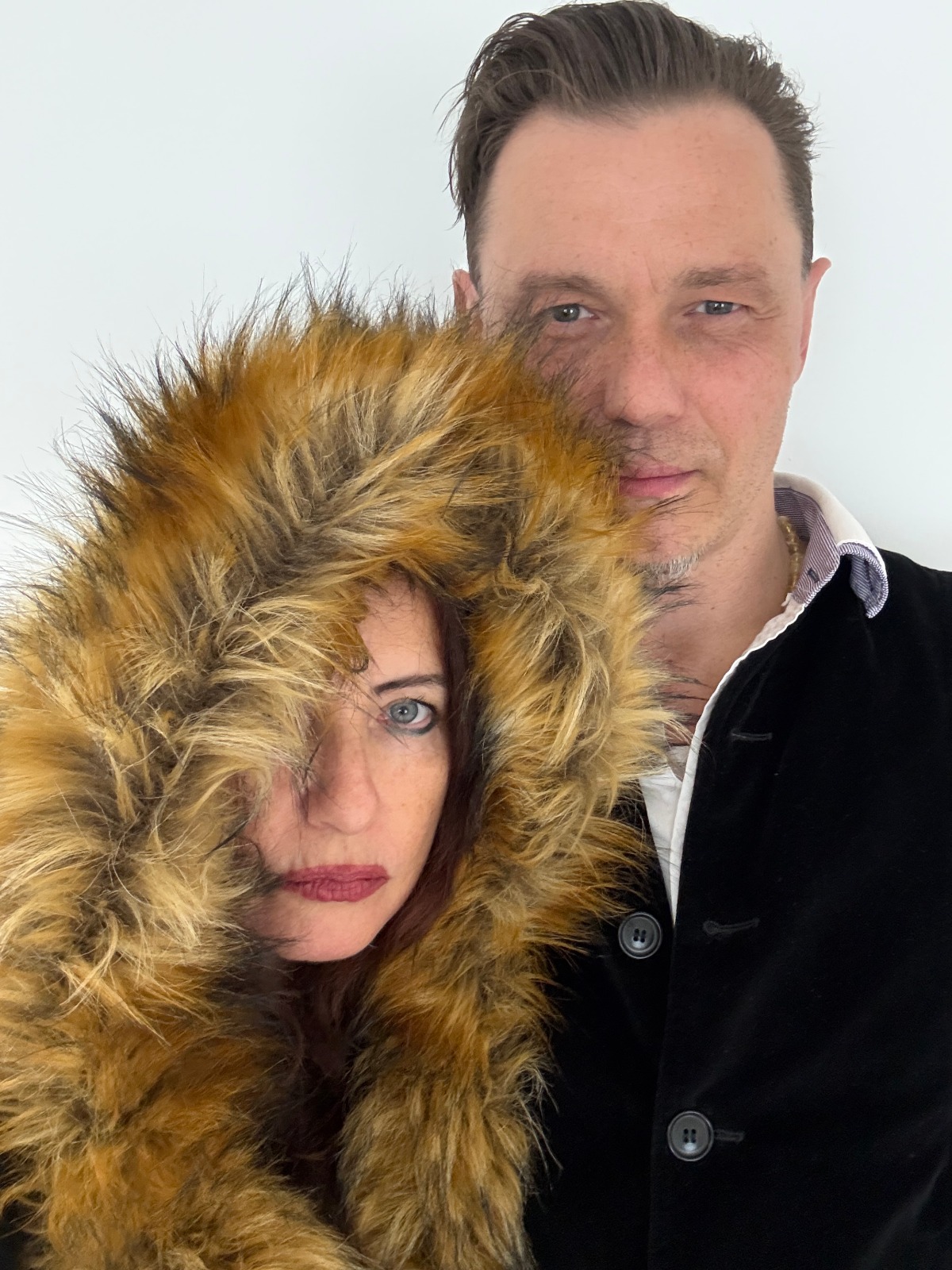
HoneyBones is an electronic duo formed by multi-award-winning musician, author and filmmaker Melinda Joy and Slovak-born musician, filmmaker, photographer and digital artist Juro Kosec. Their collaboration grew from a shared interest in music, artistic exploration and spirituality, bringing together two distinct creative backgrounds. Melinda’s musical identity draws on soulful, jazzy and lush songwriting, with a sound previously described as Southern Gothic, while Juro explores the relationship between electronic textures, analog warmth, psychedelic imagery and human perception. Together, they approach music as an opportunity to explore consciousness, sensuality and the boundaries between different artistic disciplines.
Their second single, “The Call of Baba Yaga”, takes inspiration from the mysterious figure of Baba Yaga, an archetype deeply rooted in Eastern European folklore. Influenced by their shared cultural heritage and experiences within Iceland’s dramatic natural landscapes, the duo developed a composition that explores the darker, more mysterious dimensions of spirituality and mythology. The track moves between richly layered electronica and rock, combining downtempo rhythms with theatrical vocal performances and experimental textures. Its central inspiration also reflects the duo’s interest in archetypes, transformation and the relationship between the visible and invisible worlds.
The creative process behind the single involved an exchange of musical ideas and spontaneous experimentation. Beginning with Melinda developing initial musical motifs using Logic Pro and Juro’s prepared instruments and drum machines, the arrangement gradually expanded through additional synths, bass, piano, guitars and various vocal recordings. Juro further developed the composition, incorporating unusual vocal samples, atmospheric elements and a choir to strengthen its dramatic character. Both artists contributed their own lyrics, allowing their individual perspectives to become part of the song’s wider narrative.
Beyond HoneyBones, both artists maintain extensive creative practices across several disciplines. Melinda has released two full-length studio albums, Beautiful Illusions (2020) and Unbound (2004), and continues to write, perform and teach. Her 2026 duet “Out of the Blue”, created with Son of Cormack, has also received multiple film festival recognitions for its music video and original song. Juro, meanwhile, continues to explore filmmaking, photography, animation and digital art, including his work on the award-winning “Out of the Blue” music video. Looking ahead, HoneyBones hopes to develop a live performance experience incorporating music, projected visuals and movement, while also exploring animation, multimedia storytelling and new musical directions.
Having this brief introduction to today’s featured project, I’m sure both new listeners and longtime fans are excited to hear directly from Melinda and Juro about the ideas, experiences and creative discoveries behind HoneyBones. So, without further ado, let’s begin today’s interview.
INTERVIEW SESSION
Oliver:
Melinda and Juro, you both have established creative lives across music and other artistic fields. Before HoneyBones came together, what experiences and personal interests first shaped your individual approaches to making art, and how did those paths eventually lead you to collaborate?
Juro:
When I was 4, my grandma bought me a plastic alphabet board and taught me to read, two years ahead of first grade. From childhood my dad guided me toward photography, and for my 10th birthday I got my first guitar, a classical “Spanish” one. I read a lot as a kid, from adventure novels about Native Americans to modern physics. Early on I also started writing poetry and my own songs. Singing by the campfire and at campsites was one of my sources of romantic experience. Reading the Beats led me to Nietzschean philosophy, Zen and alternative cultures, in literature as well as in music. After the waves of ’90s psychedelia, a love affair with a muse from Brno grounded me. She led me to Core Shamanism, which drew me deep into the unity of knowing, creating and spiritual journeying. That shaped the abstract core of my work more than anything. Behind the move to Iceland, too: cherchez la femme, and the muse. Iceland, a new beginning and a warrior’s mindset let me start living my creative dream full-fat. I began publishing the songs I’d written in Iceland on YouTube. By the time I met Melinda, I was already riding the wave of creativity in earnest, as the main force shaping my fate. That resonated freshly between us, so I made a music video for one of Melinda’s songs. Later Melinda invited me into an online songwriters’ group, which greatly enriched my approach to songwriting. During her visits to Iceland we lit our shared original music project, HoneyBones. Bones and Honey, honeymoons and celibacy: a union of opposites through which we reflect our shared creative adventures.
Melinda:
I am a seeker, a traveler, a creative, and a mystic at heart. Singing and making music is a calling for me. I was a shy and introspective kid, yet my desire to sing was so strong that when I began performing in elementary school, my legs would shake and my face would turn bright red from nervousness. But something drove me to continue. I’ve come a long way as a musician and performer since then, from classical and operatic training to a cappella to writing and performing my own original music. I’ve also felt a wanderlust and drive to explore both the world and its deeper mysteries since I was a young child. Traveling and exploration open up new possibilities and new vistas, which in turn serve as creative inspiration. Since 2007, I have followed the path of Buddhism, while honoring the wisdom teachings of many other faith traditions, and I am a meditation and contemplative arts teacher. Life has brought both many challenges, from a mother with bipolar disorder to the cataclysm of living in New Orleans during Hurricane Katrina, and many incredible opportunities and collaborations, creatively, educationally, and relationally. Juro and I initially connected though our passions for art, music, and creativity and this initial creative spark developed into a love affair which continues to offer deep sensual, spiritual, and intellectual inspiration, as you can hear in the song.
Oliver:
HoneyBones is described as a collaboration built around creative alchemy and the desire to explore consciousness, spirituality, and artistic expression. When you first began developing the project, what did you feel was missing from your other creative work that HoneyBones could allow you to explore?
HoneyBones:
HoneyBones brought in a new spark of polarity: the full range of possibilities between lovers, and everything they can undertake together, in a key ranging from the mundane to the spiritual, against the dreamlike scenery of Iceland. There is so much to explore, reflect on and enrich through creating. We wouldn’t say something was necessarily missing. We’d rather say that surfing on creativity led into a more advanced poet–muse interaction, in both directions. These roles aren’t gender-stereotyped; we swap them between us. Our friend the deadline was amicably invited in too, along with strategies for distributing the work. HoneyBones allows us to explore both more contemplative qualities and the place of eroticism in art.
Oliver:
You come from different cultural backgrounds, with Melinda based between Austin and Mexico and Juro originally from Slovakia and now living in Iceland. How have your different experiences of place, culture, and identity influenced the way you understand and approach this project?
Juro:
In the Czechoslovak culture of my childhood, Baba Yaga appeared very directly as a somewhat grotesque figure in the legendary Christmas fairy tale Mrazík (Jack Frost). You still enjoy it after seeing it on every Christmas broadcast for ten years straight, when everyone already knows its lines by heart. Back then I didn’t yet see it as an expression of cultural dominance and subtle Russian propaganda pushing into children’s minds. The content was fairy-tale, magical, morally instructive in its characters, and apolitical. https://en.wikipedia.org/wiki/Jack_Frost_(1964_film)
In any case, for me Baba Yaga represented something more old-pagan-magical. The Slovak verb jagať sa means to glitter or shimmer, the typical “visual” effect of a spell in fairy tales. In my mature years she struck more of a chord with the realm of archetypes from Women Who Run with the Wolves and Iron John. That’s a literary link to the deep psychology of the archetypes of male–female dynamics. But in Iceland, Baba Yaga sidled up to Melinda and me almost unnoticed. She came in the form of occasional shouts, answers to anything, with which we theatrically entertained ourselves. “Mmmaaah!” was the Zen exclamation of an almost tantric Baba Yaga. In one demented cry, it expresses the essence of the absolute truth about the universe.
Melinda:
To me Baba Yaga is a powerful archetype and manifestation of the dark divine feminine, who appears across cultures in many different forms, from the Mexican Tonancin and Virgin of Guadalupe, to Mary Magdalene, the Greek goddess Persephone (Queen of the Underworld), the Indian goddess Kali and the Norse goddess Freyja (and so many more). She calls to me based on my interests in both Jungian depth psychology and earth-based, shamanic, tantric, and pagan goddess traditions. As Juro described, she found her way into our personal mythology as a couple in both mundane and powerfully tantric ways, which in turn inspired the song.
Oliver:
Your description of HoneyBones as the sound and feel of “honey and bone” is an unusual but memorable way to introduce the duo. What do those two images represent to you, and how do they reflect the balance of warmth, sensuality, darkness, and physical intensity you want the music to carry?
HoneyBones:
The first associations came from explicit eroticism, wrapped in images of Art Nouveau cut with Mexican skeletons. Then there’s the tantric dyad of yoni and lingam as honey and bone, an alchemical mortar and pestle. There’s also the honeymoon, and the name “Melinda” is derived from honey. At the same time, “going to the bone” is a process of uncovering the truth. It’s the awareness of the desert, of the wasteland of the Icelandic landscape and the lava field. It’s a perfectly artistic dyad of the dry and austere with the sweet and viscous: an alchemical mortar and the creative witch’s kitchen of love.
Oliver:
Melinda, your solo work has been described as Southern Gothic, with soulful and jazzy qualities, while Juro’s creative work draws on electronic textures, analog warmth, and psychedelic imagery. How do you bring these different musical instincts together without losing what makes each of your contributions distinctive?
Melinda:
As we’ve already noted, there’s a tension of opposites in our work and collaboration. I bring that seemingly softer side, but with strong undertones of depth, while Juro brings a more raw, even primal, quality to the sound. We meet somewhere in the middle, each bringing out something latent, yet complimentary, in the other to create a truly unique sonic fusion. We discovered this initially in our initial collaboration and debut single, “Dragon’s Tail in the Sky,” and carried it forward even more powerfully in “Baba Yaga.”
Juro:
The way I do it, I mostly shape the banks the river flows between in the creative process. Melinda works more in the organizational sphere of finishing, with the deadline as a good friend who turns off the lights at the party. At the boundary between bank and river, a fusion zone arises, a sphere of touching and sparking, and we enrich each other with our inner hinterlands. My electronic textures are the contour lines of a landscape you can wander through with singing and feelings. The guitar riffs sharpen attention. They make a stretch of the river sharper and wilder, with rapids and action, where the loose wandering forces its way through a rocky gorge and becomes concrete. The psychedelic imagery points to vivid color and to shifted planes of perception, dreaming, trance and contemplation. Themes and archetypal undercurrents gush out of them, and one of them is that old hag Yaga.
Oliver:
“The Call of Baba Yaga” draws on a figure deeply rooted in Eastern European folklore. What first attracted you to Baba Yaga as a subject, and what about her character made her the right figure to explore through HoneyBones?
HoneyBones:
As we mentioned, Baba Yaga quite naturally sidled up to us during a road trip across Iceland, first as a kind of invisible stray, roaming and cuddly, from the visible land and the invisible one too. She provoked our theatricality, playfulness, liminality, instinctiveness, eroticism and Spirit. Above all, she took the floor whenever she wanted the last word, to speak the all-encompassing secret of being in one primordial Zen animal cry: “Mmmmaaaaah!!”
Oliver:
Baba Yaga is often presented as a mysterious and unpredictable figure, carrying associations with danger, wisdom, transformation, and the unknown. Which aspects of this archetype were most important to you, and did your interpretation change as the song developed?
HoneyBones:
Our interpretation of Baba Yaga swung around a lot and resisted being fully grasped, creating especially interesting mysterious states and magical effects inextricably connected to the power of nature. Specifically, one night in January of 2026, we found ourselves alone among an isolated circle of cabins in the north of Iceland, in an in-ground, stone hot tub with snow all around, when a sudden, uncompromising aurora borealis appeared overhead, shifting and dancing with a breathtaking intensity, like curtains of magic rustling silently across the night sky. The next day, we learned it had been the strongest solar storm in 20 years. This awe-inspiring experience, coupled with an intense medicine journey, took our understanding of the Baba Yaga archetype to a whole new level.
Oliver:
Your shared Eastern European heritage appears to have played an important role in the song’s inspiration. How personally connected are you to the folklore and cultural stories surrounding Baba Yaga, and did exploring this subject bring either of you closer to parts of your heritage?
HoneyBones:
Definitely, yes. It especially took us on an intellectual adventure, exploring similar archetypes of the dark feminine in other cultures too, such as Kali in India, and also Grýla in Iceland. In the end Baba Yaga was an intuitively great choice, because she represents the experience of the threshold. If travelers are ready for a liminal experience, they may receive a gift; if not, it kills them. It’s a bit like talent, that crystalline formation in the soul. When you discover it, it gives you purity and a clear ring. If you can’t carry it, you may well drink yourself to death, dope yourself to death, or worry yourself to death. If you grasp it the right way, it’s a source and an oscillator of creativity.
Cultural heritage has its place in this, but intuitively, not as a plan, in the sense of “hey, how about a song about Baba Yaga, I saw a fairy tale about her as a kid.” It’s more that whenever we meet, some events or phenomena happen that somehow exceed us and grab our attention, like a strange new phenomenon.
Oliver:
The song also draws inspiration from Iceland’s wild landscapes. How has living or spending time in that environment influenced its atmosphere, and were there particular natural surroundings, experiences, or feelings that you wanted to translate into the music?
HoneyBones:
Absolutely. The experience of the surreal and harsh Icelandic landscape is the key perceptual frame for shaping this little piece. Iceland knows how to press on your neck like a secret. It has unexpected weather changes, widescreen vistas, sudden shifts in terrain, and monumentality. Known as the land of fire and ice, there are huge volumes of flowing and frozen water, volcanic material, glaciers and waterfalls, canyons cut through lava fields, bizarre landforms, and ten colors of clay in a single patch. And on top of that, the aurora borealis dances across the sky of the polar night like an electromagnetic dragon’s body.
Oliver:
You describe the track as dark downtempo ritual music, combining layered electronica with elements of rock. How did you approach building that sound, and what role did rhythm, bass, electronic textures, and rock influences play in creating its final character?
HoneyBones:
It happened like this. Melinda sat down in front of Logic Pro and Juro’s MIDI keyboard, where he had prepared a set of instruments and drum machines for her. The idea was that she’d start playing with them and bang in some initial MIDI motifs. Then Juro went to the kitchen to make lunch. When he came back, Melinda already had a solid loop region ready, with ritual drums, synths, bass and a piano riff, which Juro further developed later. He added an ethno motif with sitars and saxophone, developed the piano, fine-tuned the synth motifs, and added a wobble sub-bass and guitars. Then we got together and listened to it, and each of us spontaneously wrote our own part of the lyrics.
Juro also suggested recording shouts, animal noises and all sorts of screeches and purrs. That was enormous fun. In the end he mixed it all in as a layer of voice samples. At first it seemed grotesque to us, but the music reframed the whole thing as drama. Then one day Juro went to the sauna, and it occurred to him to add a choir, to give it a more fatal, Carmina Burana-style “O Fortuna” touch. After that he polished it for hours and days, both the composition and the sound, taking particular care over the guitar solo. It was the final cut at the touch of the threshold: the encounter with Baba Yaga.
Oliver:
Melinda, as a singer-songwriter and bass player, you have a background in shaping songs through lyrics, melody, and instrumental performance. Juro, your work also involves electronic music, filmmaking, photography, and digital art. How did your individual creative roles influence the writing and production of “The Call of Baba Yaga”?
HoneyBones:
We touched on this previously, but our creative roles aren’t strictly fixed; they’re more like fluid zones that fuse together. For example, when Juro builds the basic timeline for a music video, we sit together first: he cuts and arranges, and we talk about what we like or want to change. Or when Melinda lays down drums and bass, Juro plays with it and produces it for hours more to balance the levels, the composition, the rhythm changes in the chorus and the compositional build-up.
Oliver:
Juro, your wider creative practice often explores human perception and visual landscapes. Did you approach the production of this track with any particular images, scenes, or visual ideas in mind, and how closely do those ideas connect with the music itself?
HoneyBones:
I inherited my interest in perception and its transformations from the Castaneda school of shamanism. The visual landscapes are a kind of map of the shifted states of perception that arise in a liminal experience, an experience of the threshold like the one Baba Yaga mediates. So when I give concrete form to those processions of feelings and inner shifts of perception, abstract poetry becomes a map of an invisible landscape. I try to have the images triggered as directly as possible by the surges of feeling that happen while creating and discovering.
Oliver:
Melinda, your previous releases have explored different emotional and musical territories. Did working on “The Call of Baba Yaga” challenge you to approach songwriting, vocal delivery, or musical expression differently from your solo work?
HoneyBones:
Yes, as noted previously, there’s a primal, elemental quality to “Baba Yaga” that’s deeply influenced by our relationship, and our mutual interests in spirituality, psychology, psychedelics, and the magic of the creative process, blended together with our intense impressions of, and experiences within, the landscape of Iceland. The result is a true HoneyBones collaboration, a tension of opposites (what Carl Jung called the transcendent function) to create something new and different, a whole new avenue of possibility in creative synergy.
Oliver:
This is the second single from HoneyBones. Following the introduction of the project through your first release, what did you want this new single to reveal about the duo’s identity, and how does it move the wider creative direction forward?
HoneyBones:
“Baba Yaga” reveals a sonic and thematic shift from conflict-free, in-love, smooth romanticism toward a more raw, dark expression. It works with emotions more dramatically, making the composition less conventional and embracing more of our own voice. We’re not claiming we’ve definitively invented our style, or that our lava field will set into one unambiguous authorial voice. We see it more as a tendency not to fear that some people will find it too heavy, and to accept that we don’t have to be universally liked. We’re already getting feedback from some people who absolutely love the sound as well as others that don’t quite know what to make of it.
Oliver:
The track arrives in October, a time when folklore, witchcraft, and supernatural stories often become part of the wider cultural conversation. Was the Halloween season an important consideration when deciding on the release, or did the timing simply complement a subject that already belonged naturally to the song?
HoneyBones:
Halloween joined in as a fitting synchronicity. We originally planned to release the song earlier in the year, but due to a variety of factors, we ended up pushing it back to the autumn. A friend also commented that the lyric video conveyed a Halloween mood. That struck us as an acceptable cultural gateway for our otherness to enter without explanation: take as much enchantment as your belief system and cultural conditioning allow.
Oliver:
Beyond its folklore inspiration, the project seems interested in the relationship between music, spirituality, and the deeper parts of human consciousness. What do you hope listeners might discover or reflect on when they spend time with “The Call of Baba Yaga”?
HoneyBones:
We enjoy exploring our personal cultural power myths, especially those our cultures have disinherited as dark. For example, why did someone culturally impose on us that wolves are killer beasts and ravens are messengers of darkness? And we haven’t even started on human qualities and abilities. Why, for example, do dictatorships kill off their own philosophers and intellectual elites? We’re interested in uncovering the ambivalence of the agreed canons of good and evil, beauty and ugliness, and so on, for going to the edge of value relativism and confronting our critical thinking with the uncertainty that we really don’t know.
Oliver:
You both work across several creative disciplines, including music, film, photography, writing, and digital art. How do you see these different forms of expression developing alongside HoneyBones, and do you imagine the project becoming a wider visual and multimedia experience?
HoneyBones:
We’re discovering a whole parallel universe emerging around HoneyBones, one that we’re creating, with its own aesthetics, themes, and methods of discovery. Juro is strongly drawn to the idea of a HoneyBones animated film, or even a series of stories. We’re also open to offering our music to film productions we would resonate with. In any case, the key is to build a repertoire and bring it to live stages, where projected visuals, our singing, and movement blend together, and introducing the project to audiences at concerts that way. That is the real test, the baptism of fire, and maybe exactly what Baba Yaga is calling for.
Oliver:
As HoneyBones continues to develop, what creative territory are you most interested in exploring next? Are there other stories, cultural influences, emotional themes, or musical directions you would like to bring into the project?
HoneyBones:
Thinking about live shows, We’re drawn to enriching our repertoire with tracks that have a stronger dance groove. We’d like to see some tracks released as maxi singles, with the original version and multi-genre remixes, and the dance-club and deep bass versions shouldn’t be missing either. The concert would flow seamlessly into a rave party where Juro would play as a DJ and dance too. He’d also love to visit Mexico, get closer to the culture of the joyful, colorful skeletons, and blend those influences more organically with European Art Nouveau. And of course, a big theme is how to stay authentic and original, while letting the algorithms support our rhythms.
Oliver:
Having worked together on two singles, what have you learned about each other creatively, and how has the collaboration changed the way you approach your own artistic work?
HoneyBones:
We’ve learned more about what we’re really afraid of, what excites us, and how honesty and transparency deepen our alliance, as well as how our individual energies and inspirations can blend creatively in fascinating and novel ways. On the practical side, Juro notices most of all a growth in self-discipline, in finishing the details, in working with limits and deadlines, and in finding his bearings on the music scene: which waters to sail into and which niche resonates with us.
Oliver:
Finally, when listeners look back on HoneyBones and the work you are creating together, what would you like the project to represent beyond its music, and what kind of lasting connection would you hope people take away from it?
HoneyBones:
As the song lyric states “Loosen the bounds of imagination / The sensual realm, an invitation to roam.” We embrace creativity as a path to knowing both the visible and the invisible world. Let everyone dip into the river with the cup they bring. The wider and deeper the cup, the more of the mystery it holds, and no two cups come back with the same water.
“The Call of Baba Yaga” transforms an ancient Eastern European archetype into a haunting encounter with the unknown, where Iceland’s untamed landscapes, primal vocal expressions and dark electronic rhythms become part of the same mysterious summons.
~ Oliver (DULAXI Team)
EDITORIAL PERSPECTIVE
What stands out about “The Call of Baba Yaga” is how naturally HoneyBones allow their contrasting creative instincts to meet. The interplay of electronic textures, rock elements and theatrical vocals gives the track a distinctive character, while its folklore inspiration opens the door to deeper questions about spirituality, identity and human perception. Speaking with Melinda and Juro also reveals a collaboration that values experimentation over predictability. Their willingness to embrace unusual ideas makes this second single an interesting indication of the creative territory HoneyBones are beginning to explore.
~ Oliver (DULAXI Team)
CLOSING
A special thank you to Melinda Joy and Juro Kosec for taking the time to share their experiences, creative philosophies and the fascinating ideas behind HoneyBones. Our conversation has offered a closer look at the individual artistic journeys that brought them together, as well as the contrasting influences and shared curiosity shaping their work.
“The Call of Baba Yaga” is an invitation to explore a world where folklore, electronic experimentation and personal mythology intersect. We encourage readers to spend some time with the single and discover the different layers of expression that HoneyBones have brought together. As the duo continues to develop its musical and visual identity, it will certainly be interesting to see where their creative explorations lead next.
Thank you for joining us for another DULAXI interview. We appreciate your continued support and hope you will stay connected as we bring you more conversations with talented musicians and creative minds from around the world. Until next time, keep discovering new music and supporting independent artists.