

Hello everyone, it’s your host Oliver from DULAXI, and today I’m delighted to be joined by American singer-songwriter, guitarist, and independent recording artist John Korbel. Based in Orlando, Florida, John brings together jazz-inflected songwriting, sophisticated pop, funk, soul, and contemporary singer-songwriter influences. His latest album, Johnny Still Got Game, released on October 30, 2026, reflects a lifetime of musical experiences, creative reinvention, and a continued passion for making music. Welcome to DULAXI, John! Before we begin our conversation with John, here’s what you need to know about today’s featured project.
About John Korbel
John Korbel’s musical journey began in Philadelphia, where he developed an early interest in guitar, picking up the instrument at the age of 12. During his college years in Western Pennsylvania, he began performing with bands before returning to Philadelphia and becoming part of the city’s active rock scene. Performing under his birth name, John Knoblauch, he formed the John Knoblock Band, which gained recognition from local rock audiences and earned opportunities to perform at notable venues, including the legendary Main Point, where the band headlined two sold-out performances. He later became the frontman of Jelly Rolls, an eight-piece band featuring a three-piece horn section that performed extensively throughout Philadelphia and the Jersey Shore. The group also earned the remarkable opportunity to perform twice at the White House, including appearances at the Congressional Ball and an event for Laura Bush.
After relocating to Florida, Korbel continued performing with touring bands before eventually stepping away from music as a full-time profession. However, his passion for songwriting never disappeared. In 2017, inspired by the opportunities that digital distribution and home recording had created for independent musicians, he returned to recording with renewed determination. His subsequent releases, including the bossa nova-influenced Earthlight, the jazz-oriented Bourbon Street Taps, and the full-length Falling Feels Like Flying, demonstrate his interest in exploring different musical directions while developing a distinctive songwriting identity. Drawing inspiration from artists such as Steely Dan, Al Jarreau, Michael Franks, and Ben Sidran, Korbel combines sophisticated musical arrangements with personal storytelling, witty observations, and a strong appreciation for musical detail.
His latest album, Johnny Still Got Game, brings together the experiences and creative knowledge accumulated throughout his musical career. The project explores a range of subjects, balancing personal reflection, romance, social observations, and playful imagination. “Paint a Starry Night” opens the album with an expansive horn-driven arrangement, exploring the challenges and possibilities of romance later in life. Inspired by a guitar riff from longtime friend and co-writer Jeff Rankin, alongside imagery associated with Vincent van Gogh and a memorable observation from Joni Mitchell, the song considers the desire to recapture the excitement of new love. Elsewhere, “Great Flowing River” transforms an initial songwriting exercise about avoiding familiar river imagery into a thoughtful reflection on American history, race, and reconciliation. In contrast, “Speed Shop at the Top of the World” embraces humour, funk, and surreal storytelling, following an unexpected phrase that sparked an imaginative composition filled with automotive and spiritual imagery.
The recording process behind Johnny Still Got Game also reflects Korbel’s willingness to embrace new creative possibilities. Working alongside longtime producer and collaborator Mark Falchuk, he recorded vocals, guitar, and mixes at his Orlando home studio, The Alcove, while musicians contributed remotely from Nashville, Orlando, and other locations. This collaborative approach allowed different musical perspectives to shape the arrangements while maintaining a cohesive direction throughout the album.
Having this brief introduction to today’s featured project, I’m sure both new listeners and longtime fans are excited to hear directly from John about the experiences, ideas, and creative decisions behind Johnny Still Got Game. So, without further ado, let’s begin today’s interview.
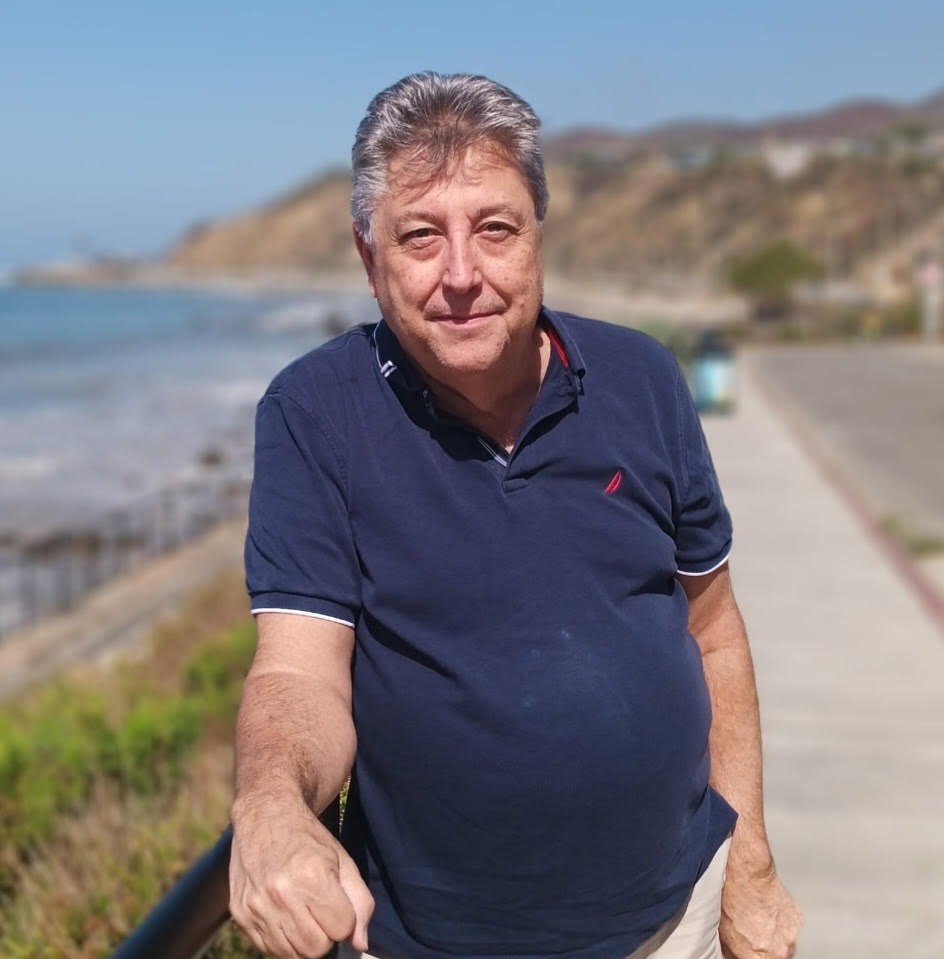
INTERVIEW SESSION
Oliver:
Growing up in Philadelphia and beginning to play guitar at the age of 12, you eventually found yourself performing in bands and becoming part of a very active local music scene. What do you remember most vividly about the young John who first realised that music could become such an important part of his life?
John Korbel:
I had just moved back to Philadelphia after college in western Pennsylvania. There was a very active club scene developing and I was fortunate to get those gigs at places like the Main Point, 23East and Chestnut Cabaret. Mostly, I reflect now on what those audiences did for my confidence. I don’t think I ever had stage fright, but it was exciting to feel like what we were doing was well received, and to get to be part of a regular rotation of hot local bands that included the Hooters and some other great acts. I also got opening shots with Blood, Sweat, and Tears, Jay Leno, and other touring acts..
Oliver:
Your early career included the John Knoblock Band, performances at the Main Point, and later your work as the frontman of Jelly Rolls. How did those experiences shape your confidence as a performer and your understanding of what it means to hold an audience’s attention?
John Korbel:
I think the most important lesson I learned was pacing. Especially with Jellyroll, we constructed our sets so we would have blocks of three or four songs that segued into each other so we could keep the show moving. Then we could slip in a ballad here and there to give things a nice flow. I apply those lessons every time I perform now.
Oliver:
You eventually stepped away from music as a full-time profession before returning to recording in 2017. What changed in your life or in the possibilities available to you that made you feel it was time to start making music seriously again?
John Korbel:
I had some personal changes in the years leading up to 2017, including a divorce. Things like that force you to take stock and focus on what matters most to you and what you find most fulfilling. I never stopped writing, so I had lots of songs available, and I was becoming more aware of the opportunities for independent artists that were out there thanks to the internet and streaming. So, I just dove back in.
Oliver:
Your return to music has included projects such as Earthlight, Bourbon Street Taps, and Falling Feels Like Flying, each reflecting different sides of your musical interests. How has making those records helped you understand the kind of songwriter and recording artist you wanted to become?
John Korbel:
I think the differences in those projects are more of a reflection of the great producers I have had the good fortune to work with, rather than differences in my writing approach. Earthlight and Bourbon Street Taps were both recorded with Art Ward of Century Music Group in Nashville. The studio session players in Nashville are legendary for their approach to serving the song. Both Earthlight and Bourbon Street Taps were completed in a week or so. Falling Feels Like Flying was done in Orlando with Mark Falchook producing. Since it was a home town project, we had the luxury to devote more time to pre-production and experimenting with the arrangements. We would try something and if it didn’t feel right we could go a different direction until it worked. Mostly it involved trusting Mark’s instincts. He is a really gifted arranger.
Oliver:
You describe your musical space through jazz, sophisticated pop, funk, soul, and singer-songwriter traditions, while naming artists such as Steely Dan, Al Jarreau, Michael Franks, and Ben Sidran among your influences. What is it about those artists and their approach to songwriting and musicianship that continues to resonate with you?
John Korbel:
Two things, first I am primarily a lyricist. Most of my songs start with lyrics that I later set to music. Second, musical vocabulary is important to me. I like the element of surprise you can provide with an unexpected chord change or a turn around into a key modulation. As far as the Jazz elements are concerned, I am trying to have the song provide a framework that Mark Falchook and the other great musicians that we have on the project can sink their teeth into.
Oliver:
The title Johnny Still Got Game feels playful on the surface, but it also carries a much deeper statement about continuing to create and reinvent yourself. What does that title mean to you personally at this point in your life and career?
John Korbel:
First off, let me say that I was never great at basketball. That element of the song is me laughing at myself a bit. I was trying to write a little self pep talk. Kind of like, yeah you’re getting old but don’t be afraid to get in the game. I just feel fortunate to have my music at this stage of my life. I think about it when I go to bed at night, and when I wake up in the morning. I hope the message of staying with the things that matter to you translates to older people and younger people too.
Oliver:
The album draws on experiences accumulated across decades, yet the overall concept is not simply about looking backward. How did you balance everything you have lived through with the desire to keep the music feeling curious, fresh, and forward-looking?
John Korbel:
The main reason I record is because I want to find out what the end result is going to sound like. It is always surprising to me. Again, I have to credit Mark Falchook and his production. More often than not, I would present a demo of a song to Mark, thinking I had a pretty solid idea of what I wanted to do with it. Mark would often provide a totally different perspective on it. Sometimes I am scratching my head at first, but I have learned to trust him and I have never been disappointed.
Oliver:
“Paint a Starry Night” explores romance later in life through imagery connected to Vincent van Gogh, while also drawing inspiration from a memorable piece of Joni Mitchell stage banter. What was the creative spark that brought those different ideas together, and how did the song eventually find its own identity?
John Korbel:
There is a segment of stage talk they retained with the tracks of the Miles Of Ailes live album where the audience was yelling out requests, and Joni Mitchell makes a comment that nobody ever asked Van Gogh to “paint A Starry Night again”. I thought it was such a cool way to handle the crowd. My co writer, Jeff Rankin, gave me a riff that he was working with, and I started to contemplate what the phrase could mean in a romantic context. I think that at one time or another everyone longs for a way to recapture what those first new love affairs felt like. It’s something that life’s experiences can prevent you from ever really having again. Paint A Starry Night is just an expression of that idea,
Oliver:
“Great Flowing River” began with a very specific songwriting challenge: writing about a river without falling into familiar clichés. How did that initial exercise eventually lead you toward questions of American history, race, reconciliation, and the idea of crossing bridges both literally and metaphorically?
John Korbel:
Driving from Florida to Texas one time, I spent the night in Vicksburg MS, and started driving in the morning across the bridge into Louisiana. I was thinking about all the songs down through the years about the Mississippi River, especially Old Man River from the Broadway musical Show Boat. I have always had an aversion to the cliche “river flowing to the sea”.. Just as a mental exercise, I started writing the song in my head while driving, and used my distaste for the cliche to provide the opening lines. As I started coming up with ideas, I realized that the river could be a metaphor for all of the issues that we still deal with in our country, especially poverty and race. I wanted to make the river a symbol of reconciliation. The song became a lot more meaningful than I thought it was going to be when I started.
Oliver:
You were deliberate about wanting “Great Flowing River” to make a statement without becoming preachy. When you are writing about subjects with genuine historical and social weight, how do you decide how much to say directly and how much to leave for the listener to interpret?
John Korbel:
Great question! I only have a few tracks that fall into the category of “message songs”. One technique is to use phrases that can be interpreted in more than one way. There’s a track on one of my EPs called No Better Angels. It talks about how the powerful abuse others, especially children. I leave the meaning of No Better Angels ambiguous, it could mean that we shouldn’t expect our “better angels” to protect the victims, or it could mean that there are “no better angels” than the victims themselves. I am not even sure myself which meaning I intended.
Oliver:
“Speed Shop at the Top of the World” takes a very different route, combining funk with surreal images of grease monkeys, automotive Bodhisattva, Buddhist monks, and stream-of-consciousness wordplay. Where did that unusual idea come from, and what does allowing yourself to follow an unexpected thought contribute to your songwriting?
John Korbel:
I literally woke up one morning with the phrase “speedshop at top of the world” in my head. I don’t remember any dream or anything else that triggered it. It was just there. So I began to just riff on ideas about what that phrase could mean, and the ideas just flowed. It kind of wrote itself, and I was laughing to myself the whole time. But the track was also a studio experiment for me. My old friend from Philadelphia, John Coleman Gilson, had recorded some guitar tracks on an early demo of the song that I really loved. When Mark Falchook worked up the new version with me, I was able to insert a lot of John’s guitar work into the new arrangement. Gilson is the Kahuna!
Oliver:
You have described the album as the culmination of everything you have learned along the way, while also working with longtime producer and collaborator Mark Falchuk. What has that long-term creative relationship taught you about recognising when a song needs your own instincts and when another musician’s perspective can take it somewhere unexpected?
John Korbel:
I think it just comes down to respect. For me as a songwriter, I have learned that you have to be willing to be open to different perspectives and not tie yourself too closely to your original sense of the song. I also know that I am not as proficient an instrumentalist to deliver the level of performance that I want on the final product. Mark and the session guys we use are just amazing. Don’t get me wrong, I let my ideas be known and the respect is mutual.
Oliver:
Much of the album was created through remote collaboration, with musicians contributing from Nashville, Orlando, and elsewhere while you recorded vocals, guitar, and mixes at The Alcove. How did working this way change the creative process compared with the live-band environments you experienced earlier in your career?
John Korbel:
Of course, you sacrifice some of the spontaneity that you can experience in a traditional studio setting. But I think the lessons Mark and I learned working together on the Falling Feels Like Flying album paid dividends on the Johnny Still Got Game project. Our preproduction was really solid between the reference tracks that I created, and the work Mark did on songs that we did from scratch. By the time we handed things off remotely, everything was ready to fall into place, and the musicians were able put their own spin on things.
Oliver:
You have said that you enjoy working with players who hear things in your songs that you do not initially hear yourself. Can you describe a moment during Johnny Still Got Game when another musician’s contribution changed your understanding of a song or took the arrangement in an unexpected direction?
John Korbel:
We did a complete take on Paint A Starry Night that leaned heavily on my acoustic guitar approach to the song. After that session, Mark came back to me with what he likes to call a “Proof of Concept”. He sent me a short clip of an alternate approach to the song that would include an intricate horn arrangement. At first I was a little reluctant to let go of my original vision for the song but after a few listens, I started to appreciate where he was taking things and we moved forward with that version. However, I am considering putting out the alternate version featuring my acoustic guitar track sometime in the future.
Oliver:
Your songs often combine witty observations with personal experiences and adventurous arrangements. When you begin writing, does the story usually come first, or can a groove, guitar idea, phrase, or unusual image become the doorway into a much larger story?
John Korbel:
Really all of the above. That being said, I most often get started lyrically, with either a title idea, or an opening line. I used to get together with a group of songwriters here in Florida. One of the guys in that group was Eddie Snyder, who co-wrote classics like Strangers In The Night, A Time For Us, and a ton of other famous hits. He said that he always kept a notebook so that any time he came up with an idea for a song title, he could write it down right away. Then later if he came up with a music idea or was collaborating with another writer he could refer to his list of titles as a starting place. I still do that myself. Paint a Starry Night is a current example.
Oliver:
Looking across the album as a whole, there is a noticeable balance between sophistication and playfulness, reflection and humour. Was maintaining that balance something you consciously thought about while making the record, or did it naturally emerge from the way you write?
John Korbel:
The songs span a number of years. I think the balance came about naturally as Mark and I went through the different songs I was considering. I think for me it was a bit of a baseball card approach. We used to say either “got it” or “need it”. I think we would choose one song and then make sure we had something with a different vibe to complement what we already had.
Oliver:
Having experienced the music industry from the Philadelphia rock scene of the 1970s through touring bands, stepping away, and eventually returning as an independent recording artist, what has changed most about your understanding of yourself as a musician?
John Korbel:
I think the biggest thing for me is that I have learned to better utilize my personal life and experiences in my writing. I am a bit more honest about my failings. I think Courageous Love is a good example of that.
Oliver:
With Johnny Still Got Game arriving after such a long and varied musical history, what do you hope listeners who discover the album for the first time understand about the person behind these songs?
John Korbel:
When I first released Earthlight in 2017, I remember thinking to myself that I’m not going to be a star but I can still be an artist. All any artist really wants is an audience, no matter how large or small. The songs only exist while someone is either performing them or listening to them. Johnny Still Got Game is the continuation of that idea. As long as someone is listening, I’ll keep at it.
Oliver:
As you continue writing and recording independently, what are you most curious to explore next, and what would you like the next chapter of John Korbel’s music to make possible that you have not yet attempted?
John Korbel:
Honestly, my fondest hope is to do more live performing. I don’t have a steady band. I do get out and perform solo acoustic occasionally. It would be a thrill if a success with recording would help facilitate some live festival shows or a tour. Hope springs eternal!
“John Korbel’s Johnny Still Got Game is a reminder that an artist’s relationship with music does not have to be defined by age, changing circumstances, or the passage of time. His willingness to keep experimenting, welcome new perspectives, and find inspiration in both life’s complexities and unexpected moments makes this a particularly meaningful chapter in his creative story.”
~ Oliver (DULAXI Team)
EDITORIAL PERSPECTIVE
What stands out about John Korbel’s approach is the importance he places on songwriting as a starting point for musical exploration. His preference for beginning with lyrics, titles, and unexpected ideas gives the compositions a strong sense of individuality. The contrast between the expansive horn arrangements of “Paint a Starry Night,” the reflective storytelling of “Great Flowing River,” and the playful direction of “Speed Shop at the Top of the World” demonstrates the range of his creative interests. Equally important is his openness to collaboration, allowing other musicians to bring fresh perspectives to his work.
~ Oliver (DULAXI Team)
CLOSING
A special thank you to John Korbel for taking the time to speak with us and share the experiences, creative ideas, and personal reflections behind Johnny Still Got Game. From his early days in Philadelphia’s music scene to his return as an independent recording artist, this conversation has offered a valuable insight into the dedication and curiosity that continue to shape his musical journey.
For listeners who have not yet experienced the album, Johnny Still Got Game offers an opportunity to explore John’s songwriting through its combination of jazz influences, sophisticated arrangements, funk grooves, and thoughtful storytelling. We also look forward to seeing what the future holds, particularly his hopes of returning to more live performances and bringing these songs to audiences on stage.
Thank you, John, for sharing your story with us, and thank you to everyone who continues to support DULAXI and take the time to discover the artists and music we feature. This has been Oliver from DULAXI, and we look forward to bringing you more interesting conversations with talented artists from around the world. Until next time, keep discovering great music!