
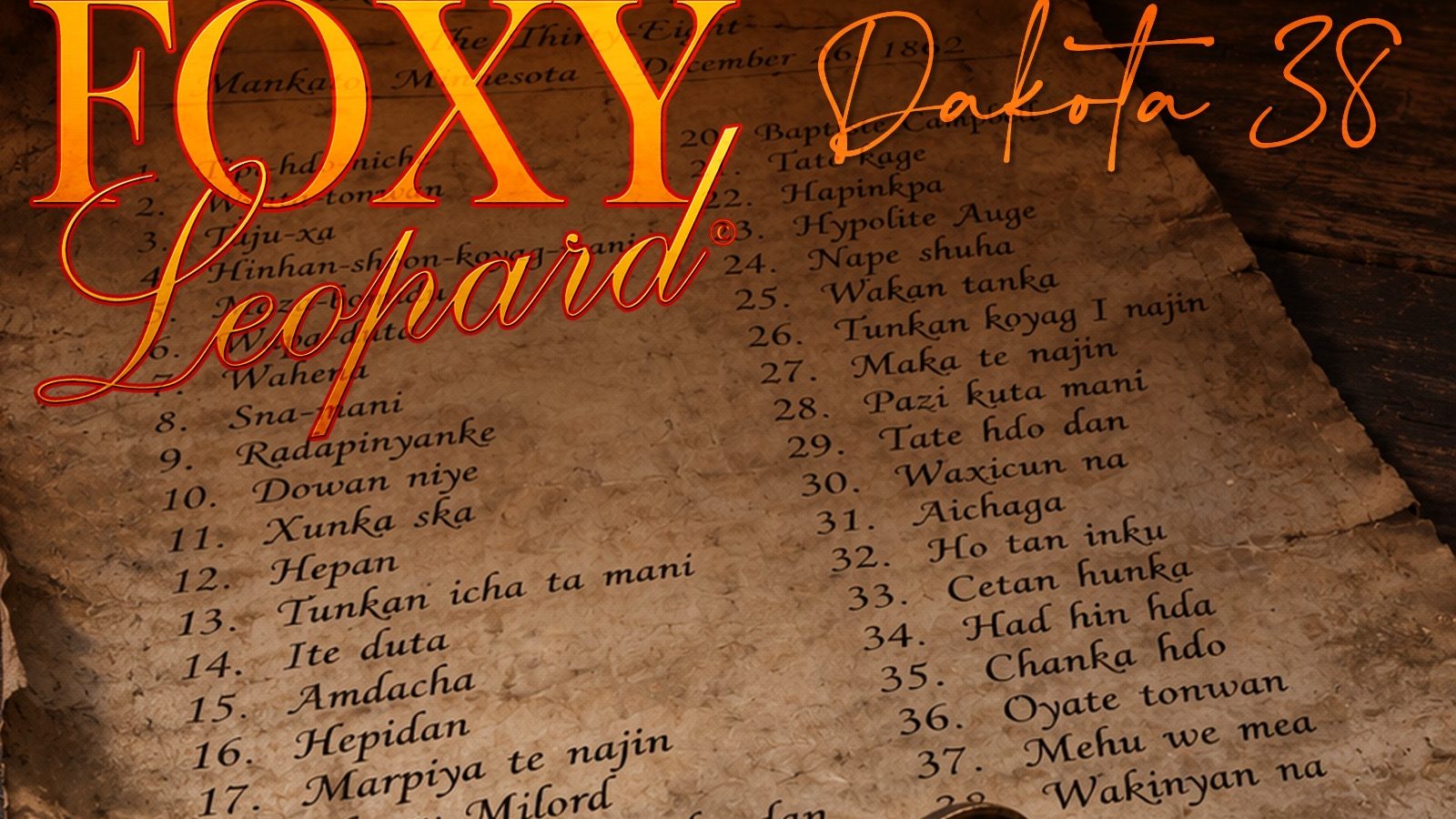
Released on November 18, 2026, “Dakota 38” tells the story of thirty-eight Dakota men executed at Mankato, Minnesota, on December 26, 1862. Foxy Leopard discovered the history while researching Indigenous words for another song, following a suggestion that led to weeks of reading about the trials and executions. That discovery became the foundation for this tribute, written from the perspective of someone encountering a painful chapter of history previously unfamiliar to them. The song acknowledges the lives lost without claiming to represent the Dakota people, keeping its attention on the tragedy and the importance of remembering those who were executed.

The arrangement is built around resonator guitar and violin, with both instruments given room to breathe. The guitar’s metallic resonance carries a rough, earthy character, while the violin introduces a mournful melody that sits comfortably alongside the storytelling. There is little unnecessary ornamentation, and the music remains restrained throughout, allowing the lyrics to retain their prominence. The sparse instrumentation suits the subject without relying on dramatic crescendos or excessive production to communicate sadness. Instead, the recording maintains a steady intimacy, giving the story space to unfold through its words and musical phrasing.
Clarabelle’s vocals bring a raw, intimate quality to the performance. Her delivery is tender without becoming overly sentimental, and the phrasing feels closer to recounting a personal story than performing a conventional folk ballad. She gives the lyrics room to settle, maintaining a measured approach as the narrative moves through the events surrounding the executions. The recurring refrain, “I’m here,” carries particular weight, its simplicity offering an expression of presence and remembrance. Rather than embellishing the words with exaggerated emotion, Clarabelle allows their meaning to develop through repetition, making the refrain one of the song’s most memorable moments.
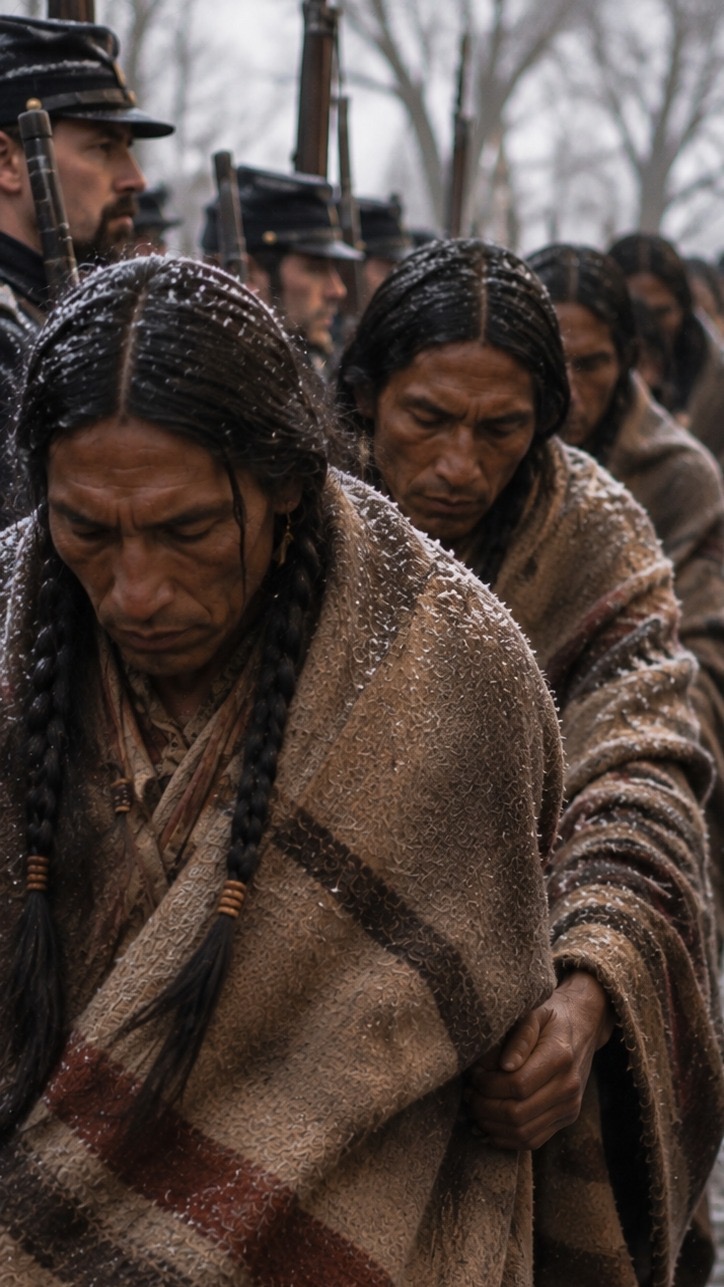
The songwriting draws attention to the human cost of the executions through details that are difficult to overlook. References to broken promises, names written on paper and futures erased capture the contrast between official decisions and the lives behind them. The image of the chair still being warm when the next man came to pay is especially disturbing, conveying the succession of executions with blunt immediacy. The lyrics also acknowledge the wider consequences of the tragedy, including displacement and the disappearance of the buffalo, connecting the executions to the continuing loss experienced by the Dakota people. These details give the song historical depth without distracting from the individuals whose lives it commemorates.
Foxy Leopard is a cinematic alt-country project from Quebec, Canada, combining human-written lyrics and storytelling with AI-assisted musical production. Its creator, a former 1990s dance-club DJ, now writes about ordinary people caught in extraordinary historical circumstances, with much of the project’s material centred on the American Civil War and the lives surrounding it. The upcoming album “After” explores grief, displacement, rebuilding and what happens when conflict ends. “Dakota 38” fits within that wider direction, reflecting the project’s interest in stories that extend beyond historical events into the lives and emotions of those affected. Its origins in the songwriter’s own research also give the release a personal connection to the history it addresses.
Dakota 38 Is A Solemn Folk Tribute That Honours Lost Lives Through Intimate Vocals, Restrained Instrumentation, Historical Storytelling, And A Quiet Refrain Of Remembrance
~ Faithfulness (Dulaxi Team)
“Dakota 38” succeeds through its restraint and the sincerity of its storytelling. The song does not attempt to speak for the Dakota people or reduce their history to a musical statement. Instead, it acknowledges the limits of the songwriter’s perspective while bringing attention to a tragedy worth learning about. I find the repeated “I’m here” particularly moving because it leaves the song with a simple expression of remembrance rather than an attempt to resolve the grief it recounts. Foxy Leopard has approached an unfamiliar history with care, and the decision to turn that discovery into a tribute gives the song a purpose that extends beyond the recording itself.
For more information about Foxy Leopard, click on the icons below.