
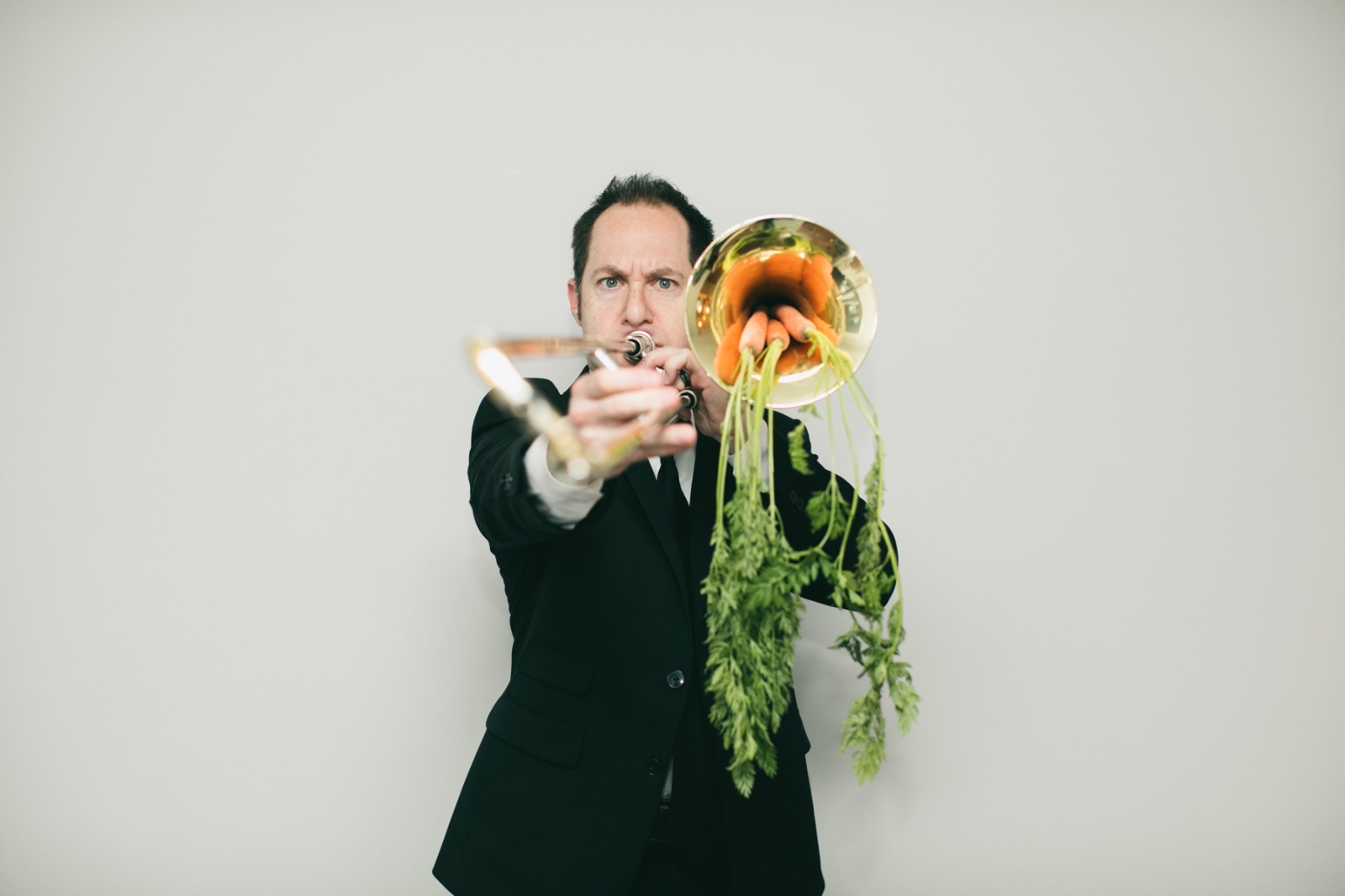
Hello everyone, it’s your host Oliver, and welcome to another DULAXI interview! Today, I’m pleased to introduce Ben Tatar, the creative force behind Ben Tatar and the Tatar Tots, a Chicago-based family music project that brings together rock, jazz, humour and plenty of imagination to create music that both children and adults can enjoy. With their latest album, The Kids’ Table, released on November 20th, 2026, Ben and his band turn everyday experiences, food, family memories and playful storytelling into lively musical experiences that encourage listeners to sing, dance and participate. From songs like Jumping Beans and Put A Little Ranch On It to Boogie On The Cookie, the album embraces the joy of making music without placing limits on creativity or age.
About Ben Tatar and the Tatar Tots
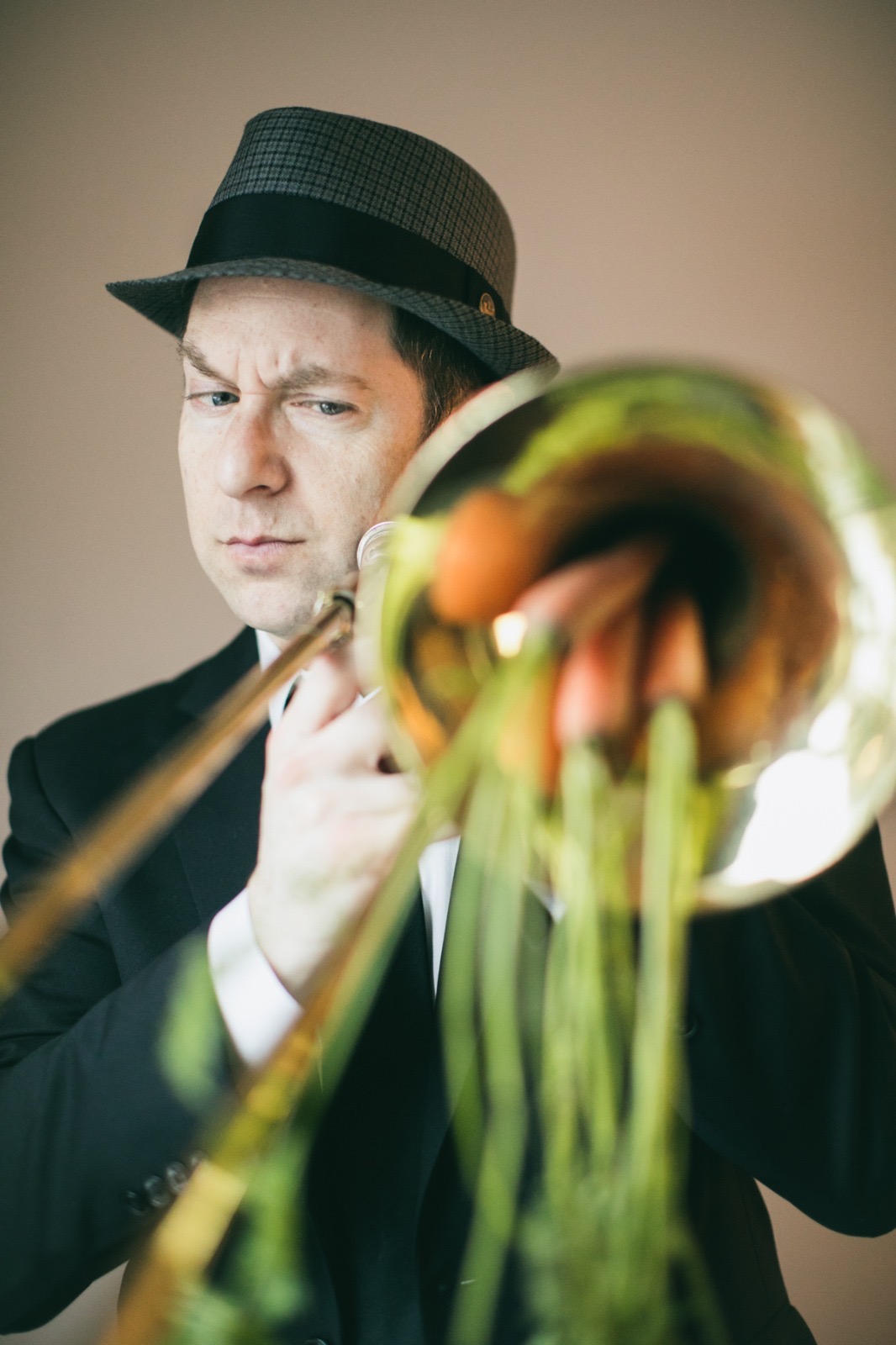
From childhood memories of music teachers who nurtured his talent to a career spanning jazz, classical performance, music education, and family-oriented rock, Ben Tatar has spent much of his life finding ways to make music a shared experience. Through Ben Tatar and the Tatar Tots, he has developed a musical world where food, humour, imaginative storytelling, jazz instrumentation, and audience participation come together. Based in Chicago, Illinois, the project brings a playful approach to children’s music without sacrificing musical variety, instrumental creativity, or thoughtful songwriting.
Launched in 2014 with the EP Food!, Ben Tatar and the Tatar Tots grew out of Ben’s experiences as an elementary school music educator and his desire to bring the energy, creativity, and musical ideas he developed in the classroom to the stage. Following the band’s full-length album Seconds in 2021, the group now returns with The Kids’ Table, its third family album centred on food, released on November 20, 2026. The project draws on a distinctive combination of rock, jazz, improvisation, lively horn arrangements, and trombone features, with Ben’s multi-instrumental background allowing him to approach the music from several creative angles. His work as an educator also informs the band’s emphasis on movement, interaction, humour, and the importance of allowing young listeners to contribute to the musical experience.
Across The Kids’ Table, familiar foods become starting points for imaginative songwriting, playful narratives, and musical experimentation. Songs such as “Pass It On Down The Line,” “The Candy Dance,” “Put A Little Ranch On It,” and “Five Second Rule” draw on everyday experiences, family memories, and humorous situations while incorporating different musical styles and instrumental textures. The album also features contributions from Ben’s children, Cameron and Everleigh, further connecting the project to the family experiences that inspire much of its creative direction. Recorded in part at Waterdog Studios in Chicago, the album brings together musicians including Kurt Lubbe, Jon Gould, Cory Biggerstaff, and Anthony Bruno, while allowing Ben to explore arrangements that range from funk and swing to New Orleans-inspired rhythms and rock.
Beyond his work with the Tatar Tots, Ben has spent 22 years teaching elementary school music to students in grades one through five, composed several theatrical works for children, and performed at venues and festivals across Chicago, Milwaukee, and Italy. His professional experiences have included collaborations with musicians such as Arturo Sandoval, Maria Schneider, Slide Hampton, Dave Liebman, and Phil Woods. In 2026, he also became a voting member of the Recording Academy, adding another milestone to a career shaped by performance, education, and creative exploration.
Having this brief introduction to today’s featured project, we’re sure both new listeners and longtime fans will be eager to hear directly from Ben about the experiences, ideas, and musical inspirations behind The Kids’ Table. So, without further ado, let’s begin today’s interview.
INTERVIEW SESSION
Oliver:
From humming Billy Joel songs during childhood road trips to performing across Italy and building a career around music, your journey has covered several different worlds. Looking back, what are some of the earliest experiences that made music feel like something you wanted to pursue for the rest of your life?
Ben Tatar:
I have to give it up for my teachers. Early on as a 5th grade beginning band student I had a wonderful teacher, Brayer Teague, who helped me to recognize my own talents emerging as a beginning trombone student at Elm Place School in Highland Park. Seeing his passion for teaching beginning band students and feeling the comfort of the band room and “band crowd” was probably preparing me for a lot of time spent in the future in band rooms. Eventually the high school band director Glenn Williams, who was also a trombone player, started driving over to the middle school to spend lunch time with me playing beginning band duets… I was quickly a part of the family and there was just no escaping it. I’m still in contact with both of them, and I credit them with steering me towards a life in music education and performance.
Oliver:
You have spent 22 years teaching elementary school music while also maintaining an active career as a performer, composer, and bandleader. How has working with young children influenced your own personality, creativity, and understanding of what makes music enjoyable and meaningful?
Ben Tatar:
After 22 years of teaching elementary school music, I’ll still always say this is true: My favorite moments in the music room are those when I am doing learning from the kids, and when I let them take the lead on a creative spark. Or sometimes that I am fully convinced in my mind of a creative idea to set into motion in a song, and the kids hear it a totally different way! Or even better, they improve it and show me the way it should be. At some point, you just have to listen to your audience!
It took me a while to really settle in to what my students in the 1st-5th grade age range really went to. What kinds of songs did they like? What did they find funny? Maybe not the same thing as the grown-up writing the song. This particular album experience also reminds us that you don’t always have to add 30 instruments and musicians to each song, but sometimes by stripping it down and letting the listener and audience bring something to the table, you have a new way to let people connect.
Oliver:
Your musical background stretches across jazz, classical performance, education, and rock, with experience playing instruments ranging from trombone and tuba to piano, guitar, and bass. How have these different musical disciplines shaped the way you approach composition, performance, and your identity as an artist?
Ben Tatar:
I really think a lot of music should look and “sound” like a spice cabinet in a kitchen. You have all these great spices…. why not use them? Let’s add color to songs by adding countermelodies, background auxiliary instruments, interesting rhymes, hide quotes from other songs… I think with a lot of musical diversity in my background, I find ways to add this to the songs. These melodies should be memorable, and each song taking on its own shape and character. Our compositions have included rhumbas, New Orleans second-line traditions, 1940’s-era big band arrangements, a capella songs… each one, to continue the theme, brings its own flavor and angle to the topic. These stylistic differences make the songs unique and, I believe, more special and enjoyable to the listener.
You also get what you pay for with this background; previous performances with the Tatar Tots have randomly referenced the trumpet introduction to Mahler’s 5th symphony as well as a scat-singing vocal battle, and always unpredictable trombone behavior. My 5th graders last year performed the 3rd movement to John Cage’s “4”33,” and this week we finished up a mini-unit on Ladysmith Black Mambazo. There’s just so much out there! Add those spices!
Oliver:
In 2014, you launched Ben Tatar and the Tatar Tots, bringing together your love of music and your experience in children’s education. What inspired you to create a dedicated children’s rock band, and what did you hope to offer young listeners that they might not necessarily find in conventional children’s music?
Ben Tatar:
I love to retell the story about how my wife and I attended Chicago’s Lollapalooza (in 2011) when we were dating. In between the bigger acts, she led me to a side stage where Kidzapalooza was taking place! I remember seeing Ralph Covert on stage with his band, and a young dad with a beer in his hand was dancing with his little son in a much more secluded and private spot of the fest. I remember hearing and seeing Ralph’s energy on stage with his band, Ralph’s World and thinking to myself…. “I can do that! I do that every day in District 96! Let’s take some of those formulas and conventions of kids music and movement and get going on it with my own group!” I had created who-knows-how-many songs in the classroom, and a lot of times I base my basic rhythmic exercises on food items and names… so I just kept going with the theme and assembled the band!
I hope that listeners young and old(er) notice that the music is unapologetic, regardless of the age of the listener. This childrens’ music is not dumbed down or reduced because the intended listener is younger. They may not be able to fully identify a clarinet yet, but I want them to start hearing one! It’s almost as if it’s not childrens’ music — it’s just music, and anyone who wants some of it or is ready to leave with an experience from it is able to do so. The songs also can’t be just literal love songs to foods, but have to be more literary and more clever. I hope that the 10th listen is just as exciting as the 1st or 2nd.
Oliver:
One of the most distinctive things about the Tatar Tots is your strict rule that the songs must be about food. It’s an unusual creative boundary, but it has also become a recognisable part of the band’s identity. How did this idea begin, and how has it helped you develop a creative direction that audiences can immediately associate with the band?
Ben Tatar:
Yes, to continue this idea, it was really borne in the classroom at Kildeer Countryside School. When I was teaching basic eighth note and quarter note rhythms to kids, I was bored with the “ta ta ti-ti ta” language that I grew up with, and I felt like the kids didn’t respond to it either. So instead it became “cheese cheese ta-co cheese” or similar names. Kids instantly smiled! Kids instantly replied with the rhythm louder and with more connection! Then it became “wa-ter-mel-on ta-co cheese” and kids loved it even more! Not so secretly…. everyone loves food as a theme. Every culture and community has their food, and a population that will discuss their favorites, share recipies, or defend a culinary custom that is unique to them. So why not continue with this theme that all audiences can relate to?
Many people ask if we have a song for ‘this’ food or ‘that’ food, and we try to keep lots of bases covered. Some of the songs are about healthier foods, and some are not! No duplicating foods allowed. Some songs are not as much about the food itself but rather using food as a way to demonstrate things like patience or indecision, suspicion or sharing. And again, these can’t be basic and deliberate love songs to certain foods, or I’d bore the listener (and myself!).
Oliver:
Your music combines kid-friendly rock with jazz improvisation, a lively horn section, and plenty of trombone features. You have also described your unexpected journey into what you call a rock-and-roll trombone situation. What do you enjoy most about bringing your primary instrument into a rock setting, and how do you balance its jazz character with the energy of a family-friendly rock band?
Ben Tatar:
I often wonder what would be my response if I went back in time and found the high school Ben Tatar bumming around the band room of Highland Park High School and told him he’d be playing trombone in his own kids rock band… what would be my response? Hey, I found a gig and I made my own opportunity. I spent lots of time after college playing in bands and seeing that trombone was maybe the third call, coming after saxophone and trumpet. I was going to have to try to make myself musically irresistible to bandleaders, or I was going to have to make my own avenue for the instrument and my musical vision behind it.
I think I spent a lot of time growing up as a musician being concerned with “finding my own sound” on my instrument. Lots of other jazz players around me seemed to find it younger, or while we were in college, and mine was a more patient journey which really didn’t happen until my instrument landed in a slightly different genre. Now, it’s fun to find the jazz opportunities for anyone in the band in the middle of our kids’ songs. What kid can’t benefit from hearing a wailing tenor sax solo, or participating in a trombone conga line? These are the instruments and moments that will bring on a greater experience for our listeners.

Oliver:
Your upcoming album, The Kids’ Table, is your third family album and follows Food! and Seconds. The title immediately brings to mind a familiar childhood experience, but it also suggests a space where young people can have their own voices and experiences. What does The Kids’ Table represent to you, and why did you feel this was the right concept for your next album?
Ben Tatar:
What a great question… the safety and comfort of the kids’ table!! Many times as the grown-up in situations, I even find MYSELF wishing I was seated at the kids’ table instead of the grown-up one. The laughter! The stories! The silly nonsense coming from simple joys and food at a celebration! I had so many great moments with cousins especially at the kids’ table growing up, so it seemed like the perfect descriptor for what the listener is in for.
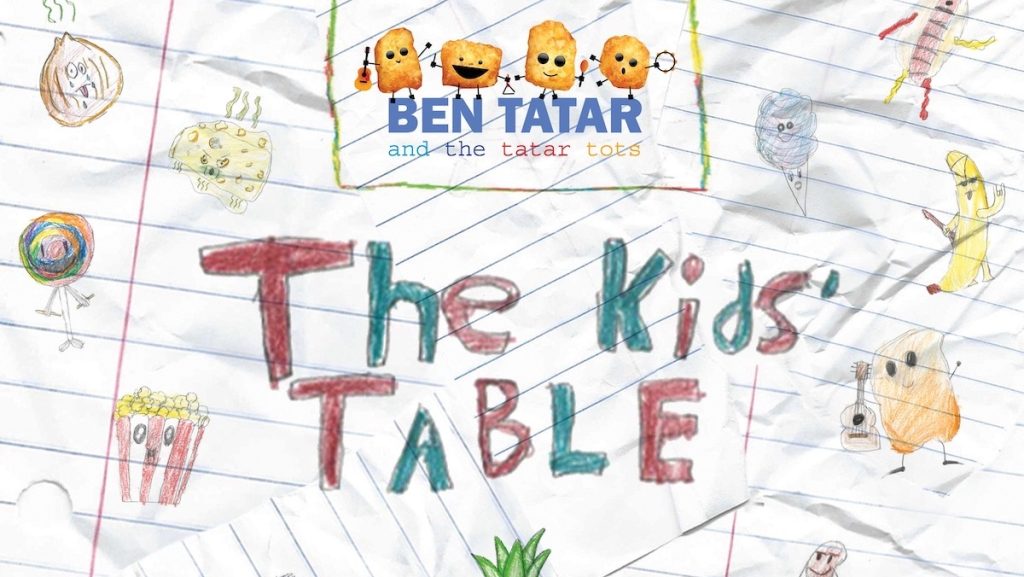
I also have to give immense credit where it is due to my 11-year-old son Cameron, who did the amazing artwork for the album (when he was 10). He got busy drawing interesting “food creatures” and graphic designer Karol Skoczen arranged it with notebook paper and butcher paper themes to instantly remind the person of the irregular and playful freedom of sitting with the kids!
Oliver:
You have explained that food is sometimes the direct subject of your songs, while at other times it becomes a way to approach entirely different topics. How do you use such a familiar subject to introduce children to broader ideas, and what creative opportunities does this approach give you as a songwriter?
Ben Tatar:
There’s one track on “The Kids’ Table” called “Pictures of Food.” The first draft of this song was as a funky jam involving some of the same lyrics and premise: poking fun at people who take pictures of food. Then, I spent some time around some books! The names Judy Blume and Beverly Cleary starting getting mentioned in our house, and it was a sign to tell the listeners a story! Let’s get literary and really explore one of these themes, not just dance and laugh at people snapping pics of taco platters. So I made it a story, that instantly puts the listener as the main character, “scrolling through my mama’s phone.” And as the story develops, the listener can have the last laugh, as we all come to the conclusion that EVERYONE takes pictures of food, even those who laugh at the idea. Suddenly a song that might be about suspicion or making fun of grownup behavior is easier to digest. I don’t have too many songs (yet) that function as stories, so that’s one big standout for this one. And the song features a fade-out, which happened to be a random checklist item for me as a songwriter. Hey, that counts as an opportunity also, right?
Oliver:
The title track, “The Kids’ Table,” has become a regular opening number at your live performances. What makes this song such a natural introduction to the Tatar Tots, and how does it establish the atmosphere and sense of participation you want audiences to experience throughout a show?
Ben Tatar:
Cue: The Tatar Tots’ “nu country” song! Gotta have a slow burner in the setlist, giving off some big bass drum thumps amid the guitar jangling. I usually get on the microphone and tell the audience to “get some hands up” or “get some food up in the air.” We’ve looked out and seen kids holding up sandwiches, getting ready for the show! So, we start a bit downtempo, and call the kids up closer to the stage mid-song to allow them to declare the dance floor up front. It’s musically the most sparse moment of the show, but allows for a guitar or trombone solo and affords another literary theme: running late to a dinner! As the song pleads at the refrain, “save a spot at the kids’ table for me!”
Oliver:
“Pass It On Down The Line,” also known as “The Hot Dog Song,” draws on the familiar tradition of passing hot dogs and money through stadium crowds, using call-and-response to bring listeners into the experience. What inspired you to turn this everyday situation into a musical story, and how did you develop the idea of encouraging listeners to add their own dance moves as the song progresses?
Ben Tatar:
I am worried that this tradition is ending! I remember sitting in Comiskey Park growing up, watching White Sox games with my family and, of course, enjoying the great ballpark food! But it’s not just the tradition of hot dogs and baseball… and it’s not even about the (questionable) taste of the hot dogs. It starts with the TRUST and RESPONSIBILITY you briefly get with passing a freshly-purchased hot dog from your neighbor’s hands to the next set of waiting hands, and then subsequent cash passed in the other direction. It made you feel so proud to be a part of that exchange as a little kid! Oh, how the digital tap of a payment has diminished this memory!! Singing an entire song about this memory didn’t seem feasible or substantial enough, so let’s use the toppings as a way to dress up the song! I love it when songs we perform are different each time, and we are pretty firm on going with WHATEVER toppings the audience throws at us. We generally start with mustard each time (gotta make sure kids are making good choices, says this Chicagoan) to accompany a single-finger-spraying-mustard-in-the-air dance for the first verse, but after that it’s anyone’s guess. Understandably, this kids’ rock band is always ready for ketchup as a suggestion, and we just hope parents show kids the right way.
Oliver:
“The Candy Dance” invites children to take the lead and represent different types of sweets through movement, from chocolate and gummy candy to sour candy and their own personal favourites. How important is it to you that children become active participants rather than simply listening, and what do you believe this kind of creative freedom adds to their relationship with music?
Ben Tatar:
You can bet that if we are going to have a “Candy Dance,” that it better be one encouraging kids to get up and get moving! I play this version for my 1st grade students and pick 4 different dancers each time for the 4 verses, and you can also bet that the composer of the song gets up and gets moving with the kids, too! For kids, music and movement should be one and the same. And here, even better if it is inspiring and challenging the dance leader to create a dance right on the spot! More smiles, more engagement, and more people asking to do it again and again. That’s how I know when I have an idea that’s worth pushing forward!
I usually give the kids a few small specifics for their dance: they have to stay up on their feet and not down on the ground, they have to set 1 – 2 simple patterns, and I use songs like “The Candy Dance” to encourage the kids to find the steady beat of the song! Some kids come REALLY programmed with their own moves, and for others it’s a chance for the refrain of a song to start to come out of their shell and do something silly and low-pressure to a song about candy.
Oliver:
“Put A Little Ranch On It” was inspired by your daughter Everleigh’s love of ranch dressing and also features both Everleigh and Cameron. The arrangement builds gradually, introducing the drums, bass, guitar, and eventually a trombone solo. How did this song develop from a family-inspired idea into a full band performance, and what was it like incorporating your children’s contributions into the recording?
Ben Tatar:
Yes, the song really does open up, right? Even the beginning, allowing Kurt’s steady countoff to start the slow sizzle. Amazing to think how a song begins as just an idea and eventually stands up and takes on its own form! I appreciate that this song started from just sheer love for the food and we can always look back on this project and see how it cemented Everleigh’s passion for ranch dressing. It really makes “The Kids’ Table” represent this time period for my family, so I think I greatly look at this album as being the one that’s “for the kids.” Usually if someone gives me a song idea or a food idea, the suggestion or participation doesn’t go much further than the suggestion…. then I think about it awhile. Some ideas come faster than others. Sometimes solid songs vomit themselves out fast onto the page (sorry for the imagery there), and other songs have taken me close to 10 years to really close up. And once they are done, they are never really done…. we don’t feel like we can’t keep evolving the songs just because they are set in a recording a certain way.
This whole process also started from Everleigh’s pleading from her car seat on the way to day camp, asking me to make another album. This was maybe 3 years ago, and I was also the song leader at the day camp in Northbrook, IL. “Put A Little Ranch On It” was not even a thought yet! So the themes and topics have really grown with the family over the last few years. Now, we actually use this song to introduce the band, starting with drums, adding the bass ostinato, and then finally guitar. I might make a few trombone noises in there before really kicking off the lyrical portion. And to think where this song could go… what will it sound like in a few years as the band really sinks into the song and explores the spaces?
Oliver:
“Five Second Rule” takes a familiar childhood saying and gives it a lively New Orleans street-beat treatment, complete with trombone and your banjo playing. What attracted you to this particular musical direction, and how did you approach combining humour, rhythmic energy, and the different instrumental features to give the song its character?
Ben Tatar:
I think I was mostly inspired to create stylistic variety on the album. They can’t be all danceable songs at 118, so let’s bring in some New Orleans flavor for this one! I visited New Orleans a few years ago with Tom Matta, who arranged “Bake Me A Cake” on “Seconds.” We met up, for dinner of course, while attending a Jazz Education conference, and that trip planted this particular seed. I think as tone color and timbre goes, this song really sticks out among the others on the album. I think it also sticks out based on the subject matter, as perhaps this song begins the reluctant discussion at home! I remind myself, and the listeners, that children’s literature, movies, music, comics…. all filled with bad ideas! So, I guess you might as well know the rules in case your group of friends participates.
I think the key to combining a sense of humor with the compositional components is that everything needs its own space. I try to explore lots of ways to allow the music to support the lyrical humor. I think the rhymes for this song especially are really crucial for the storytelling and drive the clever, memorable moments for the listener. They help to dictate how the story unfolds. For this one, I actually really envisioned the “1 – 2 – 3 – 4” as being numbers dancing on a screen, a la “Schoolhouse Rock,” and I am personally a fan of the “offbeats” version of the refrain when it comes up. Lots of great steady beat connection! As trombone humor goes, this song seemed to REALLY be the perfect opportunity to throw in the beloved ‘sad trombone.’ But really, for all of the humor in the song theme, I try to take it all pretty seriously!
Oliver:
“Boogie On The Cookie” features a playful exchange between you and your son Cameron, alongside an upbeat, funky arrangement that highlights Anthony Bruno’s tenor saxophone playing. What did you want to capture through that interaction, and how do you decide when a song benefits from being musically simple and playful rather than following a more traditional songwriting structure?
Ben Tatar:
The first thing to know is that this idea came from the WHOLE FAMILY, but they were all probably a bit surprised with how the song turned out. Finding a “boogie” on anything would not be a very pleasant discovery, and the topic started as a big “what if” by the kids at the dinner table. Although certain age groups might appreciate more of a story around this theme, I chose for a more carefree dance with minimal lyrics and a big stage set for me, Cameron and Anthony’s sax.
Most of the song was already recorded, and originally I was going to let Anthony’s awesome solo stand alone. And then I thought…. no, we need more talking over the saxophone solo. The skit was not my original intent for this section of the song, but I decided to add it when I discovered that Cameron was available to come down to the studio to get all of the files! We headed down to Waterdog Studios in the South Loop neighborhood of Chicago, headquarters for Ralph Covert’s group Ralph’s World. Ralph and I shared a bill a few years ago and he invited me in for our next session, and I couldn’t say no. He had me over before I even made my first album, so to actually record in his space was a really special part of this project. He has such a creative spot, and it’s so COMFORTABLE. It feels like a familiar friend’s house, and Cam settled right in with headphones on in the vocal booth. He punched in some singing parts (on “Pass It On Down The Line” and “Put A Little Ranch On It”) and our skit is all of the storytelling needed for the song! He came up with my favorite line in the song (or maybe album): I hope he’s havin’ a good time!
Oliver:
Your experience as a music educator clearly gives you a different perspective on how children respond to rhythm, melody, humour, and participation. When creating The Kids’ Table, how did you translate your understanding of early childhood music education into arrangements and songwriting that would also keep parents and older family members interested?
Ben Tatar:
Thank goodness for the musical laboratory I have at Kildeer Countryside School (or even at home) where I can test drive songs and ideas on kids grades 1-5. “Is this funny?” “Is this fun?” “What do we like better, option 1 or option 2?” So good to have a panel to help steer some of what you do. Once the kids are in a good spot with the song, the grown-ups will follow. Sure, they may be slower to stand or participate in the live shows, and that’s ok! I’ve been a tired parent before wanting someone else to entertain my kids! But little do those parents know that I am including them in every word, note and bit of banter. Some of the humor flies over the kids’ heads and lands on the parents. For example, you have to have a LITTLE fun when handing out CD’s to kids who don’t know what CD’s or CD players are. “Congrats on winning our freeze dance, I hope your parents have an older car!”
A constant challenge or point of inspiration is holding a 45-minute show (or crafting a 9-song album) that is really somehow for every listener of any age. Anyone should attend our show and say it was a good time, and I hope the same happens from “The Kids’ Table.”
Oliver:
Your previous albums, Food! and Seconds, helped establish the Tatar Tots’ identity, while The Kids’ Table brings together several songs that have already become favourites at your live shows. In what ways do you feel the band’s songwriting, musical arrangements, and overall creative confidence have developed between these three releases?
Ben Tatar:
I think the most important of any of those elements you just mentioned has got to be the development of creative confidence. Songwriting can take place in a lab basically. I’ve written songs while sitting at pianos and sitting on airplanes… that can happen anywhere. But creative confidence is something that really just gets thrown on you in the moment, and forces you to grow. I think about the immense amount of creative confidence we have developed as a band over just the last 3 years. It’s almost as if the sooner we can get AWAY from the songwriting and the arrangement, the sooner we can start to rely on creative instincts, listening, sharing, etc.
Oliver:
You have performed at a wide range of venues and festivals, from Chicago’s Millennium Park and Green Mill Lounge to Italy’s Umbria Jazz Festival, while also sharing stages with respected figures across jazz and entertainment. How have these different performance experiences influenced your approach to entertaining audiences, particularly when moving between professional jazz settings and family-focused shows with the Tatar Tots?
Ben Tatar:
A jazz audience wants to be satisfied just like a 10am young family audience wants to be satisfied. And just maybe some of the listeners will be unwilling listeners…. musically we have to convince them and draw them in, and not let go of their ear. Jazz audiences tend to appreciate technical skill, musical challenges, and variation, while rock or dance audiences respond more immediately to energy, excitement, and the urge to move. Both demand engagement, just in different ways. I’m fortunate to also get trombone time with “Sway Chicago,” a Chicago-based wedding and private events Top 40 band. Our bandleader/vocalist Steve Biossat fosters an environment that makes our band a bit like a family. Over the long COVID break, boy did I miss my bandmates! For these music-and-movement moments for these great occasions that bring people together, making the audience a bit of the “band family” can really extend a performance and make it more meaningful to the listener.
Oliver:
Becoming a voting member of the Recording Academy in 2026 is another important milestone in your musical career. Considering your work as a performer, composer, educator, and children’s music creator, what does this recognition mean to you, and how do you hope to use your experience and position to contribute to the wider music community?
Ben Tatar:
It’s a wonderful achievement, and it was also a great news that landed in my inbox on my birthday this last summer. It’s truly an honor to especially be a voting member who can help to direct and shape the future of children’s music. Although I joked with some audiences this summer that I was going to use my vote to “take down jazz,” I hope to use my vote to reward music that is positive, creative, unique and inspiring. Children’s music shouldn’t be simplified, and it has to be honest. More immediately, I find myself very consumed with the threat of AI in music. While I don’t think it will replace any one of us in the end, it threatens the honesty of what we present to our ears or to others’ ears. Arts has to be kept honest and kept human.
Oliver:
With The Kids’ Table arriving on November 20, 2026, and your music reaching families with children as young as infants and toddlers, what do you most hope parents and children will take away from listening to this album together? Beyond the songs themselves, what kind of memories or experiences would you like the music to create within families?
Ben Tatar:
Simply put, I hope it brings people together in ANY way. Maybe it’s in the car, or dancing in the kitchen, or maybe the song gets stuck in your ear and you take it wherever you go! I just hope it brings joy, positive, and maybe a few tapping toes.
Oliver:
Having built the Tatar Tots from an idea in 2014 into an established family music project, what would you like the next chapter to look like? Are there new musical directions, educational projects, performance opportunities, or creative ideas you would particularly like to explore, and what lasting contribution would you hope Ben Tatar and the Tatar Tots make to children’s music?
Ben Tatar:
Oh man, I can’t reveal my cards yet, but lots of other music is written and waiting in the wings. I’ve got my eyes on a few other media-related idea I’d like to explore. Maybe more social media that connects people rather than just making announcements? I’ve been trying to hide CD copies of “The Kids’ Table” recently in local shops, which is a fun way to get the audience ready for music and support some small businesses. I always like the idea of combining music with other artforms, or with live art or other artists contributing to the atmosphere. I’m also trying to think of creative things to stamp my ridiculously cute logo onto. Right now Jibbitz are hot, and next summer we may crank out some other unique pieces. Specifically our YouTube audience will be treated to some music videos very soon. There are lots of possibilities out there, but anything unique, creative and honest — we’re there!
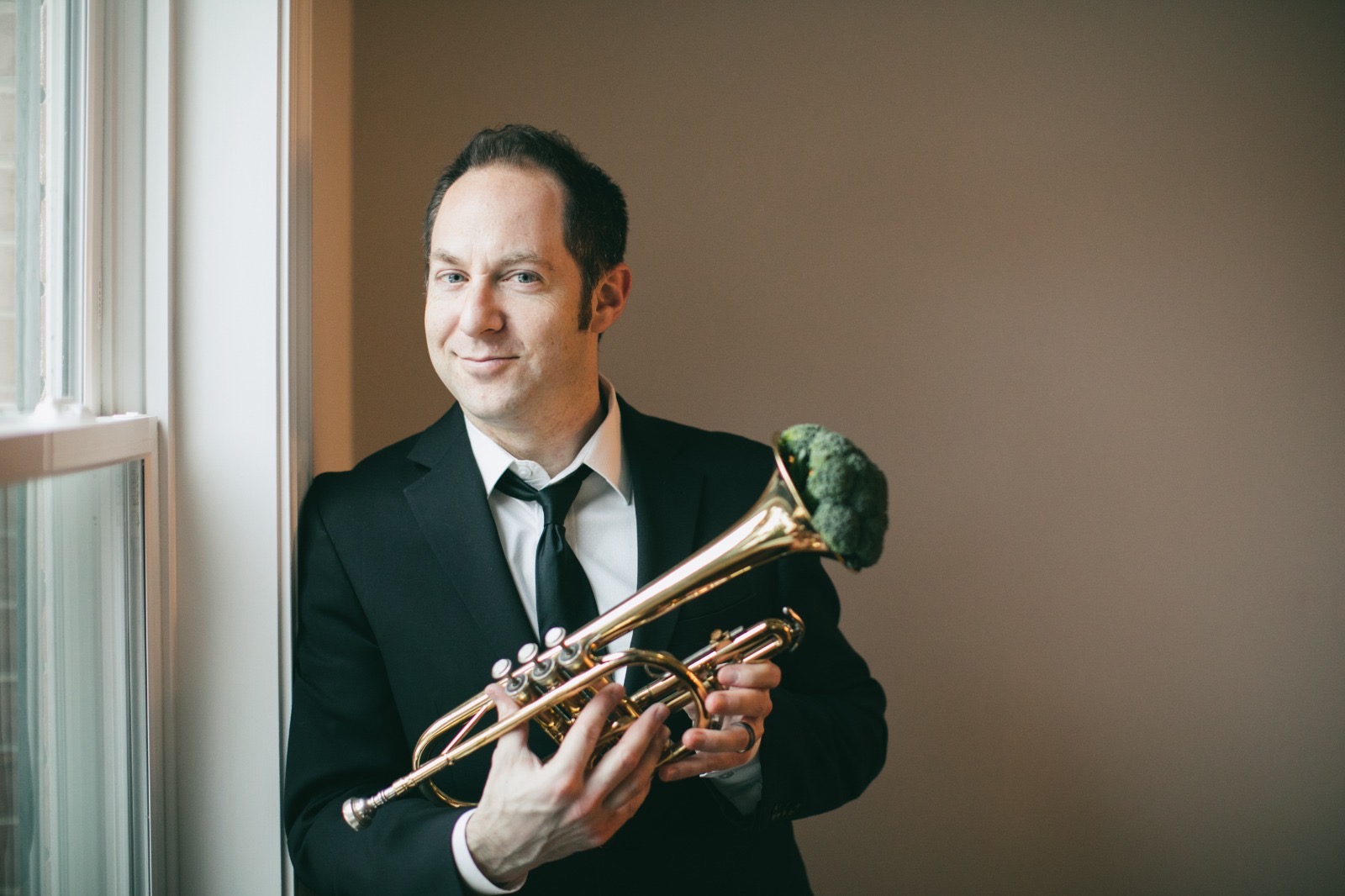
With The Kids’ Table, Ben Tatar turns food into a doorway for musical discovery, blending the unpredictability of jazz, the joy of family participation, and the imaginative freedom of childhood into songs that invite listeners of every age to take their own place at the table.
~ Oliver (DULAXI Team)
EDITORIAL PERSPECTIVE
What stands out about The Kids’ Table is the care with which Ben Tatar approaches children’s music as an opportunity for genuine musical exploration. Food may provide the playful starting point, but the arrangements, instrumental exchanges, humour, and invitation to participate give these songs a character that reaches beyond their subject matter. His experiences in education clearly influence the way he makes room for young listeners to contribute, while his musical background allows jazz and rock to remain central to the experience. It is a project built around the idea that music can be shared, explored, and enjoyed across generations.
~ Oliver (DULAXI Team)
CLOSING
Our sincere thanks to Ben Tatar for joining us at DULAXI and sharing the stories, experiences, and creative ideas behind The Kids’ Table. From the teachers who helped shape his early musical ambitions to the classroom experiences that continue to influence his songwriting, this conversation offers a closer look at the thought, humour, and creativity that drive Ben Tatar and the Tatar Tots.
With The Kids’ Table, Ben invites families to share music through laughter, movement, imagination, and the simple joy of spending time together. We encourage readers to experience the album and discover the different musical flavours, stories, and playful moments it has to offer, while continuing to follow Ben and the Tatar Tots as they explore new creative possibilities.
Thank you for spending time with DULAXI. We look forward to bringing you more conversations with artists, musicians, and creative minds from around the world.