
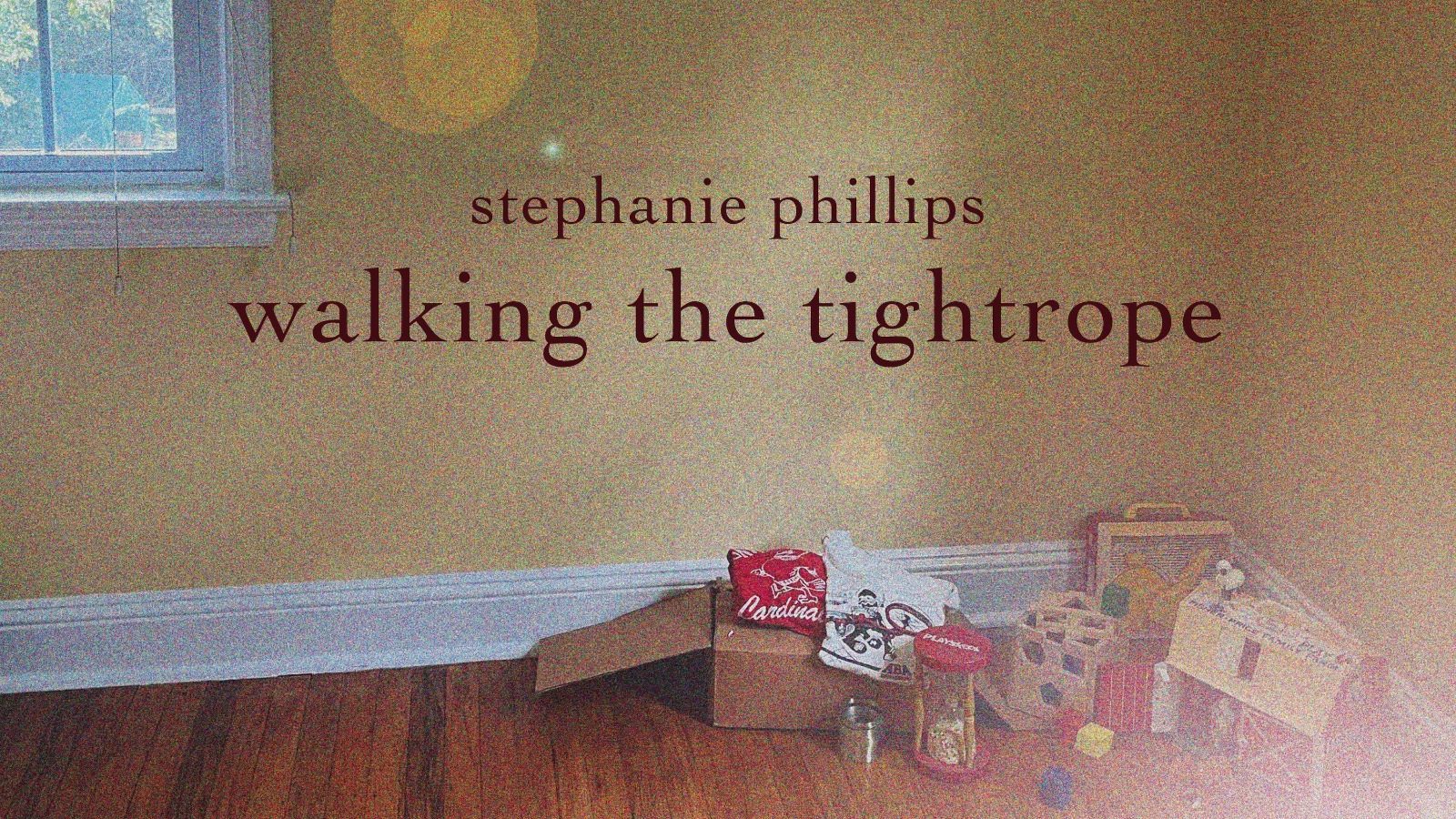
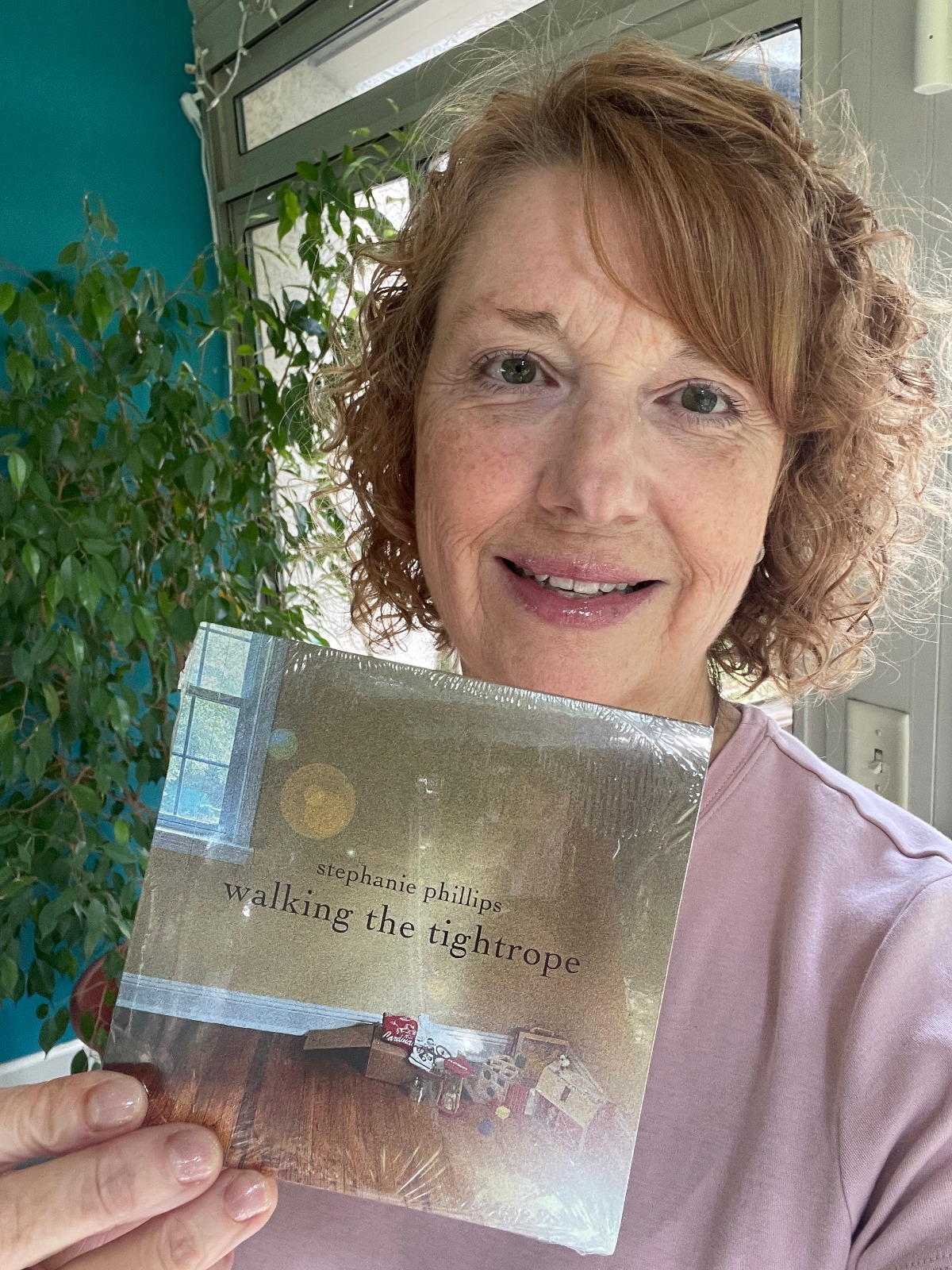
Hello everyone, it’s your host Oliver from DULAXI, and today I’m delighted to be joined by American singer-songwriter Stephanie Phillips, an independent artist from West Chester, Pennsylvania, whose musical identity draws from indie folk, Americana, country, and progressive folk. We are here to discuss her seventh studio album, Walking the Tightrope, released on August 28, 2026, a deeply personal collection shaped by significant changes in her life and continued growth as a songwriter.
Before we begin our conversation with Stephanie, here’s what you need to know about today’s featured project.
About STEPHANIE PHILLIPS
Stephanie Phillips has been singing, playing guitar, and writing music from an early age, developing a lifelong connection to songwriting that has taken her to performance venues across the United States. Her early musical experiences were shaped by a family environment where music was a regular part of everyday life. Over the years, she has performed at New York City venues such as the SpeakEasy and the Village Gate, with one notable career highlight being her opportunity to open for Emmylou Harris in the 1990s. Drawing inspiration from songwriters including Billy Joel, James Taylor, and the late Dan Fogelberg, Phillips describes her musical approach as progressive folk, combining accessible songwriting with thoughtful storytelling and emotional expression.
Her seventh studio album, Walking the Tightrope, captures a particularly significant period in her personal and artistic life. Written and recorded over approximately a year and a half of emotional upheaval, the album emerged during a time marked by the death of her younger brother and the beginning of her marriage to her second husband. These contrasting experiences brought grief, happiness, uncertainty, and hope into the same chapter of her life. Rather than separating these emotions, Phillips allows them to exist alongside one another throughout the collection, using songwriting to explore the complexity of navigating profound personal changes.
Musically, the album represents a further development of Phillips’ established sound. While maintaining the introspective lyricism that has long informed her songwriting, she introduces a fuller instrumental arrangement than on her previous records. The expanded sound was partly shaped by her recording engineer, who introduced her to the bass player and cellist featured on the album. Her daughter, Mackenzie, also contributes keyboards, continuing a musical collaboration that has been part of Phillips’ previous recordings. These additional contributions broaden the arrangements while supporting the melodies and storytelling at the centre of the songs. Across the album, Phillips brings together folk foundations with elements of Americana, country, and melodic pop influences associated with groups such as The Beach Boys and The Beatles.
Beyond its personal themes, Walking the Tightrope reflects Phillips’ continued commitment to honest artistic expression. Her songwriting also addresses social justice issues, drawing from a perspective shaped by her upbringing and experiences at Sarah Lawrence College, where she became politically active. With a musical career built around songwriting, live performance, and independent expression, she continues to explore new creative possibilities while remaining connected to the principles that have guided her work. The album ultimately documents an important period of transition, presenting an artist who remains open to growth while finding new ways to communicate the experiences and ideas that matter to her.
Having this brief introduction to today’s featured project, I’m sure both new listeners and longtime fans are interested in hearing directly from Stephanie about the experiences, creative decisions, and personal reflections behind this record. So, without further ado, let’s begin today’s interview.
INTERVIEW SESSION
Oliver:
You have been singing, playing guitar, and writing music from an early age, which suggests that music has been part of your life for as long as you can remember. Looking back at your childhood, what were your earliest musical experiences, and how did those formative years influence the person and songwriter you eventually became?
Stephanie:
My childhood was characterized by my parents’ love of music. Mom and Dad played records frequently; Cat Stevens, Chicago, and Donovan were favorites. My mom played piano (and still does!), and my siblings were all involved in various musical activities in school, like choral groups and piano lessons. I started piano lessons at the age of 3 and then began taking guitar at age 9.
Oliver:
Your musical journey has taken you to different stages across the United States, including well-known New York City venues such as the SpeakEasy and the Village Gate. How did performing in those environments shape your confidence as a musician, and what did those early experiences teach you about connecting with audiences?
Stephanie:
Interesting question. I learned early on that I had to really engage with the audience right from the start, especially those NYC audiences. I was performing there in my late teens and early 20’s, and it felt like baptism by fire! The audiences were often chatty and even impatient, and I had to learn how to have a strong stage presence. It was probably a good lesson as it taught me that it’s one thing to be a good musician, but it’s quite another thing to hold an audience’s attention. That takes more than just being good at your craft; it takes the ability to engage on an emotional level.
Oliver:
Opening for Emmylou Harris in the 1990s stands out as a significant moment in your career. Considering her influence and place in American roots and country music, what do you remember most about that experience, and did sharing a performance setting with an artist of her stature change how you viewed your own musical ambitions?
Stephanie:
Funny, I was so young at the time (I think about 20), I honestly don’t remember much about it other than my feeling very nervous initially, but once onstage, thrilled to be there. I do have a memory of Emmylou congratulating me on my performance afterwards, but it’s so fuzzy. Of course, I had grand delusions that my opening for her would be “my big break,” but when that didn’t happen, I guess I ended up burying that memory.
Oliver:
You describe your music as progressive folk, drawing inspiration from songwriters such as Billy Joel, James Taylor, and Dan Fogelberg. These artists have distinct approaches to melody, storytelling, and emotional expression. What particular qualities in their music have stayed with you, and how have you combined those influences with your own experiences to develop a recognisable artistic identity?
Stephanie:
Wow, Oliver – your questions are hard-hitting! OK, let me try and answer this one. I think what those men all have in common, and what I consistently strive for in my own music, is the ability to connect emotionally with their audience in a way that uses simple language, but in an artistic/poetic format. My goal, as I believe is the same as Joel’s, Taylor,’s and the late Fogelberg’s, is to use lyrics that are emotionally charged without creating unnecessary friction for the listener. I want my music to be thought-provoking, but I don’t want my listeners to have to agonize over, “But what does she really mean?” Yes, there can be some ambiguity, but not to the point where the message in the song is missed. I hope this makes sense and answers your question. 🙂
Oliver:
Your songwriting explores different sides of the human experience, including love, loss, hope, and despair, while also making room for social justice issues affecting society. How do you decide which personal or wider social experiences deserve to become songs, and what responsibility, if any, do you feel as a songwriter to give a voice to subjects that people may find difficult to discuss?
Stephanie:
I think the simplest answer to this question is that I don’t really decide. The social justice songs tend to choose me, in that I often feel like a vessel in which to pour out messages that need to be heard. Many of those kinds of songs I’ve written almost wrote themselves. As for my responsibility as a songwriter, yes, I believe anyone who has any kind of “pulpit” (be it artistic, religious, or otherwise) should use that, to the best of their ability, to convey truth and justice. We live in a time fraught with fake images, videos, and messages designed to confuse and obfuscate. My goal is to be honest, transparent, and to ensure that my music speaks for those who can’t speak for themselves.
Oliver:
Walking the Tightrope was created during approximately a year and a half of considerable emotional change, particularly following the death of your younger brother and the beginning of your marriage to your second husband. These are two very different but equally significant life experiences. How did navigating grief alongside the happiness and adjustments of a new marriage affect your everyday life during the period when you were writing this album?
Stephanie:
I am naturally a very emotionally expressive person, so I think I was my usual self, but maybe on overdrive. It was a confusing time, as I was “walking the tightrope” between sorrow and joy, almost on a daily basis. Just to be clear, though, many of the songs on the album had already been written before my brother’s death.
Oliver:
Losing a younger sibling can change the way someone understands family, memory, and the passage of time. Without feeling any pressure to revisit experiences you would rather keep private, how has the loss of your brother influenced your outlook on life, and has songwriting become a way of preserving memories or expressing emotions that are otherwise difficult to communicate?
Stephanie:
Yes, losing a younger sibling is deeply life-changing, on many levels. I think having to say goodbye to Raleigh so early in his life (he died 2 days before his 52nd birthday) has made me realize even more how fragile life is. It has also awakened in me a renewed desire to create a “legacy” with my music. And, I don’t mean in the sense of “quantity”, but rather, in the words that I choose to leave here on this earth and the meaning behind those words.
Oliver:
The title Walking the Tightrope suggests the challenge of maintaining balance while dealing with uncertainty and competing emotions. Given the personal circumstances surrounding the album, what does this title mean to you, and how does it represent the experience of trying to move forward while carrying both painful and joyful memories?
Stephanie:
Well, I think I answered this in a previous question. As I mentioned, that song represented a time of deep, conflicting emotions that left a permanent groove in my psyche. While I think I have done a good job of moving forward in my life and remaining positive and hopeful, I will never forget that year and the impact it had on me as a person and as an artist.
Oliver:
You have described the album as being born out of grief and joy, with many emotions existing between those two experiences. I find that contrast particularly interesting because life rarely allows us to experience one emotion in isolation. How did you approach translating such complicated feelings into a collection of songs, and was there a particular emotional truth you wanted the album to capture as a whole?
Stephanie:
I’m not sure I know how to answer the first part of that question, but as for the second, my emotional truth is always just that – emotional truth. I am, and have always been, authentic to myself and my feelings. No one comes away from an interaction with me not knowing how I feel, for better or worse. 🙂
Oliver:
One of the important developments on Walking the Tightrope is the introduction of more instrumentation than on any of your previous records. You have also continued to evolve your lyrical and musical style. What inspired you to explore a fuller musical arrangement this time, and how did you determine which additional instruments would complement the emotional character of the songs without taking attention away from their stories?
Stephanie:
Well, the truth is that I have wanted to expand the instrumentation on my albums for at least the last couple albums, and I have been progressing towards what we did on this last album. But, this one just happened to fill out even more, mostly due to my recording engineer who introduced me to the bass player and the cellist who played on the album. The songs with keyboard were done by my daughter Mackenzie, a gifted musician in her own right, but she has been contributing to my albums for some time now. As far as the emotional character of the music, I would say it was less about that and more about what would be sonically pleasing to the listener, while also complementing the lyrics and melodies.
Oliver:
Your musical direction brings together indie folk, Americana, country influences, and elements of soft-band pop associated with groups such as The Beach Boys and The Beatles. These influences offer different possibilities for harmony, melody, and arrangement. How do you bring these musical elements together while maintaining the intimacy and storytelling qualities that are central to your songwriting?
Stephanie:
Wow, you really DID listen to the album! 🙂 The answer to that question is simply that the storytelling is first and foremost. Everything else is complementary to that. Lately, though, I have been striving to expand my “sound”, because I think it’s important as a musician to continue to evolve and grow; otherwise, the music gets stale. The last thing I want is for someone to get bored with my music.
Oliver:
Your songwriting appears to place considerable importance on emotional honesty rather than presenting life as something perfectly arranged. When writing about difficult experiences, how do you find the balance between being personally vulnerable and creating something that another person, who may have experienced a completely different situation, can still connect with?
Stephanie:
I’m not sure I do that deliberately or with conscious thought. I think the vast majority of my songs connect with other people simply because the human experience transcends race, nationality, language, and every other difference among us. We are all living out our lives in the best way we know how, and my lyrics speak to the challenges that most of us experience along the way. And, more than that, music has a way of connecting people, even when they don’t seem to have much in common.
Oliver:
Social justice has also been an important part of your artistic expression, with your songwriting addressing issues that affect the nation and the wider world. How has your perspective on social and political issues developed over the years, and what do you believe music can achieve when it moves beyond personal storytelling to encourage people to think about the world around them?
Stephanie:
My perspective on social and political issues was formed as a child with two parents who were progressive Democrats and who viewed life through that lens. They taught me to care about others, to help others when I could, and to speak Truth to Power whenever and wherever I could. That framework was cemented in my 4 years at Sarah Lawrence College, where I became politically active on campus and participated in protests that affected both the college students and the wider community. As I said before, I believe that music has the ability to transcend many differences among people, and that songwriters in particular have the obligation to use that as a way to stir their audiences to think and care about things larger than themselves.
Oliver:
As your seventh studio album, Walking the Tightrope represents a considerable body of creative work and experience. When you compare this record with your earlier albums, what changes do you notice in your approach to songwriting, arranging, and expressing yourself, and are there aspects of your younger musical self that you have deliberately retained?
Stephanie:
As we’ve already discussed, this album is instrumentally fuller than any of my previous ones. I think my approach to songwriting remains pretty much the same as it always has, except that as I get older, I am more open to risk-taking — using different tunings, learning new chords, finding new rhyme schemes and new ways to express ideas I’ve already written about. I think my younger musical self is always inside me, but she is wiser now and more receptive to growth.
Oliver:
You have spent years performing live and developing your music in front of different audiences, while also continuing to write and record new material. How has the relationship between your identity as a live performer and your identity as a recording artist changed over time, particularly as your songwriting has become more personal and your arrangements have grown more developed?
Stephanie:
I’m not sure any of that has really changed. I remain, first and foremost, a songwriter. Performance, to me, has always been of slightly lesser importance, although still a very vibrant part of my life. And the recording aspect is probably last on the list of the three, in terms of my musical “needs.” However, I love them all, and see them as important pieces of my musical personality.
Oliver:
You have described yourself as incredibly proud of the passion and work that went into creating Walking the Tightrope. After completing an album shaped by such significant personal experiences, what was the most challenging part of the creative process, and was there a particular point when you felt that the songs had finally come together in the way you originally imagined?
Stephanie:
I think the most challenging part of this past album was exactly what the title conveys – the emotional tightrope I was on for the better part of a year, during some of the writing and all of its recording process. Generally speaking, when I have 10-13 songs that can come together in a cohesive way, that is when I decide it’s time for recording. In the case of this past album, I had about 16 new (unrecorded) songs, but only 12 of them really “fit” together in a way that made sense.
Oliver:
Music often reaches people at moments when they are dealing with experiences they may struggle to explain to others. Considering the themes of grief, love, transition, hope, and resilience throughout Walking the Tightrope, what do you hope someone going through a difficult period in their own life might take away from listening to this album?
Stephanie:
I hope that people will take away from this album the notion that life is short and that can’t see around the corner. We never know what is awaiting us in our lives, so it’s important to say what we feel to those that matter to us and to be as present as we can be.
Oliver:
Having built a career around songwriting, live performance, and independent artistic expression, what would you still like to explore in the next chapter of your musical journey? Are there particular creative directions, collaborations, or subjects you have not yet had the opportunity to pursue, and what kind of lasting connection would you ultimately like your music to leave with the people who discover it?
Stephanie:
Honestly, the last “moonshot” of mine is in the sync industry. My dream is to have a song (or more than one!) placed in an independent film or TV show; something that would create a long-lasting legacy. I would love to find a sync agent who believes in my music and who is excited to shop it to music supervisors.
Ultimately, I hope that people who discover my music feel a connection to me and my emotional truth, but also perhaps a new found connection to other human beings. As I always say, we have so much more in common than we know, and that is what will be the key to happiness on this earth.
“With Walking the Tightrope, Stephanie Phillips reminds us that personal growth does not always come from having everything figured out. Sometimes, it comes from learning to keep moving while carrying the things that have changed us.”
~ Oliver (DULAXI Team)
EDITORIAL PERSPECTIVE
What stands out about Walking the Tightrope is the relationship between Phillips’ direct songwriting and her willingness to explore a broader musical sound. The additional instrumentation creates new possibilities for her melodies without taking away from the personal stories at the centre of her work. Our conversation also revealed an artist who views songwriting as more than musical expression, recognising its ability to preserve meaning, address difficult subjects, and connect people through shared experiences.
~ Oliver (DULAXI Team)
CLOSING
A sincere thank you to Stephanie Phillips for joining us and sharing the personal experiences, creative decisions, and musical influences behind Walking the Tightrope. Her reflections offer a deeper understanding of the life experiences that informed the album, as well as the values that continue to shape her approach to songwriting. From her early musical beginnings and years of live performance to her evolving arrangements and commitment to meaningful storytelling, this conversation has provided an insightful look into the person behind the music.
We encourage readers to spend time with Walking the Tightrope and discover the stories, musical details, and personal reflections that make up this seventh studio album. You can also follow Stephanie’s work and stay connected with her continuing musical journey through the links provided below.
Thank you for spending your time with DULAXI. We appreciate your continued support and look forward to bringing you more conversations with independent artists, songwriters, and musicians from around the world. Until our next interview, keep discovering and supporting independent music.