
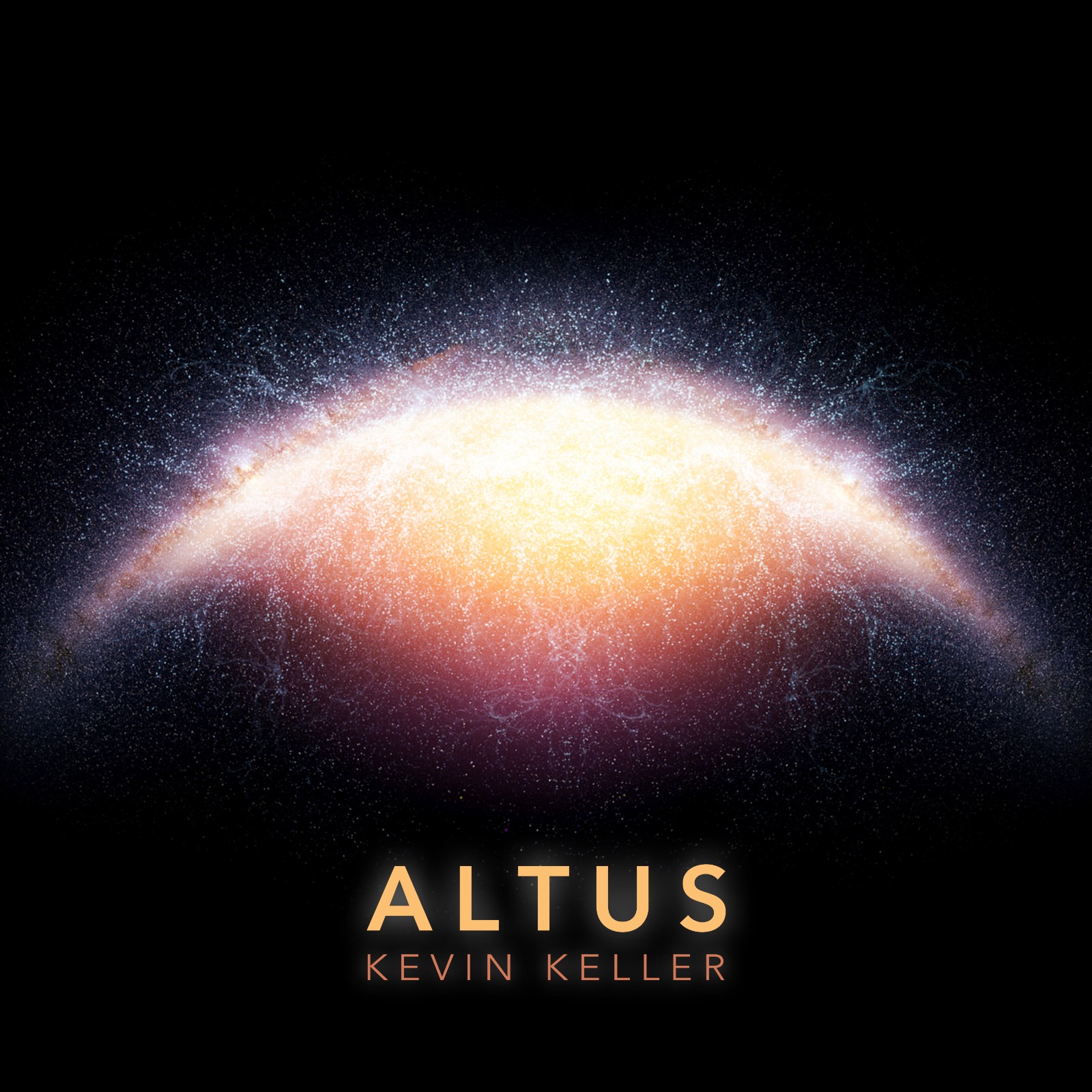
Hello everyone, it’s your host Oliver from DULAXI, and today I’m delighted to be joined by composer and recording artist Kevin Keller, based in New York, United States. With more than three decades of experience exploring ambient, electronic, piano, chamber and cinematic music, Kevin joins us to discuss his 16th full-length album, ALTUS, released on October 30, 2026. Bringing together atmospheric electronics, intimate acoustic instrumentation and experimental sound design, the album offers a deeply contemplative listening experience shaped by questions of recognition, transcendence and belonging. Before we begin our conversation with Kevin Keller, here’s what you need to know about today’s featured project.
About Kevin Keller
With a musical career spanning more than 32 years, Kevin Keller has established himself as a composer whose work explores the relationship between intimate musical expression and expansive sonic environments. Based in New York City, he has developed a distinctive approach often described as ambient chamber music, combining piano, live instrumentation and electronic textures to create compositions that move across ambient, classical, sacred and cinematic territories. Since releasing his first album in 1994, Keller has built an extensive catalogue that includes Evensong, The Front Porch of Heaven, Ice Worlds, La Strada and his previous release, Arcadia, which brought together medieval-inspired plainchant, modern electronics and live strings.
His 16th album, ALTUS, represents another significant point in this ongoing creative exploration. Developed around questions of consciousness, mortality, beauty and transcendence, the ten interconnected compositions gradually unfold as an inward journey through longing, curiosity, mystery, remembrance and a sense of homecoming. Rather than presenting listeners with a fixed narrative or a particular philosophical conclusion, Keller leaves the music open to individual interpretation, allowing each person to approach its themes through their own experiences and beliefs. The album emerged from a series of improvisations rather than a predetermined concept, with its larger artistic direction becoming clearer as the compositions gradually took shape.
A particularly important part of the album’s development was Keller’s renewed exploration of analog synthesis, especially through the distinctive Solar 42 synthesizer. Its tactile and exploratory possibilities became an unexpected catalyst for the writing process, encouraging him to approach improvisation with greater openness. Alongside this instrument, ALTUS brings together familiar elements of his musical vocabulary, including piano, organ, celesta, Moog and Juno synthesizers, as well as voices, chamber-like textures and cinematic rhythms. These sounds create a meeting point between acoustic warmth and electronic experimentation, allowing the compositions to develop naturally without losing the melodic sensibility that has remained central to his work.
The story behind ALTUS also extends beyond the recording process. Shortly after completing the album, Keller travelled to Namibia and listened to the finished compositions in the vast desert landscape surrounding Sossusvlei. Experiencing the music in that environment gave him a different understanding of its scale and meaning, revealing connections between the expansive sounds he had created in his studio and the natural surroundings before him. That experience deepened the album’s central exploration of belonging and recognition, shifting the perspective from searching for something beyond ourselves towards recognising our relationship with something that has always been present.
Having this brief introduction to Kevin Keller and his latest album, I’m sure both new listeners and longtime followers of his work will be interested in hearing more about the ideas and experiences behind ALTUS. So, without further ado, let’s begin today’s interview.
INTERVIEW SESSION
Oliver:
Kevin, you have spent more than three decades developing your identity as a composer, exploring ambient, electronic, piano, chamber, sacred and cinematic music. Looking back to the beginning of your musical journey in 1994, what first drew you towards composition, and how have your personal experiences over the years shaped the way you understand music and its ability to communicate things that words sometimes cannot?
Kevin Keller:
I was drawn to composition because music offered a way to explore things I couldn’t fully express in words. Over the years, my understanding of music has become less about communicating specific ideas and more about creating spaces where people can encounter something within themselves. Music can hold mystery without needing to resolve it, and I think that possibility has become increasingly important to me.
Oliver:
Throughout your career, you have developed a distinctive approach that has been described as ambient chamber music, bringing together intimate piano performances, live instruments and expansive sonic spaces. How did this particular musical identity develop, and were there any defining moments when you began to recognise that combining these different musical elements was becoming your natural way of expressing yourself?
Kevin Keller:
It developed gradually rather than through a conscious decision to establish a particular sound. I’ve always been attracted to the intimacy of acoustic instruments and the sense of limitless space that electronic music can create. Eventually, those worlds began to feel less like contrasting approaches and more like different aspects of the same musical language. I think my identity as a composer emerged through following that intuition rather than trying to define it.
Oliver:
Having released 15 full-length albums before ALTUS, your catalogue includes works such as “Evensong,” “The Front Porch of Heaven,” “Ice Worlds,” “La Strada” and “Arcadia.” Each represents a different point in your creative development. When you look across these releases, what recurring ideas or musical interests do you recognise in your work, and how have your priorities as a composer changed since those earlier projects?
Kevin Keller:
Looking back, I recognise a recurring interest in the relationship between the intimate and the infinite: how a simple melody, a piano phrase or a sustained sound can open onto something much larger than itself. My albums have explored that idea through different musical languages, but the underlying curiosity has remained remarkably consistent. What has changed is my relationship with the creative process. I’m less concerned with inventing something entirely new and more interested in listening carefully enough to discover what the music is asking to become.
Oliver:
Your music has explored several different creative and emotional territories, from the medieval-inspired plainchant and modern electronics of “Arcadia” to the atmospheric and cinematic qualities found throughout your wider catalogue. What influences, musical traditions or personal interests have remained important to you throughout this evolution, and how do you decide when it is time to explore an entirely different creative direction?
Kevin Keller:
I’ve remained interested in music that creates a sense of timelessness, whether that comes through the simplicity of plainchant, the resonance of a piano or the possibilities of electronic sound. I’m also drawn to the natural world and to questions about consciousness, belonging and our place in something larger than ourselves. I don’t generally decide in advance that it’s time to change direction. A new instrument, a musical idea or even a question that I can’t quite answer will often lead me somewhere unexpected.
Oliver:
ALTUS is described as the 16th album in your catalogue, but its central idea is particularly interesting: after more than three decades of composing, you reached a point where making something entirely new became less important than recognising something that had been present all along. What brought you to this realisation, and was there a particular experience or period in your life that helped you understand what this album needed to become?
Kevin Keller:
The album began with questions I was exploring in my journal about consciousness, mortality and the possibility of returning to something universal. The following day, I sat down with my Solar 42 synthesizer and made an unplanned improvisation. There was something about the music that felt strangely familiar, comforting and complete, as though I had discovered something rather than created it. That experience became the starting point for ALTUS, although it took many months for me to recognise the larger album that was gradually emerging.
Oliver:
You describe ALTUS as an album shaped by questions surrounding recognition, transcendence and our relationship with something larger than ourselves. These are deeply personal subjects, yet you have deliberately avoided providing specific answers or imposing a particular belief system on the listener. How did you approach translating such abstract and personal questions into instrumental compositions that could communicate emotionally without relying on words?
Kevin Keller:
I approached the music through feeling, texture, harmony and the movement of sound rather than trying to illustrate particular ideas. I wanted the compositions to create an experience that could be felt before it was intellectually understood. The questions behind the album are personal to me, but I don’t believe the listener needs to share my beliefs or arrive at my conclusions. The music is an invitation to explore, not an explanation of what anyone should find.
Oliver:
One of the most interesting aspects of ALTUS is that it grew from a series of improvisations rather than a predetermined concept. Instead of beginning with a fixed narrative and composing music to illustrate it, you allowed the compositions to develop naturally before recognising the larger idea connecting them. How do you work with improvisation as a composer, and what helps you recognise when individual musical experiments are beginning to form a larger artistic statement?
Kevin Keller:
Improvisation allows me to bypass some of the expectations I bring to composition and discover things I might not have thought to create deliberately. With ALTUS, I began making pieces without knowing whether they belonged to an album at all. As the music accumulated, I started to recognise connections between the pieces and the questions that had originally prompted me to sit down and play. My task then became less about imposing a structure and more about listening for the structure that was already there.
Oliver:
The Solar 42 synthesizer appears to have played an important role in the development of ALTUS, introducing a sound world that was relatively unfamiliar within your established musical vocabulary. What first attracted you to this instrument, and what possibilities did it reveal that encouraged you to approach composition differently from your previous albums?
Kevin Keller:
The Solar 42 offered me a way back into the world of analog synthesis, which had been an important part of my musical life but hadn’t occupied the same place in my more recent work. I was attracted to its tactile, exploratory nature and the way sounds could evolve through interaction rather than simply being selected from a library. It encouraged me to spend more time listening and responding in the moment. In a sense, the instrument became a partner in the improvisations that eventually gave birth to the album.
Oliver:
Alongside the Solar 42, the album brings together familiar instruments such as piano, organ, celesta, Moog and Juno synthesizers, creating a meeting point between acoustic warmth and electronic experimentation. How did you approach combining these different instruments, and what guided your decisions about which sounds should lead, complement or contrast with one another throughout the album?
Kevin Keller:
I approached the instruments according to what each piece needed emotionally rather than following a fixed arrangement formula. Sometimes a piano provides a human, intimate point of reference within a larger electronic landscape; at other times, the synthesizers create an atmosphere that the acoustic instruments can inhabit. I’m interested in the way these sounds can illuminate one another without competing for attention. The goal was to create a coherent world in which every instrument had a reason to be present.
Oliver:
ALTUS unfolds through ten interconnected pieces, gradually moving through feelings of curiosity, mystery, anticipation, remembrance and transcendence. Rather than presenting the album as a collection of unrelated compositions, you have given it the structure of something closer to a pilgrimage. How did you approach the sequencing and development of these pieces, and what made it important for the listener to experience the album as one continuous emotional progression?
Kevin Keller:
Once I began recognising the connections between the pieces, I became interested in how they might form a larger journey. The sequencing developed around shifts in perspective and feeling, with each piece opening a door to the next. I wanted the listener to experience a gradual unfolding rather than simply move from one self-contained composition to another. The album’s journey is ultimately less about reaching a destination than about recognising something that was present from the beginning.
Oliver:
Your description of the album suggests a gradual movement away from the individual self towards something larger, with the music encouraging emotional and perhaps spiritual recognition rather than intellectual understanding. How did you approach this change in perspective through composition, and were there particular musical elements you used to create the feeling of moving beyond familiar surroundings or personal boundaries?
Kevin Keller:
I think of the album as a movement from the individual toward the possibility of a more universal consciousness. Musically, that movement emerges through changes in scale, texture, repetition and the relationship between intimate sounds and expansive sonic spaces. But I wasn’t trying to create a musical representation of a particular spiritual experience. I wanted to explore the feeling of loosening our usual sense of separation and becoming receptive to something we might not yet have the language to describe.
Oliver:
Shortly after completing ALTUS, you travelled to Namibia, where you listened to the finished album in the vast desert landscape around Sossusvlei. You described hearing the music differently in that environment, almost as though the album had been waiting for that landscape to reveal something about itself. What was going through your mind during that experience, and what did the surrounding landscape help you recognise about the music that you had not fully understood while composing it?
Kevin Keller:
Listening to the completed album in the Namibian desert was a remarkable experience. Surrounded by that immense landscape, the music suddenly felt as though it belonged there, as if it had found its natural environment. The vastness of the desert changed my sense of scale, and sounds that had emerged in the intimacy of my studio seemed to open onto something much larger. I began to understand that the album wasn’t simply about searching for something beyond ourselves; it was also about recognising our relationship with something that has always surrounded us.
Oliver:
There is something fascinating about creating a piece of music in one environment and later experiencing it in a completely different setting, only to discover that the new surroundings seem to reveal another dimension of the composition. Did your experience in Namibia change your emotional relationship with any of the ten pieces, or did it simply confirm something about ALTUS that you had already sensed during its creation?
Kevin Keller:
I would say it deepened my relationship with the album rather than fundamentally changing it. While composing, I was exploring these ideas from within my own experience, often in the relatively confined space of my studio. Namibia offered an entirely different perspective, one in which the music seemed connected to the landscape, the sky and the extraordinary sense of space. It confirmed something I had sensed during the creative process but hadn’t fully understood: the music could belong to a world much larger than the circumstances in which it was made.
Oliver:
Your previous album, “Arcadia,” explored medieval-inspired plainchant alongside modern electronics and live strings, while ALTUS moves into a different territory through its combination of analog synthesizers, piano, chamber-like textures, voices and cinematic rhythms. What did you learn from creating “Arcadia” that influenced your approach to ALTUS, and in what ways do you feel the new album represents a continuation of your artistic development rather than a departure from it?
Kevin Keller:
Arcadia reminded me that seemingly different musical traditions can coexist when they serve a shared emotional purpose. Although ALTUS explores a different sound world, I see it as an expansion of the same ongoing inquiry rather than a departure. Both albums bring together contrasting elements in search of a sense of coherence and wonder. With ALTUS, I found myself returning to analog synthesis while drawing on the many other musical languages I’ve developed over the years.
Oliver:
Your work has received longstanding support from influential ambient radio programmes and music communities, helping your compositions reach listeners who appreciate atmospheric, contemplative and cinematic music. Over the years, how has your relationship with this audience developed, and have listener responses ever revealed emotional meanings or interpretations within your compositions that you had not originally considered?
Kevin Keller:
I’ve always appreciated that listeners bring their own experiences to the music. Over the years, people have shared stories about how particular pieces accompanied them through periods of grief, change, reflection or discovery. Those responses remind me that once music leaves the studio, it begins a life of its own. A listener may find something in a composition that I never consciously intended, and I think that’s one of the most beautiful aspects of making music.
Oliver:
Although ALTUS explores deeply personal questions about life, mortality, beauty and transcendence, you have deliberately left its meaning open to individual interpretation. Some listeners might approach it as a spiritual experience, others as a meditation on life’s journey, while some may simply appreciate its musical atmosphere. How important is it to you that listeners bring their own beliefs and experiences to the album rather than feeling that they need to understand one particular message?
Kevin Keller:
It’s essential to me. The questions that inspired ALTUS emerged from my own life, but the answers, if there are answers, belong to each listener. Someone might experience the album spiritually, someone else might find it emotionally moving, and another person might simply enjoy the sounds. All of those responses are equally valid. I would much rather offer listeners a space in which they can discover something for themselves than tell them what the music is supposed to mean.
Oliver:
With more than 30 years of experience and 16 full-length albums behind you, you have reached a point in your career where your established musical vocabulary is extensive. At the same time, the introduction of new instruments and unfamiliar creative possibilities shows that there is still room for discovery. What continues to challenge and excite you as a composer today, and how do you maintain a sense of curiosity after so many years of developing your craft?
Kevin Keller:
The challenge is to remain open to discovery rather than simply repeat what I already know how to do. New instruments can certainly help, but I think the deeper challenge is learning to listen without assuming that I already understand what I’m hearing. ALTUS reminded me that the most meaningful discoveries sometimes come when I stop trying to create something remarkable and allow myself to be surprised. After all these years, that sense of wonder remains one of my greatest motivations.
Oliver:
Looking beyond ALTUS, what creative questions are currently occupying your mind, and are there particular instruments, musical traditions, collaborations or artistic directions you would like to explore in your next chapter? Having spent so much time reflecting on recognition, belonging and transcendence through this album, where do you feel your musical curiosity might lead you next?
Kevin Keller:
I’m interested in continuing to explore the relationship between music, place and our experience of the natural world. My time in Namibia left me with a wealth of impressions that I’m still processing, and I suspect some of those experiences will find their way into future compositions. I’m also drawn to the possibilities of creating music for immersive environments, where sound can become part of a larger experience rather than something we simply listen to. Beyond that, I’m trying not to decide too much in advance. If ALTUS taught me anything, it’s that sometimes the most interesting journey begins when you don’t yet know where you’re going.
“Kevin Keller’s ALTUS is a reminder that artistic discovery does not always come from moving further away from what we know. Sometimes, it comes from looking more closely at the sounds, questions and experiences that have quietly accompanied us all along.”
~ Oliver (DULAXI Team)
EDITORIAL PERSPECTIVE
What stands out about ALTUS is the thoughtfulness behind its development. The interplay between piano, analog synthesis and other instrumental textures gives the ten compositions a sense of continuity without making them feel restricted to a single musical approach. I also find the relationship between the album’s creation and Keller’s experience in Namibia particularly interesting. It offers another dimension to the way we understand music, reminding us that the environment in which we experience a composition can influence what we discover within it.
~ Oliver (DULAXI Team)
CLOSING
Our conversation with Kevin Keller has offered a fascinating insight into the creative thinking, personal questions and musical discoveries behind ALTUS. From the spontaneous improvisations that first inspired the album to the unexpected perspective gained from listening to the completed work in Namibia, it is clear that this project represents an important moment in his continuing development as a composer.
A special thank you to Kevin for taking the time to share his experiences, creative process and thoughts with us. His reflections provide a deeper understanding of the ideas behind the album while leaving plenty of room for listeners to form their own interpretations.
For those yet to experience ALTUS, we encourage you to spend some time with its ten interconnected compositions and discover what they bring to your own listening experience. You can also explore Kevin Keller’s wider catalogue to appreciate the different musical directions he has explored throughout his career.
Thank you for joining us for another DULAXI interview. We appreciate every reader who continues to support our conversations with independent artists, composers and musicians from around the world. Stay connected with DULAXI for more interviews, musical discoveries and stories behind the people creating the music.
Until next time!