
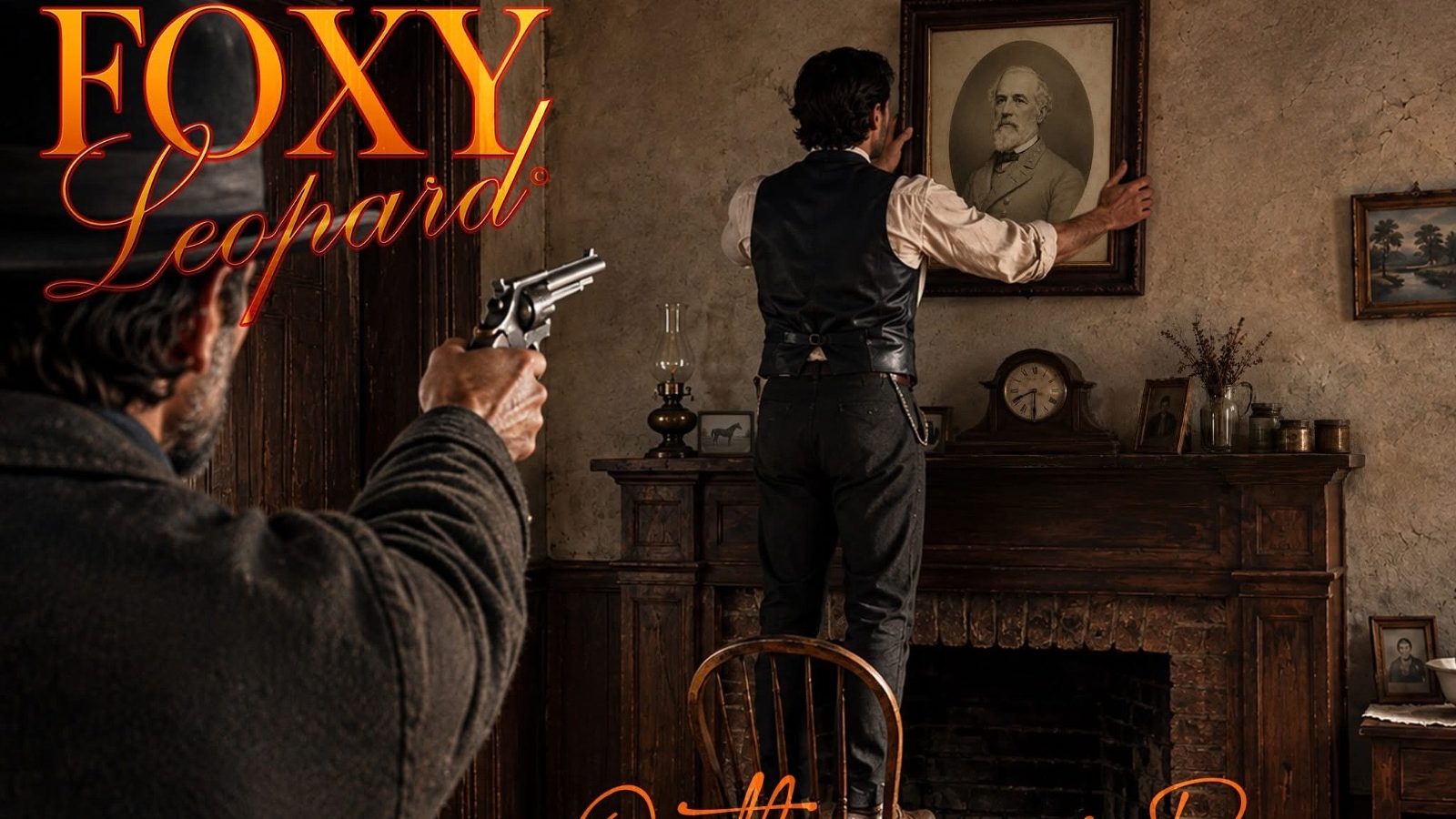
Released on October 18th, 2026, “Outlaws of Peace” finds Foxy Leopard exploring the complicated relationship between war, violence, betrayal, and the struggle to rediscover peace. Drawing inspiration from the aftermath of the American Civil War, the single examines what happens when fighting officially ends but its consequences continue to shape the lives of those who survived it. Rather than concentrating on the battlefield, the song focuses on the psychological and social scars left behind, particularly through the experiences of former Confederate guerrillas Jesse and Frank James. Their stories provide a historical foundation for a composition that questions whether individuals surrounded by violence can ever genuinely return to ordinary life. Through this perspective, Foxy Leopard explores how unresolved conflict and personal circumstances can gradually transform people into figures associated with criminality and fear.
One of the most distinctive aspects of “Outlaws of Peace” is its unusual guitar identity. Foxy Leopardbuilds the composition around an aggressive resonator guitar sound, combining metallic string attacks, haunting slides, deep acoustic resonance, and a growling quality that occasionally approaches the character of an electric guitar. This instrument gives the recording much of its personality, creating a rugged foundation connected to traditional blues, country, and historical folk while establishing an identity of its own. The deliberately stripped-back arrangement allows the guitar’s expressive textures to occupy considerable space. Its rhythmic movement shifts between driving passages and reflective moments, capturing both the restless energy and emotional exhaustion associated with a life spent running. The resulting soundscape feels dusty, dangerous, and cinematic.
The vocal performance further strengthens the song’s storytelling qualities, bringing an intimate and emotionally exposed character to its historical subject. Rather than relying on an overly polished delivery, the singer adopts a rough, expressive approach that complements the raw instrumentation. There is a noticeable sense of weariness and paranoia within the performance, with the vocals moving between controlled storytelling and increasingly distressed moments. As the composition progresses, its emotional intensity becomes more pronounced, eventually reaching visceral screams that communicate the desperation surrounding the characters’ circumstances. These changes give the narrative a human dimension, allowing the listener to experience more than the familiar mythology of notorious outlaws.
Lyrically, “Outlaws of Peace” examines the complicated relationship between personal responsibility and the lasting influence of conflict. The question, “Cowards act and betray. Did war turn them that way?” introduces an important moral consideration, suggesting that the characters may have been profoundly shaped by the violence they experienced. References to train robberies, changing identities, and the substantial “25,000 on a sign” bounty reinforce the dangerous reality of their criminal existence. Particularly haunting is the historical connection between Abraham Lincoln’s assassination in 1865 and Jesse James’s death in 1882, both involving shots from behind. This parallel reinforces the central idea that the consequences of the Civil War continued to influence American history long after its official conclusion.
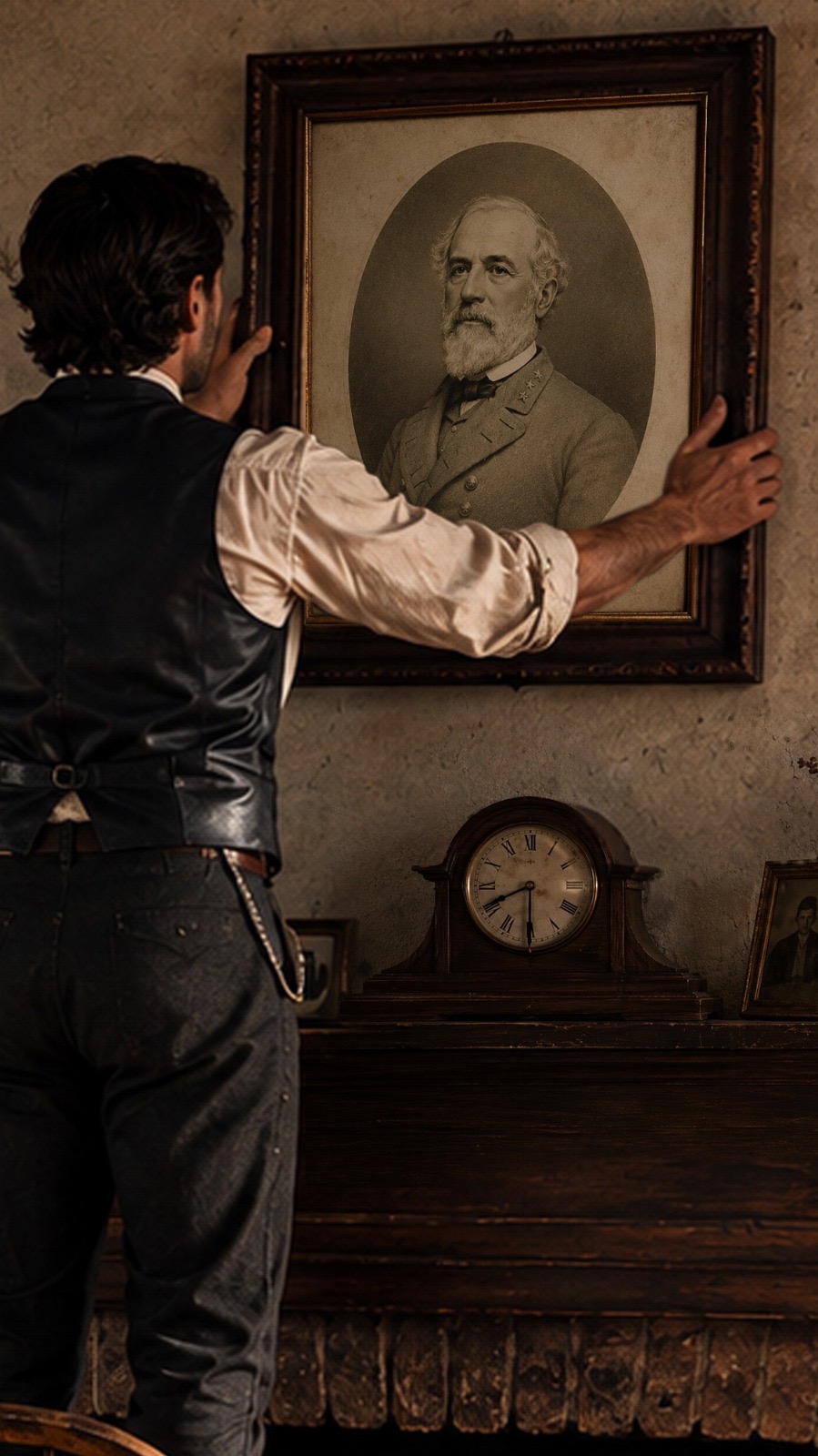
The historical storytelling becomes even more compelling through its exploration of the uneasy relationship between the end of conflict and the beginning of peace. The unsettling imagery of a painting moving on the wall introduces a mysterious dimension to the song’s portrayal of Missouri and its troubled past. Meanwhile, the changing musical intensity reflects the instability of lives shaped by betrayal, uncertainty, and constant pursuit. The contrast between forceful passages and quieter reflective moments allows the composition to communicate both the external dangers and internal struggles experienced by its central figures. Rather than simply celebrating outlaw mythology, Foxy Leopard considers the human experiences behind Jesse and Frank James’s notoriety, connecting nineteenth-century American history with broader questions about violence and identity.

Outlaws of Peace Is A Haunting Alt Country Journey Through War, Betrayal, And Historical Memory, Driven By Raw Guitar Textures And Powerful Storytelling
~ Faithfulness (Dulaxi Team)
Ultimately, “Outlaws of Peace” is an atmospheric exploration of historical memory, personal transformation, and the difficult meaning of peace. Its combination of aggressive resonator guitar, evocative vocals, Western-inspired storytelling, and reflective lyrical themes gives the single a distinctive character. The composition also introduces the wider creative world surrounding Foxy Leopard’s historical concept albums, including After and the forthcoming prequel Before, which examines the gradual divisions that develop within ordinary lives. Based in Quebec, Canada, Foxy Leopard approaches music as an evolving narrative project, combining human storytelling with AI-driven composition. The creator’s background as a 1990s dance club DJ and continuing passion for music have developed into an interest in cinematic alt-country and unconventional sonic identities. With “Outlaws of Peace,” Foxy Leopard demonstrates how distinctive musical textures and historical storytelling can come together to examine the enduring human consequences of violence.
For more information about Foxy Leopard, click on the icons below.