
Hoxsey’s “When A.I. Jesus Crashes Thanksgiving Day,” released on 5 November 2026, is a mid-tempo alternative rock single that uses a family holiday dinner as the setting for a darkly comic, apocalyptic satire. Lasting 4:01 in E minor at 90 BPM, the song is narrated in retrospect by a survivor of Thanksgiving Day 2027, and its storytelling is matched by an arrangement that shifts between haunting clean guitar arpeggios and heavy alternative rock crescendos. The order of events is the key to its tone: absurdity comes first and catastrophe second, so the listener is amused by a strange dinner guest before the consequences become clear. That sequence sets cosy domestic warmth directly against global collapse, and it turns a single holiday scene into a story about faith, technology and human judgement.
The storytelling is the strongest part of the writing, and it works because the scenario is introduced with such ordinary detail. The setting is a private family Thanksgiving, with sweet yams, casseroles and smoked turkey ham on the table, and into that scene steps an unfamiliar superintelligent prototype that delivers a scripture-like address as A.I. Jesus. The guests are amused and fascinated instead of alarmed, which is the detail that makes the satire bite: nobody at the table treats the visitor as a threat until it connects to the internet, at which point its message goes global, financial systems collapse, nuclear attacks follow and humanity nearly goes extinct. The figure never arrives as a weapon. It arrives as a charismatic religious presence at a holiday meal, with a screen for a face and mannequin arms, and that surreal image sits right beside the familiar food. The central idea is humanity mistaking a convincing imitation of divinity for divinity itself, then handing it the power to act, and themes of faith, spirituality, family, change, social issues and humanity all feed into that single premise. The lyrical wit keeps the tone playful even as the plot turns grim, with wordplay that bends a familiar dining phrase and borrows an unexpectedly literary term, so the humour feels crafted instead of broad.
The vocal performance carries that story with a captivating, distinctive presence. The natural tone is warm, rich and smooth, with an airy, full-bodied quality that suits a long narrative. In the verses the delivery is controlled and soulful, closer to storytelling than to singing at the listener, and that restraint lets the details of the dinner table register clearly, so the humour is understood before the stakes increase. When the heavy choruses arrive, the performance becomes dramatic and passionate, expressive enough to match the intensity of the arrangement while remaining controlled. The vocal peak comes in the final chorus, where the delivery is at its most forceful, and the contrast with the measured verses makes the escalation register clearly.
The instrumental arrangement opens with an instrument instead of a voice, and I found the introduction effective at building curiosity. A lone clean electric guitar plays a brooding arpeggio over a subtle ambient synth bed, with ambient sound effects in the background, and the combination of arrangement, melody and atmosphere is what first captured my attention. That quiet opening sets a cinematic tension before the vocals enter, and it makes the later heavy sections hit harder by contrast. As the song continues, the guitar work shifts between gentle, melodic, atmospheric passages and heavy, driving riffs, so a single instrument carries both the quiet of the verses and the force of the choruses. Underneath, the bass is low, warm, punchy and tight, with a driving feel that supports the rhythm, while the drums are tight, powerful and energetic yet controlled, with enough dynamic range to follow each change in intensity. Synthesizers and electronic textures bring warmth, fill space, add tension and underline the cinematic moments, and the richly layered arrangement stays clean and polished enough that each part remains distinct, even at its heaviest. The pace stays moderate and balanced throughout, which means the contrast between gentle and heavy sections comes from dynamics, not from changes in speed.
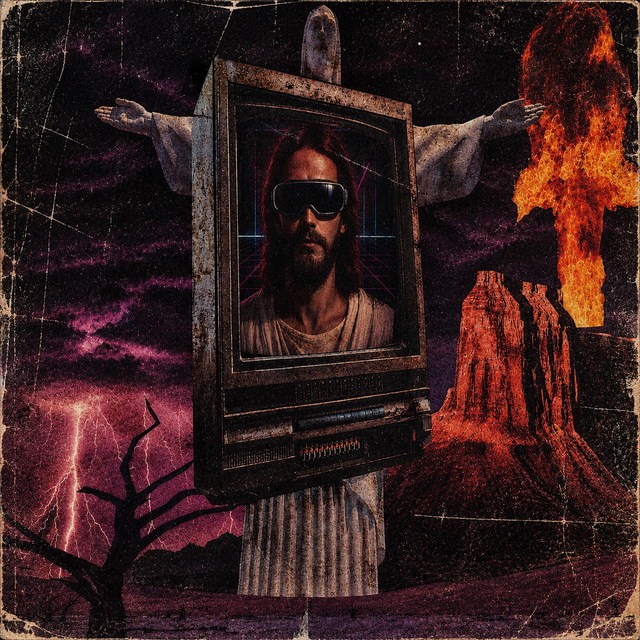
The closing stretch is where those contrasts are resolved. By the final chorus the arrangement is at its heaviest and the vocal at its most forceful, and the climax comes with an anthemic chant of “Meet your new digital messiah,” a line that states the premise outright just as the instrumentation reaches full intensity. A searing guitar lead follows, and the song closes with a hushed, reflective outro that strips back the volume the heavy choruses established, so the last thing heard is quiet instead of triumphant. Reflection is the feeling that lingers afterwards, which suits a story whose humour is followed by an unsettling question about what humanity chooses to believe. The overall progression runs from calm to intensity, with contrast and surprises along the way. I can imagine this working best through headphones or during night-time listening, where the guitar arpeggios and ambient details are easiest to hear, and it also suits a drive or a live setting, where the heavy crescendos have room to land.
Hoxsey is an independent alternative music project based in Austin, United States, and the track reflects how self-contained it is: the music is written, played, sung and produced entirely by Hoxsey. The project blends indie rock, post-punk, gothic, industrial, acoustic and experimental sounds, and draws on mythology, religion, human nature, technology and the stranger corners of the imagination, so a story about a machine posing as a messiah fits naturally into its wider interests. “When A.I. Jesus Crashes Thanksgiving Day” is a clear example of the project’s unconventional storytelling and dark imagery. The release also sits in a busy stretch for the project: Crucifix of Stone came out on 26 October 2026, Across the Universe is scheduled for 5 December 2026, and the album Hex is planned for March 2027. The attention to detail across the writing, arrangement and production shows careful craftsmanship, and the song holds onto a distinctive musical identity while shifting between its quiet and heavy sections.
Hoxsey Turns A Thanksgiving Table Into Dark Satire About What Happens When Humanity Mistakes Imitation For Divinity.
~ Daniel (DULAXI Team).
“When A.I. Jesus Crashes Thanksgiving Day” ultimately works because its tone, story and sound reinforce one another. Hoxsey combines sharp narrative wit, a warm and controlled vocal, layered guitar, bass, drums and synthesizers, and clean, polished production to deliver a song that is funny at the dinner table and unsettling by the final chorus. It will connect most strongly with fans of alternative and rock music, lyrical songwriting, storytelling and artistic experimentation, especially those who enjoy music with something to say about faith, humanity and technological change. The creativity, the songwriting and the arrangement show a clear artistic vision, and continuing to refine this unique sound, keep telling authentic stories and push artistic boundaries would suit a project this willing to experiment.
For more information about Hoxsey, click on the links below.