
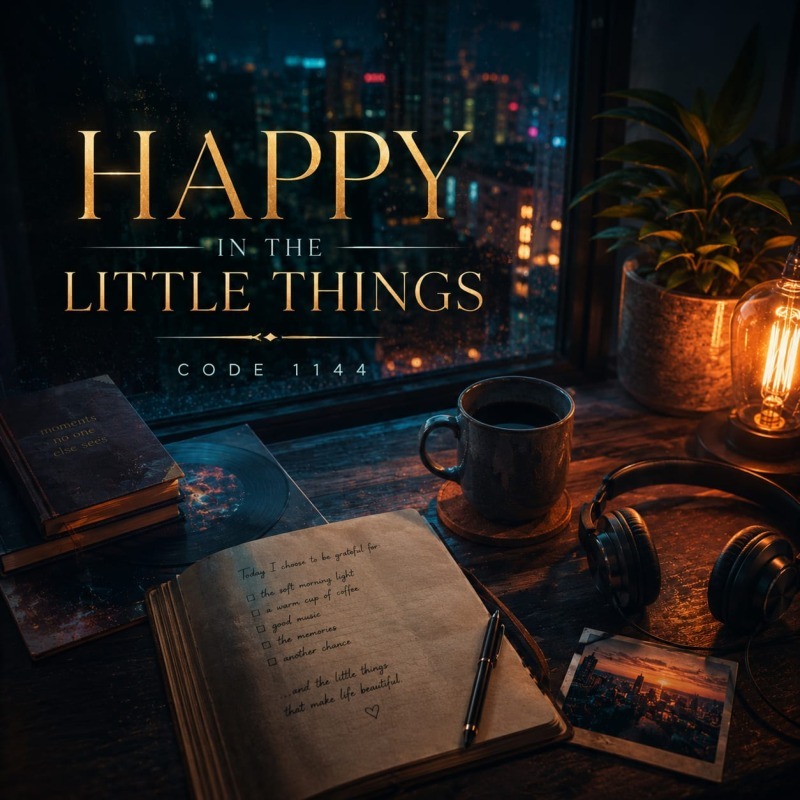
Hello everyone, it’s your host Oliver from DULAXI, and today I’m delighted to be joined by Jellson Kumpil, the independent artist behind CODE 1144, a Melbourne-based music project exploring emotional honesty, memory, and the human experience through alternative pop and contemporary production. Released on 4 September 2026, “Happy In The Little Things” reflects on the everyday experiences that can bring genuine happiness, reminding us that meaningful moments do not always arrive through major achievements or dramatic changes. Drawing on personal experiences, musical influences, and an interest in the relationship between technology and human emotion, Jellson has created a release that invites listeners to appreciate the people, memories, and small acts of kindness that shape their lives.
Before we begin our conversation with Jellson Kumpil, here’s what you need to know about today’s featured project.
About CODE 1144
CODE 1144 is the independent music project of Jellson Kumpil, an artist originally from North Borneo who now lives and works in Melbourne, Australia. His approach to music centres on emotion, memory, identity, and the experiences that connect people, often exploring feelings that can be difficult to express through ordinary conversation. Rather than restricting the project to a single genre or musical formula, Jellson wants CODE 1144 to develop an identity defined by the emotions its music leaves behind. His background as a guitarist and bassist, songwriter, and live performer has exposed him to different musical environments, from mainstream and indie music to underground death metal, helping shape his understanding of melody, lyrical expression, and the relationship between musical arrangements and human feeling.
Released on 4 September 2026, “Happy In The Little Things” brings these interests together through a reflection on the happiness that can exist within everyday life. The single challenges the assumption that fulfilment must come from extraordinary achievements, encouraging listeners to recognise the value of familiar voices, shared laughter, quiet mornings, meaningful conversations, and moments of connection that might otherwise pass unnoticed. Its central idea is not that life is always easy or that people should ignore their difficulties. Instead, the song considers how small experiences can provide comfort and meaning even when life remains complicated. By keeping its message accessible while allowing listeners to connect it to their own memories, the release offers a personal perspective without demanding that everyone interpret it in the same way.
The song’s musical direction draws inspiration from the uplifting reflection and memorable melodies associated with artists such as Coldplay and Hozier, while incorporating contemporary alternative pop and atmospheric production. Created remotely using Suno’s AI music-generation platform, the release reflects Jellson’s independent creative direction across its concept, lyrics, vocal direction, arrangement, and production decisions. His approach to this process involves more than exploring technological possibilities. He places particular importance on deciding which sounds support the intended emotion, how lyrics and melodies work together, and when restraint can communicate more effectively than additional layers. The result brings a contemporary production approach into conversation with a deeply human subject, preserving the song’s central focus on ordinary experiences and genuine emotional connection.
Looking beyond this release, Jellson hopes to continue exploring memory, loss, identity, connection, and the passage of time through CODE 1144. He is interested in developing music that can move between intimate, vulnerable expressions and darker, more cinematic sounds without losing its underlying purpose. Rather than following a fixed formula, he wants each release to establish its own musical identity while contributing to a wider body of work about what it means to be human. With “Happy In The Little Things,” that exploration begins with a simple but meaningful reminder: the moments that shape our lives are not always the ones we recognise as important while they are happening.
Having this introduction to CODE 1144 and the personal experiences behind “Happy In The Little Things,” we can now explore the ideas, memories, and creative decisions that shaped the release directly with Jellson. So, without further ado, let’s begin today’s interview.
INTERVIEW SESSION
Oliver:
CODE 1144 is presented as a solo creative project built around emotional honesty, accessibility and personal resonance. How would you describe your artistic identity, and what initially led you towards creating music under this project?
CODE 1144:
I would describe CODE 1144 as a music project built on emotion, memory, and the human experience. For me, music is more than just a melody or a sound. It is a way of expressing the things we sometimes struggle to say out loud the feelings we carry, the memories that stay with us, and the moments that quietly change who we are. My name is Jellson Kumpil, and my journey has shaped the way I see life and music. I was born in North Borneo and now live and work in Melbourne, Australia. Moving through different chapters of life has taught me that everyone carries a story, even when the world cannot see it. Sometimes, the people who seem the strongest are carrying the heaviest emotions behind a quiet smile. That understanding became part of the inspiration behind CODE 1144. I wanted to create music that people could connect with in their own way music that doesn’t tell you what to feel, but gives you space to feel something for yourself. One of the ideas closest to my heart is that happiness doesn’t always come from achieving something extraordinary. Sometimes, it is found in the little things we overlook, a moment of peace, a memory of someone we love, or simply waking up and having another chance to begin again. That feeling became part of the inspiration for Happy in the Little Things. As a solo creative project, CODE 1144 also gives me the freedom to explore different sounds, emotions, and musical worlds. I can move between vulnerability and strength, darkness and hope, or something deeply personal and something that feels almost futuristic. I’m interested in how technology and artificial voices can carry very human emotions. Ultimately, I don’t want CODE 1144 to be defined by one genre or one sound. I want it to be recognised by the feeling it leaves behind. If someone listens to my music and feels understood, remembers someone important, or finds a little hope during a difficult time, then I believe the music has done something meaningful. That is what I want CODE 1144 to stand for.
Oliver:
“Happy In The Little Things” begins with a simple but powerful idea: happiness does not always come from major achievements or dramatic changes. What personal experiences or observations first made you want to explore this idea through a song?
CODE 1144:
One experience that really stayed with me happened before COVID, when I had first arrived in Australia. I had an elderly neighbour named Miriam. She was probably in her eighties, perhaps even her nineties. My mates and I would make her a cup of tea every morning and take it to her. We’d sit with her for a little while, have a brief chat, and later, before the day ended, one of us would collect the cup. It was such a simple routine that we never really thought much about it. We were just making her tea and spending a few minutes with her. But looking back, I wonder if those little moments meant much more to her than we ever realised. Her relatives lived far away, and I don’t think she had many people who could visit her regularly. That little cup of tea and a short conversation might have been one of the moments she looked forward to each day. Then COVID came, and Miriam was moved into an aged-care home. We didn’t visit her as often as we should have, and that is something I still remember. The last time I visited her, she asked my mate to take a photograph using her phone. She wanted a picture with me standing beside her bed while she lay there. Even though she was struggling, she smiled for that photograph. What I remember most is what happened when my mate handed her phone back. She looked at that picture and seemed so happy and proud. It was such a small thing just a photograph with someone standing beside her but you could see how much it meant to her. The next day, we heard that Miriam had passed away. That memory has stayed with me. I often think about how we can spend our lives chasing bigger things, believing that happiness must come from something extraordinary, while overlooking the little things we do for one another. We never truly know how much a few minutes of our time, a cup of tea, a conversation, or a simple photograph might mean to someone else. We thought we were just making tea for our neighbour. We didn’t realise that those ordinary moments might have been some of the happiest parts of her day. And that is one of the feelings behind Happy In The Little Things. Sometimes, we only understand the value of a moment after it has become a memory. And sometimes, the smallest things we do for someone become the biggest things they carry in their hearts. I think that is something we should all remember. We don’t always need to do something extraordinary to make a difference in someone’s life. Sometimes, we just need to show up, share a little of our time, and make someone feel that they matter. Because one day, those little moments may be all that remain. And we may never know how much they meant until we can no longer create them.
Oliver:
In a culture that often places so much emphasis on achievement, progress and having something bigger or better, why do you think it can be difficult for people to recognise the value of ordinary moments?
CODE 1144:
I think we live in a world where we are constantly encouraged to want more. We want to achieve more, earn more, become more successful, and keep moving towards the next thing. There is nothing wrong with having ambitions or wanting a better life, but sometimes, in the process of chasing something bigger, we forget to appreciate the things that are already part of our lives. I think the difficulty is that ordinary moments don’t always feel important while they are happening. A cup of tea, a short conversation, a smile, or a few minutes spent with someone might seem insignificant because we experience these things so often. We assume there will always be another opportunity. I understood this differently after knowing my elderly neighbour, Miriam. At the time, my mates and I thought we were simply bringing her tea and having a little chat. We didn’t realise how much those small moments might have meant to her until we looked back on them. That experience taught me that something doesn’t have to be extraordinary to be meaningful. I think that is what Happy In The Little Things represents to me. It is a reminder that happiness isn’t always about reaching a destination or having everything we want. Sometimes, it is already there in the people around us, the time we share, and the little moments we barely notice until they become memories. For me, the song isn’t about telling people to stop dreaming or wanting more from life. It’s about reminding ourselves not to miss the beauty of the present while we’re busy chasing the future. Because sometimes, we spend so much time waiting for something big to make us happy that we fail to recognise the little things that were making us happy all along. And perhaps the most important thing is that we never really know how much a small act of kindness means to another person. We might forget it by the next day, while they might carry that moment in their heart for the rest of their life. That is the feeling I wanted to capture in this song the idea that happiness doesn’t always arrive as a major event. Sometimes, it comes quietly, through the simplest things, and we need to learn to recognise it while it is still here.
Oliver:
The song highlights familiar voices, quiet mornings, laughter, connection and simply being present. Were there particular everyday moments that helped shape the emotional world of the song?
CODE 1144:
I think the song comes from something we can all relate to, how the smallest moments in life can sometimes mean the most. I remember the story of Miriam, who had friends bringing her a cup of tea each morning and spending time chatting with her. It was such a simple gesture, but there was something beautiful about it. It reminded me that sometimes, just being there for someone can mean more than we realise. That feeling stayed with me. We can get so caught up in life that we forget to appreciate the familiar voices, the laughter, the quiet mornings, and the people who make an ordinary day feel special. With Happy in the Little Things, I wanted to capture that feeling through both the lyrics and the melody. Not by telling people what happiness should look like, but by reminding them to notice the little moments that are already there. Because sometimes, we don’t realise how precious a moment is until we look back on it.
Oliver:
Your stated aim was to create something listeners could see themselves in. When writing the lyrics and developing the song’s message, how did you balance making the story personal to you while keeping it open enough for listeners to connect their own experiences to it?
CODE 1144:
I think the key was to be honest about the feeling behind the song without making the lyrics too specific to my own life. I wanted to capture something real, but leave enough space for listeners to bring their own memories and experiences into it. The little things we share can look different for everyone. A familiar voice, a conversation over a cup of tea, a moment of laughter, or simply having someone beside you can carry a meaning that words don’t always explain. I didn’t want to tell listeners what those moments should mean to them. I wanted to give them a chance to recognise what they mean in their own lives. That also guided the melody. I wanted it to feel warm and natural, allowing the emotion to come through without overcomplicating it. Sometimes, a song doesn’t need to explain everything. It just needs to make you feel something you already understand deep down. For me, that’s what Happy in the Little Things is about. It began with a feeling I wanted to express, but I hope that when people hear it, they don’t just hear my meaning. They remember someone, revisit a moment, or appreciate something in their own lives that they might have taken for granted. That’s when the song becomes more than my story.
Oliver:
You draw inspiration from artists such as Coldplay and Hozier, particularly their ability to create emotional impact through simplicity, warmth and memorable melodies. What have you learned from those qualities, and how have they influenced your own songwriting?
CODE 1144:
What I admire about Coldplay and Hozier is that they understand how powerful simplicity can be. Their music can feel intimate and deeply emotional, yet there’s something in the melody or the way a song builds that stays with you long after you’ve finished listening. That has taught me to think beyond the arrangement and focus on what a song actually makes someone feel. A beautiful melody matters, but so does knowing when to leave space, when to hold back, and when to let an emotion speak for itself. Sometimes, adding more doesn’t make a song more powerful. Sometimes, it’s what you choose not to add that makes the feeling stronger. With Happy in the Little Things, I wanted that sense of warmth and familiarity. I wanted the song to feel approachable, but still carry an emotion that people could return to and discover something new in as their own lives change. I respect what those artists have achieved, but I don’t want to recreate their sound. Their influence reminds me to keep searching for the most honest expression of an idea and to trust a melody when it says something words alone cannot. That’s what I’m working towards with CODE 1144, music that doesn’t have to demand your attention to earn a place in your memory.
Oliver:
The production combines alternative pop with atmospheric elements and a more cinematic sense of scale. What attracted you to that combination, and how did you decide how much atmosphere the song needed without allowing it to overshadow its central message?
CODE 1144:
What attracted me to that combination was the contrast between intimacy and scale. I love the idea of a song feeling close and personal, while the music creates a wider emotional space around it. Alternative pop gives the song a familiar foundation, and the atmospheric elements allow the feeling to unfold in a more cinematic way. With Happy in the Little Things, the message is deliberately grounded in everyday life. I didn’t want the production to make that simplicity feel less genuine. The music needed to add emotional depth while preserving the warmth of the melody and the meaning behind the lyrics. For me, the key was knowing that atmosphere isn’t valuable just because it sounds beautiful. It has to serve a purpose. Every element should help communicate the emotion, support the vocal or give the song room to breathe. If something draws attention away from what the song is trying to say, then it can become a distraction rather than an addition. Ultimately, I wanted the production to make listeners feel as though they’re stepping into the emotional world of the song, without losing sight of the simple human moments at its centre. The sound can be cinematic, but the feeling should remain personal.
Oliver:
You describe the production as revealing new details with repeated listens. Were there particular textures, layers or arrangement choices that you deliberately used to give the track more depth beneath its immediate, accessible quality?
CODE 1144:
I think my background as a musician has shaped the way I hear music. I’ve played guitar and bass across different worlds, from mainstream and indie music to underground death metal. I’ve written lyrics, developed melodies and performed live, and those experiences taught me that a song can communicate on different levels without losing its connection with the listener. What I’ve always appreciated is the balance between what you feel immediately and what you discover over time. A melody might draw you in first, but the emotion behind the words, the way the music develops, or the memories a song brings back can give it a different meaning with every listen. With Happy in the Little Things, I wanted to keep that initial connection simple and accessible while allowing the song’s emotional meaning to stay with the listener. I didn’t want complexity for its own sake. I wanted the music to serve the feeling rather than distract from it. For me, a song has real depth when it doesn’t need to reveal everything at once. You can return to it months or years later, hear it from a different place in your life, and discover that it means something new to you. That’s the kind of lasting connection I hope this song can create.
Oliver:
You shaped the concept, lyrics, vocal direction, arrangement and overall musical identity yourself. How important was it for you to maintain creative control across all of those elements, and did that responsibility change the way you approached the song?
CODE 1144:
Creative control has always mattered to me because I’ve experienced music from different sides. I’ve played guitar and bass, written lyrics, developed melodies and performed live, moving between mainstream music and underground death metal. Those experiences taught me that every part of a song contributes to how its emotion reaches the listener. With Happy in the Little Things, I wanted to carry that understanding into the entire creative process. From the original concept and lyrics to the vocal direction, arrangement and overall sound, I wanted each decision to support the same central feeling. I wasn’t just trying to make a song that sounded good, I wanted the music and the message to belong together. That responsibility also taught me the importance of restraint. Having the freedom to experiment doesn’t mean every idea needs to stay. Sometimes, the better decision is to simplify something, leave more space, or recognise that an element is distracting from what really matters. Working with AI-assisted music tools gives me another way to explore ideas and shape a sound, but the creative direction still needs intention. The technology can help me explore possibilities. Deciding what belongs in the song and what doesn’t is part of my responsibility as its creator. Ultimately, creative control allowed me to protect the heart of Happy in the Little Things throughout the process. I wanted every choice to lead back to the same idea, appreciating the small, human moments that can mean more to us than we realise.
Oliver:
The track was created remotely using Suno’s AI music-generation platform, while the creative direction, songwriting, arrangement and production decisions were developed independently by you. How do you view AI within your creative process, and where do you feel your own artistic judgement matters most?
CODE 1144:
I see AI as a way to explore musical possibilities, but what matters to me is what I choose to do with those possibilities. My relationship with music began long before CODE 1144. I’ve played guitar and bass, written lyrics, developed melodies and performed live across different genres, from mainstream music to underground death metal. That experience shaped my instincts as a musician and the way I understand emotion in a song. Working with Suno gives me a different way to explore those instincts. I can experiment with sounds, vocal approaches and arrangements, but the challenge is knowing which ideas genuinely serve the song and which ones simply sound impressive. Not every result fits the original intention, and being willing to reject an idea is just as important as discovering one that works. With Happy in the Little Things, I wanted to preserve a particular emotional quality, warmth, sincerity and an appreciation for ordinary human moments. My artistic judgement mattered most in keeping that intention consistent throughout the creative process, so the sound supported the message rather than distracting from it. I don’t think creativity is defined by the tools you use alone. It’s also defined by your perspective, your decisions and what you’re trying to communicate. AI has become part of how I make music, but my responsibility is to give the work direction, meaning and an identity that feels true to what I want to express. Ultimately, I want people to connect with the song itself. They don’t need to know every step of how it was created to feel something real when they hear it.
Oliver:
When working with an AI music-generation tool, how do you decide which ideas or musical elements fit your original vision and which need to be changed, developed or rejected?
CODE 1144:
For me, it starts with understanding what I want the song to express, but the lyrics themselves are a big part of how that vision develops. I’ve always felt that words and melody have a natural relationship. It’s not just about what a word means, it’s also about how it sounds, how its syllables flow, where the emphasis falls, and how it feels when you sing it. Different words can lead you towards different melodic possibilities, and different languages bring their own rhythms and sounds. Sometimes, a very simple word can carry an incredible amount of emotion when it meets the right note or falls into the right melodic phrase. You don’t always need more words to say something meaningful. Sometimes, the simplest expression is the most powerful. When I work with Suno, I listen for that connection. Does the melody feel natural with the lyrics? Does the vocal phrasing express the emotion I intended? Does the arrangement give those words room to breathe? An idea might sound impressive on its own, but if it doesn’t feel right with the song, I need to be willing to change it, develop it or let it go. With Happy in the Little Things, I wanted the words, melody and production to work together to express something honest and familiar. The technology gives me possibilities to explore, but my responsibility is to recognise which possibilities bring the original idea to life. Ultimately, I believe a song becomes meaningful when the words and music feel as though they belong to each other. When that happens, even the simplest phrase can stay with someone long after the music has stopped.
Oliver:
You have described the recording process as being almost like capturing a collection of small moments, with each layer carefully added so that nothing overwhelms the central message. How did that mindset influence your arrangement and production decisions?
CODE 1144:
I approached the arrangement with the idea that every element should have a purpose. I didn’t want to add layers simply to make the song bigger. I wanted each element to contribute to the emotion while leaving enough space for the lyrics and melody to connect with the listener. My background in playing guitar and bass, writing lyrics and developing melodies has taught me that sometimes, the smallest musical decisions can have the greatest impact. The way a word flows into a melody, the space between phrases, or the way different sounds complement each other can change how a listener experiences a song. Sometimes, knowing what to leave out is just as important as knowing what to include. With Happy in the Little Things, I wanted the arrangement to preserve the warmth and simplicity of the message while allowing the emotion to develop naturally. The production needed to add depth and atmosphere without making the song feel overcomplicated or taking attention away from what the lyrics were expressing. Ultimately, I wanted the music to reflect the meaning of the song itself. Not everything needs to be grand to be meaningful. Sometimes, one small detail can make all the difference.
Oliver:
There is an interesting contrast between the song’s very human subject matter and its contemporary production approach. How important was it to preserve warmth and emotional authenticity while using modern production technology?
CODE 1144:
For me, warmth and emotional authenticity were never things I wanted to compromise. Technology can open up new creative possibilities, but the challenge is making sure the song still feels human at its core. Having played guitar and bass, performed live, and written lyrics and melodies, I’ve learned that what makes music connect with people isn’t necessarily its complexity. It’s the emotion behind the words, the way a melody carries them, and the feeling a listener takes away. I see modern AI-assisted tools as part of my creative process, not a substitute for artistic judgement. They allow me to explore possibilities, but I still have to decide what serves the song, what feels right, and what doesn’t belong. With Happy in the Little Things, I wanted the contemporary production to support the message rather than overshadow it. The song is about finding meaning in ordinary moments, so the music needed to preserve that sense of warmth, sincerity, and connection. For me, technology can shape how a song sounds, but it is the emotion behind it that gives the song meaning.
Oliver:
Your music focuses on genuine emotion rather than perfection. What does “emotional authenticity” mean to you as an independent artist, and how do you recognise when a song feels emotionally honest?
CODE 1144:
To me, emotional authenticity means that a song has to feel true before it can mean something to someone else. It doesn’t have to be perfect, and it doesn’t have to express everything directly. Sometimes, the most powerful emotions are found in the simplest words or in the things we struggle to say. My background in writing lyrics, developing melodies, and performing live has shaped how I approach music. I’ve learned that words and melody are inseparable. The sound of a word, its rhythm, and the way it sits within a melody can completely change how a feeling comes across. I pay attention to those details because I want the music to express something genuine, not just sound impressive. I recognise when a song feels emotionally honest when its lyrics, melody, and overall atmosphere feel connected, rather than as though they’re trying too hard to create an emotion. If something feels forced, I know I need to reconsider it. With Happy in the Little Things, I wanted to capture the kind of happiness we can easily overlook in everyday life, the small moments, familiar connections, and simple experiences that often mean more to us than we realise. For me, a song doesn’t need to be perfect to be meaningful. It needs to make you feel something you recognise as true. And if someone hears my music and finds a piece of their own life in it, then that connection is worth more to me than perfection.
Oliver:
The message of “Happy In The Little Things” is positive without suggesting that life is always simple or easy. How did you approach creating something uplifting while still leaving room for the complexity of real life?
CODE 1144:
I think there’s a difference between pretending life is always good and learning to recognise the good that still exists, even when life is difficult. That’s the feeling I wanted to capture with Happy in the Little Things. I didn’t want to create a song that tells people to be happy regardless of what they’re going through. Everyone has their own struggles, and sometimes life can be genuinely difficult. But I believe those experiences don’t take away the value of the small moments that bring us comfort, connection, or happiness. As someone who has spent years writing lyrics, developing melodies, and performing music, I’ve learned that a simple idea can carry a lot of emotional depth. You don’t always need to make a message complicated to make it meaningful. Sometimes, the challenge is expressing something positive without making it feel superficial. With this song, I wanted the warmth of the music to reflect the message, while leaving listeners room to connect it to their own lives. The happiness isn’t about having everything figured out or living a perfect life. It’s about recognising the moments that matter, even when everything else isn’t perfect. For me, the little things aren’t important because life is easy, they’re important because life isn’t always easy, and those moments can mean more than we realise.
Oliver:
The song is designed to connect quickly while rewarding repeated listens. When you imagine someone hearing it for the first time, what do you hope they feel immediately, and what would you like them to discover after spending more time with it?
CODE 1144:
On the first listen, I hope Happy in the Little Things gives people a feeling of warmth and reminds them that happiness doesn’t always have to come from something extraordinary. Sometimes, it’s found in a familiar voice, a shared laugh, or simply being present with someone who matters to you. With repeated listens, I’d love for people to connect with the song on a more personal level. A lyric or a melody might bring back a memory, remind them of someone important, or make them appreciate a moment they once took for granted. As a songwriter, I believe the words and melody work together to create that connection. Sometimes, a simple phrase can carry a deeper meaning depending on the experiences the listener brings to it. That’s what I find beautiful about music, the artist creates the song, but every listener brings their own story to it. Ultimately, I hope people enjoy the song immediately, but remember what it made them feel long after it ends. If it helps someone recognise the value of a small moment in their own life, then the song has done something meaningful.
Oliver:
Your memorable line says, “Happy isn’t always found in the big moments. Sometimes, it’s hiding in the little things we almost overlook.” How has that idea affected the way you personally think about happiness or creativity since making the song?
CODE 1144:
Making Happy in the Little Things has reinforced something I think we can easily forget, sometimes, we’re so focused on what we want to achieve next that we overlook the value of what’s already in front of us. We can spend so much time waiting for the big moments that we fail to appreciate the small ones while they’re happening. That idea has also influenced how I think about creativity. My background in playing guitar and bass, performing live, and writing lyrics and melodies has taught me that something doesn’t have to be complicated to have a powerful impact. Sometimes, a simple phrase or a melody that feels just right can communicate more than something elaborate. I’ve always been interested in how the sound and rhythm of words work with a melody to bring an emotion to life. Creating this song reminded me that my role as a songwriter isn’t necessarily to make every idea bigger or more impressive, it’s to recognise what matters, find an honest way to express it, and leave room for people to connect with it through their own experiences. I think that applies to life as much as it does to music. Happiness doesn’t mean everything is perfect, and appreciating the little things doesn’t mean ignoring life’s difficulties. It means recognising that even when life is complicated, there can still be moments worth holding on to. Ultimately, the song has strengthened my belief that meaningful things aren’t always the loudest or most obvious. Sometimes, they’re the things we almost overlook and learning to recognise them can change the way we experience both life and creativity.
Oliver:
Looking ahead, what would you like to explore next as CODE 1144? Are there particular emotions, stories, sounds or creative ideas you would like to develop in your future releases?
CODE 1144:
Looking ahead, I want CODE 1144 to continue exploring the parts of being human that we don’t always know how to express in words. I’m drawn to stories about memory, loss, connection, identity, and the passage of time, things that can affect us deeply, even when we don’t talk about them. Musically, I want to keep pushing the boundaries between emotional songwriting and immersive, contemporary production. My background in playing guitar and bass, performing live, and writing lyrics and melodies has shaped the way I approach music. I’m fascinated by how the sound of a word, the movement of a melody, or the atmosphere surrounding a voice can communicate a feeling beyond the literal meaning of the lyrics. I don’t want CODE 1144 to be confined to one sound or formula. Each song should have the freedom to find its own musical identity, whether that means something intimate and vulnerable or darker, more cinematic, and intense. What connects the music isn’t necessarily the genre, it’s the intention behind it. Ultimately, I want to create songs that people can return to at different stages of their lives and discover something new in. I want the music to entertain, but also to make people pause, reflect, and perhaps recognise something in themselves that they hadn’t quite found the words for before. For me, the future of CODE 1144 is about continuing to evolve without losing that purpose. I’m not just interested in making another song, I’m interested in building a body of work that explores what it means to be human. One story at a time.
“Sometimes, the most meaningful stories in music begin with moments we might otherwise forget. Through CODE 1144, Jellson Kumpil reminds us that a cup of tea, a shared conversation, or a photograph can hold a lifetime of meaning. His story invites us to consider not only what we hope to achieve, but also whom we make time for along the way.”
~ Oliver (DULAXI Team)
EDITORIAL PERSPECTIVE
What makes “Happy In The Little Things” particularly interesting is the personal experience behind its message and the questions it raises about how music is created. Jellson’s story about Miriam gives the song’s central idea a human context, while his approach to AI-assisted production highlights the role of intention and artistic judgement in shaping a release. His reflections on restraint, lyrical expression, and emotional honesty also reveal a creator interested in how listeners bring their own memories to a song. It is a thoughtful perspective on both everyday kindness and the evolving relationship between music and technology.
~ Oliver (DULAXI Team)
CLOSING
A sincere thank you to Jellson Kumpil for joining us at DULAXI and sharing the personal experiences, creative decisions, and musical ideas behind CODE 1144 and “Happy In The Little Things.” His recollections of Miriam offer a meaningful reminder that the simplest gestures can leave lasting impressions, sometimes becoming memories we carry far longer than we ever expected. Our conversation also provided an opportunity to explore how personal songwriting can work alongside contemporary AI-assisted production without losing sight of the emotion at the heart of a song.
We encourage readers to experience “Happy In The Little Things” and reflect on the everyday moments that bring meaning to their own lives. Whether it is a conversation with a friend, time spent with family, a familiar voice, or a small act of kindness, there is value in recognising these experiences while we still have the opportunity to share them.
Thank you for spending time with DULAXI and joining Oliver for this conversation with CODE 1144. We look forward to bringing you more interviews that explore the people, stories, and creative ideas behind today’s music. Until next time, keep listening, keep discovering, and remember to make room for the little things.