
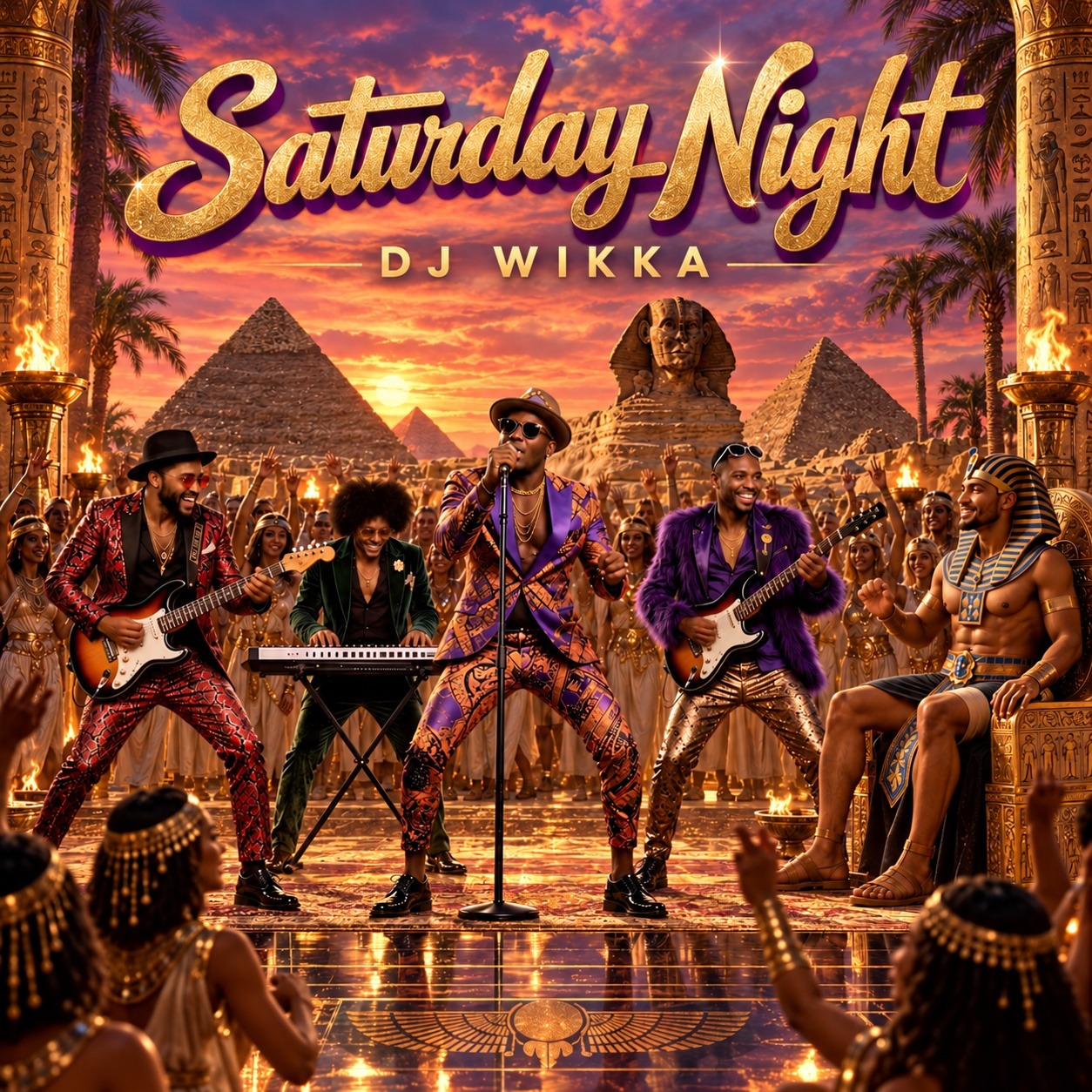
Hello everyone, it’s your host Oliver from DULAXI, and today I’m delighted to be joined by Penny Whitaker, the creative mind behind DJ Wikka, an independent music project based in Barnstaple, England. Working across Electro Pop, Dance and Electronic Pop, Penny brings together music, visual storytelling and imaginative concepts to create releases with their own distinct personalities. Today, we’re exploring her latest single, “Saturday Night,” released on 27 October 2026 via Wikka Beats. Welcome to DULAXI, Penny!
Before we begin our conversation with Penny Whitaker, here’s what you need to know about today’s featured project.
About DJ Wikka
Based in Barnstaple, North Devon, DJ Wikka is the independent music project of Penny Whitaker, a songwriter and producer who enjoys exploring different musical directions without restricting herself to a particular genre. Working outside the traditional music industry centres, Penny has developed an independent creative approach that allows her to take ideas from their earliest stages through to their musical and visual presentation. Her work brings together electronic dance-pop, commercial pop, rock influences and cinematic elements, with an interest in creating music that also has a strong visual identity.
Her previous releases, including “Coolest Mother Dancer”, “Weekend Warriors” and “Satan’s Night”, demonstrate her interest in exploring contrasting moods, characters and imaginative concepts. While these releases approach different themes, they share an emphasis on memorable hooks and distinctive creative ideas. Penny’s approach also extends beyond songwriting and production, as she takes responsibility for developing concepts, creating videos and shaping the visual direction surrounding her music.
Released on 27 October 2026 through Wikka Beats, her latest single, “Saturday Night”, explores the familiar transition from the responsibilities of the working week to the freedom of the weekend. Built around bright synthesizers, a grooving bassline, catchy pop melodies and an energetic dance production, the track captures the excitement of finally having time to enjoy yourself. Its central phrase, “Ooh, weekend freedom”, expresses the simple pleasure of stepping away from everyday routines and embracing a night of music and celebration. Penny wrote the lyrics and guided the creative development of the production, incorporating AI as another tool for exploring different musical possibilities while retaining control over the song’s structure, tempo and overall direction.
The release also reflects DJ Wikka’s interest in connecting music with visual storytelling. With “Saturday Night” arriving during the Halloween season, Penny developed a colourful celebratory presentation that offered a different atmosphere from the darker theatrical ideas explored in “Satan’s Night”. Through its music, accompanying imagery and creative concepts, the project continues to develop an identity built around experimentation and independent expression. As DJ Wikka’s catalogue grows, Penny remains interested in discovering new sounds, creating memorable visual experiences and finding different ways to bring her ideas to life.
Having this introduction to Penny and the creative world behind DJ Wikka, there is plenty to explore about the inspiration, decisions and independent approach that shaped “Saturday Night”. So, without further ado, let’s begin today’s interview.

INTERVIEW SESSION
Oliver:
Operating from Barnstaple in North Devon, away from the traditional music industry centres, you’ve developed DJ Wikka into an independent creative project with its own musical identity and visual direction. Before exploring the music itself, could you tell us more about Penny Whitaker as a person, the experiences that have shaped your outlook, and how your surroundings have influenced the way you approach creativity and self-expression?
Penny Whitaker:
I’m based in Barnstaple, and I’ve built DJ Wikka from here. I like being able to follow an idea wherever it takes me and give it a go without waiting for someone to tell me it fits. Working independently in North Devon has made me resourceful. I’ve had to find my own ways to make the music, create the videos and get the songs heard.
Oliver:
Your journey involves more than simply writing and releasing songs. You’ve taken responsibility for developing concepts, directing creative ideas, refining your releases, and shaping how your music is presented to the public. Where did this desire to take control of the entire creative process come from, and was there a particular experience that made you realise you wanted to build something independently?
Penny Whitaker:
For me it came from wanting the whole release to feel like the same idea. I could write a lyric and already be thinking about what the video might look like or what feeling the artwork should give you. The more I did, the more I wanted to see those ideas through myself. That’s a big part of what makes DJ Wikka enjoyable for me.
Oliver:
Your previous releases, including “Coolest Mother Dancer”, “Weekend Warriors”, and “Satan’s Night”, suggest an artist who enjoys exploring different characters, moods, and imaginative ideas. What initially attracted you to this kind of creative expression, and how much of your own personality, humour, imagination, or personal experiences finds its way into the characters and worlds you create through DJ Wikka?
Penny Whitaker:
There’s a lot of my sense of humour in it. I like an idea that makes me laugh or gives me a picture in my head straight away. Coolest Mother Dancer has that cheeky confidence, Weekend Warriors has the energy of going out, and Satan’s Night gave me a chance to go darker and more theatrical. I enjoy being able to do all three.
Oliver:
One interesting aspect of your artistic identity is the freedom with which you move between electronic dance-pop, commercial pop, rock influences, and cinematic orchestral elements. Rather than committing to one particular genre, you appear interested in exploring what happens when different musical styles meet. What does artistic freedom mean to you, and how do you decide which musical direction best communicates the idea behind each release?
Penny Whitaker:
I let the idea steer the music. If I want a track to feel like the moment you walk into a club, I want a beat and a bassline that give you that straight away. If the story feels bigger or more dramatic, rock or cinematic sounds can give it a different kind of energy. The freedom is being able to follow the feeling of each song.
Oliver:
You’ve developed DJ Wikka as a project where music, imagery, and storytelling are closely connected, with each element contributing to a wider creative identity. When developing a new release, which usually comes first for you: the musical idea, the story you want to tell, the visual concept, or the character you want listeners to encounter? How do these different elements eventually come together?
Penny Whitaker:
It varies. Often I’ll have a phrase or a feeling I want to write about, and once I can hear the song taking shape, I start seeing the visuals. Sometimes a scene gives me a new angle on the song. For Saturday Night, even the simple idea of people getting ready to go out gives you a story before they’ve left the house.
Oliver:
“Saturday Night” takes a familiar experience, moving from the responsibilities and frustrations of the working week into the freedom of the weekend, and turns it into an energetic dance-pop celebration. What inspired you to build a song around this particular transition, and was there a personal experience or observation that helped you capture the feeling of finally being able to let go?
Penny Whitaker:
It’s that familiar moment when you’ve got through the working week and can finally say, “Right, this time is mine.” I wanted the song to take you from the alarm going off and getting on with things to the moment the music comes on and your mood changes. I think a lot of us recognise that feeling.
Oliver:
The phrase “Ooh, weekend freedom” sits at the heart of “Saturday Night”, giving the song a clear message of release, enjoyment, and stepping away from everyday routines. What does weekend freedom represent to you beyond the obvious idea of going out and having fun, and what emotions were you hoping listeners would associate with that chorus?
Penny Whitaker:
It’s the feeling of having a bit of time back for yourself. That might be a night out with friends or putting something loud on at home and dancing round the kitchen. I wanted the chorus to give you that little lift whenever you hear it, even on a Monday.
Oliver:
The song moves from the frustrations of the weekday routine towards the excitement of a night beneath neon lights, creating a simple but relatable story that many listeners can recognise. How did you approach building this narrative, and what made the Saturday night setting the right way to express the feeling of freedom and escape you wanted the song to communicate?
Penny Whitaker:
I wanted the beginning to feel ordinary so the change in mood would land. The alarm, the coffee and the routine set up the release you get later under the lights. Saturday night felt like the right setting because you can picture the anticipation before you even get to the dance floor.
Oliver:
Your previous work has explored different creative themes, including the character-driven ideas associated with releases such as “Satan’s Night”, while “Saturday Night” takes a more celebratory approach to nightlife and personal freedom. How do you move between these contrasting themes without losing the identity that connects your releases, and what do you enjoy most about exploring different sides of your imagination?
Penny Whitaker:
Both are quite visual for me. With Satan’s Night I could lean into the drama and have fun with the darker side of Halloween. With Saturday Night I wanted that feeling of everybody coming together and letting go. What connects them is that I like a strong mood, a hook you can remember and a world you can picture.
Oliver:
You write your own lyrics, which means the words and central ideas of your songs come directly from your creative perspective. When developing the lyrics for “Saturday Night”, how did you approach capturing the frustrations of the working week while keeping the language accessible, memorable, and suitable for a dance-pop track? What makes a lyric particularly effective when it needs to connect with listeners in a club or party setting?
Penny Whitaker:
I wanted people to recognise the working week in a few lines. Things like waking up at dawn and reaching for the coffee give you a picture quickly. Then the chorus can open up. I like a lyric you can catch on the first listen and want to sing back by the second.
Oliver:
Your creative process also involves the use of artificial intelligence in music creation, while you retain responsibility for writing the lyrics and producing the releases. This introduces an interesting relationship between human songwriting and technology. How did you begin incorporating AI into your music-making process, and what attracted you to exploring its possibilities as another creative tool?
Penny Whitaker:
What interested me was being able to explore more musical directions around the lyrics I’d written. I could take an idea and hear how it felt with a different sound or energy. I write my own lyrics, create the structure and set the tempo of the song. Using AI in the music production gives me another way to try things out and find the version that feels right for the song.
Oliver:
With the musical composition of your releases involving AI and the lyrics coming from your own writing, your role as producer becomes particularly interesting. How do you guide, refine, and shape the musical material to ensure that the finished recording reflects your original artistic intention? What decisions do you consider essential to maintaining your identity and creative control throughout that process?
Penny Whitaker:
The lyric and the feeling I want it to carry are my starting points. I listen for whether the vocal suits the words, whether the chorus lands and whether the track moves in the way I imagined. Choosing what to keep, what to revisit and which version is ready to release are all part of making it feel like DJ Wikka.
Oliver:
“Saturday Night” brings together bright synthesizers, a grooving bassline, catchy pop melodies, and an energetic club-focused drop. Each element contributes to the track’s movement, but the arrangement also needs to maintain a sense of progression rather than becoming repetitive. How did you approach balancing these elements, and what helped you determine the right structure and energy for the finished song?
Penny Whitaker:
I wanted the arrangement to make the same journey as the lyric. The early part gives you the feeling of getting through the week, then the groove starts to lift and the drop lets that energy out. The bright synths and bassline help carry it forward. I wanted the chorus to feel even more inviting when it came back.
Oliver:
Your creative vision extends into the visual presentation of your releases, where you bring together sound, imagery, and narrative to create a recognisable artistic world. With “Saturday Night” being associated with a Halloween-season release campaign, how did you approach the visual identity of this particular single, and how do you ensure that the artwork and promotional imagery communicate something meaningful about the music rather than simply serving as decoration?
Penny Whitaker:
Saturday Night came out around Halloween, and I wanted it to have its own celebratory look alongside Satan’s Night. I liked the idea of going big and colourful, with the band, the stage and the pyramids making it feel like an event. The getting-ready video explores the same feeling from the other end of the night, when the excitement is just building.
Oliver:
Looking at the development of DJ Wikka through releases such as “Coolest Mother Dancer”, “Weekend Warriors”, “Satan’s Night”, and now “Saturday Night”, there is a growing catalogue of work exploring different musical and creative directions. What have these releases taught you about your strengths as an independent artist, and how has your understanding of what DJ Wikka represents changed since the project first began?
Penny Whitaker:
They’ve taught me that I enjoy taking one clear idea and seeing how far I can go with it. I’ve also learnt how much the way you present a song can change what someone notices first. A lyric clip, a cartoon and a music video can each give people a different way into the same track.
Oliver:
Taking responsibility for songwriting, production, creative direction, visual concepts, and release strategy can be demanding, particularly when working independently without the established resources of a traditional music industry structure. What have been the biggest challenges of managing so many aspects of your project yourself, and how have those experiences influenced the way you organise your creative work and make decisions?
Penny Whitaker:
There’s always something else to do. You can spend the morning on a video, then switch to sending tracks to radio or working out what an ad actually achieved. I’ve learnt to give each release a timeline and to test things so I can see where my time and budget are making a difference. I still want to leave myself enough room to enjoy making the next song.
Oliver:
One of the appealing qualities of “Saturday Night” is its ability to connect with a familiar emotion: the excitement of putting everyday responsibilities aside and making time to enjoy life. When listeners encounter the track, what kind of reaction or personal connection would you most like it to create? Are you hoping people simply enjoy its energy, or would you also like the song to remind them of the importance of finding moments of freedom and happiness in their everyday lives?
Penny Whitaker:
I’d love someone to put it on and feel instantly happier. If they’re getting ready to go out, it can get the night started. If they’ve had a long day and they’re at home, I’d love it to give them three minutes to switch off and have a dance anyway.
Oliver:
With DJ Wikka continuing to explore electronic pop, dance production, rock influences, and imaginative storytelling, there are several creative directions available for the project to develop. Looking ahead, what would you like to explore next, both musically and visually, and what kind of artistic world do you ultimately hope to build through DJ Wikka as your catalogue and audience continue to grow?
Penny Whitaker:
I’m enjoying how far I can take the visuals. I like the idea that one song can have a video that feels like a night out and another clip that takes you somewhere completely unexpected. Musically, I want to keep making tracks with strong hooks and trying different sounds when the song calls for it. I’d like people to come back because they’re curious to see what DJ Wikka will do next.
“With DJ Wikka, Penny Whitaker approaches independent music as an opportunity to follow an idea without limitations, bringing together sound, imagination and visual storytelling. ‘Saturday Night’ is a reminder that sometimes the simplest creative ideas are the ones that bring people together.”
~ Oliver (DULAXI Team)
EDITORIAL PERSPECTIVE
What stands out about Penny’s approach is the attention she gives to the complete creative identity of each release. Her willingness to explore different musical directions while remaining personally involved in the songwriting, production decisions and visual presentation gives DJ Wikka room to develop without following a fixed formula. “Saturday Night” also offers a relatable idea through its contrast between everyday responsibilities and personal enjoyment. Our conversation provided a closer understanding of the thought and independent effort behind that creative process.
~ Oliver (DULAXI Team)
CLOSING
A special thank you to Penny Whitaker for taking the time to speak with DULAXI and share the creative thinking, personal experiences and independent decisions behind DJ Wikka. It was a pleasure learning more about her approach to songwriting, the role of AI in her production process, and the importance she places on bringing music and visual storytelling together.
We encourage readers to experience “Saturday Night” and discover the celebratory spirit behind its message of weekend freedom. Whether you are preparing for a night out or simply looking for something to lift your mood after a long day, the single offers an opportunity to step away from the routine and enjoy the moment.
Thank you for spending your time with DULAXI. We appreciate your continued support and invite you to keep following our platform for more conversations with independent artists, musicians and creative minds from around the world.
Until our next interview, keep discovering new music and supporting independent creativity!