
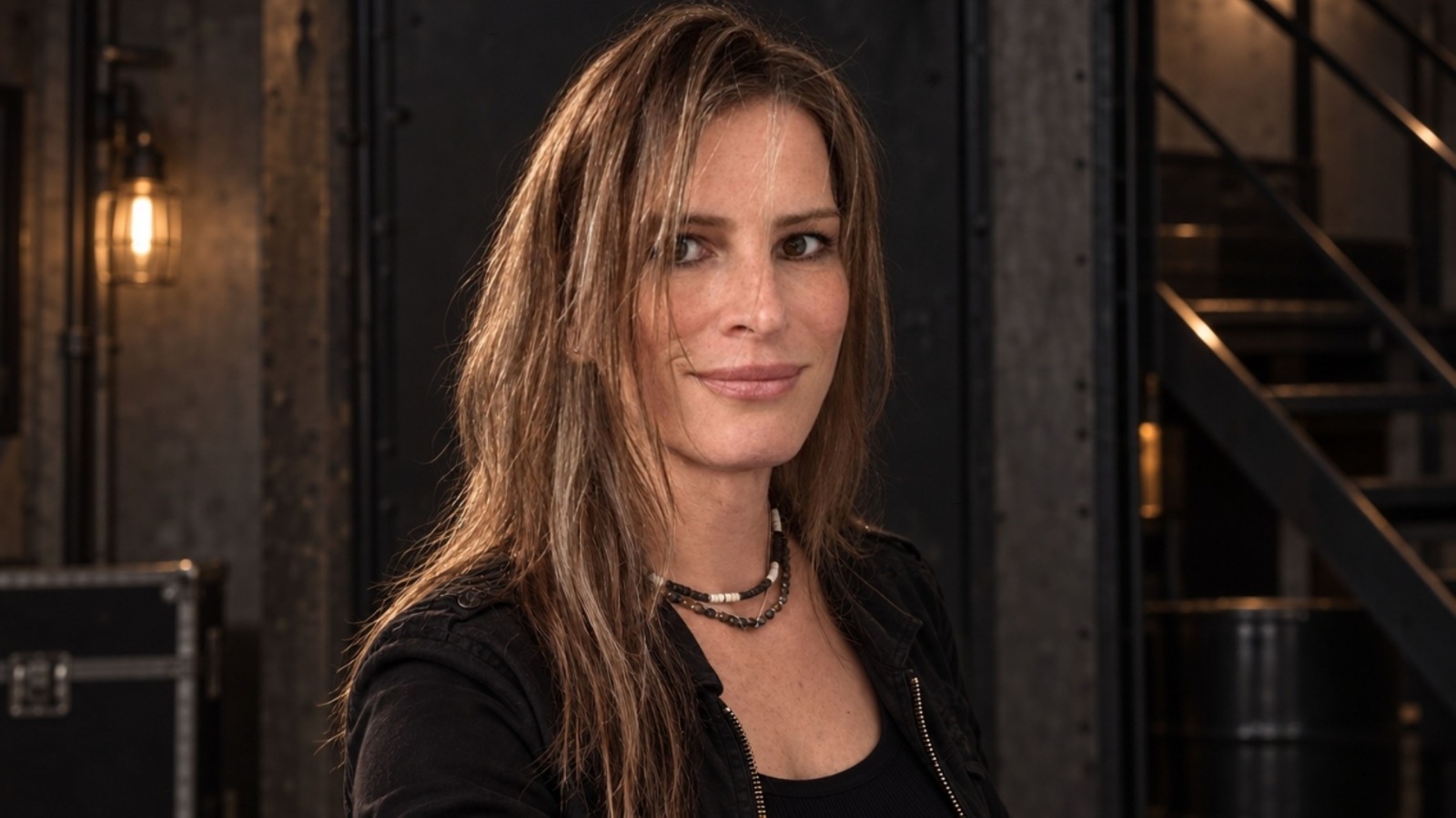
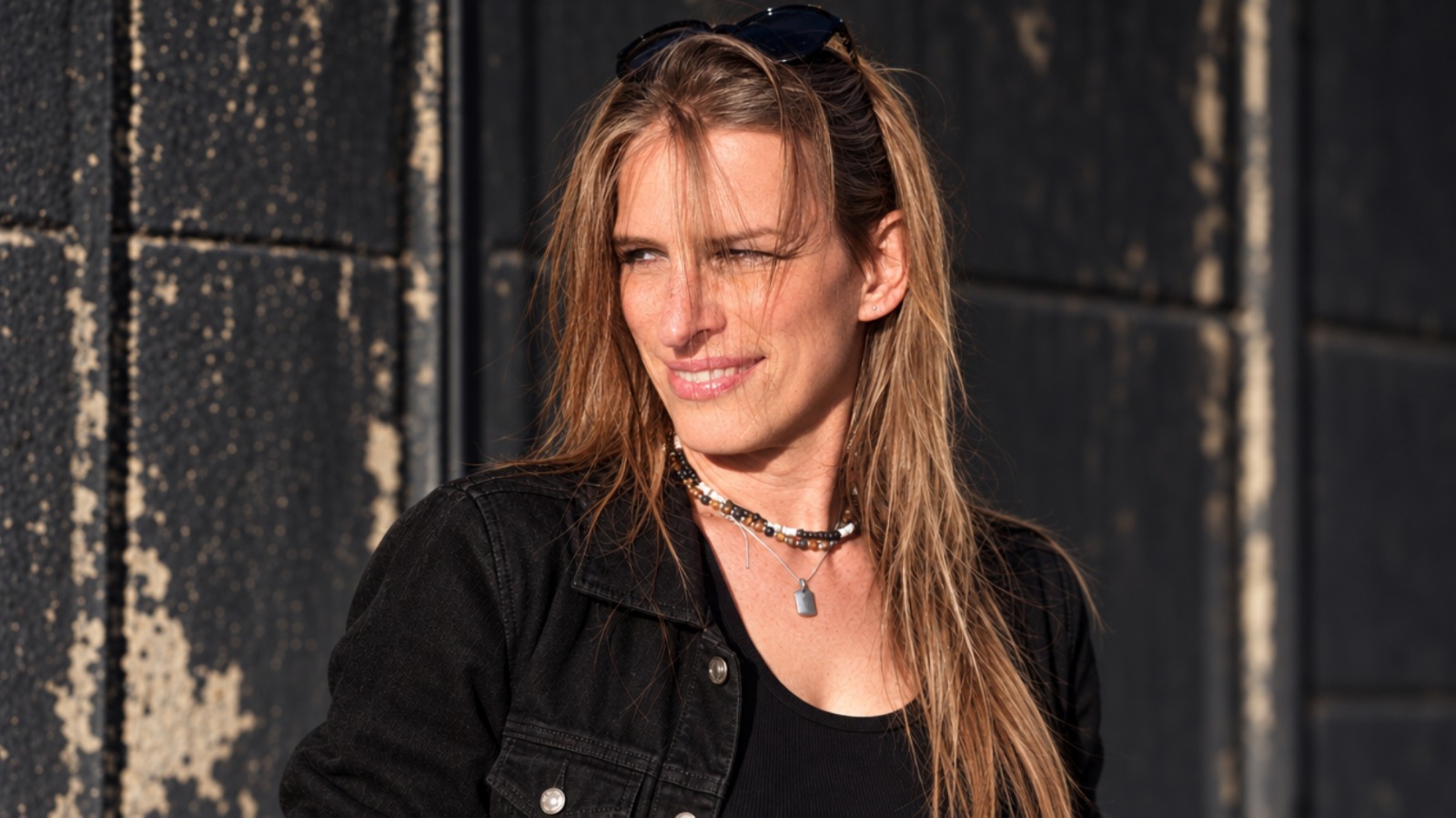
Hello everyone, it’s your host Oliver from DULAXI, and today I’m delighted to be joined by Juley, an independent singer-songwriter and multi-instrumentalist based in Munich, Germany. Blending alternative rock with elements of indie rock, folk-rock and Americana, Juley joins us to discuss “The Mirror”, an original single released on 25 September 2026. The track serves as the opening chapter of an upcoming album project titled Obsidian, which explores identity, self-image, memories and personal transformation. Before we begin our conversation with Juley, here’s what you need to know about today’s featured project.
About Juley
Juley’s relationship with songwriting stretches back many years, although sharing that music with an audience was not always part of the plan. Having spent much of that time writing privately, Juley eventually found a way to bring those compositions into the world through the independent music project. The songwriting draws from a broad range of influences, including The Beatles, Bob Dylan, Bruce Springsteen, Beth Hart and Taylor Swift, alongside the Americana and folk-rock traditions. There is also an appreciation for the more unpolished character of 1990s alternative rock, with artists such as Nirvana, Pearl Jam, The Smashing Pumpkins, Alanis Morissette and Beck forming part of that musical background.
Released as the first single from Obsidian, “The Mirror” introduces a deeply personal exploration of identity and the difference between who we are and the person we learn to present to the world. Its central image becomes both a physical reflection and a metaphor for the different versions of ourselves that develop throughout life. The song also draws from Juley’s personal experiences, with the “boy” referenced in its lyrics representing an earlier version of the artist. Rather than attempting to resolve the questions raised, the composition opens a wider conversation that the forthcoming album will continue through different memories, perspectives and stages of self-discovery. Musically, its darker alternative-rock direction reflects influences from The Cranberries, Garbage and Yeah Yeah Yeahs while retaining the personal storytelling at the centre of Juley’s songwriting.
The creative process behind the release is equally distinctive. Written, arranged and produced independently, “The Mirror” began with Juley’s own lyrics, melody, chords and acoustic musical ideas before developing into its final arrangement. Most of the main guitar, bass and keyboard parts are performed by Juley, with electronic drums and selected digital and AI-assisted elements contributing to the production. Recorded in a home studio, the process also incorporates AI-assisted vocal production using a voice clone based on Juley’s own voice. This approach reflects an ongoing development since the release of the first album, The Dune, in January 2026, with Juley taking an increasingly hands-on role in recording and arranging. The wider Obsidian project will initially introduce its songs through raw, intimate versions on SoundCloud and YouTube before bringing them together in a fully produced album on streaming platforms.
Having this brief introduction to today’s featured project, there is certainly much more to discover about the personal experiences, creative decisions and musical experimentation behind “The Mirror”. So, without further ado, let’s begin today’s interview.
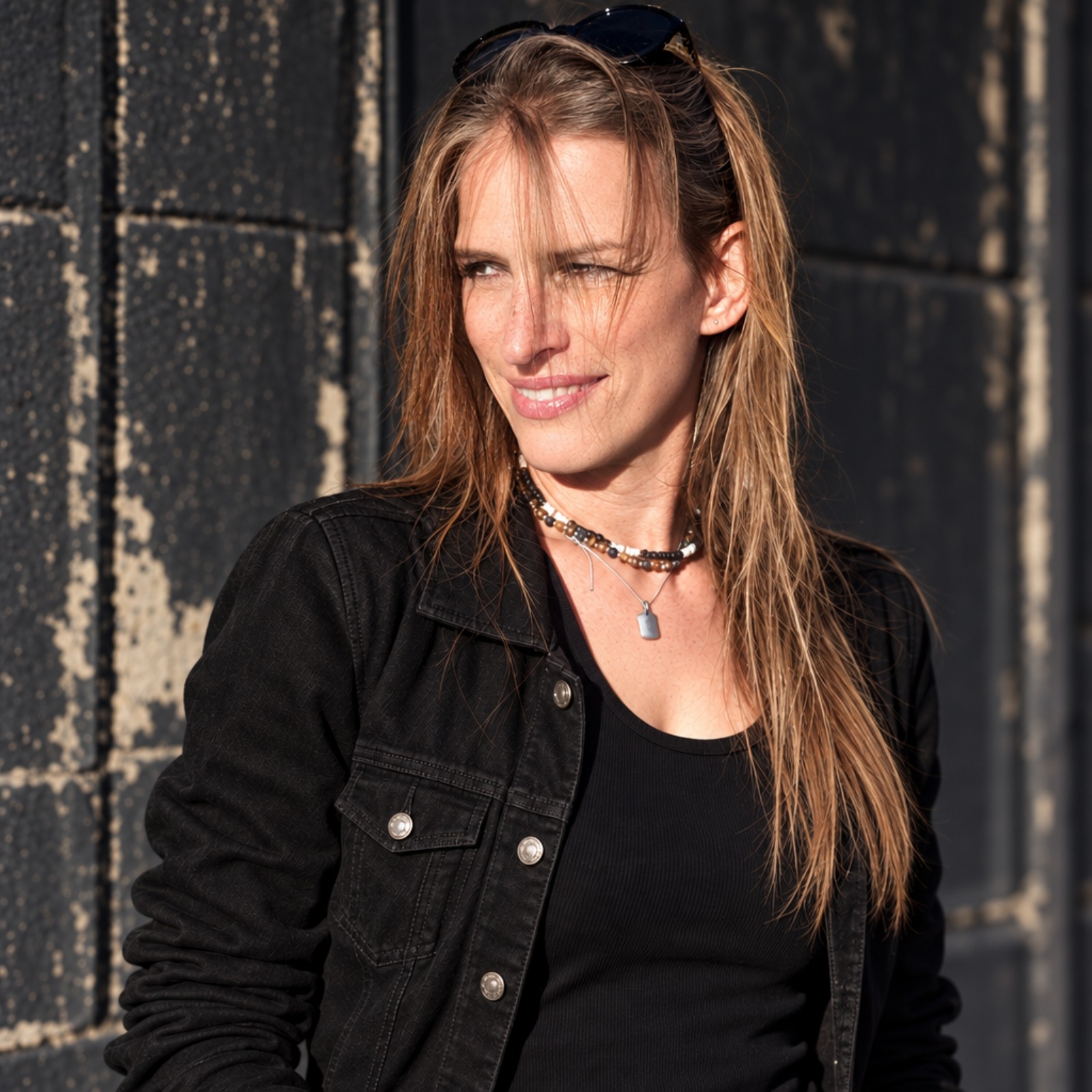
INTERVIEW SESSION
Oliver:
You mentioned that you have been writing songs for most of your life but spent a long time keeping them to yourself because you were not entirely comfortable with your singing voice. Looking back, what was that period like for you? How did you maintain your connection with songwriting during the years when sharing your music with an audience still felt out of reach?
Juley:
For most of my life, songwriting was something I did primarily for myself. I never really thought of my songs as something I could share with an audience. I often felt they weren’t good enough, or that other people simply wouldn’t be interested in hearing them.
Musically, I didn’t feel very confident either. My guitar playing was still quite basic, and I felt that my singing and playing sounded rather clumsy. Over time, I became a more capable guitarist, but my relationship with my singing voice remained more complicated. I can sing reasonably well in a male register, but as a transgender woman, it’s a voice I don’t really identify with. It never quite felt like my own voice, or like the voice I heard in my head when I imagined how my songs should sound.
But to me, at that time, writing songs was not so much about expressing myself to others, but rather a way of processing things I had experienced. It allowed me to get things off my chest, to put feelings and thoughts into a song and, sometimes, to find a sense of closure. It was about making sense of things that were going on inside me, or letting go of whatever had been weighing on my mind.
Oliver:
Your decision to finally release music under the name Juley represents an important step in bringing something very personal into the open. What changed for you that made you feel ready to share your songs with the world, and how has that decision affected your confidence and relationship with your own creativity?
Juley:
What changed was the development of modern recording and production technology, especially the availability of voice clones, so I could experiment, build arrangements and refine the sound until my songs sounded the way I had heard them inside my head.
While I didn’t start writing songs because I wanted an audience, I started sharing them as I felt comfortable letting other people hear it. Once I had opened that door and allowed my music into the world, I naturally began to hope that someone would connect with it. I still write from the same personal place, but now I also feel a genuine desire for these songs to reach other people.
Oliver:
Your musical influences cover several generations and different approaches to songwriting, from The Beatles, Bob Dylan and Bruce Springsteen to Beth Hart and Taylor Swift. What have you learned from these artists about connecting a strong melody with meaningful lyrics, and how have those lessons influenced the way you tell your own stories?
Juley:
What I’ve always admired about my musical influences is their ability to tell stories through images and precise, compelling lyrics. They can convey complex feelings with remarkable clarity, sometimes using very simple song structures and seemingly uncomplicated melodies. Yet their songs carry a depth and emotional meaning that can work across very different musical genres and arrangements.
I can’t really say that I’ve consciously learned specific techniques from these artists. But although I feel I might never be able to reach that level myself, their work has become an almost subconscious standard by which I measure my own songs.
And songwriting is not something I can really plan or summon on demand. Sometimes a song just comes to me, and sometimes nothing happens for a long time. I don’t always know where a song comes from. But when one does emerge, I have a sense of whether it has that certain quality or meets that inner standard.
Oliver:
You have also spoken about your appreciation for Americana, folk-rock and the less polished side of 1990s rock, with artists such as Nirvana, Pearl Jam, The Smashing Pumpkins and Alanis Morissette among your influences. What draws you to music that embraces both melodic songwriting and a rougher, more imperfect edge, and how do you bring those contrasting qualities into your own sound?
Juley:
My musical influences cover quite a wide range, from melodic singer-songwriters to much rougher alternative rock bands. I don’t really see these as opposing worlds, though. For me, what connects them is the strength of the songs themselves.
I find the most fascinating songs are those with several layers to them, with enough depth and character to reveal different facets when interpreted in different musical styles. The same song might feel intimate and vulnerable in an acoustic arrangement, yet powerful and dramatic in a rougher rock version. Both can bring out something different that was already there in the song itself.
Oliver:
One of the most interesting aspects of your artistic philosophy is that you do not begin with a fixed genre. You start with a song and then explore what kind of music it wants to become. How do you recognize the musical direction that best serves a particular composition, especially when you are experimenting with arrangements that could take it into completely different genres?
Juley:
I enjoy exploring different musical directions and seeing what each one can bring out in a song.
I don’t usually start writing a song with a particular genre in mind. I start with the song itself – the lyrics, melody and basic musical ideas – on my acoustic guitar, and once I have a basic version of the song, I explore what kind of musical direction might bring out its character most effectively.
Modern generative AI tools have become very useful in this process. They allow me to try out different genres and arrangements quite quickly, almost like a musical screening process. I can hear how the same song might work as folk, pop, alternative rock or something completely different, and discover aspects of it that I might not have considered otherwise.
But technology doesn’t make the artistic decision for me. It simply gives me a way to explore possibilities much faster. Ultimately, I rely on my own musical instincts to figure out which direction feels right for a particular song. Sometimes the result is close to what I initially imagined; sometimes the song takes me somewhere quite unexpected.
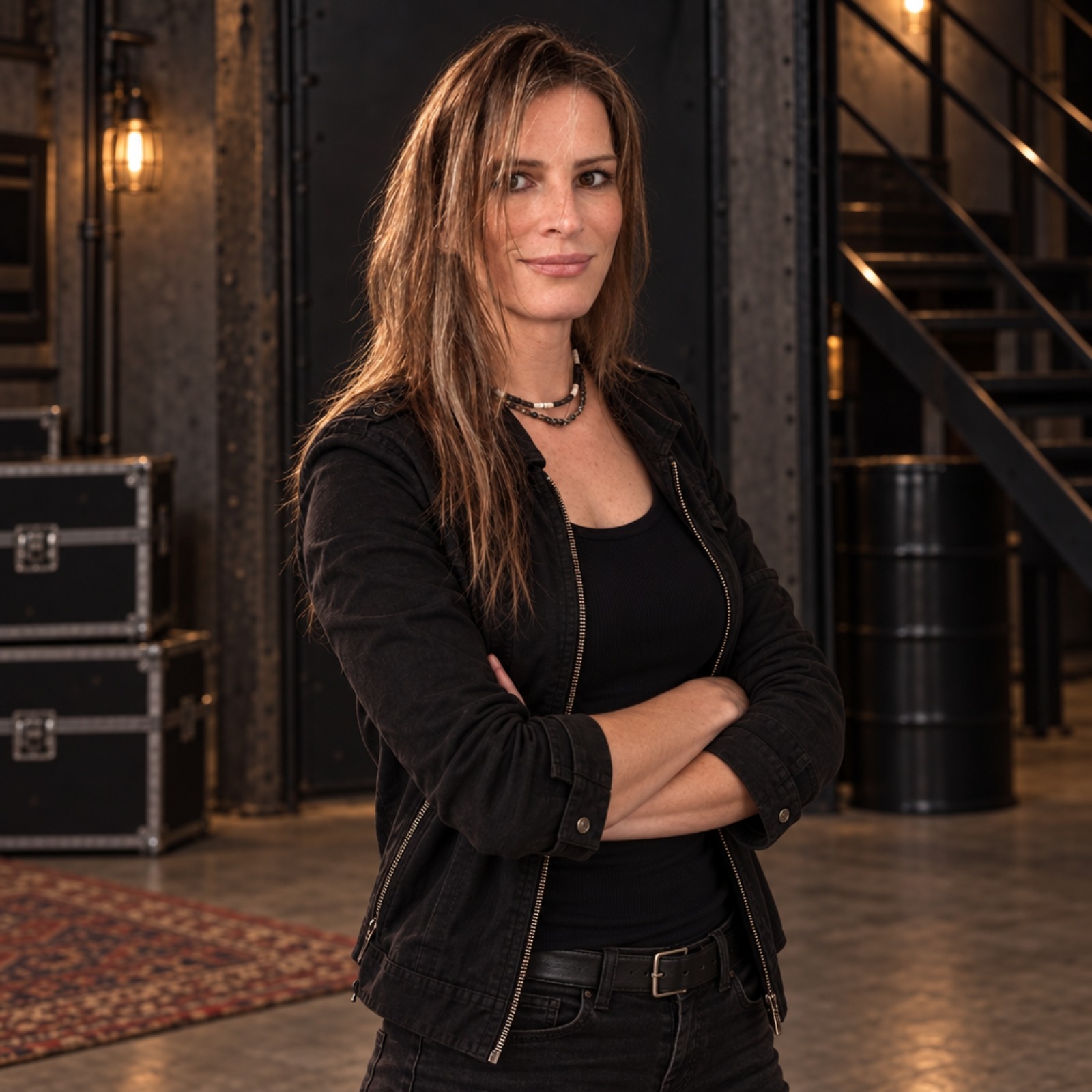
Oliver:
Your upcoming album, “Obsidian”, is described as a journey through memories, different perspectives, identity and self-discovery. These are deeply personal subjects that can change meaning as we grow older. What experiences or reflections first inspired you to build an entire album around these themes, and what made this the right time in your life to explore them through music?
Juley:
The idea for “Obsidian” came from a rather unexpected direction. I was looking into my birth chart and came across a particular astrological aspect: a square between the Sun and the Ascendant. In astrology, this is often interpreted as a tension between one’s inner self and the way one presents oneself to the outside world.
What caught my attention was how strongly this idea resonated with my own experience. Looking back at my life, I could recognize that tension between the person I felt I was inside and the identity I had learned to present to others. It made me think about how much of our outward identity is shaped by expectations, social roles and the need to fit in – and how different that can be from our inner sense of self.
The Obsidian stone is traditionally associated with this astrological constellation, and so it became the central motif of the album. Which then gradually developed into a personal exploration of identity, self-image and the different roles we inhabit throughout our lives.
Oliver:
“The Mirror” introduces the album with a question about the difference between who we really are and the person we have learned to present to the world. What does that conflict mean to you personally, and was there a particular moment of self-reflection that helped shape the song’s central idea?
Juley:
Looking back at my own life, I can see quite a contrast. As a child and teenager, I was very shy and withdrawn as I was struggling to present myself to the world, anxious if I would meet the expectations of everyone around me. Over time, I trained a more confident and self-assured male persona and grew into it, until it wasn’t simply a role I consciously played; it became an identity I inhabited quite naturally, and for a long time I hardly questioned it. Other people began to perceive me very differently, too.
There was, however, a particular moment when something unexpectedly shifted. I’ve always enjoyed experimenting with different roles, almost like an actor trying out different characters. So when I first dressed in feminine clothes and put on makeup, I approached it in much the same playful spirit – with curiosity, enjoyment and a certain excitement about trying something new. But what I experienced was quite the opposite of what I had expected. Instead of excitement, I felt an extraordinary sense of calm. And in that moment, I felt that this was somehow the answer to a tension I had carried for a long time: a sense of emptiness, and a quiet but persistent feeling that the identity I had built and lived in wasn’t really my own. That sudden sense of calm made me realise just how long I had been living an identity that didn’t truly feel like my own.
In retrospect, that moment marked the beginning of a journey towards myself – one that I knew would not necessarily be easy. The song “The Mirror” looks back at the time long before that shift, when I repeatedly asked myself all those questions about “who I am”, and when the answers I found, accepted and lived came, in fact, from the outside world, not from my inside.
Oliver:
You have explained that the “boy” mentioned in the lyrics represents an earlier version of yourself and an identity you were once expected to live in. That gives the song another emotional dimension beyond its wider exploration of self-image. How difficult was it to revisit that part of your personal history through songwriting, and what did putting those experiences into words help you understand about yourself?
Juley:
The “boy” in The Mirror is actually me as a child. It’s a reference to a time when I was still very young, before puberty, and had a much more playful and unrestricted sense of who I could be.
I remember sitting on the edge of the bathtub, looking into the bathroom mirror and imagining my future. In my mind, I would eventually be living in California. And in those childhood fantasies, I sometimes imagined myself as a girl living there, too. I would play with different possibilities – sometimes imagining myself as a boy, sometimes as a girl, sometimes simply as living somewhere far away, free to be whoever I wanted to be.
California itself was more of a symbol than a concrete destination. Back then, it represented freedom, independence and the possibility of a different life. It was almost a promised land in the imagination of many people at the time. As I grew older, I began to suppress those thoughts, partly because of the expectations around me. Eventually, I accepted that framework and learned to live within it. This is really what the line “Half the boy I wear, half the life I plan” is about.
Looking back at these earlier stages of my life through songwriting wasn’t difficult or painful for me. Quite the opposite, actually. The process of revisiting those memories and bringing them into my songs helped me reconnect with parts of myself and gain a clearer understanding of my own story.
Oliver:
The mirror in the song works as both a physical object and a metaphor for the distance between our past identities, the versions of ourselves we show others, and the people we eventually discover ourselves to be. How did you approach writing about such a layered subject while keeping the lyrics accessible enough for listeners to connect with their own experiences?
Juley:
To be honest, I’m not sure I consciously do anything specific to make the lyrics accessible. I simply write about things that are meaningful to me, and I try to find images and words that express what I’m feeling or experiencing.
I think concrete images can help create a connection, even when the underlying subject is quite complex. In “The Mirror”, for example, the mirror itself, the boy, California and the open roads are all things listeners can picture and relate to in their own way. They don’t necessarily need to know the personal story behind them to connect with the feelings or questions the song raises.
Also, for me, accessibility doesn’t mean making a subject less complex. It means finding a way to invite people into it without telling them exactly what they should take away from it. I suppose there isn’t really a recipe for it – at least, I haven’t found one. I just write what feels right to me and hope that something in it will resonate with someone else.
Oliver:
You chose “The Mirror” as the first single because it introduces the central question of “Obsidian” without giving away the answers that the album will explore later. What made this particular song the right opening chapter, and how does its darker alternative-rock direction introduce the wider musical atmosphere listeners can expect from the project?
Juley:
I felt that “The Mirror” was the natural choice to open Obsidian because it introduces the central question that runs through the album: who are we beneath the identities we have learned to live with, and how well do the people we present to the world reflect who we really are? When I faced that question early in my own life, even the freedom I experienced was still partly about keeping things under control, about making the life I had built work. I had found independence and learned to shape my own life, but the deeper tension hadn’t disappeared. The music reflects that feeling – there’s a certain restlessness beneath the surface, suggesting that something remains unresolved.
“The Mirror” raises the question but doesn’t provide an answer. It opens the door to a larger personal exploration, with each of the songs approaching the subject from a different angle. Although the song sets a rather dark and introspective tone, I wouldn’t say that the entire album follows the same musical direction. “Obsidian” moves through quite a range of styles, from country and piano ballads to alternative rock, indie pop rock and blues rock. There are heavier and darker moments, but also lighter, more uplifting passages. What connects them is less a particular sound than a shared emotional atmosphere – a certain melancholy and introspection that runs through the album, even when the musical expression changes.
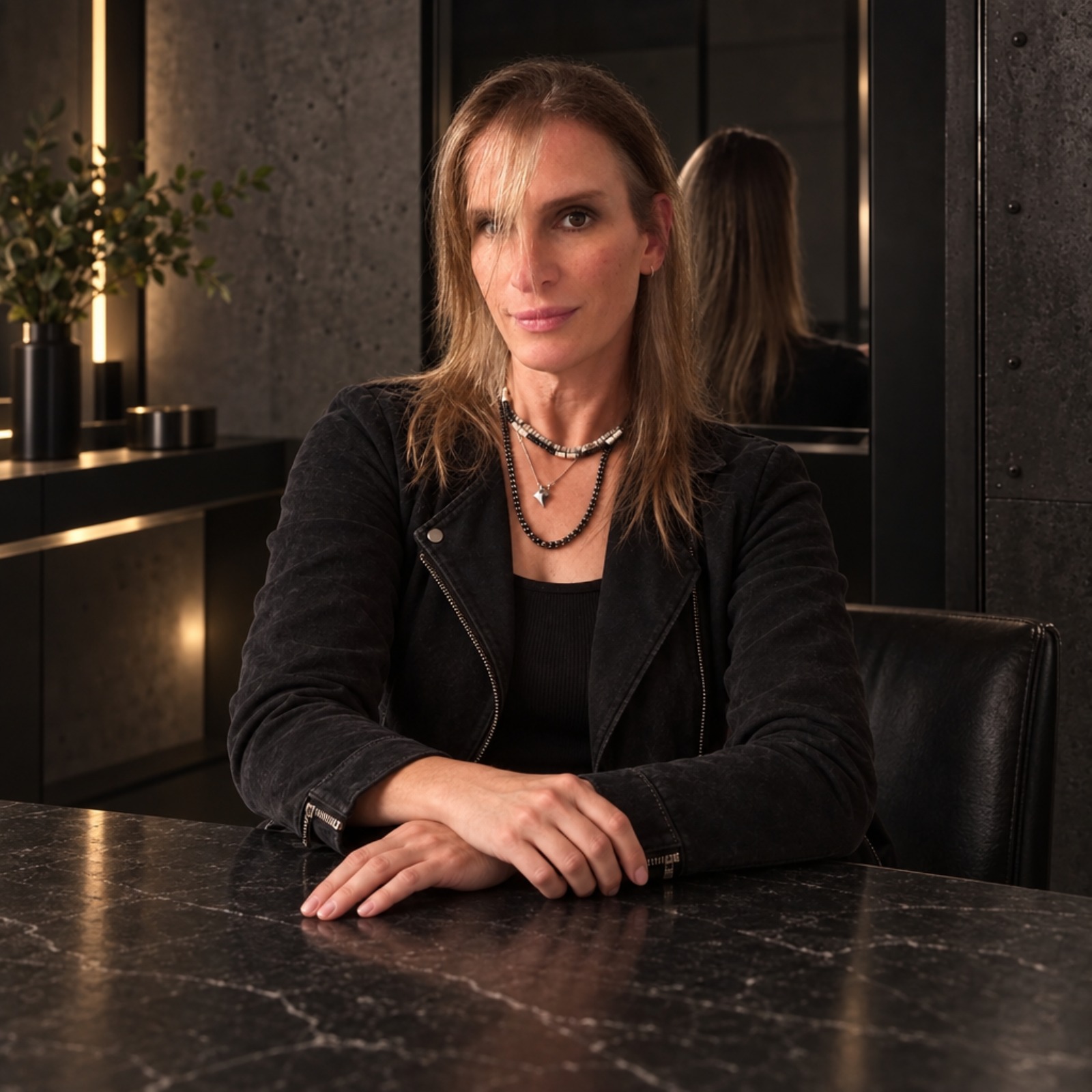
Oliver:
You have identified The Cranberries, Garbage and Yeah Yeah Yeahs as particularly relevant reference points for the sound of “The Mirror”. Each brings a different approach to alternative rock, from melodic intensity to more experimental and edgy arrangements. What qualities were you looking to draw from that musical tradition, and how did you make sure the finished track retained your own songwriting identity rather than simply following those influences?
Juley:
I never set out to imitate any particular band or deliberately recreate a specific sound. I think these influences simply become part of your musical language over time. When I write a song, what comes out I guess is naturally shaped by the music I love and have lived with, rather than by a conscious attempt to sound like someone else. So, I neither tried to avoid being influenced by those bands, but I didn’t have them in mind either when I wrote the album. In fact, some of the similarities only became apparent to me after I had written it, when I was asked about my musical influences and what kind of artists it might resemble.
Bands like the Yeah Yeah Yeahs, The Cranberries and Garbage have been part of my musical world for a long time. But they were certainly not the only bands I listened to during that period. The 1990s brought a whole range of other music into my life, including Nirvana, Stone Temple Pilots and The Smashing Pumpkins. Looking back, I wonder whether I might have unconsciously returned to some of that musical territory when making “The Mirror” – perhaps even contributing to the darker atmosphere that runs through parts of Obsidian.
Oliver:
Your production process begins with your own lyrics, melodies, chords and instrumental ideas, often in a raw acoustic form before you start exploring different arrangements. You also record the main guitar, bass and keyboard parts yourself, with electronic drums and selected digital elements contributing to the final sound. Could you walk us through how “The Mirror” developed from its earliest version into the darker, fully produced single listeners hear today?
Juley:
Like mentioned before [above], for me, generative AI has become a particularly useful tool for exploring what kind of sound might suit a song best. Sometimes these experiments confirm an idea I already had; sometimes they reveal possibilities I hadn’t considered before.
And I don’t necessarily use these versions as templates for the final production. They are more like a way of exploring different directions and discovering what brings out the character of a particular song.
With “The Mirror”, I actually had a fairly clear idea of the sound I wanted from the beginning: a dark, alternative rock sound. So I already prompted the first versions in that direction, and it became clear to me quite quickly that this was exactly the musical atmosphere I was looking for. I still tried out some other styles, simply out of curiosity, but those experiments only reinforced the initial idea.
Oliver:
Your use of AI-assisted production is particularly interesting because you describe the technology as a creative tool rather than the source of the songwriting itself. You record your own vocals and use a voice clone based on your voice to develop the polished vocal performance, while occasionally exploring AI-generated instrumental layers. How do you decide which elements should remain entirely your own performances and where technology can add something useful without taking away from the emotional character of the song?
Juley:
Once I’ve settled on a musical direction, I start building the final production myself. With “The Mirror”, I recorded the lead and rhythm guitars, bass and keyboards, simply because they are the instruments that I feel playing well enough. I also create the drum parts on the computer using MIDI programming, and sometimes I play additional percussion instruments in a song, like a Xylophone. I use AI generation of instrumental stems or the vocals when I feel my own performance needs polishing – or something extra.
That’s why the vocals in my songs so far were all produced using a voice clone. And in this particular song, I added an additional AI-generated guitar track to expand the overall sound and add another layer to the arrangement.
Oliver:
You record and produce your music in your home studio, giving yourself the freedom to experiment without the structure of a conventional studio environment. You have also described the process as being closer to building a musical collage than recording a traditional band performance. What are the biggest creative advantages of working this way, and have there been any challenges in managing so many different production possibilities while keeping the original emotion of a song intact?
Juley:
Working in my own home studio gives me a great deal of freedom. I can work whenever I feel inspired, experiment without time pressure and keep refining a song until I’m happy with the result. I don’t have to rely on anyone else’s schedule or compromise on ideas simply because studio time is limited.
At the same time, doing everything yourself can be quite demanding. The creative part – arranging the songs and recording the instruments – is something I really enjoy. But mixing and mastering are a different matter. They can take an enormous amount of time, and sometimes I find myself going round in circles, making adjustments that don’t necessarily improve the sound. In fact, there are moments when I feel I’ve made things worse rather than better.
It’s still very much a learning process for me. I hope to gradually develop my skills and I’m trying to find a better balance between getting things technically right and knowing when to stop. I suppose that’s one of the challenges of working independently: you have to wear so many different hats, and you’re constantly learning along the way.
Oliver:
Your first album, “The Dune”, arrived in January 2026, when you relied more heavily on AI during production. Since then, you have gradually taken a much more hands-on role in arranging and recording your music, with “Obsidian” reflecting that development. What have you learned about your abilities as a musician and producer during this transition, and is there anything about the experience that has changed how you approach songwriting today?
Juley:
There was quite a difference between the way I approached the production of “The Dune” and “Obsidian”. When I made “The Dune”, I was still using AI-generated instrumental parts much more extensively. The possibilities offered by AI cover generation were relatively new to me, and I was fascinated by how quickly I could turn my song ideas into fully arranged versions. I already had around so many songs I wanted to share with the world, so there was probably a certain amount of impatience involved in the production, too. I was simply excited to finally hear these songs come to life.
But during the production process of the album, I gradually started adding more of my own playing – guitar fills, additional parts and little musical details. And I discovered how they brought in more character, movement and tension, and I increasingly felt that mixing in my own playing could give the music something special.
That experience changed the way I approached “Obsidian”. The result is a more deliberate hybrid approach, with a much greater contribution from my own playing and musical decisions.
My approach to songwriting itself hasn’t really changed, though. I still write the lyrics and melodies independently, starting with nothing more than an acoustic guitar and vocals. What has changed is the way I develop those initial ideas into finished productions. I’ve become much more confident in my own abilities as a musician and producer, and I’ve learned to appreciate how much I can contribute to the sound of my songs.
Oliver:
An interesting part of your release strategy for “Obsidian” is that listeners will first encounter individual songs in their raw, intimate versions on SoundCloud and YouTube before the complete, fully produced album arrives on streaming platforms. What made you want to present both versions of the same material, and what different emotions or details do you hope listeners will discover when they experience the songs in these contrasting forms?
Juley:
I wanted to release both raw and fully produced versions of the songs on *Obsidian* because I feel they offer two different ways of experiencing the same music.
The raw versions are usually very close to the way the songs originally came into being – stripped down to their essential elements, with just vocals and acoustic guitar. I like the idea of presenting my songs in this form, allowing their original character and potential to come through. It also documents where the songs actually started and makes it clear that there are original compositions behind the more elaborate productions.
The fully produced versions, on the other hand, show what these songs can become when they are arranged, layered and given a more polished sound. I don’t see them as better or more definitive versions, but as another interpretation of the same musical ideas.
The raw recordings reveal something of the songs’ original, unadorned identity, while the polished versions show them in a more elaborate, carefully shaped form. Neither is necessarily more authentic than the other. They are simply two different expressions of the same underlying song.
There is also a connection to the concept behind “Obsidian”. As the album explores identity, the different ways we present ourselves to the outside world, and what lies beneath those outward appearances, in a way, releasing both versions reflects that idea. I hope listeners will enjoy discovering both sides and perhaps hear things in the raw versions that might get lost or transformed in the fuller arrangements.
Oliver:
You currently have no live performances planned, as “Obsidian” is being developed as a home-studio project. At the same time, you have expressed that you would be honoured if another musician wanted to perform your songs live. What does the possibility of hearing your compositions interpreted by other musicians mean to you, and how would you feel about seeing something that began as a personal home recording take on a life of its own on stage?
Juley:
Of course, I’d love to bring my own songs to the stage myself. In fact, I’m working towards that, although not yet on the scale I’d ultimately like to.
But yes, I’m also open to the idea of other musicians taking them on and interpreting them in their own way. I would genuinely feel honoured if someone wanted to perform one of my songs. It would be a source of pride, of course, because it would mean that something I’ve written has resonated with another musician strongly enough for them to want to bring it to life on stage. But I imagine there would also be a little bittersweet feeling – a sense that the song is now finding a home somewhere else, belonging to someone else in a way.
It’s a little like watching your children grow up and stand on their own feet. You’re proud of them and happy to see them find their own way, even if there’s a small part of you that feels nostalgic.
Ultimately, I think that would be a wonderful recognition of my songwriting.
Oliver:
Finally, as “Obsidian” continues to unfold over the coming months, what would you like this project to reveal about you that listeners may not have discovered through “The Mirror” alone? When people reach the end of the album, what do you hope they understand about identity, personal change and the complicated relationship we all have with the person we see when we look in the mirror?
Juley:
I think listeners can expect “Obsidian” to take them on a rather personal journey, exploring questions of identity, self-image and the sometimes complicated relationship we have with the person we see in the mirror.
At the beginning, the central question is quite straightforward: Who am I, really? But as the album unfolds, that question gradually becomes more complex. I don’t want to give too much away about where the journey leads, but one thing I’ve come to realize is that personal change doesn’t necessarily mean leaving an earlier version of yourself behind. Our past doesn’t simply disappear, and the different sides of who we are don’t always fit neatly together.
Perhaps the answer isn’t to find one single, definitive identity, or even to try to reconcile every contradiction within ourselves. Maybe the question “Who am I?” is not quite the right question to ask in the first place. Perhaps it’s more about revealing and accepting the different facets of ourselves, allowing them to coexist, even when they don’t always sit comfortably alongside one another.
I hope that by the time listeners reach the end of the album, they might find themselves looking at their own reflection a little differently. Not necessarily with a clearer answer to the question of who they are, but perhaps with a greater willingness to accept that they don’t have to be just one thing.
“With ‘The Mirror’, Juley turns that personal process into an invitation for listeners to question the identities they have carried, the expectations they have inherited and the different possibilities of who they might become.
~ Oliver (DULAXI Team)
EDITORIAL PERSPECTIVE
What makes “The Mirror” particularly interesting is the relationship between its personal subject matter and the creative process behind it. Juley’s decision to build the production around independently performed guitar, bass and keyboard parts, while incorporating carefully selected AI-assisted elements, reflects an evolving approach to making music. Equally significant is the intention to present Obsidian through both stripped-back and fully produced recordings. These contrasting interpretations offer listeners different ways to encounter the same compositions while remaining connected to the experiences that inspired them.
~ Oliver (DULAXI Team)
CLOSING
A sincere thank you to Juley for joining us and sharing such thoughtful insights into the experiences, ideas and creative decisions behind “The Mirror” and the forthcoming album Obsidian. This conversation has offered a deeper understanding of the personal story behind the music, from the early years of private songwriting to the evolving production approach that now allows these compositions to reach a wider audience.
For readers who have not yet experienced “The Mirror”, we encourage you to spend some time with the single and explore the questions it raises about identity and self-discovery. As Obsidian continues to unfold, there will be more opportunities to discover the different perspectives and musical directions that make up this project.
We would also encourage you to follow Juley’s musical journey through the links provided below and stay connected as new releases emerge.
Thank you for joining Oliver and the DULAXI Team for another artist interview. We appreciate you spending your time with us, and we look forward to bringing you more conversations with independent artists, musicians and creative minds from around the world.