

Hello everyone, it’s your host Oliver from DULAXI, and today I’m delighted to be joined by French electronic music composer and producer BigDenBoo, based in Paris, France. Working across experimental electronic music, synthwave, ambient, and cinematic soundscapes, he returns with Forgotten Stories, released on November 6, 2026. The album marks the third chapter of his ambitious Musical Adventures saga, continuing a creative project that combines electronic composition, immersive storytelling, and detailed audiovisual world-building. Before we begin our conversation with BigDenBoo, here’s what you need to know about today’s featured project.
About BigDenBoo
BigDenBoo’s relationship with music began with an early experience as an apprentice organist, but his creative interests soon developed towards electronic instruments during the golden age of synthesizers. Influenced by machines such as the Roland JX-3P, Yamaha DX7, and Korg Poly-800, he developed a lasting passion for sound, experimentation, and mixing. Today, his musical identity brings together vintage synthesizer influences, contemporary electronic production, orchestral elements, and cinematic composition, drawing inspiration from the atmosphere and storytelling traditions of video games.
At the centre of his artistic work is The Musical Adventures, an expansive fictional saga developed through interconnected musical chapters. Beginning with The Journey in 2024, the story introduced brothers Scott and Tyler Becker and their experiences aboard the ship The Vengeance. Its 2025 follow-up, Lostblood, shifted attention towards Tyler’s survival and solitary journey across the Republic of Takkanor as he searched for his brother. These two releases established the characters, locations, and narrative foundations of a fictional universe that BigDenBoo continues to develop through music. Rather than treating his compositions as isolated pieces, he builds them around an established storyline, using recurring melodies, geographical references, and character themes to maintain continuity throughout the saga.
Released on November 6, 2026, Forgotten Stories takes this creative undertaking into its third chapter. Following the eventual reunion of Scott and Tyler in their home village of Lienwood, the album expands its attention towards the lives and circumstances of the other characters introduced in the earlier instalments. Structured into four thematic movements, it moves through Lienwood, Staoslam City, Port Franklin, and Mantra Island, gradually developing its narrative from intimate family reunions to wider connections, resurfacing secrets, and emerging mysteries. Across its 20 tracks, compositions such as “Serenity,” “Tyler’s Dream,” “Lost Pages,” “Port Franklin,” and “Dancing Shadows” contribute to different stages of the unfolding story.
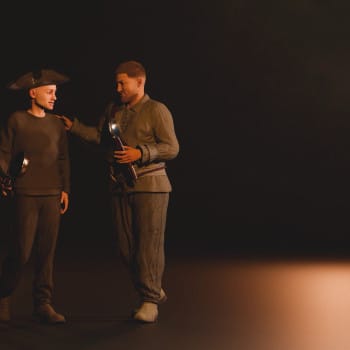
Beyond the music itself, BigDenBoo extends his creative vision into visual storytelling through detailed three-dimensional environments created with Blender. Having begun exploring the software during the development of The Journey, he has since used it to build visual references for important characters, locations, and events within his fictional universe.
Having this brief introduction to BigDenBoo and the creative universe behind Forgotten Stories, there is plenty to explore about the relationship between music, storytelling, and visual imagination that defines his work. So, without further ado, let’s begin today’s interview.
INTERVIEW SESSION
Oliver:
Having followed your musical development through The Journey and Lostblood, it’s interesting to see how the Musical Adventures universe has continued to expand. Now that you’re presenting its third chapter, Forgotten Stories, how would you describe the person and composer you have become through the experience of building such an extensive musical and narrative project? Has working on this saga changed the way you understand your own creativity?
BigDenBoo:
You have to understand that it all started as a kind of challenge in the summer of 2022: a handful of compositions in a genre I had never approached before. That is how the project was born. It was somewhat disorganized at that time. But the narration of the first chapter came to me gradually, and that is how “The Journey” was built. It was the work on this album that changed the way I approached the creative process: I began to imagine and then write the foundations of a fictional world, with its characters and their linked plots. This is what essentially reversed my way of working on the saga: generally, I now start by composing music for what I have already imagined beforehand.
Oliver:
One particularly interesting aspect of your work is the importance you place on sound itself. You describe yourself as someone passionate about sound in all its forms, with a strong interest in mixing and sonic detail. Considering how much attention you give to frequencies, textures, and precision, what does achieving the right sound mean to you personally? Is there a particular feeling you experience when a composition finally sounds exactly as you imagined?
BigDenBoo:
That’s a difficult question! I spend an enormous amount of time on the sonic aspect of the albums, in an integrated approach ranging from the choice of sounds to mixing and the final mastering stage. I spend a crazy amount of time on it—it’s almost obsessive! So, that “particular” feeling is when I finally tell myself that it is time to conclude and release the album!
Oliver:
Your musical identity brings together influences from the golden age of synthesizers, particularly instruments such as the Roland JX-3P, Yamaha DX7, and Korg Poly-800, alongside modern electronic production and cinematic composition. As technology and production techniques continue to evolve, how do you maintain a connection with the character of those vintage instruments while allowing your sound to develop in a more contemporary direction?
BigDenBoo:
I often mention these old machines because they are emblematic to me. In my approach to sound design, I try to preserve the very purposeful nature of golden-age synths. I find the fusion of raw analog sounds with the scale of orchestral sample libraries to be very interesting. However, my working processes remain resolutely contemporary. For example, I have a very old monophonic Korg from 1979. I love its sonic color—I actually used it in the track “Staoslam City” on the first album. But I ended up sampling it. It’s much more practical!
Oliver:
Your approach to music goes beyond creating individual compositions; you’re effectively building a fictional world with its own characters, locations, relationships, and unfolding events. When developing the world of Takkanor, how much of the narrative exists in your imagination before you begin composing, and how often does the music itself introduce new ideas that influence the direction of the story?
BigDenBoo:
Since the end of the production of “The Journey” in late 2024, the music is almost entirely built upon what I had already written regarding this fictional world. However, it does happen from time to time that I compose a track and then attach it to the story. In “Forgotten Stories,” for example, that is the case with “Dancing Shadows.”
Oliver:
The title Forgotten Stories carries an interesting emotional suggestion, particularly because this chapter revisits characters and events from the previous albums while bringing previously unexplored stories into focus. What does the title represent to you, and why did you feel this was the right moment in the saga to turn attention towards the histories, experiences, and hidden circumstances of the wider group of characters?
BigDenBoo:
The title has a double meaning. But the primary reflection is that what is told in “Forgotten Stories” takes place in the same timeline as the second half of “Lostblood.” The latter is already long—25 tracks and nearly 80 minutes—focusing solely on Tyler’s return to his roots. It was important for me to speak about several characters introduced in “The Journey” who were, in a sense, “forgotten” in “Lostblood.”
Oliver:
One of the major developments in this album is Tyler and Scott’s reunion in their home village of Lienwood after the separation and difficult experiences explored in Lostblood. Their relationship has been central to the larger narrative, and their reunion also creates an opportunity to explore the emotional consequences of everything that has happened. What did you want listeners to understand about their relationship at this particular point in the story, and how did you approach translating that emotional weight into music?
BigDenBoo:
This first part of the album can be summarized in one word: serenity. The family is finally reunited, without any immediate threat or danger. That is what I try to convey through these first tracks of the album, right after the opening. Because the trials that the Becker brothers have undergone were not easy… Beyond the regained serenity, these hardships make Tyler and Scott more united than ever. That is important… for what comes next!
Oliver:
The album gradually moves beyond the central experiences of Tyler and Scott to explore the lives of other characters, including people encountered along their journey. Tracks such as Irina, Mark, Serenity, and Anna suggest that individual personalities and personal circumstances are becoming increasingly important to the wider narrative. How do you approach composing music for different characters while ensuring that each one has a recognizable emotional identity within the same musical universe?
BigDenBoo:
I generally “juggle” with one to three concepts when composing tracks dedicated to specific characters: first, most have a theme melody of their own; I also sometimes add themes evoking the geography related to these characters; and finally, the way the tracks are arranged is developed based on the events of the narrative.
Oliver:
Something that stands out about the four-part structure of Forgotten Stories is how the geographical movement of the story also changes its emotional and musical scale. The album moves through Lienwood, Staoslam City, Port Franklin, and Mantra Island, gradually shifting from intimate family experiences towards wider mysteries and interconnected destinies. How did you approach creating a distinct musical atmosphere for each location, and what role does geography play in shaping the identity of your compositions?
BigDenBoo:
Geography played an important role in how I approached themes related to “The Journey.” It was necessary to introduce sonic and musical markers that would be declined throughout the rest of the saga. “Forgotten Stories,” like “Lostblood,” picks up these themes. But it follows a somewhat different logic, one that is more based on providing keys to imagine what will happen next.
Without giving away any spoilers, this is particularly the case in parts 2 and 4 of the album.
Oliver:
Tracks such as Tyler’s Dream, Lost Pages, and Dancing Shadows suggest very different forms of storytelling, from questioning reality and exploring hidden communities to uncovering mysteries within ancient ruins. When composing pieces like these, how do you communicate events, atmosphere, and character emotions without relying on conventional lyrics or spoken dialogue? What musical elements become most important when the listener must imagine the story for themselves?
BigDenBoo:
If the listener is familiar with the first two albums, they will be able to link certain tracks to locations or characters via melodic markers. Taking the three examples you mention: “Tyler’s Dream” is entirely dedicated to that character, but it includes a haunting melody that it shares with “Serenity” and “Special Circumstances.” “Lost Pages,” a track that introduces the second part, reprises the main melody of… “Staoslam City” from “The Journey.” Finally, “Dancing Shadows” relies on the island’s theme, which was the basis of the first track of “Lostblood.”
Oliver:
Your track 2+2=4 (Anticipation) carries the statement, “The world moves forward. Inexorably. It is written.” Later, Dimensions (Anticipation) introduces a contrasting statement: “The world moves forward. Inexorably. Nothing is written.” These two moments appear to introduce an important philosophical contrast within the album, particularly around destiny, choice, and the possibility of changing what lies ahead. What is the thinking behind these two statements, and what do they reveal about the larger direction of the story?
BigDenBoo:
I obviously cannot say anything for now regarding future events in the saga. I wanted the idea behind these descriptions to be both mysterious and simple at the same time: the first track, which concludes part 2, tells us that change is coming, it is inevitable because it is written. The second track, in part 4, confirms that changes are coming, but perhaps not as we might imagine. The final track of the album, “Special Circumstances,” supports this affirmation.
Oliver:
Your passion for mixing and sound design appears to be a central part of your artistic identity rather than simply a technical stage of music production. You also work with Blender to create detailed 3D environments that visually reflect the atmosphere of your compositions. How do you coordinate these two creative disciplines, and what challenges do you face when trying to ensure that the visual environment communicates the same emotions and narrative details as the music?
BigDenBoo:
This happened in two stages: back during “The Journey,” I threw myself into the Blender adventure, a software I discovered for that occasion. I built as many visual reference elements as possible: the main characters, important locations (Staoslam City, Mantra Island, Lienwood…), and other visuals intended for subsequent chapters. For “Lostblood” and “Forgotten Stories,” the visuals were often created after the musical work was done. The main challenge is that it takes me a lot of time.
Oliver:
A project with 20 tracks and an interconnected narrative requires considerable attention to musical consistency, pacing, and the listener’s ability to follow the story. With Forgotten Stories, you’re balancing individual compositions with a much larger narrative structure. How do you decide when a track needs to introduce a new musical idea, when it should revisit an established theme, and when it should simply allow the atmosphere to develop without introducing too much information?
BigDenBoo:
My process is very variable depending on the tracks, and often within a single track. I introduced themes linked to characters or locations in the first two albums. In “Forgotten Stories,” the idea is to take these themes back but in a somewhat different way. For example, the second track of the album, “Irina”, reprises two themes introduced in Lostblood: “Lienwood” and “The Matriarchs”. But with a very different musical structure and color, thus a very different atmosphere.
“Port Franklin” is another example: it relies on a new theme to try and match the atmosphere of this garrison city, but since the track is set at the moment of the arrival of the Vengeance ship, it also incorporates Captain Bright’s musical theme.
Oliver:
Your previous chapter, Lostblood, received attention for its combination of electronic and orchestral elements, its cinematic atmosphere, and its ability to function almost like a video game soundtrack or a fantasy novel told through music. With Forgotten Stories, how deliberately have you moved beyond the musical and production ideas explored in that album? Are there particular aspects of your earlier work that you wanted to improve, challenge, or approach from a completely different perspective?
BigDenBoo:
I began working on “Forgotten Stories” during the final production of “Lostblood” with the desire to evolve my production method: I wanted to reduce the number of instruments involved in the album’s arrangements. The idea was very simple: how would I have done it if I had to record the album during the era of analog studios equipped with a 24-track tape machine?
Oliver:
One of the more interesting creative challenges of an ongoing saga is knowing how much information to reveal and how much mystery to preserve. In Forgotten Stories, familiar characters return, new connections emerge, and events suggest that something much larger is taking shape beyond the immediate experiences of the inhabitants of Takkanor. How do you balance giving listeners satisfying developments within the current chapter while keeping enough unanswered questions to make them curious about what comes next?
BigDenBoo:
It is a difficult balance to find. I try to bring something new into the narration, but I cannot reveal everything all at once. Otherwise, a chapter would consist of about fifty tracks, a format that is not compatible with digital distribution or physical releases.
In “Lostblood,” the balance was simpler to grasp: we realize from the second track that Tyler is indeed alive, but we quickly realize as his adventures progress that there is a hidden truth. In “Forgotten Stories,” on the other hand, it was built not as a conclusion but as an introduction in four points. Each of its parts announces… what comes next. I am aware that the album brings more questions than answers, but for me, it is a necessary step.
Oliver:
Your music has attracted attention from publications and listeners who recognise the ambition behind your cinematic compositions and world-building. Some have described your albums as experiences that require listeners to step inside a story rather than simply play music in the background. How have these responses influenced your understanding of your audience, and have any particular reactions or interpretations made you reconsider the way people connect with the world you’re creating?
BigDenBoo:
We live in an era where music is consumed quickly and everywhere. With this somewhat marginal project, I was hoping, in a way, to take the opposite approach of this terribly ephemeral side. Much like how people used to listen to music a long time ago: sitting in an armchair and listening to an album in its entirety. Not as a product for consumption of a few seconds on social media or as background music while doing the housework or cooking!
So, these reactions and feedback go straight to my heart, as they confirm this approach. The comparison with film or video game music also touches me deeply.
Oliver:
Looking across the three chapters, from the original events aboard The Vengeance in The Journey, through Tyler’s solitary search in Lostblood, to the expanding network of stories in Forgotten Stories, there’s a clear development in the scale and complexity of the project. What has been the most demanding aspect of maintaining continuity across such an ambitious body of work, and what have you learned about long-form musical storytelling that you didn’t fully appreciate when developing the first album?
BigDenBoo:
The main lesson is that it is better to write everything before starting the production. “The Journey” was somewhat like an assembly of tracks with a process that was still finding its footing. It became much easier for “Lostblood” and “Forgotten Stories” since their narrative framework was already written.
Oliver:
You’ve indicated that the story of Scott and Tyler represents only a fragment of a much larger design, with another chapter expected in 2027. Considering that Forgotten Stories already begins to introduce forces and mysteries beyond what the inhabitants of Takkanor understand, what can you tell us about the creative direction you’re considering for the next instalment? Should listeners expect the story to move towards an even larger world, or will the next chapter approach the existing universe from a completely different perspective?
BigDenBoo:
Here too, I cannot reveal anything, except that we will, of course, find the central characters introduced in these first three chapters. I can also say that none of the additions introduced in “Forgotten Stories” is “gratuitous.”
As I mentioned when answering the previous question, the narrative framework for the sequel is already written. I have also composed some tracks. However, the chapter breakdown is another matter, and that is something I will have to focus on by early next year.
Oliver:
Finally, when you look at the Musical Adventures saga as a whole, what would you ultimately like this project to represent within your artistic career? Beyond the technical achievements, the number of compositions, and the fictional world you’ve created, what do you hope listeners will remember about the experience of discovering these stories through your music, and what kind of lasting creative legacy would you like BigDenBoo to leave behind?
BigDenBoo:
I don’t know. Primarily, that listeners take pleasure in listening to my music, having the possibility to extrapolate their own stories from it. But perhaps most importantly for me, that they immerse themselves in the saga both sonically, writtenly, and visually.
“With Forgotten Stories, BigDenBoo brings music, imagination, and an evolving fictional world together, inviting listeners to discover not just individual compositions, but the lives and possibilities that exist within them.”
~ Oliver (DULAXI Team)
EDITORIAL PERSPECTIVE
What makes Forgotten Stories particularly interesting is the relationship between its musical arrangements and the narrative framework supporting them. BigDenBoo’s use of recurring melodies gives familiar characters and locations a sense of continuity, while his more restrained production approach creates room for individual musical ideas to develop. His commitment to combining sound design with visual world-building also reveals an artistic process that extends well beyond conventional album production.
~ Oliver (DULAXI Team)
CLOSING
Our conversation with BigDenBoo has offered a fascinating insight into the creative thinking, patience, and attention to detail behind the Musical Adventures saga. From his early fascination with synthesizers to the development of an interconnected fictional universe, it is clear that his approach to music is closely connected to his desire to create experiences that listeners can explore and interpret in their own way.
We would like to sincerely thank BigDenBoo for taking the time to share his experiences, discuss the creative decisions behind Forgotten Stories, and give us a closer look at the world of Takkanor. His reflections on sound design, narrative composition, and the relationship between music and visual storytelling have added another interesting dimension to our understanding of this project.
For readers who have not yet experienced Forgotten Stories, we encourage you to spend some time with the album and discover how its different compositions contribute to the wider narrative. Whether you are drawn to electronic experimentation, cinematic soundscapes, synthesizer-driven music, or imaginative storytelling, there is plenty to explore across its four thematic movements.
We also look forward to seeing how the Musical Adventures universe develops in its next chapter, particularly with another instalment already taking shape for 2027.
Thank you for spending time with us at DULAXI. This has been Oliver, and we look forward to bringing you more conversations with artists, composers, and creative minds from around the world in our upcoming interviews.