
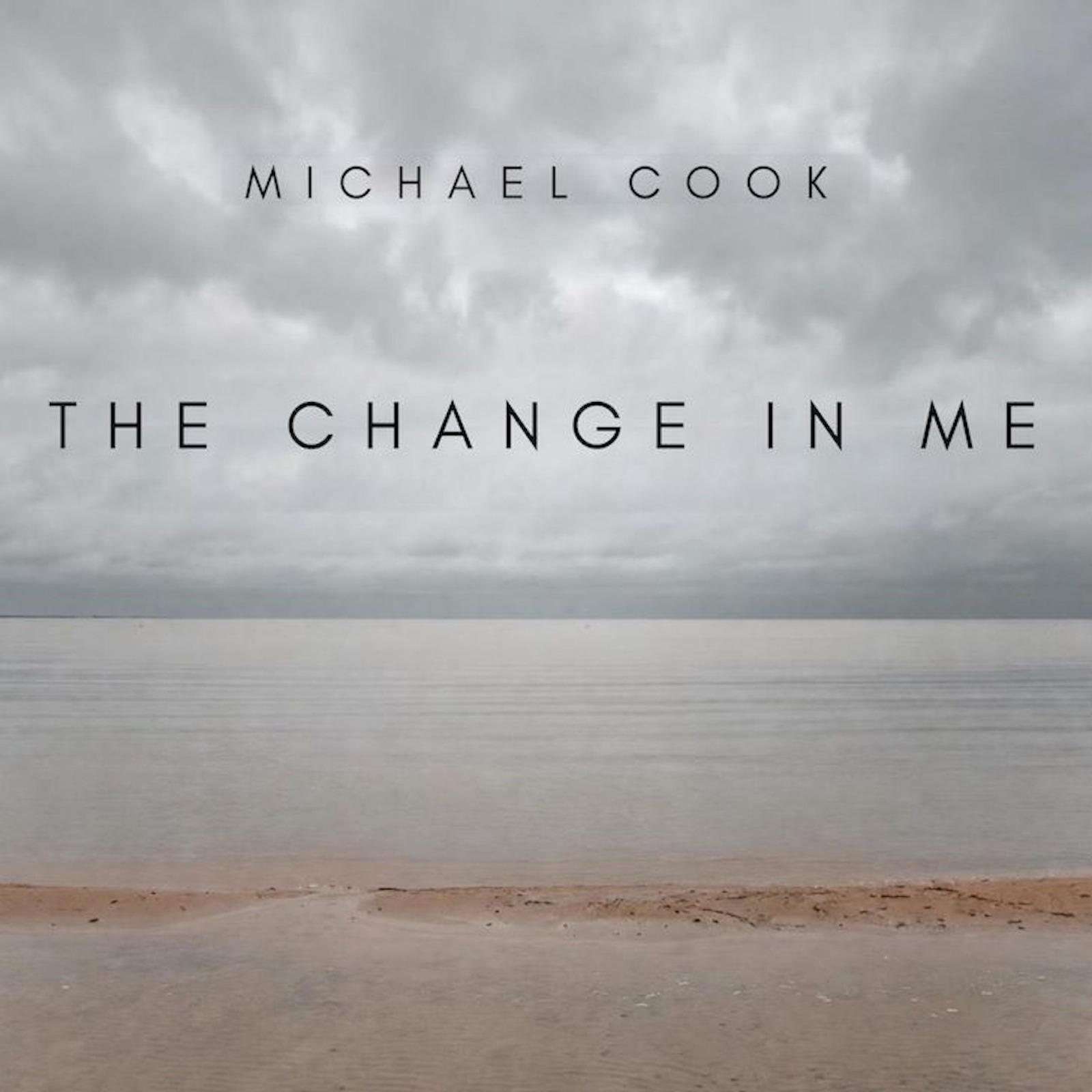
Hello everyone, it’s your host Oliver from DULAXI, and today I’m delighted to be joined by Newcastle upon Tyne-based singer-songwriter and guitarist Michael Cook, whose latest release, “The Change in Me“, offers a thoughtful exploration of personal transformation and the wider changes shaping our world. Drawing from alternative rock and melodic pop, the single was released on 11 November 2026 and serves as the lead introduction to his forthcoming debut solo album, Borderland, scheduled for January 2027.
Before we begin our conversation with Michael, here’s what you need to know about today’s featured project.
About Michael Cook
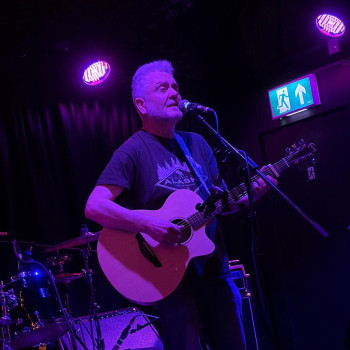
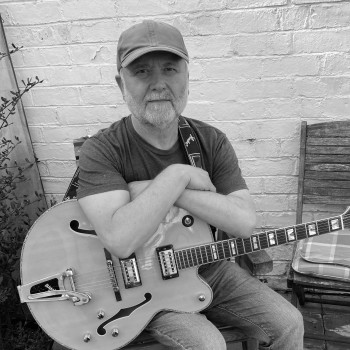
Based in Newcastle upon Tyne, United Kingdom, Michael Cook has spent years developing his musical identity within the city’s independent music community. His involvement with local groups, including indie-pop outfit Scottish Polis Inspectors and the experimental Ouseburn Collective, has allowed him to explore different creative approaches while establishing himself as a songwriter and guitarist. Having grown up in Whitley Bay, Cook’s musical development has also been shaped by the region’s grassroots music culture and the artists who helped establish its distinctive identity.
His musical influences include Prefab Sprout, David Bowie, Johnny Marr and Ron Sexsmith, alongside the songwriting traditions of the Smiths and the Go-Betweens. These influences inform an approach that places particular importance on guitar textures, melody, storytelling and expressive songwriting. Across his work, Cook brings together elements of alternative rock, melodic pop, country and folk, allowing different musical sensibilities to contribute to a sound rooted in traditional songwriting while remaining open to experimentation.
Released on 11 November 2026, “The Change in Me” is the lead single from his forthcoming debut solo album, Borderland. The song examines the relationship between global ecological changes and personal experiences of anxiety, uncertainty and transformation. Rather than approaching these subjects from a purely environmental perspective, Cook considers how individuals and society respond to overwhelming developments in the world around them. Its driving drums and guitars, raw vocals and reflective lyrics give the subject matter a sense of urgency, while elements of irony and humour offer another dimension to its message.
Written in late 2026, the track features Cook on vocals, guitars and bass, with Connor Bluemel contributing drums. The recording took place at Blank Sounds Studio in Newcastle upon Tyne, where the initial guitar, drum and guide vocal performances were captured live before Cook added further vocal, bass and guitar parts. Recording and mixing were handled by John Martindale, whose contribution helped retain the organic character of the performances. With Borderland expected in January 2027, Cook is preparing to introduce a wider collection of songs exploring emotional evolution, ageing, love, loss and the experience of living through a rapidly changing world.
Having this brief introduction to today’s featured project, I’m sure both new listeners and longtime followers of Michael’s work will be interested in hearing more about the ideas, experiences and creative decisions behind this release. So, without further ado, let’s begin today’s interview.
INTERVIEW SESSION
Oliver:
Newcastle has a strong musical identity, and you’ve spent years becoming part of its creative community through your involvement with Scottish Polis Inspectors, the Ouseburn Collective, and your solo work. What first drew you towards music, and how has growing up and developing as an artist in Newcastle shaped the person and songwriter you are today?
Michael Cook:
I grew up in Whitley Bay and there was a small music scene back then, with opportunities for bands to play small venues like Mingles. And in town we had the likes of the Gosforth Hotel and The Cooperage – Prefab Sprout, Hurrah and Scottish Polis Inspectors cut their teeth in places like that, and being aware of local musicians had an impact. But apart from the Kitchen Ware label and a small DIY scene, things were pretty limited. It’s different now thankfully. It’s so good to see the opening of new, small venues, and the grass roots scene has never been healthier – inspired by local talent like Sam Fender, Hector Gannet and the Knats.
Oliver:
You’ve worked across different musical settings, from being part of established local bands to developing your own material as a solo singer-songwriter. At what point did you begin to feel the need to establish a distinct creative identity outside those collective projects, and what did stepping into that space allow you to express that you perhaps couldn’t before?
Michael Cook:
About a year ago, I began writing more songs then realised I needed a platform for them; didn’t want them just to disappear into my hard drive. Partly due to recent life events, I was writing lyrics for the first time in years – the Ouseburn Collective recordings had been an (instrumental) response to lockdown – but the new songs are more related to a reengagement with the world.
Oliver:
Your musical influences include Prefab Sprout, David Bowie, Johnny Marr, and Ron Sexsmith. Each brings something different to songwriting, melody, guitar work, and artistic expression. What initially connected you to these artists, and how have their different approaches influenced the kind of music you want to create without losing your own identity?
Michael Cook:
It’s only a slight exaggeration to say that Prefab Sprout got me through the 1980s – one of the few bands to successfully navigate the (oppressive) music production of the decade, and still sound like a band, while at the same time fly the flag for inventive songwriting. See also the Smiths and the Go-Betweens.
Oliver:
You’ve described your debut album, Borderland, as a project that brings together alternative rock, melodic pop, country and folk influences, alongside classic songwriting. What does this combination represent about your personality and artistic outlook, and how did you arrive at a sound that feels like a natural reflection of where you are creatively?
Michael Cook:
My first musical love was the sound of guitars: the timbre, the twang, the harmonics, dynamics and imperfections. And how artists have used them to frame the human voice and help deliver stories. That’s where I’m located now. Maybe one day I’ll find inspiration and human expression in sequencers, drum programming and auto-tune. Let’s see.
Oliver:
“The Change in Me” explores the relationship between the changing ecological state of the world and the personal changes people experience in their own lives. What first brought these two ideas together for you, and was there a particular experience, observation, or moment that made you feel this was a story you needed to put into a song?
Michael Cook:
I was thinking about how society, governments and individuals avoid or fail to address massive shifts that are happening – including ecological, technological, and political, and how these dovetail with individual anxiety and mental health. Maybe I was trying to wake myself up.
Oliver:
The title “The Change in Me” suggests something deeply personal, but the song also addresses a much wider collective experience. How do you understand the relationship between personal transformation and the changes happening around us, and why did you feel that connecting these two perspectives was important?
Michael Cook:
See above. I think it’s good to talk about how we fail – it’s a big part of the human condition and something not apparent when looking at people’s social media posts and feeds. But if you look behind the bullshit…
Oliver:
Climate change can be an overwhelming subject, particularly when people feel uncertain about what they can do individually or collectively. Rather than approaching the subject purely as a statement about the environment, how did you use songwriting to explore the anxiety, uncertainty, and hope that come with trying to understand and respond to a changing world?
Michael Cook:
I’m not sure I’ve got too much more to add to the above to be honest. I’m not making any profound statement and the song’s not focused solely on climate change. There’s irony and humour in there too, so I hope that’s not too deeply hidden.
Oliver:
One interesting aspect of your songwriting is the combination of personal reflection and storytelling. When writing “The Change in Me”, how did you decide which parts of the subject needed to come from your own perspective and which required a broader voice that listeners could connect with through their own experiences?
Michael Cook:
It wasn’t really conscious – it was how the words seemed to ‘come out’, starting with an expression of being overwhelmed with these rapid changes, being paralysed by their magnitude. And thinking that perhaps that’s where many of us are.
Oliver:
Your upcoming album, Borderland, also explores emotional evolution, ageing, love, loss, and the experience of living in a fast-changing world. How does “The Change in Me” introduce these wider ideas, and what do you hope listeners begin to understand about the album through this first single?
Michael Cook:
this track is somewhere between ‘storytelling’ and ‘confessional’. And the other songs on the album are a mixture of both, the dividing line often being blurred – story songs have elements of the personal and lived experience, and the personal ones also draw on other peoples’ lives, often then transferred into the first person.
Oliver:
You handled the lead vocals, guitars, and bass on “The Change in Me”, while Connor Bluemel contributed the drumming. What did you hear in the song that made driving drums and guitar such important elements of its identity, and how did you approach building an arrangement that could carry the urgency of its subject matter?
Michael Cook:
When I wrote the song, I heard it as a ‘band performance’, up-tempo with electric guitar and drums. I wanted the music to reflect the urgency and alarm expressed in the lyrics. When I got together with Connor, he came up with the perfect drum part almost immediately. He’s an instinctive player, and this made the process fast and enjoyable.
Oliver:
Recording at Blank Sounds Studio, a facility close to where you live and one that has welcomed artists such as Pigs x7, Richard Dawson, and Liam Fender, must offer an interesting connection between your everyday surroundings and your creative work. What makes recording in a familiar local environment valuable to you, and how does that relationship with Newcastle influence the atmosphere of your music?
Michael Cook:
Some of my favourite records of recent years were recorded there – including 20/20 by Richard Dawson and Fuck Love by Lovely Assistant. I loved the sound of these albums – a big factor in choosing the studio. Oh, and I can walk there from my house
Oliver:
Taking responsibility for almost every instrument and all the vocals on a recording can be creatively rewarding, but it also brings its own demands. What was the most challenging part of handling so much of the performance yourself on this project, and was there a particular moment during recording when you had to rethink your original approach to get the result you wanted?
Michael Cook:
I’m happy with the way the recording went, but it was intense at times. I’d underestimated the amount of work I’d left myself between sessions – for example, after the recording of Connors’ drums, I had to work out bass and lead guitar parts from scratch ready for the next session. That piled up the pressure but helped me stay focused. The process was quick, with little room for successive takes or tampering with results.
Oliver:
You mentioned that most of the songs on the album were recorded within a year of being written. Many songwriters allow material to sit for considerably longer before recording it. What made preserving that relatively immediate connection between writing and recording important to you, and do you think it helped retain something in the performances that might otherwise have changed with time?
Michael Cook:
Yes, I think they reflect state of the world in 2025/6, and the state of my mind during this window. I wanted it to be a snapshot grounded in time – this is what albums are good at; why they remain important for artists, if not consumers. The only ‘old’ song recorded was ‘Politics’ which I’ve performed with Scottish Polis Inspectors a few times. That’s a tongue in cheek track which related to a career change some years back but then chimed with more recent life events. So, I included that.
Oliver:
Working with drummer Connor Bluemel and recording and mixing engineer John Martindale brought different creative contributions into the project. How did those collaborations influence the final character of “The Change in Me”, and how do you balance your own musical vision with the ideas and expertise of the people you work with?
Michael Cook:
the influence of Connor’s drums is massive – they drive the song and his playing frames the ‘crescendo’ section at the end which provides movement and interest. And John’s such a talented engineer and knew how to translate what I was looking for, how to keep the recordings grounded and organic, not overly processed. But you might detect the sneaky addition of delay in the vocals towards the end – this was John’s suggestion helping to emphasise the song’s sentiments.
Oliver:
You’ve performed at venues such as Three Tanners Bank, The Little Building, and Cluny 2, while also appearing with Scottish Polis Inspectors and Quin. How has performing in these different settings shaped your confidence as a musician, and what have you learned about connecting with an audience that has influenced the way you approach your solo material?
Michael Cook:
I’ve spent years hiding behind a guitar or bass, so ‘coming out’ to the front of the stage was a big change. Quite scary. As lead singer, you’re the focus of interest and I’m far from being extrovert. It’s a development that I wasn’t sure I could do to be honest. Still not sure. Let’s see.
Oliver:
Moving towards the release of your debut solo album after years of involvement in Newcastle’s independent music scene represents an important career milestone. Looking back at your earlier work and comparing it with what you’re creating now, what changes do you recognise in your songwriting, your confidence, and your understanding of yourself as an artist?
Michael Cook:
Rather than writing the occasional song for a band, I’m now writing regularly and I think my songs are benefit – it’s the old cliché of having to write lots of bad ones before some good ones emerge. And as a result, I’m more confident as a vocalist.
Oliver:
Music addressing subjects such as ecological anxiety and personal change can mean different things to different listeners. When someone finishes listening to “The Change in Me”, what would you like them to take away from it? Are you hoping they reconsider their relationship with the world, recognise something about their own lives, or simply feel less alone in navigating uncertainty?
Michael Cook:
I think your last point – that we are all in the same boat, and maybe when we realise that, realise our commonality, it’ll help us get our fingers out. Rather than navel gazing and feeling overwhelmed we’ll act to help make positive change. God knows we need it.

Oliver:
With Borderland scheduled for January 2027, “The Change in Me” is the first introduction to a much larger body of work. As you prepare to bring this album into the world, what are you most looking forward to sharing with listeners, and what would you like this new chapter to establish about Michael Cook as a solo artist?
Michael Cook:
Just that I’m still here, still making music after all this time, with something to say. To quote Mr Zappa: “Information is not knowledge. Knowledge is not wisdom. Wisdom is not truth. Truth is not beauty. Beauty is not love. Love is not music. Music is THE BEST.”
“Michael Cook’s move into solo work is not simply a change in musical direction, but an opportunity to give a voice to years of experience, observation and creative reflection. In ‘The Change in Me’, he finds a way to connect the uncertainty of the wider world with the quieter struggles taking place within us.”
~ Oliver (DULAXI Team)
EDITORIAL PERSPECTIVE
What makes “The Change in Me” particularly interesting is the relationship between its musical urgency and its reflective subject matter. The driving guitar and drum arrangement gives the song a direct, band-oriented character, while Michael’s vocal delivery keeps the storytelling personal. His preference for organic performances is evident in the recording approach, particularly the decision to capture the initial instrumentation live. There is also something refreshing about his willingness to acknowledge uncertainty, irony and personal shortcomings rather than present himself as someone with all the answers.
~ Oliver (DULAXI Team)
CLOSING
A special thank you to Michael Cook for joining us and sharing the experiences, influences and creative decisions behind “The Change in Me”. Our conversation has offered a closer understanding of his journey from years of collaborative musical projects to establishing himself more fully as a solo artist, as well as the personal and wider observations informing his latest work.
For readers who have not yet experienced “The Change in Me”, we encourage you to give the single a listen and explore the ideas behind its lyrics and arrangement. With his debut album, Borderland, expected in January 2027, there is more of Michael’s songwriting and creative expression to look forward to as he enters this next chapter.
Thank you for spending your time with us here at DULAXI. We hope you have enjoyed getting to know Michael and discovering more about his music. This has been Oliver, and we look forward to bringing you more conversations with talented artists and musicians from around the world. Until next time, keep discovering new music with DULAXI!