
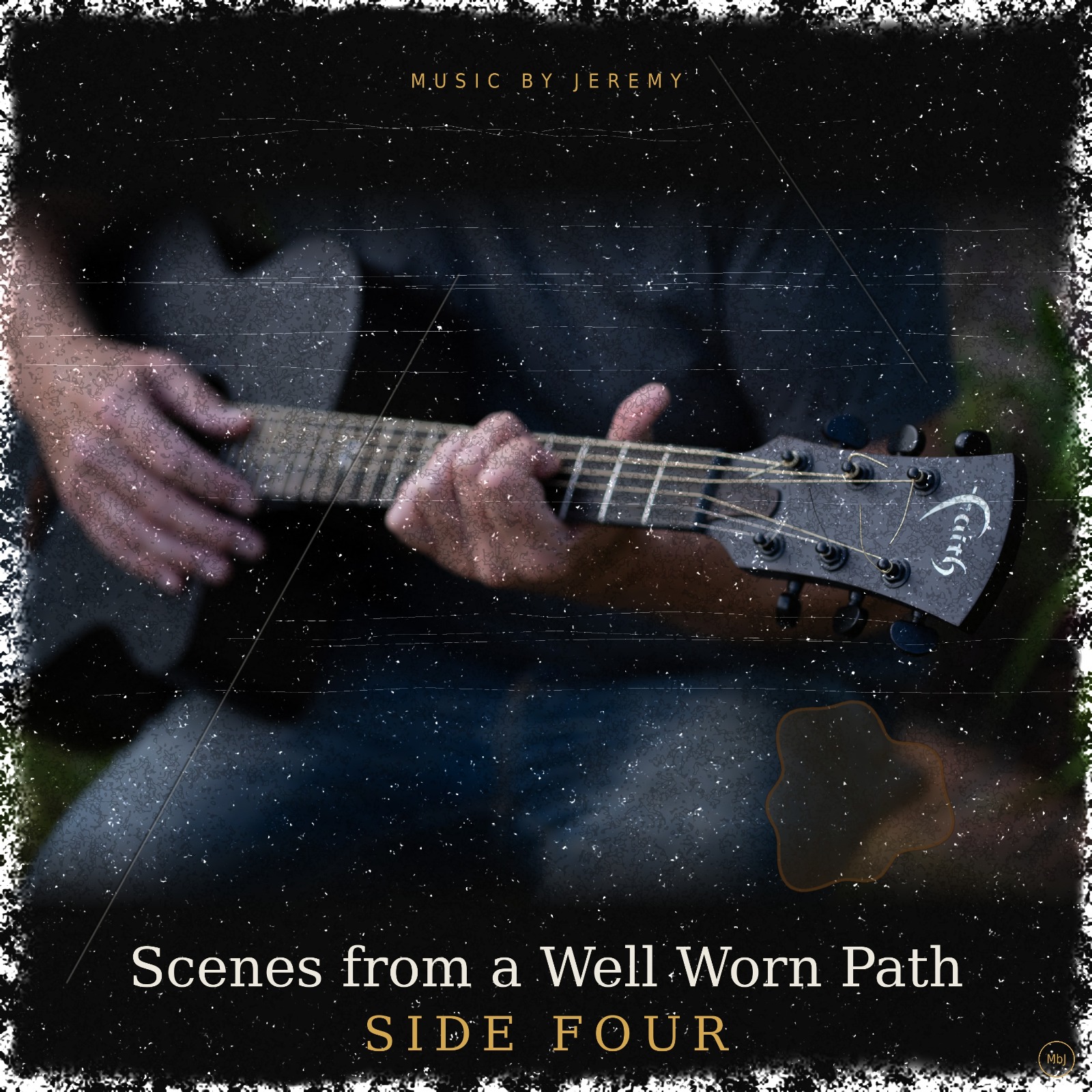
Music by Jeremy’s “Scenes from a Well Worn Path (Side Four),” released on November 25th, 2026, completes a 24-song double album that has taken up much of the year. Jeremy, a singer-songwriter and multi-instrumentalist from Banbury, England, wrote the songs on an old acoustic guitar, and across four sides they have moved between social observation and private reflection, taking in everything from Keynesian economics to a failed mathematical love proof. Side Four, the closing chapter, brings the question behind the whole project into plain view: what makes a life worthwhile?
The side runs from dry humour to private sensuality and open-hearted gratitude. “Dinosaur” laughs at becoming obsolete, “Juicy Red Apple” points at an industry built to feed shareholders, “Rollright Stones” questions the urge to be remembered, “Slow in Fast Out” turns the monthly bank balance into comedy, “Vincci Bitten” remembers a weekend in Barcelona, and “Saudade” closes the record with the idea that life’s secrets are found in paying attention, not in grand monuments, money or power. The sound follows the subjects. “Dinosaur” opens the side with a full folk-rock band, while “Rollright Stones,” “Vincci Bitten” and “Saudade” drop the drums altogether and work with acoustic guitar, bass and soft keyboard pads. That choice keeps the words easy to follow, and it suits songs that mostly look back.
DINOSAUR:
“Dinosaur” is about feeling obsolete after years of hard-won achievement. The narrator learns the ropes, reaches the top, then wakes up one day to find a world that no longer fits, and the title metaphor carries the humour and the hurt together. The verses are warm and conversational. The chorus jumps into soulful, slightly raspy upper-register singing on “Woke up one day and the world made no sense,” and the bridge asks what the future holds and answers with tired old legs. The vocal peaks in the final chorus.
A warm, melodic acoustic guitar progression opens the song and sets an unhurried, reflective mood. A crisp drum fill and a deep, steady bassline join around the 0:14 mark, and from there the arrangement settles into a moderate, balanced folk-rock pace built on rhythmic acoustic strumming, driving electric guitars, a warm, tight bass and dynamic, controlled drums. It pulls back in the verses to leave room for the story, swells whenever the chorus arrives and finishes on ringing guitar chords. The production is clean and polished, and what lingers is reflection. As an opener it works well: it has enough energy to carry a joke and enough restraint to let the bridge land.

ROLLRIGHT STONES:
“Rollright Stones” starts with the Neolithic monument in Oxfordshire and the builders who stacked its stones about 6,000 years ago, without machines, in the hope of being remembered. Then the question turns inward, and the song asks whether the narrator wants to be remembered after he has gone to his grave. The bridge is the emotional peak, with the vocal rising into a tender upper register, and it ends on a punchline that undercuts the grandeur: perhaps all that remembering amounts to a place where, in 6,000 years’ time, they will “sell crystals and smoke weed.” The voice is soft, airy and intimate throughout, close to a quiet conversation across the room.
The arrangement could hardly be plainer. A delicate fingerpicked acoustic guitar opens the song, the vocal does not enter until about 0:30, and there are no drums or percussion at all. A deep, subtle bass and soft ambient synth pads fill the space during the refrains and help build the emotion, and the pace stays slow and steady. After the final chorus the track strips back to hushed vocals and lingering acoustic chords, asking whether the builders thought they would be remembered and still be seen. Leaving out the drums suits a song that deals in millennia: with nothing marking the beat, nothing hurries the question. What lingers is reflection.
VINCCI BITTEN:
“Vincci Bitten” is a travel song and a love song at once, built on a weekend in Barcelona with his wife. The imagery is the strongest part of the writing: sunlit beaches, cathedrals, salt in the air and a dinner of rich seafood and wine “With Yoko and Lou / But only us two,” a line with a dry explanation, since Yoko and Lou Reed were brass plaques at the 7 Portes restaurant. A reflective bridge says the part of the trip he will remember is the tenderness between the two of them. The vocal is warm, soft and smooth, conversational and tender, and in the final chorus it lifts into expressive upper-register phrasing on the title.
Again there are no drums. Warm fingerpicked acoustic guitar and soft vocal humming open the song, the vocal itself arrives around 0:38, and the pace is relaxed, with gradual movement. A deep, subtle bass and airy synth pads come in with the refrains to add warmth and fill the space, and a lyrical acoustic guitar solo around 2:31 is the main instrumental moment. The final chorus is the peak, and the song ends on a lingering acoustic chord. Nostalgia is what stays behind. The small arrangement suits a song whose best details are kept between two people.
SAUDADE:
“Saudade” closes the album by cherishing small, passing beauty, and it treats its title as bittersweet gratitude for the passage of time. The imagery is seasonal and easy to picture: a hot July day, deep green trees, fields gold with barley. The message is that life passes faster than we know, and the chorus carries it on a tender falsetto lift. The bridge is the emotional peak, where the vocal soars as the lyric admits that this brief moment of heaven will end soon and that life will not wait. The song then settles on its answer: “These tiny moments / Are our bliss.”
The arrangement is minimal, spacious and organic. Warm solo guitar opens the song, soft humming enters at about 0:19, the verses begin around 0:32, and there are no drums or percussion. A deep, subtle bass and airy ambient synth pads swell underneath to add warmth, fill the space and build the emotion, while the pace stays slow and steady. The song ends on a lingering acoustic chord, and nostalgia stays behind. It is a fitting closer: a song about paying attention should not hurry, and this one does not.
“Scenes From A Well Worn Path (Side Four)” Answers Its Big Question In Small Moments, Moving From The Dry Humour Of Obsolescence To The Quiet Gratitude Of Paying Attention.
~ Daniel (Dulaxi Team)
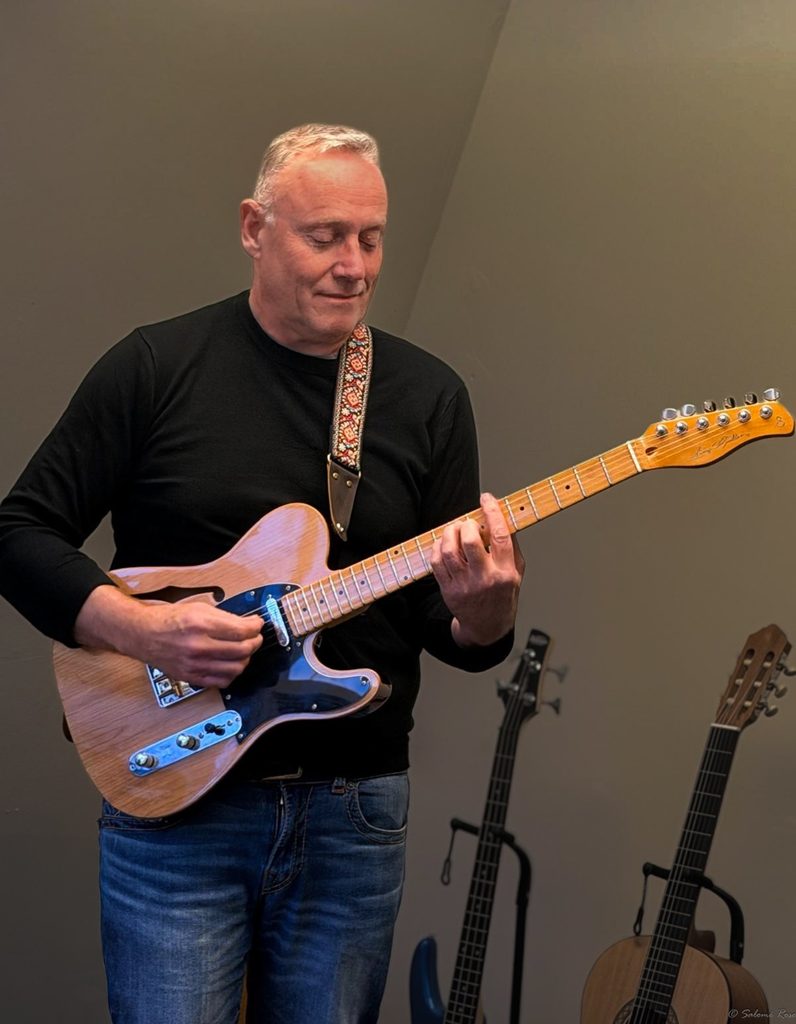
Music by Jeremy is a singer-songwriter and multi-instrumentalist from Banbury, England, who works independently from a home studio. He writes on an old acoustic guitar, plays guitars and fretless bass himself, and has been open about using AI tools trained on his own voice to build out the vocals, drums and some of the harder guitar parts. His influences include John Lennon, Bob Dylan, Randy Newman and David Bowie, and the project now moves toward human collaboration in 2027, with new music planned for the first half of the year. For me, the best thing about Side Four is how plainly it answers its own question: a laugh at obsolescence, a joke about legacy, a quiet dinner in Barcelona and a hot July day among golden fields. None of it is grand, and that is the point. It is a modest, funny and honest way to finish a big project.
For more information about Music by Jeremy, click on the links below.