
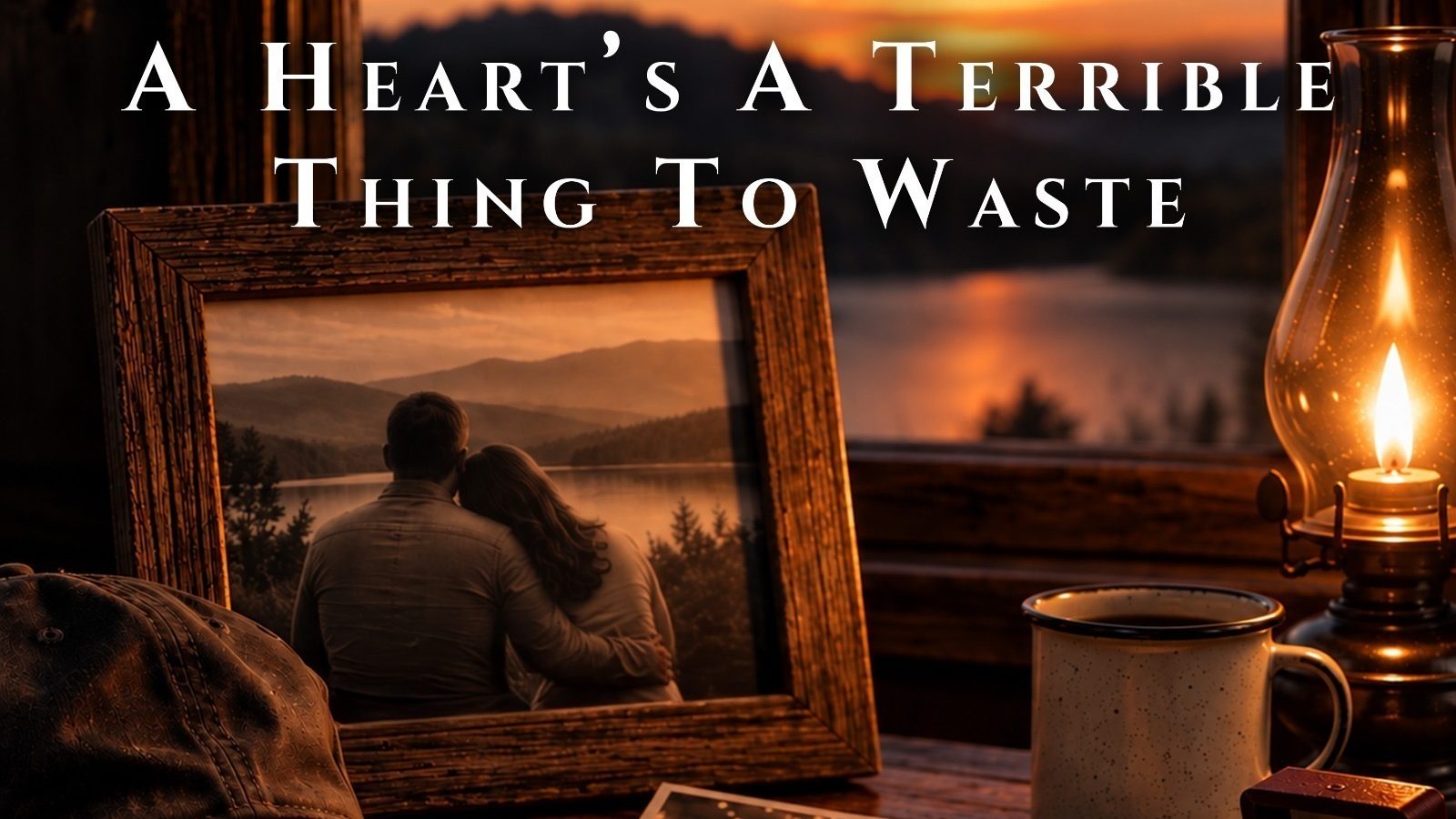
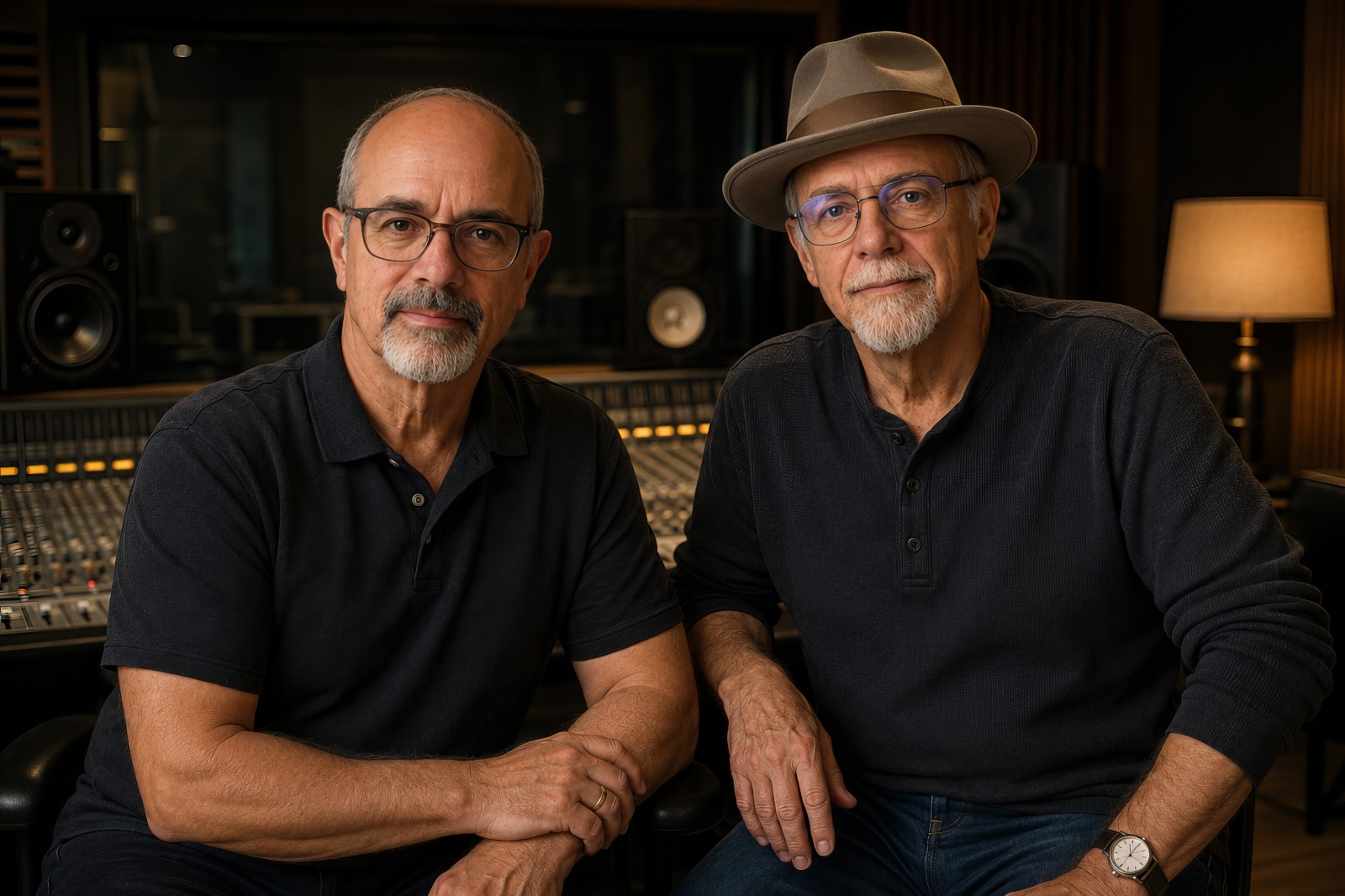
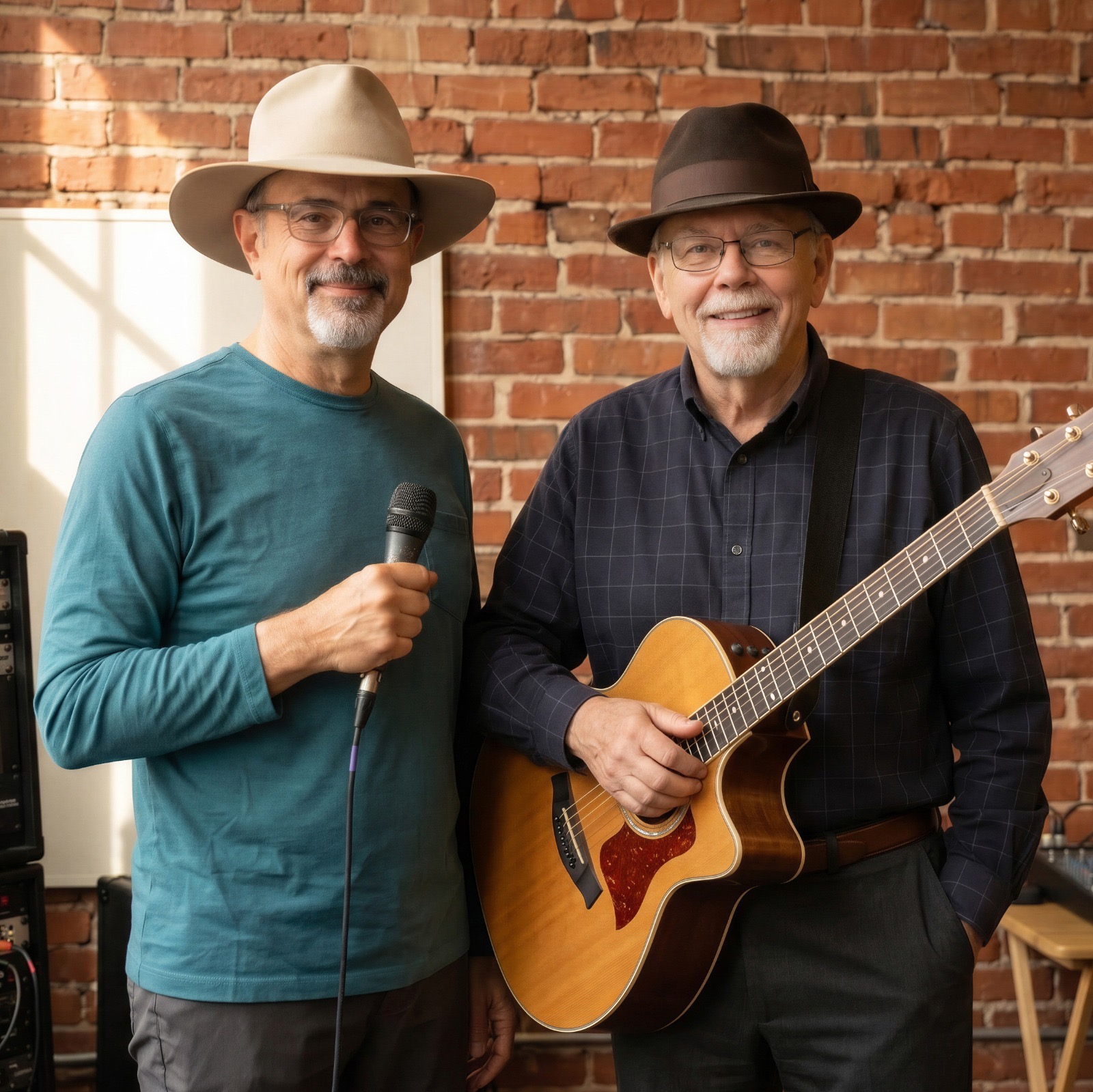
Hello everyone, it’s your host Oliver from DULAXI, and today I’m delighted to be joined by George Aiello and John Ingram of The Sonic Travelers, a songwriting and production duo from the United States whose musical partnership dates back to the 1970s. Working across country, Americana, folk-rock, pop, classic rock, and singer-songwriter traditions, the duo have built their creative identity around original songwriting and the freedom to let each composition find its own direction. Their latest single, “A Heart’s A Terrible Thing To Waste,” released on October 2, 2026, revisits a song written by John Ingram in the 1990s, bringing his original vocal performance into a new production.
Before we begin our conversation with George and John, here’s what you need to know about today’s featured project.
About The Sonic Travelers
The Sonic Travelers is a songwriting and production project founded by longtime collaborators George Aiello and John Ingram, whose friendship and musical partnership began in the 1970s. Their shared history has allowed them to develop a creative approach shaped by decades of musical exploration, a mutual understanding of songwriting, and a willingness to work beyond conventional genre boundaries. Rather than committing themselves to one particular sound, the duo approach each composition according to its individual needs, allowing its story, melody, and emotional direction to determine the music that surrounds it.
Their catalogue draws from an extensive range of traditions, including country, folk-rock, Americana, pop, classic rock, and cinematic music. This broad musical perspective reflects the variety of sounds that influenced them while growing up, as well as their belief that creativity benefits from remaining open to different styles and experiences. Their process is informal and flexible, with ideas developing through conversation, experimentation, and the exchange of suggestions. Sometimes a song arrives nearly complete, while other compositions take shape gradually as the two musicians explore different possibilities. What remains consistent is their commitment to serving the song rather than forcing it into a predetermined musical category.
Released on October 2, 2026, “A Heart’s A Terrible Thing To Waste” offers a particularly interesting example of this songwriting philosophy. Written by John Ingram in the 1990s, the song emerged from a simple but effective idea: replacing the word “mind” with “heart” in the familiar phrase about something being terrible to waste. That change became the foundation for a story about two people reaching different stages of acceptance at the end of a relationship. While one person is preparing to leave, the other understands that the decision may be beyond his control. Instead of pleading for reconciliation, the narrator asks for time, honesty, and the opportunity to preserve his pride while recognising that their shared experiences still matter.
The new release retains John’s original vocal recording from that period, with The Sonic Travelers developing a fresh instrumental arrangement around it. Acoustic instrumentation, piano, a restrained rhythm section, and expressive electric guitar support the vocal without overwhelming the story. The decision to preserve the earlier performance reflects the duo’s belief that production should serve the composition, not simply introduce changes for the sake of modernisation. Through this approach, the song connects its original moment of creation with a new opportunity to reach listeners who may recognise its themes from their own experiences. For George and John, the project also represents something personal: a way to preserve their accumulated songs, ideas, and experiences for their families while continuing to explore the musical possibilities that keep them inspired.
Having this introduction to today’s featured project, I’m sure both new listeners and longtime fans are looking forward to hearing directly from George and John about their creative partnership, the story behind this release, and the experiences that continue to shape their music. So, without further ado, let’s begin today’s interview.
INTERVIEW SESSION
Oliver:
George and John, your musical partnership dates back to the 1970s, which means you have shared several decades of songwriting, musical exploration, and creative experiences. How did your relationship with music and with each other begin, and what has kept you connected as collaborators for so many years?
The Sonic Travelers (George):
My previous bandmates and I were putting together a new band, and our drummer knew John and suggested we contact him. John was a songwriter, a multi-instrumentalist, and a great singer. How could we refuse that?
We connected almost immediately, both musically and personally. There have been some very long breaks in our collaboration over the years as careers, families, and life took us in different directions, but we always stayed in touch. When the opportunity came along to work together again, we jumped at it. The musical connection was still there.
Oliver:
Spending so much time creating music together must have given you a particular understanding of each other’s creative instincts. How would you describe the differences in your individual approaches to songwriting, and how do those differences contribute to what you create together?
The Sonic Travelers (George & John):
Our approaches really aren’t that different, and probably aren’t all that different from those of many songwriters. An idea comes along, one of us brings it up, we talk about it, toss some ideas out, keep others, and see where it goes.
It’s very informal. We don’t have a method or formula that we follow. In fact, the process can be different from one song to the next. Sometimes one of us brings in something nearly complete. Other times it develops through conversation and experimentation. We’ve known each other long enough that neither of us is particularly protective about an idea. If something makes the song better, that’s what matters.
Oliver:
The Sonic Travelers is built around the belief that every song should be free to become what it wants to be. Where did this philosophy come from, and was there a point in your musical experience when you realized that working without strict genre boundaries gave your creativity more room to grow?
The Sonic Travelers (George & John):
It came very naturally because of when we grew up. In the 1960s and early 1970s, people were exposed to a remarkable range of music. Top 40 radio wasn’t nearly as genre-specific as radio became later.
In the course of an hour, you might hear The Beatles, James Brown, Frank Sinatra, Johnny Cash, Ray Charles, Dave Brubeck, The Rolling Stones, The Doors, Bob Dylan, Harry Nilsson, B.B. King, and even movie or television themes. Nobody thought there was anything strange about that.
That became part of our musical vocabulary. We never learned to think that a songwriter had to stay in one lane. We also think something has been lost as music has become more segmented. Being exposed to different kinds of music also exposes you to different cultures, experiences, and ways of looking at things. We could probably use more of that today.
Oliver:
Your catalogue moves between country, folk-rock, pop, classic rock, Americana, and cinematic music. With such a broad range of influences, how do you recognize the musical direction a particular song needs, and what usually guides your decisions when developing its sound?
The Sonic Travelers (George & John):
We usually let the song point us in the right direction. Because our influences are so broad, we’re comfortable trying different instruments, arrangements, rhythms, and vocal approaches until something feels right.
Today’s production tools make that experimentation much easier. You can try an idea without committing an enormous amount of time or money to it. Sometimes an experiment confirms what we originally had in mind, and sometimes it sends the song somewhere else entirely.
We haven’t released examples yet, but we’re even considering releasing alternate versions of some songs in different styles. The same melody and lyric can reveal something quite different when the musical setting changes.
Oliver:
“A Heart’s A Terrible Thing To Waste” was written by John in the 1990s, yet it has found its way into a new release decades later. John, what do you remember about the circumstances in which you originally wrote the song, and what inspired you to explore the emotional situation at its centre?
The Sonic Travelers (John):
There was a very well-known public service announcement at the time built around the phrase, “A mind is a terrible thing to waste.” I found myself substituting the word “heart” for “mind,” and that gave me the central idea.
Once I had that line, the rest came very quickly. I think I wrote the song in about 30 minutes. Sometimes a song takes a lot of work, and sometimes the central idea gives you almost everything you need. This was one of those songs.
Oliver:
The new release retains John’s original vocal performance rather than replacing it with a contemporary recording. What was it about that original performance that convinced you its emotional character was still right for the song, and did you have any reservations about building a new production around a recording made so long ago?
The Sonic Travelers (George & John):
There’s an old cliché that applies pretty well here: “If it ain’t broke, don’t fix it.”
The original vocal still communicated the song the way we wanted it communicated. There wasn’t much point in replacing it simply because we could. We’re also quite a bit older now, and our voices are, shall we say, not quite as flexible as they once were.
More importantly, John’s original performance has a character that belongs to that song. The challenge wasn’t to modernize the vocal. It was to build a new production around it without losing what made the original performance work.
Oliver:
There is something distinctive about hearing a vocal performance recorded decades earlier presented to a new audience today. Did revisiting the recording bring back particular memories of that period, or did listening to it again reveal something about the song that you had not fully appreciated when it was first created?
The Sonic Travelers (John):
For me, it was less about nostalgia and more about realizing that the song still had something to say. People in my family and musical circles had encouraged me for years to revisit some of my earlier work, and eventually it seemed like the right time.
I liked the idea of giving the song a chance to reach people who had never heard it before. After all these years, I’m very happy with the way it turned out.
Oliver:
The song explores a relationship approaching its end, but its narrator does not plead for the other person to stay. Instead, he asks for honesty, time, and the chance to leave with his dignity intact. Why was it important to approach heartbreak from this perspective rather than focus on desperation, anger, or reconciliation?
The Sonic Travelers (George & John):
One thing we enjoy as songwriters is trying to find different ways of looking at relationships, both the joyous ones and the painful ones.
There are hundreds, probably thousands, of great songs covering almost every relationship and every emotion imaginable. There are only so many ways to say “I love you,” “goodbye,” or “you broke my heart.” So it’s interesting to look for another perspective.
In this case, the narrator knows what may be happening. He isn’t trying to force the other person to stay. He wants honesty, some recognition of what they shared, and the chance to retain his dignity. Sometimes those quieter emotions can say more than anger or desperation. We like trying to find those different angles. Sometimes it works and sometimes it doesn’t, but it’s always interesting to try.
Oliver:
The line, “A heart’s a terrible thing to waste,” becomes the emotional centre of the song. What does that statement mean to you beyond the immediate relationship in the story, and do you see it as a reflection on how people sometimes treat love and the emotional investment of others?
The Sonic Travelers (George & John):
We think everyone ultimately has to answer that for themselves. “Heart” can mean many different things to different people, and we don’t want to tell listeners what they should take from a song.
Within this story, though, we think it suggests the importance of valuing emotional connections and recognizing what another person has invested in a relationship. There can be regret in realizing the value of something only after it has been lost or neglected.
But if someone hears something different in that line and relates it to his or her own life, that’s fine with us. That’s one of the things songs are for.
Oliver:
John, when you originally wrote the lyrics, did you imagine the narrator as someone speaking from personal experience, or were you more interested in creating a character whose situation listeners could recognise in their own lives? Has your interpretation of that character changed with time?
The Sonic Travelers (John):
He was a created character, but certainly one I could empathize with. Like most people, I had a relationship when I was younger that ended because the other person decided it was time to move on.
So there was some personal experience I could draw from emotionally, but the song wasn’t intended to tell that particular story. I took the character and the situation farther down the road and let them become their own story.
Oliver:
The arrangement combines acoustic instrumentation, piano, a restrained rhythm section, and expressive electric guitar. How did you approach the production to ensure these elements supported the vocal and storytelling without drawing attention away from the emotional message?
The Sonic Travelers (George & John):
In an arrangement, every element should serve a purpose, and ultimately that purpose should be the song.
It’s very easy to let instrumentation, production techniques, or special effects take center stage. Sometimes that’s appropriate, but it can also cause the message of a song to become lost or diluted.
We often begin with a relatively simple rhythm section and the vocal. Then we add elements where we think they can elevate the song, reinforce an emotion, or help move the arrangement forward. If something isn’t helping, it probably doesn’t need to be there.
We like the old-fashioned term “accompaniment.” The instruments are there to accompany the singer and the song.
Oliver:
Because the original vocal was recorded in the 1990s, bringing it into a modern release must have involved balancing the character of the older recording with the sound you wanted to achieve today. What were some of the most important production decisions you made during that process?
The Sonic Travelers (George & John):
A lot of it came back to instrumentation, arrangement, and simply giving the vocal room to breathe.
We weren’t trying to make the original vocal sound like something recorded yesterday. We wanted it to sound like John and preserve the character of the performance. The newer production needed to sit comfortably around it rather than compete with it.
That meant being selective. Modern production gives you an enormous number of choices, but adding more isn’t necessarily an improvement. Sometimes the best production decision is deciding what not to add.
Oliver:
Your music draws from the singer-songwriter and country traditions, but the project also embraces soft rock, pop, and Americana. Do you think this particular song naturally brings those influences together, or did you consciously shape the arrangement to sit between those musical styles?
The Sonic Travelers (George & John):
You just haven’t heard the hard-rock and big-band influences yet.
Seriously, though, our influences are all over the place, so we don’t consciously try to position a song between particular genres. With this one, the singer-songwriter, country, and soft-rock elements seemed to fit naturally with the lyric and its emotional arc.
Listeners may hear it differently, and that’s fine. Genre labels are useful for helping people find music, but we don’t want them making the creative decisions for us.
Oliver:
You have described The Sonic Travelers as a project that combines decades of musical experience with modern production tools. How has technology changed the way you write, record, and produce music, and are there aspects of older recording methods that you deliberately try to preserve?
The Sonic Travelers (George & John):
Modern tools have greatly expanded what independent musicians can do. Digital Audio Workstations, MIDI, sound libraries, processing tools, and, yes, AI, give us the ability to arrange and produce something much closer to what we hear in our heads, and at a cost that would have been unimaginable not that many years ago.
The trick is to use all of those goodies judiciously. There’s another old saying we like: “Just because you can do something doesn’t mean you should.”
What we want to preserve from the older way of working is that sense of purpose. Technology should solve a problem or help realize an idea. It shouldn’t become the reason for the recording. For us, the songwriting still comes first.
Oliver:
As longtime collaborators, you have experienced considerable changes in the music industry, from the way songs were originally recorded and distributed to today’s streaming-driven environment. How have these changes affected your relationship with releasing music, and what do you think independent songwriters need to remain focused on?
The Sonic Travelers (George & John):
We’re widely distributed, but we’re not really chasing streams. Of course we want people to hear the music, but numbers alone aren’t particularly meaningful to us.
We’re much more interested in finding people who connect with the songs, the stories behind them, and what we’re doing with The Sonic Travelers. That’s one reason our website (https://thesonictravelers.com) and our Postcards From The Road newsletter (https://thesonictravelers.substack.com are important to us. They allow people to get to know more about us and the music than they can from seeing a song appear in a streaming playlist.
For independent songwriters, we’d say don’t let the business of getting attention overwhelm the reason you started making music. There are more ways than ever to reach people, which is wonderful, but the song still has to be worth hearing.
Oliver:
One of the interesting things about revisiting an older composition is that it can reach listeners who may be experiencing its themes for the first time. What do you hope someone going through the end of a relationship might find in “A Heart’s A Terrible Thing To Waste,” particularly in its emphasis on dignity and acceptance?
The Sonic Travelers (George & John):
It’s really pretty simple: have respect and empathy for the other person.
Relationships don’t always work out, and sometimes ending one is the right decision. But that doesn’t mean what came before had no value. There’s still another human being involved, with memories and emotions of their own.
If someone takes anything from the song, perhaps it’s that endings can be handled with honesty, dignity, and some recognition of what two people once meant to each other.
Oliver:
With your songwriting partnership spanning several decades, how do you continue to challenge yourselves creatively and avoid becoming too comfortable with familiar approaches? Are there still musical territories you both feel particularly excited to explore?
The Sonic Travelers (George & John):
We’ve hinted at a few of them already. We simply enjoy music. Not one particular kind of song or one particular style, but almost all music.
We have songs planned that cover a pretty wide range of genres and approaches, and that’s one of the things that keeps this interesting and fun for us. We don’t feel any need at this point in our lives to prove that we belong in one category.
And if somebody who follows us because they like one kind of song ends up discovering that they also enjoy a style they wouldn’t normally listen to, all the better. That’s very much how we discovered music ourselves.
Oliver:
Finally, as The Sonic Travelers continues building its catalogue, what would you like this project to represent in the years ahead? Beyond individual releases and musical styles, what do you hope listeners will remember about the songs you have created and the stories you have chosen to tell?
The Sonic Travelers (George & John):
At this point in our lives, we’re making this music first for ourselves and for our families. We’re both in our 70s, and we’ve accumulated a lot of songs, stories, experiences, and ideas along the way.
We want the people close to us to have something more than photographs and fading memories. Music can last. These songs, and even the different styles we explore, say something about who we are, what interested us, what made us laugh, what moved us, and how we looked at life.
That’s part of what The Sonic Travelers represents to us.
For everyone else, our hopes are much simpler. We hope they enjoy the songs. If a song connects with someone, reminds them of something in their own life, makes them think, or simply gives them three or four minutes they enjoy spending with us, that’s enough.
“A song does not have to erase the past to find a place in the present. By preserving an earlier vocal and allowing the music to grow around it, The Sonic Travelers show how a composition can carry the experiences of its creators while finding new meaning for the people who hear it today.”
~ Oliver (DULAXI Team)
EDITORIAL PERSPECTIVE
What stands out about “A Heart’s A Terrible Thing To Waste” is the thought behind its return. The decision to retain John’s original vocal gives the release a direct connection to its beginnings, while the new arrangement allows the song to reach listeners in a different context. Our conversation also revealed a creative partnership guided by curiosity rather than genre restrictions. George and John place songwriting above production choices, using instruments and technology according to what each composition requires. Their approach offers a reminder that a song’s lasting value can come from the honesty of its story and the care taken in presenting it.
~ Oliver (DULAXI Team)
CLOSING
A sincere thank you to George Aiello and John Ingram of The Sonic Travelers for joining us at DULAXI and sharing the story behind “A Heart’s A Terrible Thing To Waste.” Our conversation offered a closer look at the creative partnership that has connected them for decades, the inspiration behind this particular song, and their continued commitment to allowing original compositions to develop on their own terms.
Their decision to revisit John’s earlier work also highlights the value of preserving music that still has something to communicate. “A Heart’s A Terrible Thing To Waste” invites listeners to consider the importance of honesty, empathy, and dignity when a relationship reaches its end. Whether you are discovering The Sonic Travelers for the first time or have followed their musical journey for years, this release offers an opportunity to experience a song that has travelled across decades without losing its connection to the human experiences at its centre.
We encourage you to listen to the single, explore more of The Sonic Travelers’ music, and follow their continuing work as they expand their catalogue across different musical styles. You can find their official links below.
Thank you for spending your time with DULAXI and reading this interview. We appreciate your continued support of the artists and independent musicians whose stories we share. Stay connected with us for more conversations, new releases, and insights into the people and creative ideas shaping music today.
Until our next interview, keep listening, keep discovering, and keep supporting original music.