
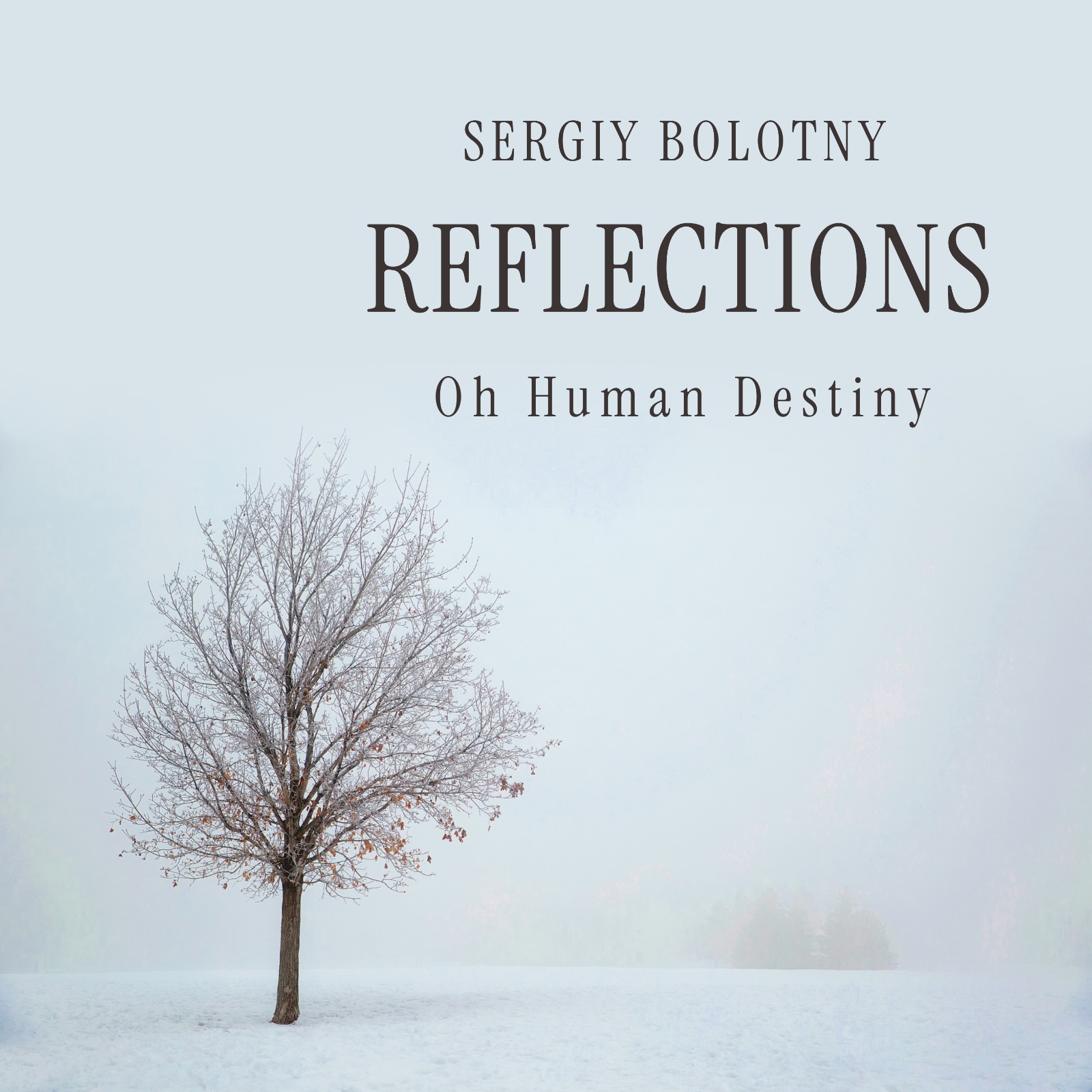
Hello everyone, it is your host Tehillah from DULAXI, and today I am delighted to be joined by Ukrainian-born violinist and composer Sergiy Bolotny, who is based in Groningen, Netherlands, where he serves as Assistant Second Concertmaster of the Noord Nederlands Orkest. Known for his work across classical performance, chamber music, and contemporary composition, Sergiy brings together traditional musical heritage and a willingness to explore new forms of artistic expression. Today, we will be discussing his latest single, Reflections: Oh, Human Destiny, released on 23 October 2026, and the ideas behind this deeply personal composition.
Before we begin our conversation with Sergiy, here’s what you need to know about today’s featured project.
About Sergiy Bolotny
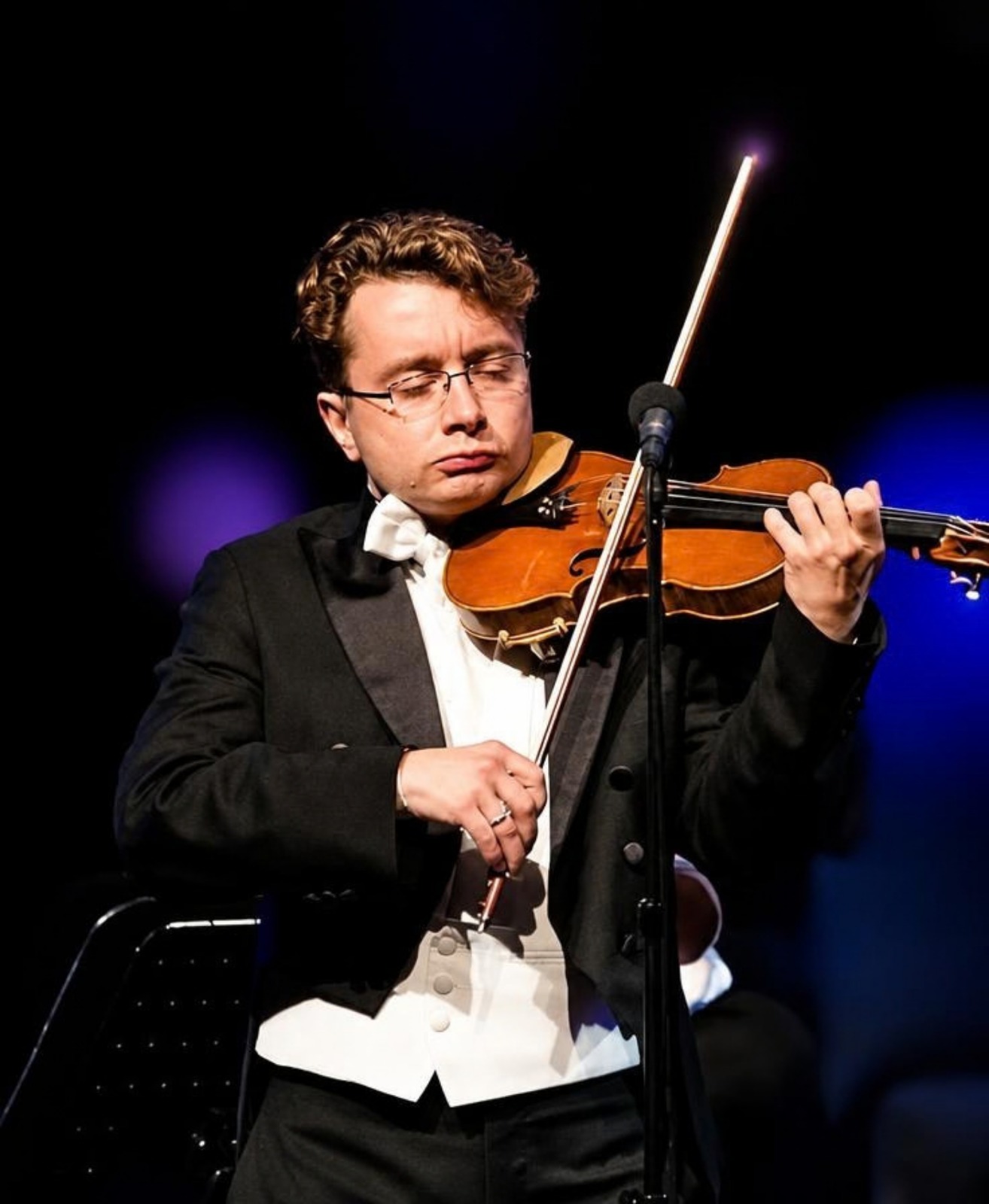
Sergiy Bolotny is a Ukrainian-born concert violinist and composer whose musical career spans orchestral performance, chamber music, and original compositions. Having studied violin in Lviv, Kyiv, and Vienna, including participation in masterclasses with the Altenberg Trio, he has developed an international career that combines classical repertoire with contemporary musical exploration. He currently serves as Assistant Second Concertmaster of the Noord Nederlands Orkest in Groningen, Netherlands, and performs chamber music through collaborations that include Duo Bolotny-Sakuma with pianist Keiko Sakuma and the Bolotny Trio. His compositional work includes the Ukrainian Caprices and Little Dutch Rhapsodies series, which explore Ukrainian and Dutch musical traditions through solo violin writing.
With Reflections: Oh, Human Destiny, Bolotny takes a different approach to the instrument, moving away from the familiar emphasis on virtuosity and acoustic beauty to confront the realities of contemporary life. Released on 23 October 2026, the single serves as the opening movement of his triptych cycle Echoes on Ukrainian Themes. The composition draws on the traditional Ukrainian folk song Ой, доле людська (Oh, Human Destiny), whose question about the blindness of human fate provides the foundation for an exploration of suffering, displacement, and the circumstances individuals cannot control.
The piece emerged from Bolotny’s response to the full-scale war in Ukraine and his belief that conventional musical beauty could not adequately express the brutality and exhaustion associated with such an experience. The solo violin takes on the character of an indifferent, relentless machine through repetitive bowing, string crossings, and restrained musical gestures. Against this persistent movement, the traditional melody appears fragile and depleted, carrying the weight of collective memory rather than offering familiar expressions of nostalgia or consolation. Instead of concentrating on the explosive spectacle of conflict, the composition turns towards the silence, grief, and psychological exhaustion that remain with those affected by war.
The wider cycle develops these ideas across three movements, each exploring repetition from a different perspective. While Reflections: Oh, Human Destiny confronts the apparent indifference of fate, Intermezzo: Why, Why My Dear Land! draws on recurring patterns in nature, including wind and flowing water, alongside memories of happiness. The final movement, Nightingale’s Farewell Song, explores the tragedy of leaving one’s homeland and carrying the remains of a familiar life into an uncertain future. Through this progression, Bolotny brings Ukrainian folk heritage into conversation with contemporary classical expression, using music to consider the relationships between memory, human fragility, and survival.
Having this introduction to Sergiy Bolotny and Reflections: Oh, Human Destiny, we can now explore the personal experiences, musical decisions, and ideas behind this composition. So, without further ado, let’s begin today’s interview.
INTERVIEW SESSION
Tehillah:
Reflections: Oh, Human Destiny takes a strikingly different approach to the violin, moving away from conventional virtuosity and acoustic beauty to confront the harsh realities of contemporary life. What was the initial thought, experience, or observation that led you to create a piece that prioritizes such an unvarnished portrayal of reality over the musical beauty traditionally associated with the instrument?
Sergiy Bolotny:
With this piece, as the opening movement of the cycle Three Echoes on Ukrainian Folk Themes, I wanted to begin an entirely new chapter in my journey as a composer. As classical violinists, we are trained for decades to produce a round, blooming, noble sound. But when the full-scale war struck Ukraine, conventional aesthetic beauty felt completely insufficient. War is not romantic; it is brutal, senseless, and exhausting. I realized that my instrument had a different responsibility: not merely to entertain or display fireworks, but to tell an honest, unvarnished story. I needed the violin to reflect raw truth, even if that truth meant cold friction, harsh repetition, and silence rather than sweet cantilena.
Tehillah:
The piece serves as the prologue to your triptych cycle Echoes on Ukrainian Themes, suggesting that it establishes an important foundation for the works that follow. What central idea or emotional reality did you want Oh, Human Destiny to introduce, and how does this opening composition shape the larger narrative you intend to explore throughout the cycle?
Sergiy Bolotny:
The triptych is built around the arc of human destiny and displacement. Reflections: Oh, Human Destiny introduces the darkest, heaviest confrontation with fate: people losing their homes, their loved ones, becoming refugees in the middle of senseless destruction. The second movement, Intermezzo: Why, Why My Dear Land!, shifts into a lighter, rhythmic repetition of nature—wind, flowing water, and memories of happiness. The final movement, Nightingale’s Farewell Song, becomes the quiet tragedy of someone who must pack their life into a single suitcase and leave their homeland forever. Oh, Human Destiny sets this entire cycle in motion by facing the initial blow directly.
Tehillah:
One of the most striking elements of Oh, Human Destiny is the way the solo violin takes on the character of a relentless, mechanical apparatus, almost like an ancient engine that continues running without emotion or purpose. What inspired this particular musical image, and how did you approach translating the idea of an indifferent, perpetual machine into the physical gestures, rhythmic patterns, and textures of the violin?
Sergiy Bolotny:
It came from the feeling of sheer helplessness. In life, when something terrible happens—or even in everyday life when you have a crucial concert or exam tomorrow and your neighbors throw a loud party all night, or you have a blinding migraine that won’t stop no matter what medicine you take—life forces you into this indifferent loop! War is that nightmare amplified a million times. To capture this on four strings, I stripped away romantic rubato and vibrato. I built an unyielding, minimalist ostinato—a relentless motor of bowing friction and string crossings where the violin behaves like a cold machine of fate that doesn’t care who stands in its way.
Tehillah:
At the heart of the composition is the traditional Ukrainian folk song Ой, доле людська (Oh, Human Destiny), a melody deeply connected to cultural memory and the human experience of fate. What drew you to this particular folk song for the piece, and what did its original meaning or cultural significance allow you to express that a newly composed melody might not have conveyed in the same way?
Sergiy Bolotny:
The old song says: “Oh, human destiny, why are you so blind?” It carries generations of sorrow. A newly composed melody can be expressive, but an ancestral folk melody carries the collective DNA of an entire people. Ukrainian history has endured centuries of tragedy, oppression, and war. When that specific melody emerges through the violin, it connects instantly to centuries of lived experience. It is not just my personal voice; it is the voice of our ancestors whispering from the earth.
Tehillah:
Rather than presenting the traditional melody with the warmth, ornamentation, or nostalgic beauty often associated with folk music, you strip it of much of its expressive power, allowing it to exist almost helplessly within the mechanical pulse. What guided your decision to treat this ancestral melody in such a stark manner, and how did you determine how much of its original character needed to remain for its cultural and emotional significance to be felt?
Sergiy Bolotny:
My goal was to create what I call the “beauty of emptiness.” Have you ever cried so much that you run completely out of tears, and suddenly you feel entirely hollow, with no strength left to feel angry or sad? That is the state of this melody. It appears like a shadow, a silhouette, a distant childhood memory. If I had surrounded it with lush romantic harmonies or virtuoso ornamentation, it would have turned into cheap melodrama. By keeping it fragile and bare, the listener feels how depleted of hope it has become.
Tehillah:
The composition confronts the war in Ukraine through an unusual emotional perspective. Instead of emphasizing the explosive violence or dramatic intensity of conflict, it focuses on the quiet exhaustion, grief, and numbness that remain in its aftermath. Why was it important for you to approach the subject through this quieter, more restrained emotional language, and what aspects of the human experience of war did you feel this approach could communicate more truthfully?
Sergiy Bolotny:
Explosions and sirens are what you see on the twenty-four-hour news cycle. But the truest tragedy of war happens when the cameras pack up and the sirens stop. What remains is silence, ruined walls, displaced families wandering across borders, and a profound, hollow exhaustion. That numbness is far more terrifying than noise. By focusing on restraint and quiet tension, the music invites the listener into the real human aftermath—the psychological weight that survivors carry inside long after the shelling ends.
Tehillah:
The title Oh, Human Destiny raises questions about fate, suffering, and the extent to which individuals can influence the circumstances that shape their lives. Within the composition, the traditional melody seems to ask why it must endure what it does, yet the relentless mechanical movement offers no apparent answer. What questions about human destiny were you wrestling with while composing this work, and do you see the piece as an expression of resignation, an unanswered protest, or something more complex?
Sergiy Bolotny:
At its core, the piece is a prayer to God and an unanswered protest addressed to those who hold the power to stop this bloodshed. But practically, it is a confrontation with blind fate. The individual human being wants to live, love, and create, but history sweeps in and crushes those plans without warning. The piece does not offer a triumphant Hollywood resolution because real life does not hand us easy consolations. It is an open wound—a question suspended in mid-air.
Tehillah:
Grief in Oh, Human Destiny appears to emerge not through dramatic musical climaxes but through repetition, restraint, and the gradual wearing down of the melody’s expressive voice. How did you work with repetition and musical tension to communicate the exhaustion that can follow prolonged suffering, and what helped you distinguish between a passage that simply repeats and one that makes the listener feel the weight of time and human endurance?
Sergiy Bolotny:
The difference lies in physical friction and tonal decay. In sterile loop-based music, a repetition is simply an identical digital copy. Here, it is played live on acoustic wood and horsehair. Every repetition carries subtle human fatigue: the bow stroke becomes drier, the breath tightens, the acoustic resonance hollows out. The listener doesn’t just hear notes repeating; they feel the physical endurance required to keep holding the instrument, mirroring the endurance of a human soul trying to survive one more day.
Tehillah:
Your description of the piece places the violin within an almost industrial sound world, creating a contrast between the instrument’s traditionally expressive voice and the cold, impersonal movement surrounding it. As both the composer and the performer, how did you approach the technical and interpretative demands of producing this mechanical character while preserving the fragility of the human voice embedded within the music?
Sergiy Bolotny:
As a violinist, it goes against every instinct you have learned. You have to suppress your natural impulse to make a warm, expressive vibrato or a singing slide. Technically, your bow arm has to remain rigid, steady, and metronomic like an iron clockwork, while your left hand has to float over the fingerboard with whisper-thin, almost lifeless contact. It requires immense concentration to inhabit both states simultaneously: the cold iron outside and the dying pulse inside.
Tehillah:
Your wider compositional work includes Ukrainian Caprices, which draws on Slavic lyrical motifs and virtuosic solo violin writing, as well as Little Dutch Rhapsodies, which reimagine traditional Dutch themes. Oh, Human Destiny appears to move in a markedly different direction, using minimalism and stark textures rather than foregrounding virtuosity. What prompted this shift in musical language, and how did you decide that this particular subject required a different relationship between the violin, its technical possibilities, and its expressive purpose?
Sergiy Bolotny:
As an artist, I never want to be locked inside a single box. I have two major creative paths. On one side, I love pure concert virtuosity in the tradition of Paganini, Kreisler, or Wieniawski—dazzling, sparkling, playful music like my Ukrainian Caprices or Little Dutch Rhapsodies. But on the other side, I have a deep affinity for dark neoclassical and minimalist aesthetics, influenced by composers like Arvo Pärt and Philip Glass. When you speak about war and the destruction of lives, virtuoso acrobatics feel offensive and out of place. This subject demanded absolute humility.
Tehillah:
The composition has affinities with dark neoclassical textures and avant-garde minimalism, musical approaches that can communicate difficult ideas without relying on familiar melodic resolutions. When developing Oh, Human Destiny, how did you balance the need for a clear emotional narrative with the desire to avoid conventional musical gestures that might make the suffering at its centre feel too beautiful, comforting, or easy for the listener to process?
Sergiy Bolotny:
By refusing to write a comfortable cadence or a resolving harmonic cushion. In traditional classical forms, tension always resolves into a comforting tonic chord. But in war, people do not get that release. Families remain scattered, ruined cities remain ruined, and lives cannot simply be tied up with a neat bow. I allowed the musical lines to trail off into stark unisons, open fifths, and acoustic room silence, forcing the listener to sit with the reality rather than soothing them out of it.
Tehillah:
Because Oh, Human Destiny is rooted in Ukrainian folk heritage while confronting the realities of contemporary war, the piece brings cultural memory into direct contact with present suffering. How do you navigate the responsibility of working with a traditional melody in this context, particularly when its meaning extends beyond your individual experience to encompass the memories, losses, and identity of a wider community?
Sergiy Bolotny:
You approach it with clean hands and pure intentions. When you handle traditional cultural heritage, you are not just manipulating notes—you are holding the tears and prayers of your ancestors. As someone born in Ukraine, with my family history and my homeland under attack, I felt an immense duty of truthfulness. You cannot treat this material casually or use it for commercial posturing. You have to step back, quiet your own ego, and let the ancestral voice speak through your bow.
Tehillah:
As the opening work in Echoes on Ukrainian Themes, Oh, Human Destiny seems to establish a tension between a human voice that longs to be heard and a larger force that continues regardless of its suffering. What musical or conceptual elements have you established here that listeners should carry into the remaining works of the cycle, and how will the subsequent compositions develop or challenge the ideas introduced in this prologue?
Sergiy Bolotny:
The unifying element across the entire triptych is this concept of minimalist repetition. In Oh, Human Destiny, the repetition is blind fate and machinery. In the second piece, that same technique transforms into the eternal cycles of nature—the river flowing, the wind in the trees, reminding us that life endures. In the third piece, it becomes the repetitive, bittersweet song of the nightingale at dawn as a displaced soul leaves their home. Listeners will hear how repetition can mean doom in one movement, solace in the next, and memory in the end.
Tehillah:
A composition dealing with war and human fragility can easily be received primarily as a political statement, yet the restrained character of Oh, Human Destiny also invites a more personal response to grief, helplessness, and the search for meaning. When listeners encounter this work, what do you hope they will recognize about their own relationship with suffering and uncertainty, even if they have never experienced the realities of the war in Ukraine directly?
Sergiy Bolotny:
I have always avoided politicians and party slogans; my loyalty is entirely to music and human truth. Every single human being, regardless of where they live, knows what it feels like to confront circumstances beyond their control—illness, grief, the loss of someone irreplaceable, or profound loneliness. I hope this music offers that “space between”—a door where listeners can step out of the noise of our dishonest, transactional world, disconnect for a few minutes, and find the space to grieve, reflect, and heal.
Tehillah:
With its release scheduled for 23 October 2026, Oh, Human Destiny arrives as a work that deliberately resists easy consolation and leaves difficult questions about human suffering unresolved. Looking ahead to the completion of Echoes on Ukrainian Themes, what do you hope this composition will ultimately contribute to the way Ukrainian musical heritage is understood today, and what lasting thought or feeling would you want listeners to carry with them after the final note has faded?
Sergiy Bolotny:
I hope it shows that Ukrainian musical heritage is not merely museum folklore or cheerful embroidered songs. It has an extraordinary, serious depth capable of engaging with modern classical aesthetics and addressing the existential crises of our century. When the final high note evaporates into silence on October 23, I don’t want people to think about violin technique. I want them to hold their loved ones a little closer, appreciate the fragile gift of peace, and carry a quiet prayer for those who have lost everything.
“By placing a fragile Ukrainian folk melody against the relentless movement of an imagined machine, Sergiy Bolotny turns the violin into a voice for those whose lives have been interrupted by forces beyond their control. The composition asks us to look beyond the spectacle of conflict and recognize the quiet human suffering that continues long after the noise has faded.”
~ Tehillah (DULAXI Team)
EDITORIAL PERSPECTIVE
Reflections: Oh, Human Destiny explores what happens when the violin is asked to communicate without relying on its familiar expressive beauty. Bolotny’s restrained approach gives repetition a human significance, while the traditional Ukrainian melody connects individual suffering with a much longer cultural history. The tension between mechanical movement and musical fragility makes the composition’s central subject particularly striking. Rather than offering a clear resolution, the work leaves listeners with questions about displacement, helplessness, and the responsibility to remember those affected by war.
~ Tehillah (DULAXI Team)
CLOSING
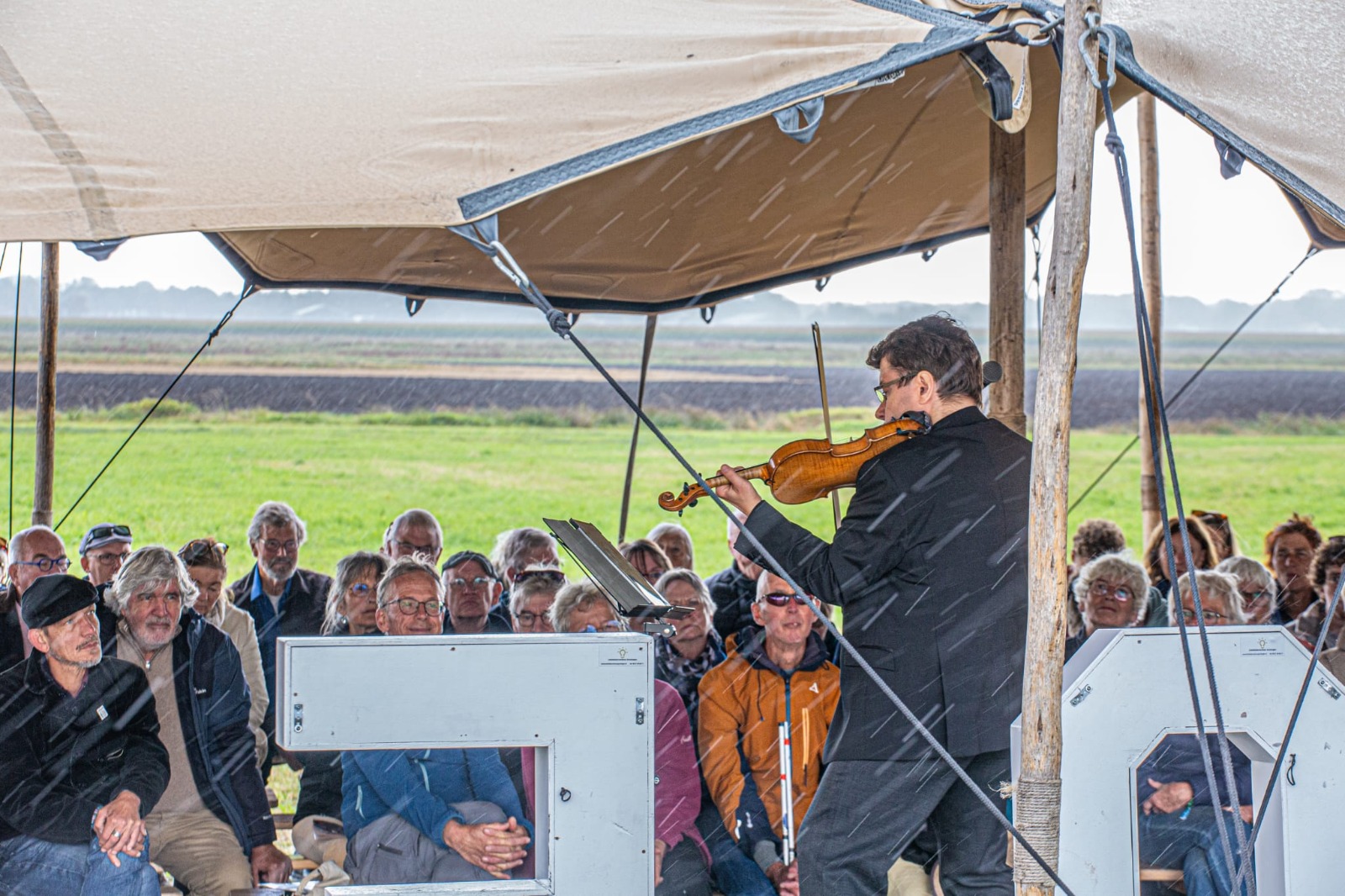
My sincere thanks to Sergiy Bolotny for joining us at DULAXI and sharing the thoughts, experiences, and creative decisions behind Reflections: Oh, Human Destiny. This conversation has offered a closer look at the relationship between Ukrainian musical heritage and contemporary composition, as well as the responsibility an artist carries when addressing the realities of war through music.
We encourage readers to experience Reflections: Oh, Human Destiny and discover how Sergiy uses the violin to explore grief, displacement, and the fragile hope that remains in difficult circumstances. As the opening movement of Echoes on Ukrainian Themes, the single also introduces a wider musical exploration of fate, nature, memory, and the experience of leaving one’s homeland.
Thank you for spending your time with DULAXI and reading this interview. We invite you to continue following Sergiy Bolotny’s musical journey and to join us for more conversations with artists who bring distinctive perspectives and meaningful stories to their work.
Until our next interview, thank you for being part of the DULAXI community.