
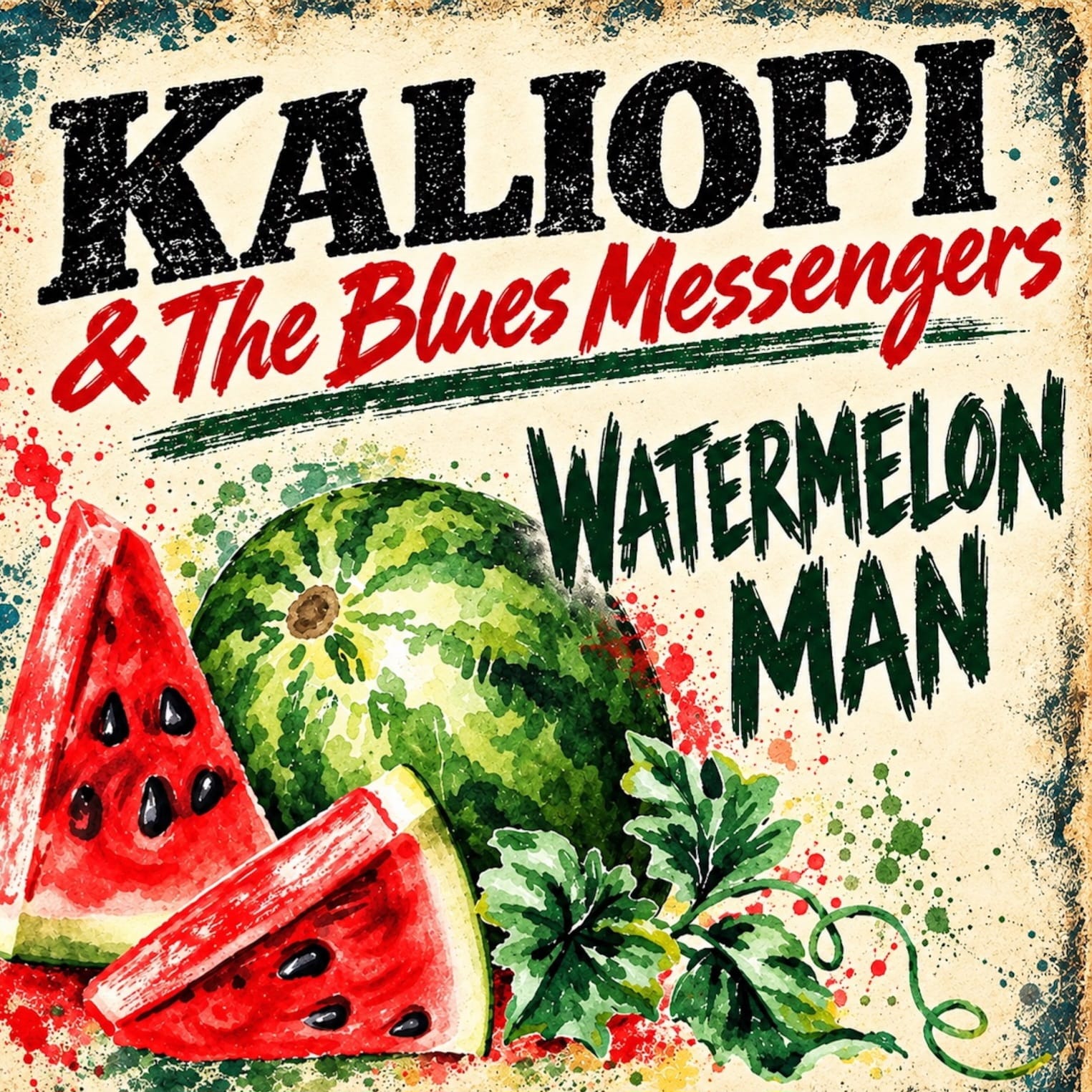
Hello everyone, it is Oliver from DULAXI, and today I am delighted to be joined by Kaliopi Stavropoulos, the Greek-Australian vocalist, guitarist, and songwriter behind Kaliopi & The Blues Messengers, an Australian contemporary blues ensemble based in Melbourne. Bringing together the traditions of blues, soul, jazz, and roots music, Kaliopi has developed an artistic identity shaped by her Greek heritage, Australian upbringing, international musical experiences, and years of professional performance and education. Her latest single, “Watermelon Man,” released on 1 October 2026, revisits Herbie Hancock’s celebrated jazz composition through a blues-driven arrangement inspired by Buddy Guy, with the band’s distinctive interplay captured during a live recording session at Woodstock Studios in Melbourne. The release follows the recognition of “How The Caged Bird Sings” at the 2026 InterContinental Music Awards and offers another glimpse into the forthcoming third album, A Day at Woodstock. Before we begin our conversation with Kaliopi, here’s what you need to know about today’s featured project.
About Kaliopi & The Blues Messengers
Kaliopi & The Blues Messengers have established themselves within Australia’s contemporary blues scene through an approach that respects the genre’s historical foundations while allowing room for experimentation, personal storytelling, and musical exchange. Fronted by Kaliopi Stavropoulos, the ensemble brings together musicians whose individual contributions support a collective sound built on attentive playing, thoughtful arrangements, and expressive performances. Kaliopi’s musical identity reflects several interconnected influences, including her Greek-Australian background, extensive engagement with jazz, and long-standing interest in the traditions of African-American blues. Her studies at Berklee College of Music, where she completed the Advanced Blues Guitar Program with a 4.0 GPA under Professor Michael Williams, further developed her understanding of blues guitar, particularly its phrasing, vocabulary, and expressive use of space.
The band’s previous releases trace the development of this musical direction. Their 2024 album, The Devil’s Voodoo Curse, spent twelve months in the ABARAC Top 25 and received recognition from the VIC/TAS Blues Awards. In November 2025, Kaliopi & The Blues Messengers released “How The Caged Bird Sings,” a song inspired by Maya Angelou’s I Know Why the Caged Bird Sings. Its exploration of resilience, freedom, and the need to find one’s voice connected with listeners internationally, earning the band further recognition before the single received the 2026 InterContinental Music Award for Best Australasian Blues & Roots Song. The group followed it with “One Woman One Love” in February 2026, an upbeat blues shuffle exploring devotion and its accompanying risks. Its sold-out launch at Melbourne’s Kew Courthouse marked another important moment in the band’s continuing development.
The forthcoming third album, A Day at Woodstock, brings these experiences together in a project that reflects the musicians’ growing familiarity with one another and their evolving approach to arrangement and performance. Recorded at Woodstock Studios in Melbourne during a single day, the album was engineered by Richard Stolz and mixed and mastered by Sean O’Sullivan at Highway No.9. The recording sessions brought together Kaliopi on guitar and vocals, Greg Rowan on drums, Paul Leeder on bass, Brendon Price on piano, John Drews on Hammond, and Wayne Albury on saxophone. While the album’s central performances were captured live, selected additions and refinements helped develop the final arrangements. “Watermelon Man” offers a different perspective from the more introspective themes of the preceding singles, focusing instead on groove, improvisation, and the pleasure of musicians creating something together.
The story behind “Watermelon Man” begins with Kaliopi’s years as a secondary school music educator, when she taught Herbie Hancock’s composition to school big bands and VCE students. Having played and arranged the piece repeatedly in the classroom, she eventually decided that she would never perform it herself. That changed when she encountered Buddy Guy’s interpretation, which revealed new possibilities within the familiar composition and inspired her to approach it through the blues. When she introduced the song to The Blues Messengers, the musicians found an arrangement that allowed their individual instrumental lines to interact while retaining the composition’s recognisable identity. The song subsequently became part of their Australian live performances and Kaliopi’s European repertoire with the Lava Blues Supergroup in Greece. Alongside her international collaborations, including representing Greece at the 2026 European Blues Challenge in Katowice, Poland, Kaliopi continues to explore the connections between musical traditions and the experiences that shape them.
Having this introduction to today’s featured project, I am sure both new listeners and longtime fans will be interested in hearing directly from Kaliopi about the experiences, ideas, and creative decisions behind this latest release. So, without further ado, let’s begin today’s interview.
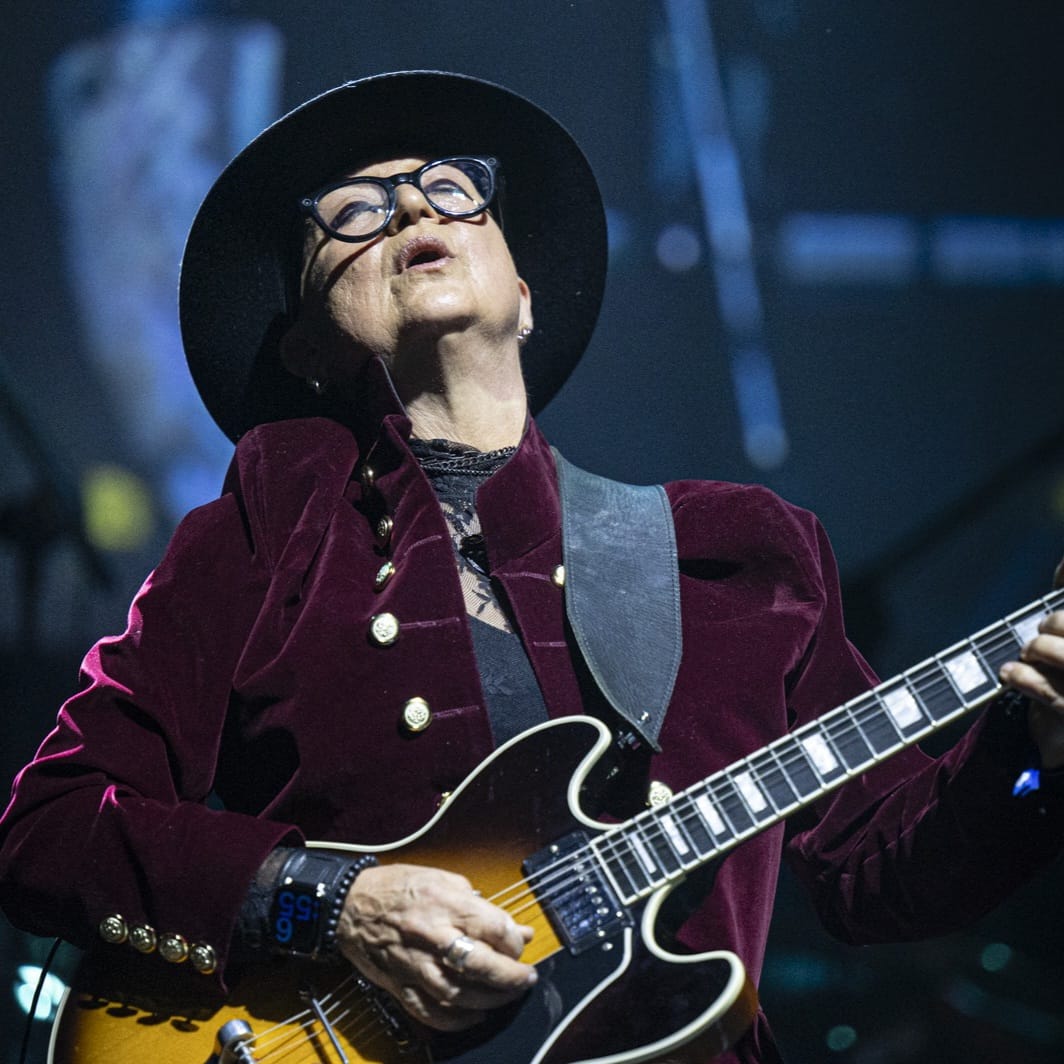
INTERVIEW SESSION
Oliver:
Your musical journey brings together performance, songwriting, education and a deep appreciation for blues traditions. How would you describe your identity as an artist today, and which experiences have had the greatest influence on the musician you have become?
Kaliopi Stavropoulos:
Today, more than ever, I identify as a Greek-Australian blues woman. As I’ve matured, I’ve become increasingly conscious of the extraordinary cross-fertilisation between the music I inherited through my Greek heritage and the music I’ve grown up with in Australia.
My mother’s family comes from Nisyros and my father’s from the Peloponnese, so the sounds of laïká, rebetika and smyrneïka have been part of my musical consciousness since childhood. The violin traditions of the islands, the expressive clarinet playing of the Peloponnese, the compound rhythms, the exotic scales and the way musicians bend into notes — all of that resonates deeply with the way I hear and play the blues.
Although I’ve studied jazz extensively, I find something particularly compelling in the expressive freedom of those Greek musical traditions. The way a clarinet or violin can bend into a note, almost crying or speaking through the instrument, feels very close to what I instinctively seek through my guitar.
I don’t experience these influences as separate musical worlds anymore. They’re all part of me, and increasingly they’re finding their way into my own blues language.
As for the experiences that shaped me, there have been several pivotal chapters.
The first was spending time in Athens as a teenager during the 1970s, particularly in the golden era of the Plaka boîte scene. My uncle, Christos Patrinos, was a professional actor, dancer and choreographer associated with the golden age of Greek cinema. I accompanied him to performances and rehearsals, often night after night, and witnessed how productions were conceived and brought to life. The music, the theatre, the dancing and the extraordinary artistry of that environment had a profound influence on me.
I had initially travelled to Greece longing to reconnect with my grandmother, whom I’d missed terribly. Instead, I found myself immersed in an artistic world that changed the direction of my life.
During that period, I attended an American private school where students could largely design their own curriculum. I studied mathematics and English literature alongside fine arts, music, drama and theatre, and achieved straight A’s. I was completely engaged because I was learning through subjects I loved.
When I returned to Melbourne, I found it increasingly difficult to fit back into a conventional, teacher-centric educational system. I’ve often described myself as a circular peg trying to fit into a square hole — deliberately reversing the familiar expression, because to me the square represents the restriction!
That experience later influenced my educational philosophy and the development of what I call Fluid Pedagogy, which became the subject of my academic writing. But more immediately, it encouraged me to pursue life as a professional musician.
Another extraordinary chapter came during the early 1990s, when I travelled to the United States and became involved in artist-development discussions with Geffen Music. Through those connections, I was introduced to John Courage, whose association with Fleetwood Mac made the experience particularly meaningful to me.
I’d been deeply influenced by Fleetwood Mac’s Rumours in the 1970s, so to find myself working with John was quite a dream. We entered into recording and management agreements, and over the following years I developed and recorded original material, released an EP and toured the American West Coast with a five-piece band.
It was an extraordinary opportunity to experience a professional recording and touring environment, working alongside exceptional musicians and supported by the infrastructure that comes with artist development.
One memory remains especially vivid: performing at the Savoy Theatre in Santa Barbara to a full house, receiving a standing ovation and hearing the audience singing the chorus of my song Come to Me.
I remember looking across the stage at Steve Hearn, a fellow musician I’d brought over from Australia. We exchanged a look that said everything. We’d come from playing Melbourne pubs with sticky carpets to standing on an American theatre stage with an audience singing my song back to me.
I’ll never forget that moment.
Of course, the music industry has its pitfalls, and my journey hasn’t always been straightforward. But I’m not particularly interested in defining myself by those experiences. What matters is getting up, dusting yourself off and continuing. That’s very much the ethos of the blues.
A further turning point came in 2018, when I began working with Marios Papadeas, a traditional Smyrneiko and Asia Minor santouri musician. I toured with him on bass, studied intensively under him and explored the modal traditions and historical experiences behind Greek music, including stories of displacement and resilience.
That experience helped me recognise connections between Greek musical expression and the blues that I’d instinctively felt for years.
Soon afterwards, I immersed myself in African-American blues traditions through the Melbourne Blues Appreciation Society, studying the foundations of early blues, particularly Memphis Minnie, and developing The Blues Messengers.
Our early work explored Delta and jug-band blues, traditional two-four feels, clarinet, piano, bass and brushes, and how that repertoire could be arranged for a contemporary ensemble.
Eventually, I was offered sponsorship to study Advanced Blues Guitar at Berklee College of Music with Professor Michael Williams. That opened another significant chapter.
So when I look at my identity today, I see all these experiences coming together: Greek heritage, Australian upbringing, American touring, education, traditional blues scholarship and a lifetime of playing with remarkable musicians.
I’m still learning, still developing and still discovering connections. I think that’s what keeps the music alive for me.
Oliver:
Before establishing your current musical direction, you developed your skills through formal music education, including Berklee College of Music’s Advanced Blues Guitar Program. What motivated you to pursue that experience, and how has your training influenced the way you approach guitar playing and composition?
Kaliopi Stavropoulos:
My motivation was really my love of the blues. By that stage, I’d immersed myself in its foundations through Memphis Minnie and the early Delta and jug-band traditions, and I was beginning to experience an extraordinary sense of clarity about the musical direction I wanted to pursue.
I’d been a professional musician for much of my life, but I wanted to get right inside the language of blues guitar — not simply reproduce its vocabulary, but understand the subtleties that distinguish one great player from another.
I approached the Berklee course with enormous commitment. I put in countless hours studying, analysing and applying the material, and I was very proud to complete the Advanced Blues Guitar Program with a 4.0 GPA.
The experience influenced me profoundly, particularly in two areas: space and vocabulary.
Space is so important in the blues. It’s not simply what you play, but what you leave unsaid. The pauses, the anticipation, the way a phrase answers another phrase — that’s where the conversation begins.
The course also expanded my vocabulary enormously. Studying influential blues guitarists from a critical and practical perspective gave me a deeper understanding of their phrasing, note choices, rhythmic placement and expressive techniques.
That learning fed directly into my second blues album, The Devil’s Voodoo Curse. Much of its repertoire and musical direction grew out of those studies, particularly the relationship between the traditional material and my original compositions.
But I think it’s important to distinguish vocabulary from personal interpretation.
My tone, touch and approach to the instrument had been developing over a lifetime. As a young musician, I was fortunate to work with experienced players who introduced me to beautiful instruments and amplifiers. Kevin Hines, for example, introduced me to the combination of a Vox AC30 and single-coil guitars, which opened up another world of tone.
I’d often gravitated towards Gibson guitars because their necks suited my hands, but those early experiences encouraged me to explore different instruments and the expressive possibilities of valve amplification.
I’ve never professed to be a speed player, although my technical fluency continues to develop! What interests me most is making the guitar speak.
And that’s where the Berklee experience was so valuable. It gave me a richer vocabulary and a greater appreciation of space, allowing me to become more conversational in my improvisation.
Ultimately, I want the technique to become so deeply absorbed that I’m no longer thinking about it when I perform. I want to listen, respond and allow the music to happen.
Oliver:
Your experience as a secondary school music educator gave you a particularly long relationship with Herbie Hancock’s “Watermelon Man.” You taught it to school big bands and VCE students for years, eventually becoming so familiar with it that you swore you would never perform it yourself. Looking back, what made that experience so memorable?
Kaliopi Stavropoulos:
When I reflect on my years as an educator, the most memorable experiences are actually the relationships I developed with my students.
I was particularly drawn to those young musicians whose connection with their instruments was so profound that music seemed to become their entire world.
I remember one gifted guitarist who practised so intensely that his fingers would bleed. Assessments meant very little to him — he generally excelled anyway — but what mattered was his absolute love of playing.
Another student was an extraordinarily gifted pianist and intellectual who struggled within the conventional school environment but excelled in music. She reminded me very much of my own experience as a teenager in Athens, where I flourished because I was finally able to pursue the subjects that genuinely engaged me.
I also remember taking a group of VCE musicians to Top Acts. Individually, they were wonderfully unconventional personalities, but together they became an extraordinary musical unit. Their dedication extended well beyond the classroom and ultimately reached a much wider audience.
Those are the experiences that stay with me — watching young people discover what they’re capable of when they’re genuinely connected to what they’re doing.
And Watermelon Man was actually a wonderful teaching vehicle for that.
Herbie Hancock’s composition has an immediately recognisable melody, a relatively accessible harmonic framework and enormous possibilities for arranging and improvisation. It allowed students of varying abilities to participate meaningfully in an ensemble while developing their listening, timing and musical expression.
But there’s a catch!
That opening melodic phrase, particularly the first sustained note, can be challenging when you’re working with a large ensemble of developing wind players. If the intonation isn’t quite right, the resulting dissonance can be rather confronting!
I spent years finding creative ways to arrange and rehearse the piece so that those sustained notes, phrases and ensemble responses would come together beautifully.
And after teaching it year after year to big bands and VCE students, I became so familiar with it that I eventually swore I’d never perform it myself!
That’s what makes the story so amusing to me now.
When I eventually heard Buddy Guy’s interpretation, he approached the composition from an entirely different perspective. The groove became the central attraction, and suddenly I was hearing possibilities I’d completely overlooked.
So Watermelon Man carries two very different sets of memories for me: the joy of teaching young musicians and the unexpected pleasure of rediscovering a composition I thought I’d exhausted.
Oliver:
Everything changed when you encountered Buddy Guy’s interpretation of the composition. What specifically caught your attention in his version, and how did his blues approach reveal possibilities in the song that you had not previously considered?
Kaliopi Stavropoulos:
It was the groove! That was what grabbed me immediately.
After years of hearing and teaching the original composition and its various interpretations, Buddy Guy’s version was wonderfully refreshing. I could hear the possibilities almost instantly, and I wanted to become part of that groove.
What fascinated me was how the different musical lines could interact: an ascending bass movement working against a descending piano riff, with that hypnotic guitar figure underpinning the whole arrangement.
I could hear how we might elaborate on those relationships and give the song our own flavour.
Buddy’s blues language was equally important. His note choices, his sense of space, the way he bends into particular notes and allows phrases to breathe — that’s what gives his playing such character.
I certainly pay homage to that approach in my solo, but the performance is very much my own response to the music.
What I particularly love is that the guitar solo on our recording was captured in one take. There’s no overdubbing on that solo. It’s a spontaneous response to the band and the groove we were creating together.
So, essentially, it’s Buddy’s flavour that inspired us — and we’ve added a little of our own spice!

Oliver:
When you introduced the song to The Blues Messengers, you immediately connected with the band’s interpretation. What happened during that first musical exploration that convinced you the arrangement was worth developing?
Kaliopi Stavropoulos:
One of the defining characteristics of The Blues Messengers is the way I like to web musical parts together.
By that, I mean creating individual lines that interlock rather than having anyone play the same thing in unison. Each musician contributes something distinctive, and those parts form a larger musical fabric.
Usually, that takes considerable arranging and experimentation.
But with Watermelon Man, something quite extraordinary happened. The parts seemed to find their places almost naturally from the beginning.
We had Wayne’s tenor saxophone carrying the essential melodic identity, Brendon’s piano playing that descending seventh-chord figure, Paul’s bass moving in contrary motion, and Greg establishing this wonderful, buoyant shuffle underneath it all.
My guitar riff became another thread in that musical web.
Nobody was simply doubling what somebody else was playing. Everyone had their own role, their own rhythmic and melodic space, yet everything connected.
I think it may be the first song we’ve developed where that happened so naturally from day one.
It gave us the freedom to elaborate individually without losing the collective groove.
That’s what convinced me we had something special. We weren’t simply playing an arrangement of Watermelon Man — we were giving it another life.
And that’s the wonderful thing about a band: together, you can create something none of you could achieve individually.
Oliver:
“Watermelon Man” is originally one of Herbie Hancock’s celebrated jazz compositions, but your version approaches it through blues, groove and improvisation. How did you decide which elements of the original to retain and which aspects needed to change to make the composition your own?
Kaliopi Stavropoulos:
For me, the identity of a composition is fundamentally established by its melody.
Herbie Hancock created such a memorable melodic statement in Watermelon Man that even when you approach it through another genre, those essential elements remain recognisable.
I wanted to honour that identity while exploring the spaces around it.
The melodic head is particularly important to me, which is why I’ve incorporated it into the outro of our recording, played in guitar octaves. That’s something I developed through performing the song live, where I often return to the melody alongside Wayne’s saxophone.
Interestingly, I added that octave passage after our original live recording session because it had become such a natural part of my performance.
Beyond that, we approached the song through the distinctive Messengers method of interweaving musical parts.
Rather than everybody following the same riff, we created independent rhythmic and melodic lines that support one another.
That gives us space to improvise while remaining firmly connected to the groove.
So the composition retains its recognisable melodic identity, but the rhythmic conversation, instrumental textures and improvisation are very much ours.
Oliver:
The track has a distinctive Hammond-and-saxophone presence alongside its guitar-driven blues groove. How did you approach the arrangement, and what did you want each instrument to contribute to the character of the recording?
Kaliopi Stavropoulos:
The horn has been an important part of The Blues Messengers’ sound from the beginning, whether it’s tenor saxophone or clarinet.
In our earlier repertoire, particularly the Delta and jug-band arrangements, we often worked with clarinet, piano, bass and brushes, exploring traditional two-four rhythms and the conversational qualities of early blues.
But Watermelon Man required a different approach.
The piano isn’t playing a traditional stride or Dixieland-style part. Brendon contributes a very rhythmic, harmonically rich descending figure, which works against Paul’s ascending bass movements beyond his essential groove line.
That contrary motion is one of the elements I love most about the arrangement.
Greg’s drums provide a swinging, groove-centred foundation, with the hi-hat, snare and cymbal work responding to the musical activity above it.
The tenor saxophone was a natural choice because its fuller sound carries the melody beautifully against that rhythm section. Wayne’s playing gives the arrangement a wonderful presence without overcrowding it.
Then there’s John Drews on Hammond.
John has an extraordinary musical vocabulary, shaped by decades of performing and recording, particularly through the rock, blues and soul traditions of the 1960s and 1970s.
His Hammond playing brings a vintage texture to the recording, but what I admire most is his restraint. He listens. He responds. He knows when to contribute and when to leave space.
The Hammond was added after our original live session, and it became another essential colour in the arrangement.
What fascinates me is that the individual parts can sound almost chaotic when you examine them separately. There’s so much happening rhythmically and melodically.
Yet when you bring them together, they create this wonderfully coherent, lively sound.
I often describe it as order out of chaos.
That’s really the essence of Watermelon Man for me: six individual musical voices, each with its own personality, weaving together into one collective groove.
Oliver:
Your band features Greg Rowan on drums, Paul Leeder on bass, Brendon Price on piano, John Drews on Hammond and Wayne Albury on saxophone, alongside your guitar and vocals. How would you describe the musical chemistry within this lineup, and what makes playing together such a rewarding experience?
Kaliopi Stavropoulos:
The chemistry is something that’s developed over time, through different musical relationships, experiences and recording projects.
One of the interesting things about The Blues Messengers is that our recording ensemble and touring lineups can vary depending on geography and availability. But there’s a common musical language that connects everyone involved.
Greg Rowan and I go back many years as teaching colleagues. I was coordinating a music department where Greg directed the senior big band, and I would occasionally sit in on bass when a student was unavailable.
We developed a musical understanding through that environment, and it eventually carried over into The Blues Messengers.
Greg came from a strong jazz background, so one of the interesting developments in his playing with us has been the different role of the bass drum in blues.
In jazz, the kick can become part of the improvisational conversation, adding accents and rhythmic colour. In much of our blues repertoire, I want it to provide a more consistent foundation, working closely with the bass while Greg explores the subtleties of shuffles, brushes and rhythmic expression with his hands.
He’s developed a beautiful understanding of those nuances, and you can hear that particularly in One Woman One Love and Watermelon Man.
Paul Leeder brings another dimension entirely. He’s a wonderful listener and a very responsive bass player.
When we recorded The Devil’s Voodoo Curse, I’d prepared foundational bass parts for him, which he studied before coming to Melbourne. But what he brought to those arrangements went well beyond the written notes. He instinctively responded to the vocal, guitar and drum phrases, adding his own musical personality.
By the time we recorded A Day at Woodstock, that relationship had developed into something much more immediate. We were playing and responding together in real time.
Brendon Price brought an important rhythmic and harmonic foundation to the Woodstock session, particularly on tracks such as Watermelon Man and One Woman One Love, where his piano parts became integral to the arrangements.
Wayne Albury’s saxophone and clarinet playing has also been central to the Messengers’ identity. His ability to move between those instruments allows us to explore very different blues textures, from early traditional styles to more contemporary arrangements.
And then there’s John Drews.
I first met John through the Candelo blues community, and from the moment we played together, I recognised something quite special.
He’s one of the most responsive musicians I’ve encountered. He has an enormous vocabulary and a wonderful instinct for musical texture, yet he never feels compelled to dominate the performance.
He shines without needing to stand out.
That’s an extraordinary quality in an ensemble musician, and it’s something I value enormously.
Because John is based regionally, we work around the practicalities of travel and performance, but his studio and recording capabilities allow us to collaborate remotely very effectively.
Our Melbourne touring lineup also includes musicians such as Aaron Curtis, who can interpret the piano and Hammond elements of our repertoire.
So The Blues Messengers is more than one fixed group of individuals. It’s a musical community built around a shared approach to arranging, listening and responding.
As I’ve matured, I’ve come to appreciate just how rare and valuable genuine musical chemistry can be.
When you find musicians who understand the music, respect one another’s space and contribute their own personalities without losing sight of the collective sound, you treasure that.
That’s what makes playing together so rewarding.
Oliver:
You have described the band’s interpretation as authentic and irresistible, particularly because of the groove the musicians discovered together. How important is spontaneous interaction between band members when creating a blues performance that feels natural rather than overly rehearsed?
Kaliopi Stavropoulos:
Spontaneous interaction is absolutely fundamental to the way I want this music to feel.
And Watermelon Man is perhaps the clearest example of that in our repertoire.
It’s such a busy arrangement when you examine the individual parts, yet the collective sound is remarkably coherent.
There are six musical voices, each contributing something different, but they’re all woven together into one living, breathing groove.
That’s what I mean when I describe the arrangement as order out of chaos.
The musicians need to understand their individual roles and the essential structure of the song, but within that framework there’s enormous freedom to listen, respond and improvise.
For me, the improvisation is every bit as important as it would be in a jazz performance. The difference is that, in our interpretation, everything remains anchored to the fundamental groove.
And that groove isn’t simply one repetitive rhythm. It’s almost a salad of grooves, with different rhythmic and melodic ingredients interacting simultaneously.
I love that!
It’s contemporary, it’s playful, and it feels very much of the present rather than an attempt to recreate a particular period in blues history.
You can rehearse the structure and develop the vocabulary, but you can’t manufacture the spontaneous conversation that happens when musicians are genuinely listening to one another.
That’s where the music becomes alive.
Oliver:
The recording took place at Woodstock Studios in Melbourne, with Richard Stolz engineering the session and Sean O’Sullivan handling the mixing and mastering at Highway No.9. What was the recording experience like, and how did the studio environment contribute to capturing the band’s energy?
Kaliopi Stavropoulos:
Woodstock Studios in Balaclava is a wonderful Melbourne recording space with a significant musical history, including its association with Joe Camilleri of Jo Jo Zep & The Falcons.
What I particularly loved was the studio’s design and its suitability for live tracking.
The control room sits centrally, almost like the centre of a spaceship, with recording spaces arranged around it.
We were able to position the musicians so that everyone could see one another while maintaining the separation needed for recording.
My guitar amplifier was isolated, Wayne had his own recording space for saxophone, Greg was on drums, Paul was connected directly through the desk, and Brendon’s keyboard was also recorded directly.
I was singing and playing guitar live, with headphones, maintaining visual contact with the band.
Originally, the intention was to capture the fundamental rhythm tracks — particularly the drums and bass — and then develop the recordings further if necessary.
But something wonderful happened.
Because everyone could see and respond to one another, the performances developed exactly as they might on stage. There were spontaneous moments, unexpected musical decisions and interactions that simply couldn’t be reproduced afterwards.
And that’s the thing about recording a band live.
If one musician responds to something unexpected, another musician responds to that response, and suddenly you have this extraordinary chain of musical events.
You can’t simply replace one part without affecting the others. It’s almost like a domino effect.
So we ended up preserving much more of those original performances than we’d initially anticipated.
Richard Stolz was wonderful to work with, and the studio environment allowed us to capture that collective energy.
The entire album was tracked in one day, which is where the title A Day at Woodstock comes from.
There have been some selective additions and refinements afterwards, including John’s Hammond and the octave guitar passage on the outro head of Watermelon Man, but the essential performances and musical conversations were captured during that one session.
I also have a particularly rewarding working relationship with Sean O’Sullivan at Highway No.9, who handles the mixing and mastering.
Sean and I seem to think at a similar speed when we’re working.
During post-production, I often hear several possibilities simultaneously — a particular frequency, a texture, an effect or an instrumental adjustment — and I need to be able to articulate and explore those ideas quickly.
Sean understands that process beautifully. He can translate what I’m hearing into practical sonic possibilities, often offering several variations for us to consider.
That collaboration has become an important part of developing the Messengers’ recorded sound.
I would happily return to Woodstock Studios for future tracking, and I’m equally keen to continue developing that post-production partnership with Sean.
Oliver:
“Watermelon Man” has travelled beyond your Australian performances and become part of your European repertoire with the Lava Blues Supergroup in Greece. How has performing the song in different musical environments influenced your relationship with it?
Kaliopi Stavropoulos:
It’s been fascinating, particularly because I’ve discovered some interesting differences in how musicians and audiences approach the relationship between blues and jazz.
I was discussing this recently with a prominent Melbourne blues DJ, and we were reflecting on how generously many European blues communities embrace the cross-fertilisation of genres.
In some of the more traditional blues circles I’ve encountered in Melbourne, there can be a stronger desire to distinguish blues from jazz. I understand the importance of respecting the traditions and identities of both genres, but I also love exploring where they meet.
And Watermelon Man seems to sit beautifully at that crossroads.
We’ve had jazz enthusiasts respond enthusiastically to our interpretation, and blues audiences embrace it just as warmly.
When I introduced the song to Lava Blues in Greece, I discovered another interesting dimension.
The musicians were exceptional players, with their own musical vocabulary and a wealth of creative ideas. But the distinctive Messengers groove depends on certain subtleties that can be surprisingly easy to lose.
So I found myself being more explicit about the rhythmic relationships and the way the individual parts needed to interlock.
Once that foundation was established, there was enormous freedom to explore.
The improvisation began moving into different modal territories, including some of the minor and major tonal colours and exotic scales that are particularly familiar within Greek and broader Mediterranean musical traditions.
That was exciting for me because it brought another part of my musical identity into the performance.
So the song has become a wonderful meeting point between the Australian Messengers sound and the different musical personalities I’ve encountered in Europe.
The groove remains the foundation, but the improvisational language continues to evolve.
That’s what keeps the song fresh for me.
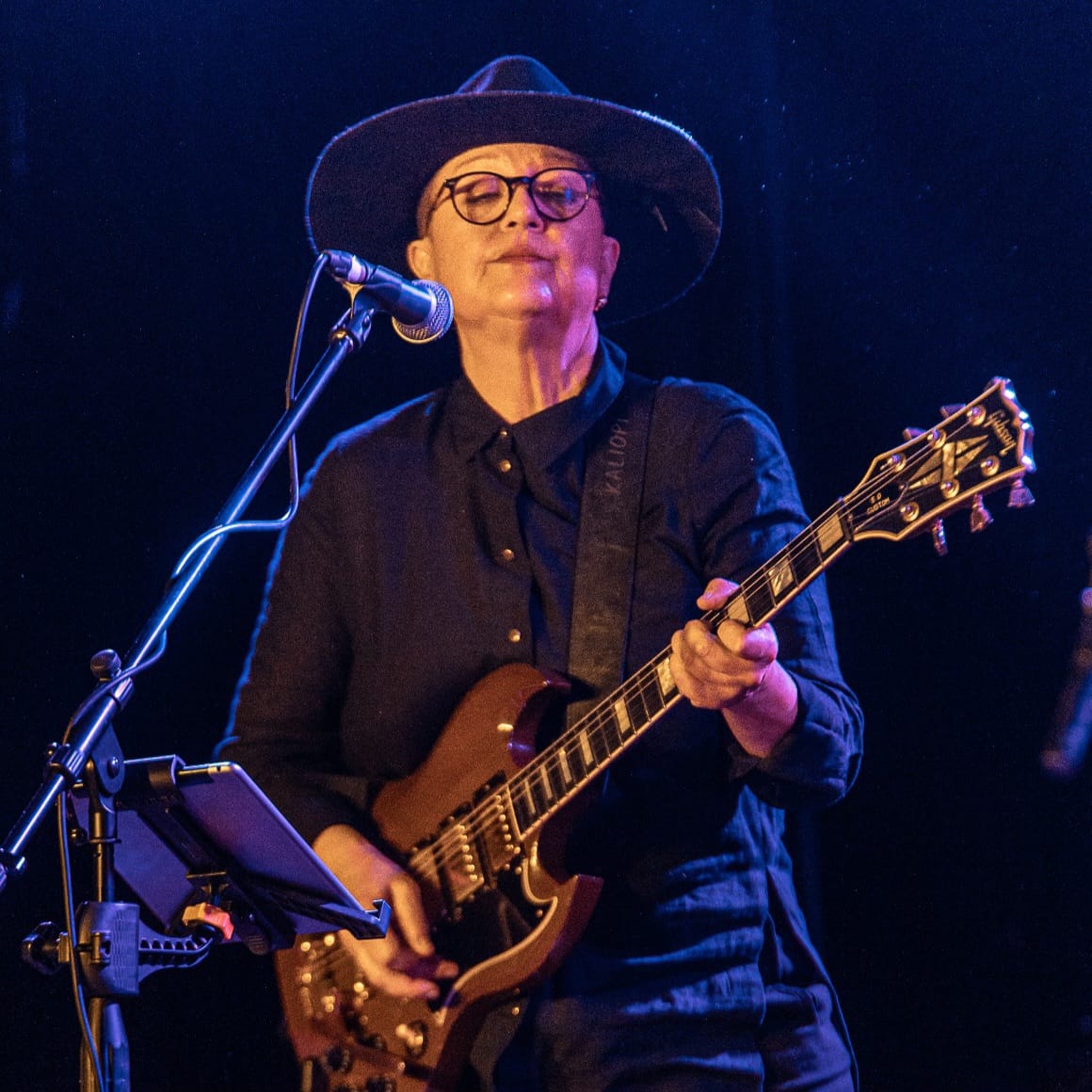
Oliver:
Your previous single, “How The Caged Bird Sings,” received the 2026 InterContinental Music Award for Best Australasian Blues & Roots Song. Following that recognition, how has the response to your music influenced your confidence and ambitions as an independent artist and bandleader?
Kaliopi Stavropoulos:
I honestly can’t express how grateful I am for the response to How The Caged Bird Sings.
It’s probably the song closest to my heart in my entire repertoire at the moment.
The message resonates with me on so many levels, but what has been particularly moving is discovering how deeply it connects with other people.
From its earliest live performances, I received extraordinary encouragement from people within the music community who felt strongly that I needed to record it.
When we finally released the song in November 2025, it received a nomination for Best Blues Song in the Melbourne Blues Appreciation Society’s Victorian and Tasmanian awards within its first few weeks.
That was already a wonderful endorsement.
Then came the InterContinental Music Awards.
I was thrilled simply to be nominated, particularly knowing the international calibre of the judging panel. But when we actually won Best Australasian Blues & Roots Song, it was an extraordinary moment.
I was on the island of Nisyros at the time, where we were celebrating the awards ceremony with friends at Enallax Bar.
When the announcement came through, everyone erupted!
We were celebrating right there on the island’s foreshore, and the joy was overwhelming.
It was especially meaningful because of my family connection to Nisyros. To receive an international award for a song about resilience, freedom and finding one’s voice while surrounded by people who shared that cultural connection was something I’ll never forget.
The band in Melbourne was equally thrilled, of course. It was their recording too, and I was enormously proud of what we’d achieved together.
What has surprised me most is the life the song has taken on internationally.
We performed it with Lava Blues at the European Blues Challenge in Poland, and it was the song that attracted particular attention from people sharing performances from the event.
I’ve had listeners from different countries tell me how deeply it resonates with them.
And I think that’s because the message is universal.
We all experience moments when life challenges us, when we feel unheard, marginalised or unable to move forward.
Sometimes we just need permission to get up, dust ourselves off and begin again.
I think How The Caged Bird Sings offers that invitation.
The recognition has also given new momentum to the entire A Day at Woodstock project.
After releasing the first singles and spending several months overseas, we returned to the album with renewed enthusiasm and a clearer understanding of its potential.
It encouraged us to continue releasing music from the session, including Watermelon Man, and to develop our touring plans for 2027.
So the award hasn’t simply increased my confidence. It’s reinforced my belief in the importance of writing and performing music that connects with people beyond my own experiences.
And for that, I’m profoundly grateful.
Oliver:
The forthcoming album, A Day at Woodstock, brings together “How The Caged Bird Sings,” “One Woman One Love” and now “Watermelon Man,” each revealing a different aspect of the band’s musical identity. What connects these recordings, and what broader picture do you hope the album presents?
Kaliopi Stavropoulos:
For me, A Day at Woodstock represents sonic maturity.
We’ve been developing the Messengers’ sound over several years, and I can hear that evolution quite clearly across the albums.
Blues For Minnie was very much a discovery album — an exploration of the foundations of early blues and the musical language I wanted to develop.
The Devil’s Voodoo Curse grew out of that foundation, particularly through the influence of my Berklee studies, and began expanding our arrangements and original repertoire.
But with A Day at Woodstock, I feel the sound has really come together.
Some of the material revisits songs we’d recorded previously, but the performances have reached another level. The arrangements are more mature, the musicians are more responsive, and the individual parts have become increasingly integrated.
That distinctive webbing of musical voices — which has always been central to my arranging philosophy — feels particularly developed on this album.
But beyond the sound, what matters most to me is the message.
How The Caged Bird Sings leads the way because it speaks so strongly to resilience, freedom and the right to be heard.
And there are related themes throughout the album: recognition of people who have been oppressed, displaced, ostracised or marginalised; the importance of inclusion; and the need for love, unity and community.
Those are universal concerns, and I think they’re particularly relevant in the world we’re living in today.
As a songwriter, I’m becoming less interested in simply presenting my own personal struggles and more interested in creating music that people can recognise themselves within.
I want the songs to offer something — encouragement, awareness, joy, perhaps even a little courage.
The audience gives me so much life through their response to the music, and I want to give something meaningful back.
Interestingly, the album title carries two meanings for me.
On one level, it’s completely literal. We recorded the album in a single day at Woodstock Studios in Melbourne.
But I also think about what the original Woodstock festival came to symbolise: peace, love, community and opposition to war.
Those ideals resonate very strongly with the underlying messages of this album.
So there’s something rather beautiful about the coincidence.
We created this music in a day at Woodstock, and the values associated with that name align so closely with what I want the record to express.
Oliver:
Your earlier single, “How The Caged Bird Sings,” drew inspiration from Maya Angelou’s I Know Why the Caged Bird Sings, while “One Woman One Love” explored devotion through an upbeat blues shuffle. How do literature, personal reflection and storytelling find their way into your songwriting?
Kaliopi Stavropoulos:
I’ve always found that literature helps declutter my mind.
It puts things into perspective and allows me to connect with ideas that extend beyond my immediate experiences.
When I read something truly inspiring, it’s not necessarily the author I feel connected to, but the message — particularly when that message reaches beyond the literal meaning of the words.
I love writing that speaks to the grey areas, to the pauses between the lines, to the things that aren’t explicitly stated.
Language can be wonderfully expressive, but it can also be limiting.
That’s one of the reasons I value instrumental music so much. It creates space beyond language, allowing listeners to participate in the experience through their own feelings and interpretations.
Metaphors can do something similar in songwriting.
Rather than telling the listener exactly what to think or feel, a metaphor opens a door and invites them to bring their own experiences into the song.
I think understanding is a continuum, and so is communication.
The most powerful writing allows that process to continue long after the words have been spoken or sung.
I’ve long admired extraordinary storytellers such as Bob Dylan and Carole King, as well as the profound literary voice of Maya Angelou. But it’s Leonard Cohen and Memphis Minnie whose work I’ve studied most deeply, particularly in recent years.
Although they come from very different musical worlds, I’m fascinated by their ability to convey complex human experiences through deceptively simple language and metaphors. Their work has profoundly shaped how I approach storytelling in my own songwriting..
In my younger years, much of my songwriting was more directly autobiographical. I was reflecting on my own experiences, emotions and relationships.
As I matured, I became increasingly interested in storytelling as a way of observing and communicating the world around me.
In a sense, I began reporting the news through music.
Over time, I’ve tried to step back from imposing my own conclusions and instead create space for listeners to engage with the stories and form their own responses.
Now I feel that process has almost come full circle.
The songs are still reflective, and they’re still connected to my personal convictions, but their focus is increasingly universal.
I’m interested in themes of injustice, displacement, resilience, love and the consequences of human behaviour.
I want to call attention to what matters without allowing hatred or cruelty to dominate the conversation.
That’s also why storytelling has become such an important part of my live performances.
I like to contextualise the songs, sometimes through local history, sometimes through broader social events, and sometimes through the universal experiences that connect us all.
Ultimately, I want to sing words I believe in and can deliver with conviction.
And I want listeners to find their own meaning within them.
Oliver:
Your biography describes the blues as more than a genre of sorrow, presenting it as a language of survival, joy, reclamation and human experience. What does the blues mean to you personally, and how has that understanding developed throughout your musical career?
Kaliopi Stavropoulos:
What I love most about the blues is that it’s both simple and complex.
The simplicity is pure. But within that simplicity, there’s an extraordinary depth.
The space between the notes, the repetition, the phrasing, the way a musical statement can be interpreted differently by every listener — all of that creates endless possibilities for connection.
And that’s what fascinates me.
The blues really is its own language, an encompassing language that allows people to communicate beyond words.
Its apparent simplicity invites participation. You don’t necessarily need to understand music theory or recognise a particular harmonic progression to feel what the music is saying.
You simply need to be open to it.
I often think the blues speaks to a mature soul, but maturity has very little to do with age.
We’ve seen extraordinary young musicians express the blues with remarkable depth, just as we’ve heard older musicians who continue discovering new emotional territory.
For me, it’s about openness, honesty and being prepared to let any mask uncover ones truth.
The blues has given me a place where I can express myself, connect with other musicians and engage with people in a way that feels completely natural.
And that connection extends far beyond the stage.
Through recording and releasing music, I’ve been able to communicate with listeners from different countries, cultures and generations.
That’s an extraordinary privilege.
My understanding of the blues has certainly deepened over the years. I’ve become more aware of its historical foundations, its cultural significance and the remarkable breadth of expression within the genre.
But the more I learn, the more I appreciate its essential humanity.
The blues can acknowledge sorrow without surrendering to it. It can transform hardship into humour, resilience, celebration and joy.
And that’s why I feel so at home in it.
It’s the musical space where I want to be.
Oliver:
You have built musical connections across Australia and Greece, including representing Greece at the 2026 European Blues Challenge in Katowice, Poland. How has working across different countries and musical communities shaped your perspective on the international blues scene?
Kaliopi Stavropoulos:
The blues has enabled me to connect with musicians from all over the world, and that’s been one of the most rewarding aspects of this journey.
It began with the musical communities I became involved with in Melbourne, then expanded across different parts of Australia, into the United States and eventually through Greece and Europe.
My Berklee studies introduced me to musicians connected with Boston and other parts of America, while my work with Lava Blues has opened up wonderful collaborations in Athens, Thessaloniki and beyond.
Representing Greece at the 2026 European Blues Challenge in Katowice, Poland, was another significant experience because it brought together musicians from so many different countries, all communicating through the same broad musical language.
And that’s what I find so extraordinary.
We may arrive with different cultural backgrounds, musical influences and approaches to improvisation, but we can begin playing together and discover a shared understanding almost immediately.
For me, blues improvisation is fundamentally a listening experience.
It’s responsive.
The concept of call and response is so central to the tradition, and I think it reflects something essential about the way blues musicians communicate.
Jazz improvisation can also be profoundly conversational, of course, but I often experience a different emphasis in the blues.
Where jazz may encourage extended exploration of harmonic and melodic possibilities, the blues often draws me towards feeding directly into the collective experience, responding to another musician’s phrase while remaining grounded in the groove.
That’s the distinction I feel most strongly when I’m playing.
And it’s something that translates beautifully across different countries and cultures.
Working internationally has also expanded my appreciation of the genre’s many subgenres and the different ways musicians interpret its traditions.
The blues I encounter in Melbourne isn’t necessarily approached in exactly the same way as the blues I experience in Greece, elsewhere in Europe or the United States.
But those differences don’t divide us. They enrich the conversation.
The more I collaborate internationally, the more convinced I become that the blues is genuinely unifying.
It brings people together.
And I believe it can be profoundly healing.
That idea has been expressed by blues musicians for generations, and it’s something I’ve experienced personally through the relationships and communities this music has brought into my life.
The blues connects people, and sometimes that connection helps heal hurts that words alone cannot reach.
Oliver:
As a guitarist, vocalist and songwriter, you balance technical precision with emotional expression. How do you ensure that musicianship and musical complexity always serve the feeling of a song rather than overshadowing it?
Kaliopi Stavropoulos:
I think the key is not allowing technical precision to get in the way of emotional expression.
For me, developing my technical abilities has always been about expanding my capacity to communicate.
I practise and study because I want to be able to express something more completely, not because I want to demonstrate an exercise on stage.
There’s a very important difference.
When technique becomes the focus of a performance, rather than the means of expression, it can interrupt the connection between the musician, the other players and the audience.
And I think anything driven primarily by ego risks doing the same thing.
The aspiration is to develop enough technical mastery that you can actually let go of it.
You don’t want to be thinking about fingerings, scales or exercises while you’re trying to communicate something meaningful.
You want those skills to be available instinctively, so you can lose yourself in the music.
That brings me to something my first dedicated blues guitar teacher, Geoff Achison, recognised when I approached him.
I was already an experienced professional guitarist with years of performing and recording behind me, but Geoff understood that what I was really searching for was something beyond technique.
It was what he described as the Zen of guitar playing and performance.
That idea has stayed with me.
It’s about reaching a point where your technical knowledge, your emotional intention and your connection with the other musicians become one experience.
You’re no longer demonstrating what you know.
You’re simply expressing what you feel.
And when that happens, the music can take you somewhere you hadn’t planned to go.
That’s what I’m continually working towards.
Oliver:
Looking ahead to the release of A Day at Woodstock and the next chapter for Kaliopi & The Blues Messengers, what would you most like to accomplish creatively? Are there new musical territories, collaborations or stories you are particularly excited to explore?
Kaliopi Stavropoulos:
Yes, indeed! There’s so much I’d love to accomplish, and I feel as though we’re entering a particularly exciting period.
My immediate ambition is to release A Day at Woodstock on vinyl and develop an international touring and distribution strategy around the album.
There’s something wonderfully appropriate about that format for this recording.
We captured the album live, with musicians interacting in real time, and I’d love people to experience it as a complete body of work rather than simply a collection of individual tracks.
I’m currently looking for the right international physical distribution and marketing partner who understands the music and can help us reach audiences through independent record stores and touring.
Ideally, I’d love to tour Australasia with The Blues Messengers, return to Europe with the Lava Blues Supergroup and develop opportunities to perform across the United States.
I have musical relationships and collaborators on both the West and East Coasts of America, and I’d love to reconnect with them, perhaps incorporating different musicians into the touring ensemble depending on the region.
The dream would be to develop a touring route that takes us through the American South, including Louisiana and the great blues centres, across the East Coast and eventually to the West Coast.
I’d also love to plant seeds for future opportunities in Canada and South Africa.
But beyond the geography, I’m particularly interested in collaboration.
I’ve already had musicians express interest in writing with me, artists interested in recording some of my songs, and others who’ve approached me about producing recordings for them.
Those possibilities are enormously exciting because every collaboration introduces another musical perspective.
And I’m already writing material for the next album.
I feel that the quality and consistency of my songwriting are continuing to develop, and I’m increasingly interested in how different cultural and regional influences can enrich the blues without losing its essential character.
But my first love will always be performing live.
There’s something irreplaceable about standing in front of an audience, sharing a story and allowing the music to unfold in that moment.
I often describe what I do as facilitating community contexts and muse through the blues.
Sometimes that means reflecting on the world around us. Sometimes it means celebrating love, resilience or the extraordinary capacity people have to begin again.
And sometimes it simply means creating a groove that brings everyone together.
That’s what I want to continue doing — writing, performing, collaborating and connecting with people across cultures and communities.
If A Day at Woodstock can become the foundation for that next international chapter, while opening the door to new music and new collaborations, I’ll be enormously grateful.
Because ultimately, the music is about connection.
And there’s still so much more to say.
“Watermelon Man” captures the moment when a familiar composition becomes something newly personal. Through Kaliopi’s willingness to revisit a song she once left behind, the recording reveals how curiosity, collective musicianship, and the freedom to follow a groove can open unexpected creative doors.
~ Oliver (DULAXI Team)
EDITORIAL PERSPECTIVE
What makes “Watermelon Man” particularly interesting in the context of Kaliopi’s wider work is the way it connects technical intention with the spontaneity of a live ensemble. The guitar, piano, Hammond, saxophone, bass, and drums each contribute a distinct voice, while the arrangement leaves room for those parts to interact naturally. Kaliopi’s account of rediscovering the composition also highlights an important part of her creative outlook: familiarity does not have to end in repetition. Sometimes, hearing a piece through another musician’s interpretation is enough to reveal a new direction.
~ Oliver (DULAXI Team)
CLOSING
A special thank you to Kaliopi Stavropoulos for sharing the experiences, musical influences, and creative decisions behind “Watermelon Man” and the forthcoming album A Day at Woodstock. Our conversation has offered a closer look at the many traditions informing her work, the importance she places on listening and collaboration, and the experiences that continue to shape her approach to the blues. Her reflections also reveal how a familiar composition can take on a new identity when musicians approach it with curiosity, individuality, and a shared commitment to the music.
We encourage readers to experience “Watermelon Man” and explore the wider work of Kaliopi & The Blues Messengers as the band continues its journey across Australian and international musical communities. With A Day at Woodstock marking another chapter in the group’s development, it will be interesting to follow how Kaliopi’s songwriting, collaborations, and live performances continue to evolve.
Thank you for spending time with DULAXI and joining us for this conversation. We remain committed to bringing readers closer to the artists, ideas, and experiences shaping music across genres and borders. Keep following DULAXI for more interviews that explore not only the music itself, but also the people and creative journeys behind it. Until our next conversation, keep listening and discovering.