
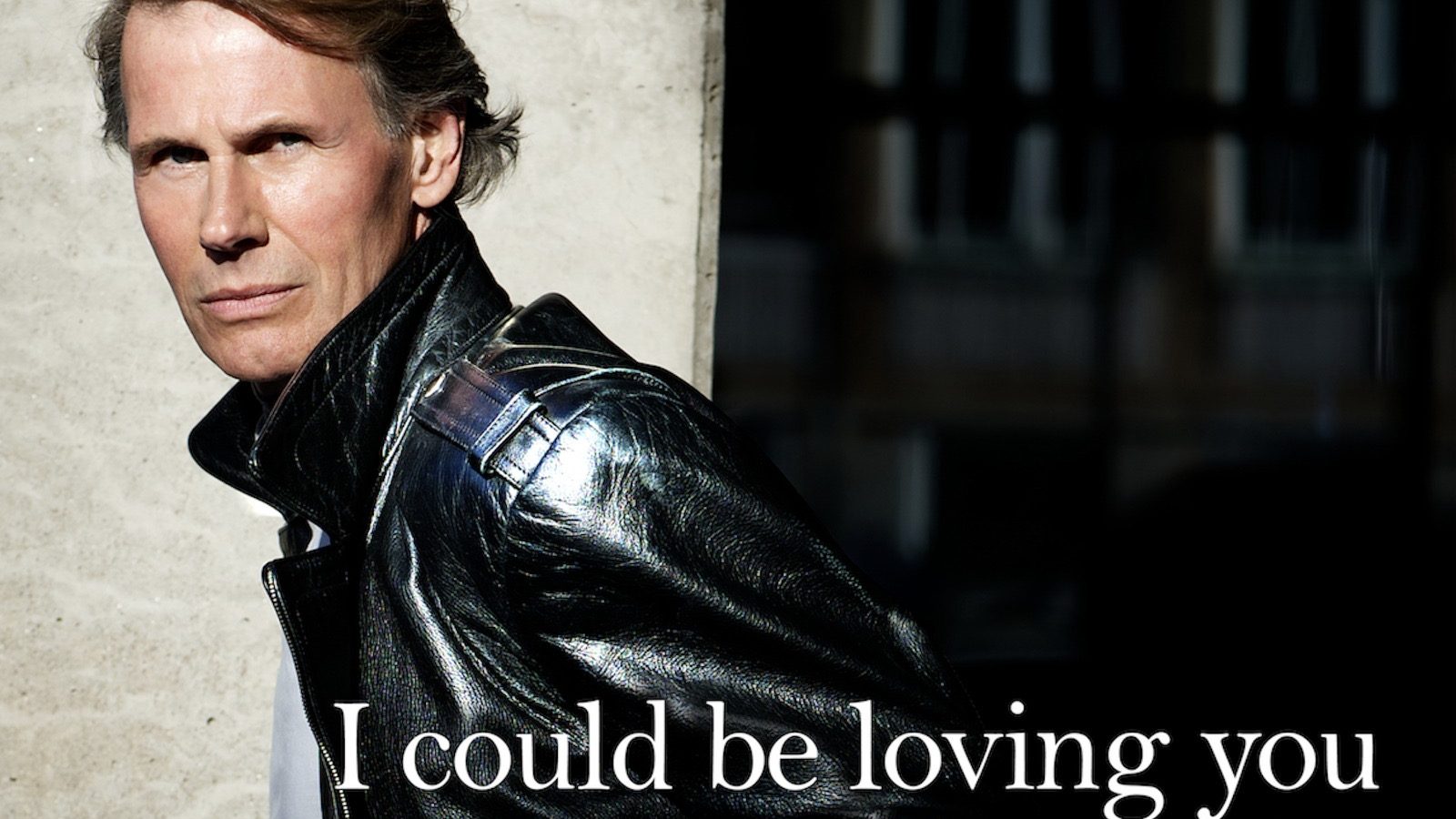
Hello everyone, it’s your host Oliver from DULAXI, and today I’m delighted to be joined by Dear Martin, the musical project of Swedish singer-songwriter and producer Martin Edvardsson. Based in Sweden and originally from Gothenburg, Martin has spent nearly two decades developing an independent musical identity built around pop, synth-pop, and electronic experimentation. His latest single, “I Could Be Loving You,” released on September 25, 2026, brings together analogue synthesizers, expressive vocals, and a distinctive electronic sound, offering the first glimpse of his upcoming EP, Conversation Pieces.
Before we begin our conversation with Martin, here’s what you need to know about today’s featured project.
About DEAR MARTIN
Martin Edvardsson introduced Dear Martin to the music world in 2007 with the five-track EP This Is Wrong. The release brought together glittering arpeggios, acoustic drums, guitars, and layered harmonies, establishing an early sound that balanced electronic textures with organic instrumentation. Produced by Björn Synneby, the EP helped introduce an artist whose songwriting would continue to explore personal uncertainty, everyday experiences, and the desire to remain true to himself. In 2009, Dear Martin followed with The Dearest, an album influenced by British pop from the early 1980s. Its songs explored themes including low self-esteem, solidarity, and the belief that change remains possible, reflecting the perspective of someone who has consistently identified with the underdog.
Throughout his career, Dear Martin has maintained an independent approach to music-making, allowing personal experiences, social observations, and creative instincts to guide his work. Although his music has been associated with melancholic pop and atmospheric electronica, Martin prefers the broader description of pop itself. For him, the format offers an opportunity to express complex thoughts and emotions within a concise musical structure. His catalogue demonstrates this flexibility, moving between electronic arrangements and more acoustic approaches without abandoning the personal perspective at the heart of his songwriting. His 2022 single “So Much for the World” addressed concerns surrounding society, nature, and politics, while the four-track EP Out of the Woods, released later that year, explored self-esteem and personal reflection through intimate lyrics and atmospheric production.
Released on September 25, 2026, “I Could Be Loving You” introduces another chapter in this continuing creative process. The single combines retro-inspired electronic elements with an energetic pop arrangement, drawing on analogue synthesizers, cut-up drum loops, and Martin’s expressive vocal delivery. Its lyrics bring together fragments of memories and experiences from different periods of life, leaving room for uncertainty, longing, and the possibility of a different future. Martin has explained that the song developed naturally, with its harmonies and lyrics taking shape almost simultaneously. Rather than replacing the original character of his demo with an entirely new arrangement, he chose to retain many of its original synthesizers and plugins, preserving the sounds that felt most familiar to him.
For the finished recording, Martin collaborated with producer Tom Goren at Sonika Studio. Goren’s work as a multi-instrumentalist and vocal coach helped refine the initial ideas while maintaining the qualities that made the song distinctive to its creator. This collaboration reflects Martin’s understanding of the value of working with someone who can recognise the potential within an early musical sketch and help bring it into focus. “I Could Be Loving You” serves as the lead single from the forthcoming EP Conversation Pieces, scheduled for autumn 2026. Having performed in Sweden, the United Kingdom, and the United States, Dear Martin continues to pursue his own musical direction, with future live performances among his ambitions. The new single captures an artist looking inward, trusting his instincts, and finding fresh ways to express the ideas that have sustained his work for nearly two decades.
Having this brief introduction to today’s featured project, I’m sure both new listeners and longtime fans are excited to hear directly from Martin about his musical development, the making of “I Could Be Loving You,” and the ideas behind his forthcoming EP. So, without further ado, let’s begin today’s interview.

INTERVIEW SESSION
Oliver:
You are Gothenburg-born and have spent much of your life and creative career connected to Sweden, with time also spent in Spain. How have the different places you have lived shaped your outlook on life, relationships, and the way you express yourself through music?
Dear Martin:
I guess British pop music has had the biggest influence on me, over the years. For a long time, I was more of an observer, and it took me forever to start writing with the aim of actually releasing my own music. That first happened when I was living in London and spent eons of time on my own. With no tv, not a huge circle of friends, writing songs became my outlet, my creative bubble. What started there, writing in English, preferably on my own recording basic demos, is something I have with me ever since, whether at home, in Sweden or in Spain, or if I am staying in a hotel room.
Oliver:
You began releasing music in 2007, which means you have spent nearly two decades building a creative identity while remaining independent. Looking back at the person you were when you first started, what personal experiences or changes in your outlook have had the greatest influence on the artist you have become today?
Dear Martin:
I am constantly feeling inadequate and frequently questioning what I am doing, so every time I actually make some kind of progress, be it musically or socially or visually, I try to remember to be in the moment, to enjoy it right there. It can be small things like finding a hook a Tuesday morning or being in the studio and having a moment of bliss when everything falls into place: enough time, right producer, recording the vocals on a track that has finally found its shape. In the beginning I didn´t quite get that those moments is what it´s really all about.
Oliver:
You have described yourself as someone who values honest music-making and maintains an underdog perspective. Where does that connection to the underdog come from, and how has it influenced the way you approach both your personal life and your career?
Dear Martin:
I totally identify with the chorus and lyrics of Beck´s track Loser (LOL). I mean twenty years on and still not a major artist someone else might had tried something else, but I can´t switch, this is what I do, and this is what I want to do. A few times I´ve tried other things, musically, but it feels awkward and false. So, what I mean by being honest in music, is doing exactly what you want to do regardless of how it is received.
Oliver:
Your music has been described as melancholic, stylish, and light, ethereal electronica, yet you have also suggested that pop is perhaps the simplest and most accurate way to describe what you do. What does pop music represent to you, and how do you balance its accessibility with the political observations, personal reflections, dreams, and disappointments that often find their way into your work?
Dear Martin:
Pop is a vast term. I´ve really tried to pinpoint and label the exact sub genre of my own music but I´ve given up. It’s simply pop. Period. If I hadn’t written songs I might have had another outlet, a diary or a column or a blog, I don´t think I could ever write a novel, I am too lazy, but this format, the three minute and something seconds is the perfect format. It’s like so sonnet or a haiku, that forces you to be stringent and chose your words and chords carefully. I sometimes chose to fill that format with comments on society and sometimes much more personal issues, but nevertheless, those three minutes must fit perfectly. Well, that is my aim, anyway…
Oliver:
From the glittering arpeggios, acoustic drums, and guitars of your early EP, This Is Wrong, to the more reflective and acoustic direction explored on Out of the Woods, your catalogue shows an artist willing to explore different musical approaches. What has remained central to your identity throughout these changes, and what have you deliberately allowed yourself to leave behind?
Dear Martin:
I´ve always felt inferior to people that can play proper instruments like guitars and keyboards. It’s that underdog perspective, again. But I think I am becoming more at ease with the fact that I don´t have a tight knit band and its ok to not have a God send bass player. Of course, I have always leaned towards synth pop and electro, but these days I am trying to purge my sound to be even more so.
Oliver:
Your new single, “I Could Be Loving You,” is described as a punchy, retro-futuristic electropop track, yet you have said it practically wrote itself, with the harmonies and lyrics arriving almost simultaneously. Can you take us back to the moment the song first came together? What was happening creatively or personally that allowed everything to fall into place so naturally?
Dear Martin:
Sometimes you just have to get rid of stuff to see, or hear, what is actually there. In this case, I started off as basic as possible with the least number of tracks and pads and arpeggios; just the simplest of rythm, one single synth lead playing a basic figure of chords, that is what I started singing over. That sense of anger or pissed-off-kind-of-feeling that the synth lead suggests, set the tone to the lyrics. And then, subconsciously I guess, I drew words and phrases from way, way back. Things I had written before, actual memories and even themes stolen from other artists. You know, like Prince. I just trusted the process and didn´t hold back but instead let myself be very personal.
Oliver:
You describe the lyrics as fragments of experiences and memories that reference both the past and the present. The title, “I Could Be Loving You,” also leaves room for different interpretations of love, possibility, and uncertainty. What does the title mean to you personally, and how do those different moments in time connect within the song?
Dear Martin:
It’s one thing to be personal and intimate in a lyric, a whole other thing explaining that lyric word by word, feeling by feeling. But basically the lyric lines up a number of situations, seconds of a life, laid out one after the other leading up to that dream of, I don´t know… everlasting love. With mutual vacation plans. LOL
Oliver:
The single is the first release from your upcoming EP, Conversation Pieces, scheduled for autumn 2026. What made this particular song the right introduction to the project, and what does it reveal about the wider creative direction and ideas you are exploring across the EP?
Dear Martin:
The directness. The energy. And also, it is so exactly how I want to be perceived; the synth arrangements, the lyrics, the desperation. It’s the perfect representation of Dear Martin.
Oliver:
You have spoken about using fragments of memories and experiences rather than following a strictly linear approach to storytelling. When writing about personal experiences, how do you decide which details to preserve, which ones to leave open to interpretation, and how much of your own life you want listeners to recognise in the finished song?
Dear Martin:
You have to write lyrics that matters to yourself. The lyrics must be yours and your words, your vocabulary. For example, I never sing “baby” because I never use that word IRL. I guess if I am personal or referring to my own experiences someone else might tag into that, more than they would with a very generic lyric. Writing for everyone is somehow writing for no one.
Oliver:
Looking across your previous releases, songs such as “So Much for the World” explore concerns surrounding society, nature, and politics, while The Dearest touched on low self-esteem, solidarity, and the belief in change. How do you bring these wider observations into personal pop songwriting without losing the intimacy of the emotions you want to communicate?
Dear Martin:
That particular song, So Much for the World, is an example of how a deeply personal experience turns into something mutual and bigger: good friends of mine were letting us stay in their lovely house in Southern France. Views to die for, the Mediterranean, the sky, the palm trees and lush gardens… And in the midst of all this cut freeways and car parks and shopping malls. That clash of the most beautiful and the worst expressions of our civilisation become so obvious.
Oliver:
One interesting aspect of “I Could Be Loving You” is your decision to retain many of the original synthesizers and plugins from your early demo. You have described these sounds as the places where you feel most at home creatively. What is it about working with your original sketches that allows you to capture something that might otherwise disappear during a more polished production process?
Dear Martin:
Good question and something I always struggle with. LOL It is easy to get attached to ideas and first arrangements. “Kill your darlings” is not that easy. But I do try to every now and then take a step back and get an overall critical view. Does this segment really fit? Is this line something I would be comfortable singing live? Quite often I don´t know what stays and what goes until I sing or play it in front a producer.
IRL is a good test!
Oliver:
You worked with Tom Goren at Sonika Studio on this release. You have also spoken openly about your preference for focusing on ideas rather than becoming deeply involved in studio engineering. How did Tom’s skills as a producer, multi-instrumentalist, and vocal coach help translate your initial ideas into the finished track, and what did the two of you bring out of each other during the collaboration?
Dear Martin:
Tom Goren is the producer I have been dreaming about. He is musically talented, way more than me. He is a multi-instrumentalist as well as a skilled singer. That means he knows both the artistic side of music as well as the technical side of it.
Tom also used to sing lead vocals. There were phrases that he would suggest being sung in a different way and sometimes this idea was just painfully so much better than my original. So, he definitely had an impact.
Oliver:
The production combines inspiration from classic electro with analogue synthesizers, cut-up drum loops, and your distinctive vocal delivery. What were the most important decisions in shaping this particular sound, and how did you make sure the finished production retained the slightly unconventional character you wanted?
Dear Martin:
Again, when I present a demo IRL I can more clearly hear a songs id. Tom liked what he heard so he had no goal of changing just for the sake of it. We both wanted to make the track better technically as well as enhancing that specific id that is the song. That meant cut away the distractions and keep the key sounds, not adding a bunch of new characteristics.
Oliver:
Your 2022 single, “So Much for the World,” arrived on February 22, the same day Russia launched its full-scale invasion of Ukraine, creating an unexpected connection between the song’s title, its subject matter, and the events of that day. Looking back, how did that coincidence affect your relationship with the song, and did it change how you think about the connection between music and real-world events?
Dear Martin:
My first thought was that it might not be such a good idea to promote one´s pop tune the very same day Europe is attacked and at war. But two thoughts must co-exist at the same time. I know people I Kiev and I know they go to barber´s they shop for dinner, continuing leading an everyday life as well as being in a war zone. It is an unbearable situation, but we all got to keep going.
Oliver:
Having released This Is Wrong, The Dearest, Out of the Woods, and now moving towards Conversation Pieces, you have experienced different stages of independent music-making. What has been the most difficult lesson about sustaining a creative career outside the mainstream, and what keeps you committed to doing things on your own terms?
Dear Martin:
I´ve tried to quit and works for a while but then I bounce back. The creative process of writing is really what keeps me going, singing live is amazing but that was some time ago now. The writing is so direct, so “always there” for me. And my life would be dull without it.
Oliver:
Your songs often combine personal emotions with wider observations about the world, leaving room for listeners to connect with them in their own ways. When someone listens to “I Could Be Loving You,” what would you hope they recognise or feel within the song, particularly if their own memories and experiences give its lyrics a different meaning?
Dear Martin:
The attraction to strangers is constantly something that might happen to yus all. At work. On the tube. Do we want to be open for it? Would we dare? Perhaps live a little…?
Oliver:
With Conversation Pieces approaching, you are entering another chapter of your musical career. What can listeners expect from the EP in terms of its themes, production, and emotional direction, and how does it reflect where you are personally and creatively at this stage of your life?
Dear Martin:
I am limiting my expressions! LOL No, but really, I am trying to focus on a very Dear Martinesque sound and really defining that sound. It means a more synth and electro-based sound. And really, this time really following my instincts regarding melodies and productions. Look inwards instead of glancing at other people.
Oliver:
After nearly two decades of remaining independent and protecting your creative freedom, what would meaningful progress look like for Dear Martin over the next few years? Are there particular creative ambitions, collaborations, or audiences you would still like to reach while remaining faithful to your original vision?
Dear Martin:
Live performances. That is my goal. I want to put my act together and get some club gigs. I´ve started planning but knowing me, the slowest pop musician on the planet, it might take some time. But live gigs, that is my ambition.

Oliver:
Finally, when you look beyond individual releases, performances, and career milestones, what would you like people to remember about Dear Martin and the music you have created? If someone discovers your work many years from now, what do you hope they will understand about the person and perspective behind the songs?
Dear Martin:
I never thought of it like that… Well I hope the lyrics somehow relates to someone. Maybe not in the exact way they were intended but still. And I do hope they catch onto my innuendos and subtle hints. I find myself hilarious when writing (LOL) but I understand that it might not be so obvious to someone else. Musically I hope my songs don’t become too dated and that my songs somehow are considered, if not timeless, at least not trendy.
Dear Martin’s music reminds us that staying true to yourself is not always the easiest route, but it can be the most rewarding. In “I Could Be Loving You,” personal memories, electronic experimentation, and the uncertainty of human connection come together through an artist who continues to trust his instincts rather than chase someone else’s definition of success.
~ Oliver (DULAXI Team)
EDITORIAL PERSPECTIVE
What stands out about “I Could Be Loving You” is the relationship between its direct electronic arrangement and the personal uncertainty running through its lyrics. Martin’s decision to preserve the character of his original demo reveals how much he values instinct in the creative process, while his collaboration with Tom Goren demonstrates the importance of knowing when another perspective can strengthen an existing idea. Beyond the single, our conversation reveals an independent artist who continues to find purpose in songwriting and is now looking towards live performances as his next challenge. His commitment to creative honesty remains central to both his music and his future ambitions.
~ Oliver (DULAXI Team)
CLOSING
A sincere thank you to Martin Edvardsson for joining us at DULAXI and sharing the experiences, uncertainties, and creative decisions behind Dear Martin. Our conversation offered a closer look at an artist who has spent nearly two decades finding his own direction, from his early releases to the electronic sound he is developing for Conversation Pieces. His reflections on songwriting, independence, and trusting personal instincts also remind us that a meaningful creative life is not defined by reaching a particular level of success, but by continuing to make work that feels true to who you are.
We encourage readers to spend some time with “I Could Be Loving You” and explore Dear Martin’s earlier releases to discover how his sound and perspective have developed over the years. With Conversation Pieces approaching and live performances among his future ambitions, there is more to look forward to from this independent Swedish artist.
Thank you for spending your time with DULAXI. I’ve been your host, Oliver, and we look forward to bringing you more conversations with artists whose stories and creative work deserve to be heard. Until our next interview, keep discovering new music and supporting the artists who make it possible.