

Hello everyone, it’s your host Oliver from DULAXI, and today I’m delighted to be joined by Bash Co., a Portuguese songwriter and creative artist whose solo musical journey began in 1999. Based in V.N. Gaia, Portugal, Bash Co. approaches music as a deeply personal form of expression, working across alternative rock, acoustic rock, alternative folk, Americana, and country influences. Today, we are exploring “Velvet,” a single released on 22 March 2026 that brings together enduring love, the history of Prague, and an unusually spontaneous period of creative inspiration.
ABOUT Bash Co.
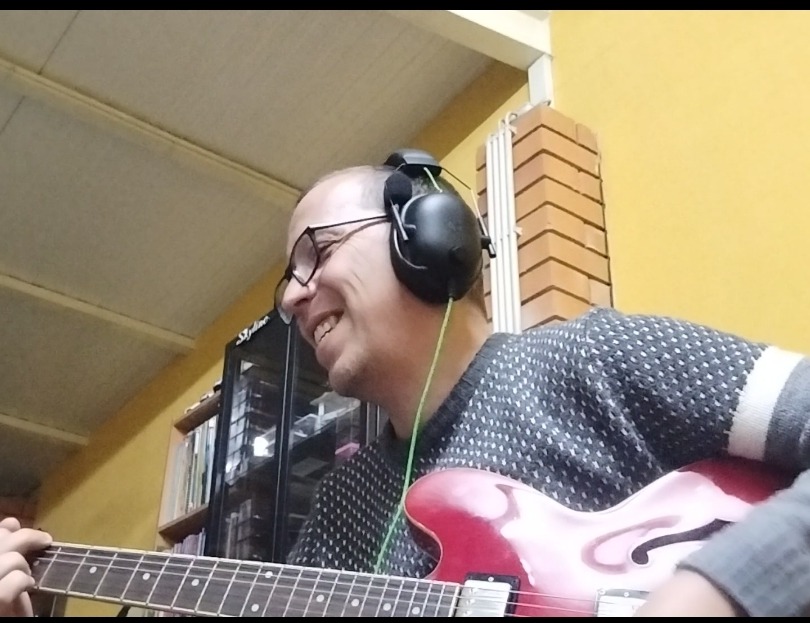
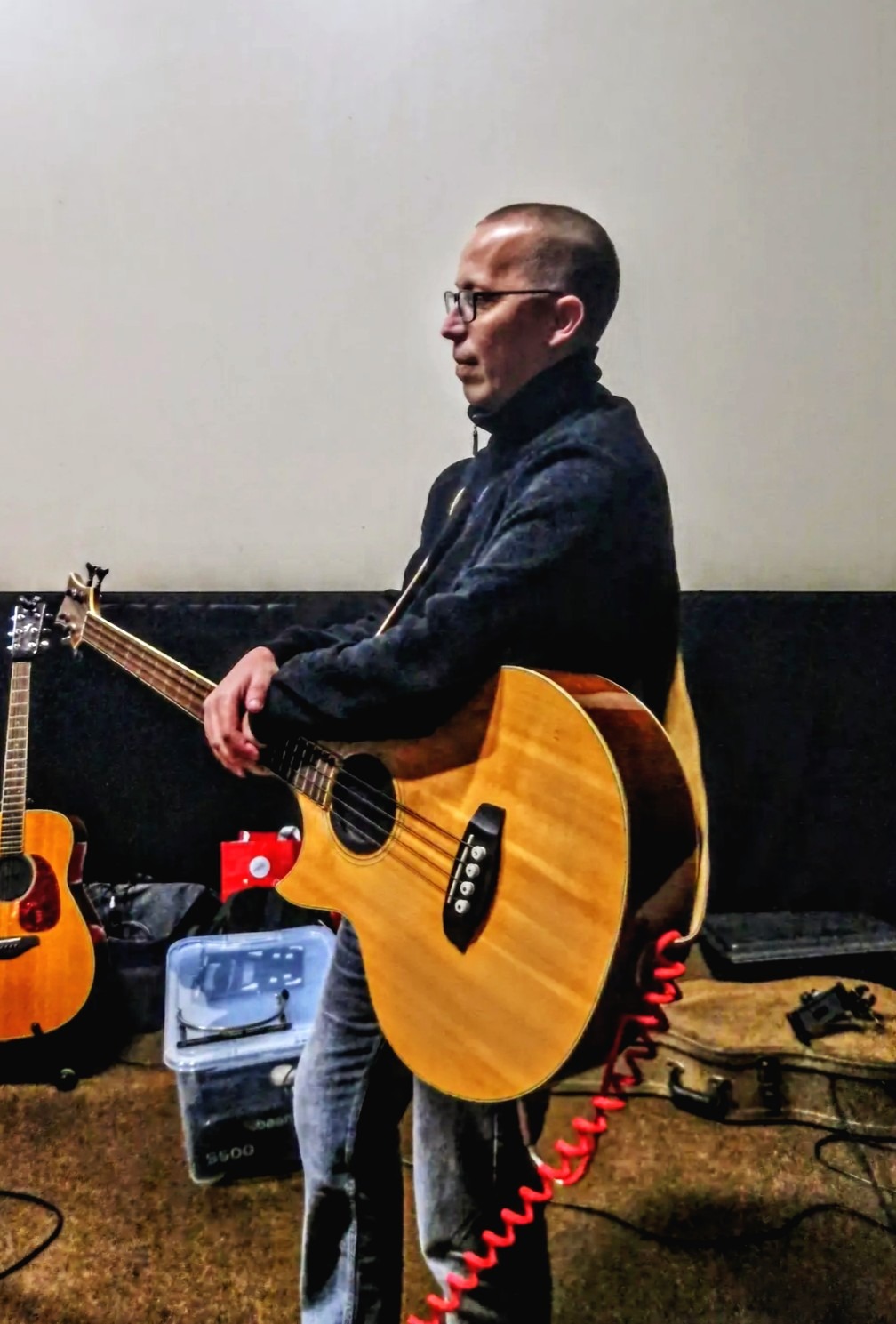
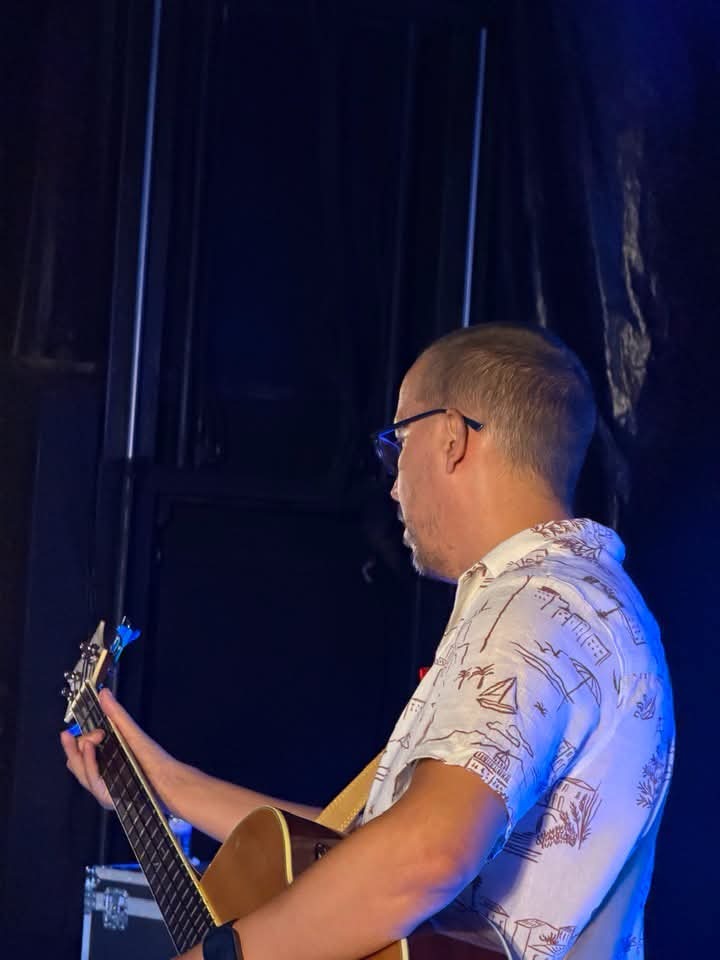
Unlike artists who place their public identity at the centre of their work, Bash Co. prefers listeners to focus on the music itself. A teacher by profession and a songwriter by passion, the artist has spent years writing and composing songs while maintaining a separate musical identity from a band that performs Portuguese music. Although Bash Co. describes himself as a songwriter rather than a singer, his creative process involves writing lyrics, playing guitars, developing arrangements, experimenting with production, and finding ways to bring his musical ideas to life. His decision to release solo material reflects a desire to share years of personal compositions rather than allow them to remain unheard.
“Velvet” emerged during a six-day family trip to Prague around Christmas. Inspired by the city’s monuments, its complex history, Franz Kafka, and INXS’s connection to the Czech capital through their music video for “Never Tear Us Apart,” Bash Co. found himself writing a song that connected a personal experience of love with broader ideas of separation, freedom, and historical struggle. The 1989 Velvet Revolution and the Iron Curtain became important references, while the song’s central theme explored affection that might endure despite difficult circumstances. What made the experience particularly unusual was the speed at which the composition developed. Whereas Bash Co. typically spends weeks revisiting and refining songs, “Velvet” came together with a sense of immediacy that encouraged him to capture the inspiration before returning home.
Recorded in Bash Co.’s home studio, the single also reflects the artist’s independent approach to production. Beginning with guitar and vocals, the arrangement develops through additional layers, with the percussion becoming particularly significant in the second half. Bash Co. deliberately shaped the drums to evoke marching troops, connecting the sound to the historical imagery behind the song. Released on the artist’s birthday, “Velvet” holds personal significance beyond its musical creation, representing both a memorable experience in Prague and another step towards sharing compositions that have remained private for many years. With a creative philosophy influenced by Kafka’s words, “We’re all cages in search of a bird,” Bash Co. continues to pursue a purpose centred on giving music a life beyond its creator.
Having this introduction to Bash Co. and the story behind “Velvet,” it is time to explore the experiences, ideas, and creative decisions that shaped the single. In today’s conversation, we discuss the inspiration behind the song, the relationship between personal identity and artistic expression, the role of technology in the recording process, and why Bash Co. believes the music should ultimately speak for itself. So, without further ado, let’s begin today’s interview.
INTERVIEW SESSION
Oliver:
You describe yourself as a teacher and songwriter, but not a singer, and your solo songwriting journey dates back to 1999. What first drew you towards writing and composing music, and what has kept that creative desire alive throughout the years, even while maintaining a separate career and everyday responsibilities?
Bash Co.:
Hi, Oliver! I always found it easy to write, and during school I was in a band and music came along. Until then, I was only a listener. I had never played an instrument before that, but I had written poems and texts that were some kind of creative escape for what I wanted to say. Having said that, as a listener I was consuming a lot of music since my early years, so I was heavily stimulated to write as well. Since then, life has naturally happened, and even though I’ve never stopped writing and composing, I never actually felt the need to do so in a professional way. I grew up making my songs and keeping them for family and friends just because I felt making them was enough.
Oliver:
You have deliberately kept your solo compositions separate from your work performing Portuguese music with a band for more than 13 years. What does each musical identity offer you creatively, and why has maintaining that distinction been important to you?
Bash Co.:
It has never been on purpose to maintain any distinction. But it has been necessary for my own sake. We’ve been playing Portuguese covers for so many years, my solo work is completely different. It’s not a question of language, because I’ve written in Portuguese as well. But my songs are me, they’re my things, most of them not everyone gets to know where they came from. They’re from a place on my own, they’ve always been. In fact, I always think the kind of exposure that solo work may lead to will always be too overwhelming for a person like me. Within the band, I get to play live more often, which is something necessary, but the songs aren’t mine, so I’m just a performer, I’m not showing my life, my thoughts, my dreams and pains.
Oliver:
You have said that being in the spotlight has never been your priority; what matters more is allowing people to hear what you have created. How has this attitude influenced the way you approach releasing music, building an artist identity and connecting with listeners?
Bash Co.:
That’s what has changed, the approach. One day I woke up and thought how bad it would be if all my effort and the true love I have for my songs had been for nothing. I really like my solo work and the time I spend with it tells the whole story. I stopped feeling that making songs was enough, I had the urge to leave a footprint that would outlive me. Not in the sense people had to know me, but my songs. I don’t want any spotlight. I want people to listen to the songs. I think the best music experience is the sound, not the source. I wouldn’t mind if I don’t get any credit at all. The fact the songs exist and they’re out there, that’s enough for me. I’ve let them fly; that’s the big change. I’ve been coping with exposure for the last several months and so far, it’s good. I’ve kept my Bash Co. identity quite obscure, despite interviews and the higher exposure from my most recent songs. So now people know who I am, I didn’t change my mind about being out of spotlight, but I do have to answer what I’m asked and I can’t lie. Listeners aren’t a problem, that’s the right word for it, I want people to listen. Not fans or followers, but listeners.
Oliver:
Your six-day trip to Prague became the starting point for “Velvet,” which you describe as your most naturally flowing composition to date. What was it about the city, its atmosphere or your experiences during that visit that opened up such an immediate creative response?
Bash Co.:
It was unbelievable. The song was written in Prague, and I felt I had to finish it there, I was so absorbed by the atmosphere, and I didn’t plan anything besides going places. I didn’t plan to write anything at all. It was a six-day family trip during Christmas time, there was a lot going on, but words just felt so clear and that has always been me, like I said writing comes easy when I’m in the right frame of mind. Visiting Prague’s most iconic places got me the setup, and the intention of getting to know INXS’s video locations for “Never Tear Us Apart” gave me the rest. I had some previous chords to which I would mumble random words and sounds, and they turned out to become the structure for the song.
Oliver:
You mentioned that you usually spend weeks writing and composing, yet “Velvet” seemed to emerge almost unexpectedly. What was different about your state of mind during those six days, and did you recognise while you were in Prague that you were experiencing an unusually strong period of creative inspiration?
Bash Co.:
Yes, my songs have always been a product of several weeks of changes and development. At the core, it’s always me and my guitars. But in my mind, all instruments are being played, even the ones I don’t know how to play. So, I spend weeks creating them on Ableton and sorts. I have different versions of my songs, in the sense that I don’t usually delete ongoing work, my releases turn out to be the last version of them. If I hadn’t release my songs, they’d would be going through changes to this day. That’s also one big change in me, having to deal with a “final” version of songs.
During the trip to Prague, it became clear I had to write something about it. I didn’t recognise any strong period of creative inspiration; I just put words together about what I was feeling. I’ve done that so many times, the difference was the place and the atmosphere. I only got a glimpse of having something different when I had finished recording the song, and that was back home. For so long all I’ve written has added to nothing, I wasn’t thinking this was any different besides the fact it was so sudden, organic, I would say visceral.
Oliver:
The song brings together references to Franz Kafka, Prague’s monuments, the Velvet Revolution of 1989 and the Iron Curtain. How did you decide which aspects of the city’s history and cultural identity belonged in the song, and how did you bring those references together without losing its central message as a love song?
Bash Co.:
There was a whole previous baggage, of course, I love Prague’s history and background. But I wasn’t planning anything, I was just there and it became clear. I just thought about what would be if there was this person going through the city and talking about this special feeling, which I don’t think is that clear as it seems in terms of timing. Are we talking about someone in love? Has this person just seen someone in velvet and started to dream about it? Is this someone who is reminiscing on a past love while going through places? And has that love won? Or was it defeated? Did war and separation get the best or is this person alive to testify how good it was? And why is there the presence of solitude throughout the song, despite all this? What has really happened? Is this someone who has loved or someone who hasn’t loved until that moment? So many questions, which is something I love. I think I give all the answers, but I like thinking otherwise, you know, and I sure try to confuse people.
Oliver:
At its heart, “Velvet” is about enduring affection through difficult times. How did you approach connecting the personal experience of love with the wider historical ideas of separation, political division and the struggle for freedom that inspired the song?
Bash Co.:
Like I said, so many questions. It’s true that’s the central piece, but my question is when. Now or then? Did it ever happen? Is it in his heart or in his mind? Prague and its history gave the song the necessary obscurity about the whole theme, and that’s something I always pursue, the duality of meanings that people may find on what they experience within my songs. So my approach was trying to once again tell everything but not completely in the open.
Oliver:
INXS and their song “Never Tear Us Apart” were an important influence because of their connection to Prague. What does that particular song mean to you, and how did its emotional character influence your thinking while writing “Velvet”?
Bash Co.:
I love the song and I love the band. Like I said, visiting the locations for their video was intended, we even took a lot of photos imitating the video. But writing anything wasn’t planned. I think the song has influenced my life, period. Those six days were too little to sum that up. Maybe most people will look at “Velvet” as a song about the same character reminiscing a few years later, but I still think there’s more than meets the eye, precisely because of the historical ideas of separation, political division and the struggle for freedom which you mentioned that inspired the song in the first place. That’s one point of view, surely not the only one. It all adds up for the sense of talking about the song and not about me, so I just love it.
Oliver:
The title “Velvet” carries several possible associations, particularly when considered alongside the Velvet Revolution and the song’s subject of love. What does the title represent to you, and was its meaning clear from the beginning or did it develop as the composition took shape?
Bash Co.:
That has always been my way of writing. Searching for sentences that would have a double meaning, it’s just my way of telling things, but not completely in the open like I’ve said before. There’s a song I wrote, called “Everything I need to know”, which is full of those contrasting images, as it goes “, The day you left, the silence was deafening/ You screamed so loud that I could hardly hear you”. My most recent song “Dungeon” says, “silent silence deafens all of my agony”. So it has always been something I search for and aim at, and you can see silence and noise, and their contrasts, tend to be present in most of my songwriting like a recurring event. The iron curtain part, as well as the word for the title, became clear when I was writing the lyrics; it all felt like the feeling was so strong that no war, no separation, no iron curtain would stand a chance against it, because love is velvety. And its timeless, so then again, when is the question. Also important to say, I’ve had the word velvet implanted in my brain since Transvision Vamp’s “Velveteen”, so the chance to use it had finally come.
All that meaning contrast plays a higher role in the message of the track, as it allows listeners to follow different ways to understand what it’s about, as I’ve told you before. I mean, it’s easy to see what it’s about, but the effect I meant was having people experience what the character expresses: the doubts and fears, and the epiphany of having an invincible feeling within. Is this person in love? Is this person starting to fall in love? Is this character seeing someone in velvet for the first time, amidst a city plagued by tanks and war and separation? Or is this character talking about past events and willingly getting past all the places that made him happy and reminiscing on how love won? As you can see, questions keep popping up.
Oliver:
One of the most distinctive production decisions comes in the second half, where you wanted the drums to resemble marching troops. How did you translate that historical image into a percussion arrangement, and what challenges did you encounter before achieving the sound you had imagined?
Bash Co.:
My idea was to start simple; I mean, true to the way I usually start, just me and my guitar, and then engage in more complex mixes that would act as one more character in the song, with more powerful guitars and the role that drums play within the song, trying to imitate marching troops in the second half. As the song seems to refer to love through tough times, and also separation, as well as political issues like the Velvet Revolution and the Iron Curtain, I felt the entire sonic experience had to make the listener feel he or she was there. I honestly think I’m trying to convey my thoughts not only through the lyrics, but also through the choices I make in terms of the way it’s going to sound. Because the lyrics on the second half are the same as the first one, I thought tension had to occur to break the sense of calmness the first half delivers. Maybe the character has gone through those places more than once, maybe not.
Oliver:
You recorded “Velvet” in your home studio, a space that holds personal significance because of the effort involved in establishing it. How has having your own recording environment influenced your independence as a songwriter, and what does being able to develop your compositions at home mean to you?
Bash Co.:
It influences everything. I have my own schedule, I fail on it and it’s fine. If I don’t record anything for the next six months, it’s all good. It took a long time for me to have the things I have, and I keep on learning about how to use them. I cherish all the flaws as they happen with better instruments like they had with worse ones. I’m not good at so many things that the entire process is beautiful and it’s mine. It has always been that way, it’s personal and I think that’s how I’m able to process things. It’s a continuous battle as well, I’m not used to leaving that place for things like these, interviews and reviews and raising interest. Being independent means leaving all this tomorrow, going back to the unknown, but with a slight difference: that footprint I mentioned earlier. It’s bigger now and out my hands.
Oliver:
You released “Velvet” on your birthday, which gives the song another layer of personal significance. Why did you choose that particular date, and did releasing a composition so closely connected to your experience in Prague make the occasion feel different from your previous releases?
Bash Co.:
The lyrics were done around the 22nd of December, my birthday was three months later and I planned the release for a maximum of 90 days. Like I said before, I always try to get songs better, so I took the schedule to its last day, and in fact it wasn’t easy, because I really had to do all the release work on that special occasion, while celebrating I mean. It obviously feels different because of the way it was created and how personal it has become. Releasing it on my birthday felt completely natural.
Oliver:
You have spoken openly about not particularly enjoying singing, despite regularly performing your songs for family, friends and with your band. What is the relationship between the music you hear in your imagination and the vocal performance needed to bring it to life, and how have you navigated that part of the creative process?
Bash Co.:
I’ve written a lot. For all purposes, not only music. The voice behind it hasn’t mattered at all. In what concerns songs, I don’t write them for me to sing them at all. If that were the case, tone and pitch would always matter and limit, and I don’t think about those things when I write, never in a million years. The way I see it, vocals are just another instrument to be fiddled with. Tuned, changed, altered at will.
Oliver:
You mentioned experimenting with different vocal filters and using AI as part of your approach because you are rarely completely satisfied with your own singing. How has this technology entered your creative process, what does it help you achieve, and where do you draw the line between using it as a tool and preserving the personal identity of your compositions?
Bash Co.:
I sing all my songs for recording purposes, as well as I play all guitars. I’ve been trying to introduce some keyboards and piano bits on my songs; they can be heard here and there. But my voice and my guitar are always the start of everything. I don’t own a proper set of drums, but I have the tools to provide any beat I come up with. So, I send my voice to the dashboard just like any other instrument, and I mess with it with everything I can, up to the point where it won’t sound like me if I need to. That’s because I want the song to last, not the person behind it. I want it to be sung by a thousand people who won’t know who wrote it. And you can be sure I won’t let my songs sound worse because I was tempted to sing them just because I’ve written them. I can sing, and I actually like my voice, but I could never live up to the songs I write the way I plan them. Tone, pitch, all has to fit, and I make it fit. Hardly ever does it fit my voice, so I work on it. I perform them all live when I want to, with the kind of differences that won’t make it to a recording process, but the producing bits and getting songs better and better are what I’ve aimed at for the last 16 years. My identity is always there, my pronunciation on some words is unavoidable and I don’t try to hide it. I’ve never had perfect accent and I’m proud of that, I’m just a Portuguese singing in English.
Oliver:
Your artist philosophy is closely connected to Franz Kafka’s words, “We’re all cages in search of a bird.” You interpret this as the idea that people need to fulfil their purpose to give meaning to their existence. How has this philosophy shaped your decision to share your music, particularly when releasing songs is not your main profession or commercial ambition?
Bash Co.:
It’s a little more complex than that but yes, sharing my music may be understood as the bird for my cage, if you will. I’ve got a lot of cages though, and releasing songs isn’t the biggest bird, it’s not the first one as well. I just want my songs to be out there, that’s the fulfilment, there’s no other ambition and first of all, I’m a teacher and that’s my job. I’ve written and composed songs as a hobby and the only difference is I’m getting them out of the shelf and sharing them.
Oliver:
You have been creating solo music since 1999, and you have expressed that you could not be at peace with yourself if those compositions remained unheard. Looking back at the years of writing and recording, what has it meant to finally give these songs a life beyond your personal space, and has sharing them changed your relationship with your own work?
Bash Co.:
I can’t say it isn’t special, but it’s also very challenging. It’s a fight with myself. The fear of losing my songs to lack of memory and the eternal bliss of not being heard at all, got the best of my fear of exposure, that’s just it. Of course, I could just record them for myself, but like I said in the beginning, I love my songs and all the effort had to mean something. All this idea of wanting songs to be heard and the creator doesn’t matter, etc, would be stupid if I don’t get them heard at all. So why not? Maybe someone else likes them too.
Oliver:
You have chosen to keep your real identity relatively separate from your musical project, explaining that you want listeners to focus on what you have created rather than who you are. Do you feel that this separation allows people to form a more personal connection with the music, without being influenced by the personality or public image of the artist?
Bash Co.:
That’s my full intention. Like I said, I won’t mind if people don’t know who’s behind the songs. I like to think they’re a fully grown being, sent out to the world and I’ve got nothing more to do with them. It has nothing to do with not wanting people to know more or less of me, it’s about not letting myself get in the way of my songs. The stage is all for them. That’s just it. If people want to know more about me, they eventually will. It’s just not important and it doesn’t add much to what the songs are and matter. When you are looking at the bird, you don’t lose time observing the cage, right?
Oliver:
Finally, “Velvet” brings together a personal love story, the history of Prague and a creative experience that you felt compelled to capture before the inspiration disappeared. When listeners discover the song without knowing any of that background, what would you hope they feel or take away from it, and what would you like them to understand about the purpose behind your music?
Bash Co.:
I hope they listen to it and feel whatever they like. It’s all about what they will get from it without preconceptions. They can try and discover more about the song, but that’s not something they can Google, that’s inside them. My whole purpose is to convey an experience in which people love songs for what they are for each one of them. Not a collective, consensual opinion, but a unique experience that makes them travel and come back to tell a different story from mine.
“Bash Co. reminds us that a song does not need its creator to stand in the spotlight to find its place in the world. Sometimes, the most personal act of creativity is learning to let go, allowing the music to leave its familiar surroundings and become something entirely its own.”
~ Oliver (DULAXI Team)
EDITORIAL PERSPECTIVE
What makes “Velvet” particularly interesting is the way Bash Co. allows a personal experience to remain open to different interpretations. The song’s connection to Prague gives its story a historical dimension, while the developing percussion adds another layer to the relationship between its musical arrangement and lyrical ideas. Our conversation also revealed an artist whose creative priorities extend beyond conventional ideas of recognition and success. Bash Co.’s willingness to experiment with vocal processing and production reflects a commitment to presenting each composition as closely as possible to the sound imagined during its creation. Ultimately, “Velvet” invites listeners to discover their own meaning within the music.
~ Oliver (DULAXI Team)
CLOSING
A sincere thank you to Bash Co. for joining DULAXI and sharing the experiences, reflections, and creative decisions behind “Velvet.” This conversation has offered a closer look at an artist who has spent years developing personal compositions and is now allowing them to reach listeners while remaining committed to keeping the music at the centre of the experience.
From the unexpected inspiration found in Prague to the historical references woven into the song and the careful production choices made in the home studio, “Velvet” demonstrates how a personal experience can become a musical expression that leaves room for different interpretations. Bash Co.’s reflections on creative independence, identity, and the purpose of releasing music also remind us that there are many reasons to create, and not every artist measures success in the same way.
We encourage you to listen to “Velvet” and experience the song for yourself, allowing its lyrics, atmosphere, and musical details to speak to you in your own way. You can also follow Bash Co. through the links below to discover more of the music and creative work behind the project.
Thank you for spending your time with us here at DULAXI. I am Oliver, and we look forward to bringing you more conversations with artists whose music and stories deserve to be heard. Until our next interview, keep listening, keep discovering, and keep supporting the music that moves you.